Determine the meaning of words and phrases as they are used in the text, including figurative and connotative meanings; analyze the cumulative impact of specific word choices on meaning and tone (e.g., how the language evokes a sense of time and place; how it sets a formal or informal tone).
Analyze how complex characters (e.g., those with multiple or conflicting motivations) develop over the course of a text, interact with other characters, and advance the plot or develop the theme.
Analyze how an author's choices concerning how to structure a text, order events within it (e.g., parallel plots), and manipulate time (e.g., pacing, flashbacks) create such effects as mystery, tension, or surprise.
Analyze a particular point of view or cultural experience reflected in a work of literature from outside the United States, drawing on a wide reading of world literature.
Determine a theme or central idea of a text and analyze in detail its development over the course of the text, including how it emerges and is shaped and refined by specific details; provide an objective summary of the text.
Track each student's skills and progress in your Mastery dashboards
Give this quiz to my class
Q 1/11
Score 0
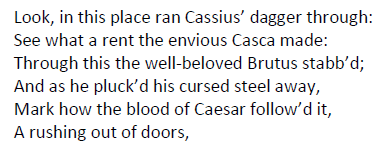
Part A: Read the following lines from Act III, Scene ii of Julius Caesar. Based on these lines, what is the meaning of rent as used in this excerpt?
45
tear in a piece of cloth
unspeakable atrocity
long-lasting impression
poor decision
Q 2/11
Score 0
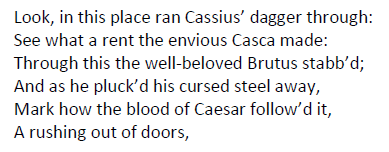
Part B: Which word or phrase from these lines help the reader interpret the meaning of rent as it is being used?
45
“ran Cassius’ dagger through”
“in this place”
“well-beloved”
“envious”
11 questions
Q.
Part A: Read the following lines from Act III, Scene ii of Julius Caesar. Based on these lines, what is the meaning of rent as used in this excerpt?
1
45 sec
RL.9-10.4
Q.
Part B: Which word or phrase from these lines help the reader interpret the meaning of rent as it is being used?
2
45 sec
RL.9-10.4
Q.
Part A: Based on the passage, what are Antony’s true feelings about Caesar?
3
45 sec
RL.9-10.3
Q.
Part B: Which excerpt from the passage best demonstrate the feeling chosen in Part A?
4
45 sec
RL.9-10.3
Q.
In his speech, Antony disproves Brutus’ assertion that Caesar was ambitious. Which lines from the first part of Antony’s speech (lines 1–35) disprove the claim of Caesar’s ambitious nature?
5
45 sec
RL.9-10.3
Q.
Part A: What does Antony mean when he refers to Brutus as “Caesar’s angel”?
6
45 sec
RL.9-10.4
Q.
Part B: Based on the excerpt, why does Antony describe Brutus in this way?
7
45 sec
RL.9-10.4
Q.
In lines 49–50 Antony says, “But here's a parchment with the seal of Caesar; I found it in his closet, 'tis his will.” What does Antony accomplish by introducing Caesar’s will into his speech at this point?
8
45 sec
RL.9-10.5
Q.
Part A: What is Antony’s intention when he refers to Brutus and others as “honourable men”?
9
45 sec
RL.9-10.6
Q.
Part B: Which quotation from the speech shows this same intent?
10
45 sec
RL.9-10.6
Q.
What is the central idea of this excerpt from Julius Caesar?