Loading...

History: Prime Ministers and Parliament
Quiz by M. Parker
Customize this quiz to suit your class
Instantly translate to 100+ languages
Tag the questions with any skills you have. Your dashboard will track each student's mastery of each skill.
Give this quiz to my class
What did William and Mary sign when they became King and Queen?
Magna Carta
Declaration of Rights
Carta Magna
School Trip form
What is Government?
Children in a class.
Teachers at school.
The group of people who make up the leading party.
People who attend football matches.
What did William and Mary sign when they became King and Queen?
What is Government?
What is Parliament?
Who was the first Prime Minister of the UK?
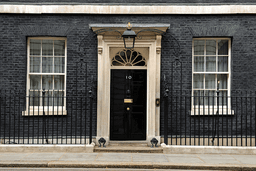
Where does the Prime Minister live?
 When it was his turn to speak, Adam Malik, Presidium Minister for Political Affairs and Minister for Foreign Affairs of Indonesia, recalled that about a year before, in Bangkok, at the conclusion of the peace talks between Indonesia and Malaysia, he had explored the idea of an organization such as ASEAN with his Malaysian and Thai counterparts. One of the “angry young men” in his country’s struggle for independence two decades earlier, Adam Malik was then 50 years old and one of a Presidium of five led by then General Soeharto that was steering Indonesia from the verge of economic and political chaos. He was the Presidium’s point man in Indonesia’s efforts to mend fences with its neighbors in the wake of an unfortunate policy of confrontation. During the past year, he said, the Ministers had all worked together toward the realization of the ASEAN idea, “making haste slowly, in order to build a new association for regional cooperation.” Adam Malik went on to describe Indonesia’s vision of a Southeast Asia developing into “a region which can stand on its own feet, strong enough to defend itself against any negative influence from outside the region.” Such a vision, he stressed, was not wishful thinking, if the countries of the region effectively cooperated with each other, considering their combined natural resources and manpower. He referred to differences of outlook among the member countries, but those differences, he said, would be overcome through a maximum of goodwill and understanding, faith and realism. Hard work, patience and perseverance, he added, would also be necessary. The countries of Southeast Asia should also be willing to take responsibility for whatever happens to them, according to Tun Abdul Razak, the Deputy Prime Minister of Malaysia, who spoke next. In his speech, he conjured a vision of an ASEAN that would include all the countries of Southeast Asia. Tun Abdul Razak was then concurrently his country’s Minister of Defence and Minister of National Development. It was a time when national survival was the overriding thrust of Malaysia’s relations with other nations and so as Minister of Defence, he was in charge of his country’s foreign affairs. He stressed that the countries of the region should recognize that unless they assumed their common responsibility to shape their own destiny and to prevent external intervention and interference, Southeast Asia would remain fraught with danger and tension. And unless they took decisive and collective action to prevent the eruption of intra-regional conflicts, the nations of Southeast Asia would remain susceptible to manipulation, one against another. “We the nations and peoples of Southeast Asia,” Tun Abdul Razak said, “must get together and form by ourselves a new perspective and a new framework for our region. It is important that individually and jointly we should create a deep awareness that we cannot survive for long as independent but isolated peoples unless we also think and act together and unless we prove by deeds that we belong to a family of Southeast Asian nations bound together by ties of friendship and goodwill and imbued with our own ideals and aspirations and determined to shape our own destiny”. He added that, “with the establishment of ASEAN, we have taken a firm and a bold step on that road”. For his part, S. Rajaratnam, a former Minister of Culture of multi-cultural Singapore who, at that time, served as its first Foreign Minister, noted that two decades of nationalist fervor had not fulfilled the expectations of the people of Southeast Asia for better living standards. If ASEAN would succeed, he said, then its members would have to marry national thinking with regional thinking. “We must now think at two levels,” Rajaratnam said. “We must think not only of our national interests but posit them against regional interests: that is a new way of thinking about our problems. And these are two different things and sometimes they can conflict. Secondly, we must also accept the fact, if we are really serious about it, that regional existence means painful adjustments to those practices and thinking in our respective countries. We must make these painful and difficult adjustments. If we are not going to do that, then regionalism remains a utopia.” S. Rajaratnam expressed the fear, however, that ASEAN would be misunderstood. “We are not against anything”, he said, “not against anybody”. And here he used a term that would have an ominous ring even today: balkanization. In Southeast Asia, as in Europe and any part of the world, he said, outside powers had a vested interest in the balkanization of the region. “We want to ensure,” he said, “a stable Southeast Asia, not a balkanized Southeast Asia. And those countries who are interested, genuinely interested, in the stability of Southeast Asia, the prosperity of Southeast Asia, and better economic and social conditions, will welcome small countries getting together to pool their collective resources and their collective wisdom to contribute to the peace of the world.” The goal of ASEAN, then, is to create, not to destroy. This, the Foreign Minister of Thailand, Thanat Khoman, stressed when it was his turn to speak. At a time when the Vietnam conflict was raging and American forces seemed forever entrenched in Indochina, he had foreseen their eventual withdrawal from the area and had accordingly applied himself to adjusting Thailand’s foreign policy to a reality that would only become apparent more than half a decade later. He must have had that in mind when, on that occasion, he said that the countries of Southeast Asia had no choice but to adjust to the exigencies of the time, to move toward closer cooperation and even integration. Elaborating on ASEAN objectives, he spoke of “building a new society that will be responsive to the needs of our time and efficiently equipped to bring about, for the enjoyment and the material as well as spiritual advancement of our peoples, conditions of stability and progress. Particularly what millions of men and women in our part of the world want is to erase the old and obsolete concept of domination and subjection of the past and replace it with the new spirit of give and take, of equality and partnership. More than anything else, they want to be master of their own house and to enjoy the inherent right to decide their own destiny …” While the nations of Southeast Asia prevent attempts to deprive them of their freedom and sovereignty, he said, they must first free themselves from the material impediments of ignorance, disease and hunger. Each of these nations cannot accomplish that alone, but by joining together and cooperating with those who have the same aspirations, these objectives become easier to attain. Then Thanat Khoman concluded: “What we have decided today is only a small beginning of what we hope will be a long and continuous sequence of accomplishments of which we ourselves, those who will join us later and the generations to come, can be proud. Let it be for Southeast Asia, a potentially rich region, rich in history, in spiritual as well as material resources and indeed for the whole ancient continent of Asia, the light of happiness and well-being that will shine over the uncounted millions of our struggling peoples.” The Foreign Minister of Thailand closed the inaugural session of the Association of Southeast Asian Nations by presenting each of his colleagues with a memento. Inscribed on the memento presented to the Foreign Minister of Indonesia, was the citation, “In recognition of services rendered by His Excellency Adam Malik to the ASEAN organization, the name of which was suggested by him.” And that was how ASEAN was conceived, given a name, and born. It had been barely 14 months since Thanat Khoman brought up the ASEAN idea in his conversations with his Malaysian and Indonesian colleagues. In about three more weeks, Indonesia would fully restore diplomatic relations with Malaysia, and soon after that with Singapore. That was by no means the end to intra-ASEAN disputes, for soon the Philippines and Malaysia would have a falling out on the issue of sovereignty over Sabah. Many disputes between ASEAN countries persist to this day. But all Member Countries are deeply committed to resolving their differences through peaceful means and in the spirit of mutual accommodation. Every dispute would have its proper season but it would not be allowed to get in the way of the task at hand. And at that time, the essential task was to lay the framework of regional dialogue and cooperation. The two-page Bangkok Declaration not only contains the rationale for the establishment of ASEAN and its specific objectives. It represents the organization’s modus operandi of building on small steps, voluntary, and informal arrangements towards more binding and institutionalized agreements. All the founding member states and the newer members have stood fast to the spirit of the Bangkok Declaration. Over the years, ASEAN has progressively entered into several formal and legally-binding instruments, such as the 1976 Treaty of Amity and Cooperation in Southeast Asia and the 1995 Treaty on the Southeast Asia Nuclear Weapon-Free Zone. Against the backdrop of conflict in the then Indochina, the Founding Fathers had the foresight of building a community of and for all Southeast Asian states. Thus the Bangkok Declaration promulgated that “the Association is open for participation to all States in the Southeast Asian region subscribing to the aforementioned aims, principles and purposes.” ASEAN’s inclusive outlook has paved the way for community-building not only in Southeast Asia, but also in the broader Asia Pacific region where several other inter-governmental organizations now co-exist. The original ASEAN logo presented five brown sheaves of rice stalks, one for each founding member. Beneath the sheaves is the legend “ASEAN” in blue. These are set on a field of yellow encircled by a blue border. Brown stands for strength and stability, yellow for prosperity and blue for the spirit of cordiality in which ASEAN affairs are conducted. When ASEAN celebrated its 30th Anniversary in 1997, the sheaves on the logo had increased to ten – representing all ten countries of Southeast Asia and reflecting the colors of the flags of all of them. In a very real sense, ASEAN and Southeast Asia would then be one and the same, just as the Founding Fathers had envisioned. This article is based on the first chapter of ASEAN at 30, a publication of the Association of Southeast Asian Nations in commemoration of its 30th Anniversary on 8 August 1997, written by Jamil Maidan Flores and Jun Abad.Yaama I'm Jack Evans and you're watching BTN. Here's what's coming up. We uncover the story behind this famous photo, learn about First Nations seasons and find out the history of Book Week. What is Statehood? Reporter: Tatenda Chibika INTRO: But first, the Prime Minister Anthony Albanese has announced that Australia will join other countries in recognising Palestine as an independent state. So, what does that mean? Tatenda found out. Anthony Albanese, Prime Minister: Australia will recognise the state of Palestine. Australia will recognise the right of the Palestinian people to a state of their own. We will work with the international community to make this right a reality. Tatenda Chibika, Reporter: That's the moment our Prime Minister said Australia would recognise Palestine as an independent state at the upcoming United Nations General assembly next month. It's something other countries, including France and Canada, have said they'll be doing too. So, what does that mean exactly? To be considered an independent state under international law a place needs to have its own land or territories with defined borders, it needs to have people who permanently live there, have a working government and it has to be able to talk and make deals with other countries. Once a place meets all those rules, it can ask to be recognised by other independent states and countries. But a big step in becoming an independent state is being fully recognised by the United Nations. To do that you first need to get approval from at least nine members of the UN's Security Council. That's a group of countries responsible for maintaining international peace and security. But even then, that tick of approval can still be blocked by one of the Security Council's five permanent members Russia, China, the UK, the US and France. If the Security Council approves, the decision then goes to the UN's General Assembly where at least two thirds of the UN's 193 members have to agree to make it official. Yeah, it's a pretty complex process which is why we've only seen a handful of countries recognised by the UN in recent years like South Sudan and Montenegro. Others like Kosovo are only 'partially' recognised which means they have some recognition but not enough to become a full member state at the UN. Right now, Palestine is recognised by more than 140 countries — that's more than two thirds of the UN General Assembly. So, why hasn't it become a UN member state yet? Well, it came pretty close last year when 12 members of the Security Council voted in favour of it. VANESSA FRAZIER, AMBASSADOR OF MALTA, APRIL 2024 UNSC PRESIDENT: I shall now put the draft resolution to the vote. But the US, a close ally to Israel, used its special powers to block Palestine from becoming a member state. VANESSA FRAZIER: Those against? At the time, the U.S said Palestine and Israel needed to come to an agreement on their own first. Throughout the years, there have been attempts to figure out a way for both Palestine and Israel to exist peacefully alongside each other but that hasn't happened yet. And now Israel has said that recognising Palestine as an independent state would be rewarding Hamas the group in charge of Gaza which was responsible for the terror attacks on October 7th, 2023. But the Palestinian Authority which governs parts of the West Bank says Hamas won't have a role in any future state of Palestine which will exist peacefully alongside Israel. Australia, like the US, had previously said that it wanted Israel and Palestine to figure out things by themselves first but because of how the war has been going the Australian government is worried that if it continues to wait, there might not be a Palestinian state to recognise. ANTHONY ALBANESE, PRIME MINISTER: There has been too many lives lost, both Israeli's and Palestinians and the world is saying we need a solution to this conflict, we need to end the cycle of violence and the way to do that is to have a two-state solution. News Quiz Russia's President Vladimir Putin stepped foot on American Soil for the first time in a decade to meet with US President Donald Trump. What state did they meet in? Alabama, Alaska or Arizona?It's Alaska. The two leaders met to discuss a way to end the war in Ukraine but weren't able to make any final agreements. DONALD TRUMP, US PRESIDENT: There were many, many points that we agreed on. Most of them, I would say, a couple of big ones, that we haven't quite got there, but we've made some headway. There's no deal until there's a deal. A lot of people criticised the two world leaders for not including Ukraine's president Volodymyr Zelenskyy in the meeting. But that didn't seem to worry Mr Trump who said the meeting was a success and Mr Putin even invited the US President to meet up again in Russia. DONALD TRUMP: We'll see you again very soon. Thank you very much, Vladimir. VLADIMIR PUTIN, RUSSIAN PRESIDENT: Next time in Moscow. DONALD TRUMP: Oh, that's an interesting one. No, no, no. I'll get a little heat on that one. Last week thousands of people marked the 80th anniversary of VJ Day. What does VJ Day commemorate? The victory of Allied forces in Europe, the surrender of Japan and the end of World War II or the dropping of the first atomic bomb? VJ Day or Victory over Japan day commemorates the surrender of Japan and the end of World War II on the 15th of August 1945. Around the world, and here in Australia, people marked the anniversary with ceremonies remembering those who fought in the war. REPORTER: Who will you be remembering today? VETERAN: Oh, a lot of fellows that I knew that never made it home. Scientists in the UK have created toothpaste that includes which of these ingredients? Hair, eye lashes or fingernails? Yeah, they're all a bit random and gross but the answer is hair. According to scientists from King's College in London, hair could be the key to good oral health because it contains a protein called Keratin which they say when mixed with saliva forms a crystal-like protective coating similar to enamel. And Swifties rejoice because Taylor Swift has announced her 12th Studio album. It's called life of a show what? Is it show pony, show girl or show bag? It's Life of a Showgirl and it'll be released October 3rd. Vincent Lingiari Reporter: Joseph Baronio INTRO: Now to this very famous photograph. It was taken 50 years ago and depicts a really significant moment in Australian history. Joe found out about the story behind it. On the 16th of August 1975, this famous photo was taken. It shows the former Prime Minister Gough Whitlam pouring sand into the hand of Aboriginal leader Vincent Lingiari. A simple gesture that symbolised handing the land at Wave Hill in the Northern Territory back to the Gurindji people. But the journey to get there was far from simple. It started back in the 1960s. At the time, Wave Hill was the biggest cattle station in the world, controlled by British landowner Lord Vestey. The Gurindji people, who had lived on the land for generations, worked for Vestey, but they weren't paid fairly, and conditions were tough. NEWS REPORTER: The station's 100 aboriginal stockmen, with their 100 dependents, are camped in the dry bed of the Victoria River with little shade from 90-degree heat, dust and flies. Eventually, Gurindji leader Vincent Lingiari said it was time to act. VINCENT LINGIARI: I said, "What was it before Lord Vestey born and I was born?" It was blackfella country. So, on August 23rd, 1966, Mr Lingiari and his fellow Aboriginal workers went on strike. It became known as the Wave Hill Walk Off. They moved their camp away from the Wave Hill station to a sacred site called Daguragu on Wattie Creek. They wanted to set up their own cattle station, and said they wouldn't move until their land was returned to them. For years, petitions and negotiations went on between the Gurindji people, the NT Administration, and the Australian Government in Canberra. CLAPPERS: 31. 32. 33. DAVID QUINN, ABSCOL: Well, it's basic justice that their land is recognised. PROTESTORS: Equal rights! As the news spread across the country, thousands of Aussies joined the campaign, including the leader of the Labor Party, Gough Whitlam, who made this promise during his 1972 election campaign. GOUGH WHITLAM: We will legislate to give Aborigines land rights. Not just because their case is beyond argument, but because all of us as Australians are diminished, while the Aborigines are denied their rightful place in this nation. Later that year, Gough Whitlam became Prime Minister. (Song From Little Things Big Things Grow, Song by Kev Carmody and Paul Kelly, 1993) From little things big things grow,from little things big things grow… But it wasn't until 1975, 9 years after the Wave Hill Walk Off started, that he followed through with his promise. Eight years went by, eight long years of waiting'Til one day a tall stranger appeared in the landAnd he came with lawyers and he came with great ceremony GOUGH WHITLAM: I solemnly hand to you these deeds as proof in Australian law that these lands belong to the Gurindji people. And through Vincent's fingers poured a handful of sandFrom little things big things grow 50 years on, and The Wave Hill Walk Off is seen as a pivotal moment in Australia's history. It led to significant legal and social changes for First Nations people, which is something many agree is worth celebrating. First Nations Seasons Reporter: Saskia Mortarotti INTRO: Recently, Melbourne's Lord Mayor suggested ditching the four-season calendar that most of us are familiar with and adopting a six-season Wurundjeri calendar instead saying it gives a better description of what the weather's actually like there. Sas found out more about the different seasonal calendars used by First Nations people. SASKIA MORTAROTTI, REPORTER: Right now, in most of the country, it's pretty cold. COLD GIRL: Think of somewhere warm. What? It's 32 degrees in Darwin in the middle of winter? But ah, yeah. There are some places where it's, well, quite warm. Which makes you wonder whether the weather actually matches the seasons. You see, Australia is pretty big, and we have lots of different weather patterns. Which is something First Nations people have tracked for thousands of years with their own seasonal calendars. KARL WINDA TELFER, CULTURAL CREATIVE KANYANYAPILLA: Why have we got four seasons when you know that don't make any sense here. It doesn't relate to the country here. This is Karl Telfer. He's an artist and storyteller who produced the Kuri Kurru exhibition at the Museum of Discovery in Adelaide that explores the 6 different seasons of the Kaurna Meyunna. SASKIA MORTAROTTI: So, how do you know when you're in one of those six seasons? KARL WINDA TELFER: Well, there are stars that rise. So, you know, there are certain stars, like in Parnatti, for example. There's a star called Parna, and we know what that star is. So, that talks to us about, okay, the time now is going to be cold on the ground. First Nations calendars like the Kaurna one don't just tell us what's happening with the weather; they're also used to track when certain plants and animals are around. KARL WINDA TELFER: It teaches you about what plants you can, you know, what you can eat what you can't and all that what is ready certain times a year and fruit everything, bird shows you the right time to eat the fruit, perfect time, if you try and go get them the next week they're gone. Karl says we can also use these calendars to see how the environment has changed over time. KARL WINDA TELFER: Kudlilla is the season we're in now and Kudlilla that talks about like the rain but we're not having enough rain these days, well, these times. And this is due to climate and the climate changing. There are many different First Nations seasonal calendars around the country. Like Ngan'gi calendar from the Northern Territory which has 13 seasons that follow the life cycle of the native spear grass. Or the Wurundjeri Calendar in Victoria which has 6 seasons. And recently, Melbourne's Lord Mayor, Nicholas Reece, said Melbourne, or Naarm, would be better off adopting the Wurundjeri calendar because it's more in tune to what's happening with the weather. Something many, including Karl, think we should be doing right across the country. KARL WINDA TELFER: I'm talking about the English four seasons. So, this is totally different systems that we're talking about and weather patterns and currents and all sorts of different things, because it's the sea country too. So, my question is, well, why do we have that? If that doesn't work, you know? Quiz How many seasons are there in the Tiwi Island Calendar? 1, 2 or 3? It's 3, although they also have 13 minor seasons. Book Week Reporter: Wren Gillett INTRO: This week, kids across Australia have been dressing up as their favourite characters to celebrate Book Week. Wren finds out why Book Week began 80 years ago and why it's still important today for getting young Aussies into reading. STUDENT: I read an hour every night, maybe even two hours some nights. STUDENT: My favourite book series are the Harry Potter series and the Keeper of the Lost City series. STUDENT: Probably Bad Guys and Weirdo. STUDENT: I like the Amulet, I've been reading that. STUDENT: I love reading Dork Diaries and Exploding Endings. Whether it's Fantasy, mystery, history — whatever you're into. Book week is a time to celebrate, well, books. STUDENT: Me and my friends are dressing up as Inside Out. STUDENT: I was thinking SpongeBob. STUDENT: I'm dressing up as Winnie the Pooh and it's just a fun way to express what kind of books you like. And guess what, book week has actually been a thing for many, many years. WREN GILLETT, REPORTER: Once upon a time, in a land not so far away, literacy lovers noticed a problem. The year was 1945. The second World War had just ended, and kids were mainly reading books from overseas, in particular the UK. Because, at the time, there weren't many Aussie authors writing books for children. WREN GILLETT: So, a group of passionate teachers, librarians, booksellers, publishers, and book-loving volunteers, decided to create what we now know as The Children's Book Council of Australia. Familiar logo, right? Together, they launched book week, all in an effort to get Aussie kids' reading more. And it seemed to work. The 1960s saw a boom in Australian children's books being published. REPORTER: How many books do you read a week? STUDENT: Well, it really depends on the week. If there's exams, I might read only one or two. But if there's no exams and if I've got plenty of time, I might read up to five or six. WREN GILLETT: But today, it's a slightly different story. Studies show that less than one in five eight to 18-year-olds are reading in their free time, and that only one in three actually enjoy reading for fun. WREN GILLETT: Why do you reckon we're seeing this trend? STUDENT: People are getting sucked into screens and they're like spending hours just scrolling through TikTok and stuff, and they're getting so attached to it that they don't feel the need to pick up books and read them. Yeah, there's a lot of different things competing for our attention these days, but many think books are still worth our time. PETER HELLIER, AUSSIE COMEDIAN AND AUTHOR: Books are the exact opposite of boring. And if you think they're boring, I'm sorry, but you're wrong. This is Peter Hellier, he's a pretty famous Aussie comedian, actor, and the author behind these books. And he's just released another one called Detective Galileo, about a trail horse who dreams of solving crimes. PETER HELLIER: He joins the police force and quickly finds out that the horses don't actually solve the crimes, it's the police officers who solve the crime. So he promptly gets thrown out of the force and begins his own detective agency, which I'm reliably told is the only detective agency in the world run by a horse. Peter actually started writing books when he was a kid. PETER HELLIER: I started writing when I was six, seven, eight years old. In fact, I started my own publishing company called Better Books. And I would write these books, and then I would get a parent or one of my parents or teachers to type them up. And I would read them in front of the class. And, you see, each has the logo, the Better Books logo, there it is — the famous Better Books logo. WREN GILLETT: You weren't mucking around. PETER HELLIER: There all on all of them. There we go. There we go. Many, Including Peter, say there's plenty to get from a good book. They help us learn new words and phrases, get a better understanding of the world around us, and strengthen our imaginations. PETER HELLIER: Books can take you absolutely anywhere. They can take you to countries that you never dreamed about going. Countries that exist, countries that don't exist. Reading just makes the world a much bigger place. It's why for the past 80 years, schools around the country have been taking part in book week. STUDENT: Reading is a place where you can have your own world just to yourself. STUDENT: It's like watching a movie inside your head, but you can choose how it goes. STUDENT: Picking up a book is a good idea, maybe you should start with something that you're interested with and then you can start exploring from there. Quiz What is the title of the book that took out this year's Book of the year Award for younger readers? It's Laughter is the Best Endingby Maryam Master. Some other winners included I'm not really here by Gary Loneborough which took out book of the year for older readers and best picture book went to The Truck Cat, by Deborah Frenkel. Sport Australia's men's national basketball team — the Boomers — have won their third Asia Cup in a row, with an epically narrow victory over China. COMMENTATOR: It is Australia who are celebrating! China started strong, leading 25-17 at quarter time. But Aussie Xavier Cooks led a fierce comeback, shooting 30 points and collecting nine rebounds, earning him the title of MVP. And there seriously couldn't have been a tighter finish. Just as the final buzzer went off, China missed a shot that would have won them the game, leaving Australia with a 90-89 victory. COMMENTATOR: An unbelievable finish. The 2025 AFLW season kicked off last week, and so did a new trick. Yeah, 19-year-old Ash Centra from Collingwood, pulled out this move in the warm-up before their season-opener to Carlton, and since then, a lot of people have been trying to do it, with some success, kind of? FOOTY PLAYER: No, I'm not doing it on camera. But despite the epic warmup, Carlton did end up beating Collingwood by 24 points. Now, the moves from these athletes in China weren't quite so graceful but give 'em a break, okay, they're robots. For the first time ever, humanoid robots from all over the world, competed in their very own games, which featured, soccer, boxing, running, and ahh, lots of falling over. Lots. Luckily though, they did bring their own cheer squad. Young Rapper Reporter: Rylie INTRO: Finally, we're going to meet another winner of this year's Heywire competition — which asks young people in regional areas to share their stories. Rylie's going to tell us how music helped to transform his life. Check it out. Mum and I were homeless. We lived at a caravan park, in motels and tents around Warrnambool. It wasn't pretty. I'm First Nations, and I remember feeling like, my own country is failing me right now. So, we camped right along here. I remember pitching a tent right here and this was actually around the same time I started to get into music which was a good way for me to have something to look forward to. I was raised by the SoundCloud era, listening to a lot of trap music. When I was in school, I'd rap along to songs by Juice World, then I started to make my own. My first track was recorded on my phone. It was bad but a lot of fun to make. Some kids in my school heard it and shamed me. That put me off music for the next couple of years, until a friend of mine bought a microphone and encouraged me to give it another go. There was something about that mic and the energy of the crew around me that gave me confidence. It lit a fire in me. Over time, I was able to focus my flow. My songs are about escapism, living the life, being a success. I rap about stuff that takes me to a better place in my head. I'm manifesting my future. My stage name is Hundo Milli, it's short for hundreds of millions. Money's not really the end goal; it's more about having the freedom to dream big. Mum taught me to never stop believing. Even when times were tough, she kept pushing for us to get housing and eventually we did. We're some of the lucky ones. Today, I'm in a Melbourne studio recording my next single. I remember living in my tent dreaming about this very moment and now I'm here, doing what I love. Ain't nothing going to stop me. Closer Well, that's all we've got for you today, but we'll be back before you know it. In the meantime, you can head to our website, there's plenty to see and do. You can also catch Newsbreak every weeknight and there's BTN High for all you highschoolers out there. Have an awesome week and I'll see you next time. Bye.History - Prime MinistersStonewall Pride History Month 2024What do an ancient Greek philosopher and a 19th century Quaker have in common with Nobel Prize-winning scientists? Although they are separated over 2,400 years of history, each of them contributed to answering the eternal question: what is stuff made of? It was around 440 BCE that Democritus first proposed that everything in the world was made up of tiny particles surrounded by empty space. And he even speculated that they vary in size and shape depending on the substance they compose. He called these particles "atomos," Greek for indivisible. His ideas were opposed by the more popular philosophers of his day. Aristotle, for instance, disagreed completely, stating instead that matter was made of four elements: earth, wind, water and fire, and most later scientists followed suit. Atoms would remain all but forgotten until 1808, when a Quaker teacher named John Dalton sought to challenge Aristotelian theory. Whereas Democritus's atomism had been purely theoretical, Dalton showed that common substances always broke down into the same elements in the same proportions. He concluded that the various compounds were combinations of atoms of different elements, each of a particular size and mass that could neither be created nor destroyed. Though he received many honors for his work, as a Quaker, Dalton lived modestly until the end of his days. Atomic theory was now accepted by the scientific community, but the next major advancement would not come until nearly a century later with the physicist J.J. Thompson's 1897 discovery of the electron. In what we might call the chocolate chip cookie model of the atom, he showed atoms as uniformly packed spheres of positive matter filled with negatively charged electrons. Thompson won a Nobel Prize in 1906 for his electron discovery, but his model of the atom didn't stick around long. This was because he happened to have some pretty smart students, including a certain Ernest Rutherford, who would become known as the father of the nuclear age. While studying the effects of X-rays on gases, Rutherford decided to investigate atoms more closely by shooting small, positively charged alpha particles at a sheet of gold foil. Under Thompson's model, the atom's thinly dispersed positive charge would not be enough to deflect the particles in any one place. The effect would have been like a bunch of tennis balls punching through a thin paper screen. But while most of the particles did pass through, some bounced right back, suggesting that the foil was more like a thick net with a very large mesh. Rutherford concluded that atoms consisted largely of empty space with just a few electrons, while most of the mass was concentrated in the center, which he termed the nucleus. The alpha particles passed through the gaps but bounced back from the dense, positively charged nucleus. But the atomic theory wasn't complete just yet. In 1913, another of Thompson's students by the name of Niels Bohr expanded on Rutherford's nuclear model. Drawing on earlier work by Max Planck and Albert Einstein he stipulated that electrons orbit the nucleus at fixed energies and distances, able to jump from one level to another, but not to exist in the space between. Bohr's planetary model took center stage, but soon, it too encountered some complications. Experiments had shown that rather than simply being discrete particles, electrons simultaneously behaved like waves, not being confined to a particular point in space. And in formulating his famous uncertainty principle, Werner Heisenberg showed it was impossible to determine both the exact position and speed of electrons as they moved around an atom. The idea that electrons cannot be pinpointed but exist within a range of possible locations gave rise to the current quantum model of the atom, a fascinating theory with a whole new set of complexities whose implications have yet to be fully grasped. Even though our understanding of atoms keeps changing, the basic fact of atoms remains, so let's celebrate the triumph of atomic theory with some fireworks. As electrons circling an atom shift between energy levels, they absorb or release energy in the form of specific wavelengths of light, resulting in all the marvelous colors we see. And we can imagine Democritus watching from somewhere, satisfied that over two millennia later, he turned out to have been right all along.A. Arundhati Roy B. Jhumpa Lahiri C. Salman Rushdie D. Anita Desai ________________________________________ 2. The Lowland was published in: A. 2001 B. 2013 C. 2010 D. 2005 ________________________________________ 3. Which earlier work earned Lahiri the Pulitzer Prize? A. The Namesake B. Unaccustomed Earth C. Interpreter of Maladies D. The Lowland ________________________________________ 4. The novel is primarily about: A. Technology and modernity B. Immigration, family, and political violence C. Business rivalry D. Mythology and folklore ________________________________________ 5. The two central brothers in the novel are: A. Rahul and Anil B. Subhash and Udayan C. Gogol and Ashoke D. Amit and Nikhil ________________________________________ 6. Where did the brothers grow up? A. Mumbai B. Dhaka C. Calcutta D. Delhi ________________________________________ 7. Udayan becomes involved in: A. Peace activism B. Cinema C. Naxalite movement D. Business ________________________________________ 8. Subhash moves to: A. London B. Rhode Island C. Toronto D. Chicago ________________________________________ 9. Udayan is killed in: A. Jail B. A riot C. The lowland near his house D. A car accident ________________________________________ 10. Why does Subhash marry Gauri? A. Love B. To protect her and her unborn child C. Financial benefit D. Family pressure ________________________________________ 11. Gauri eventually: A. Becomes a politician B. Starts a business C. Leaves her family D. Returns to India ________________________________________ 12. Subhash raises Bela: A. With Gauri B. Alone C. With help from his parents D. In India ________________________________________ 13. Bela grows up believing: A. Udayan is her father B. Subhash is her father C. She has no father D. Her father died in war ________________________________________ 14. The setting of political unrest is linked to: A. Partition B. Naxalbari uprising C. Independence movement D. Civil War ________________________________________ 15. The narrative style uses: A. Magical realism B. Non-linear structure C. Poetry D. Second-person narration ________________________________________ 16. Gauri’s character represents: A. Traditional motherhood B. Obedient wife C. Intellectual autonomy and emotional detachment D. Political activism ________________________________________ 17. Bela’s character signifies: A. Rebellion against education B. Second-generation identity struggle C. Complete assimilation D. Materialistic living ________________________________________ 18. Memory in the novel functions as: A. A simple recollection B. A haunting presence affecting identity C. A forgotten history D. A symbolic decoration ________________________________________ 19. The lowland itself symbolizes: A. Wealth B. Stability C. Transitional, unstable space D. Escape ________________________________________ 20. Lahiri’s prose style can be described as: A. Flowery and ornate B. Minimalistic and restrained C. Dramatic and verbose D. Highly poetic ________________________________________ 21. Water imagery reflects: A. Joy and happiness B. Power and victory C. Memory and emotional fluidity D. Evil ________________________________________ 22. Which theory applies strongly to this novel? A. Structuralism B. Postcolonial hybridity C. Absurdism D. Modernism ________________________________________ 23. Postcolonial hybridity is linked to: A. Complete assimilation B. Identity in-between cultures C. Traditional values D. Language fluency alone ________________________________________ 24. Which character best reflects second-generation identity conflict? A. Gauri B. Bela C. Subhash D. Udayan ________________________________________ 25. What does Subhash struggle with most? A. Career failure B. Language C. Guilt and secrecy D. Wealth ________________________________________ 26. Udayan’s ideology centers on: A. Business growth B. Armed communist revolution C. Religious reform D. Education ________________________________________ 27. The novel shows how political violence leads to: A. Personal healing B. Economic prosperity C. Emotional trauma across generations D. Cultural unity ________________________________________ 28. Betrayal appears as: A. Only political B. Only emotional C. Both political and familial D. A background idea ________________________________________ 29. The genre of the text best fits: A. Fantasy B. Realistic political family saga C. Science fiction D. Thriller ________________________________________ 30. The narrative constantly shifts between: A. Dream and reality B. India and America C. Past and future India D. Fiction and nonfiction ________________________________________ 31. Homi Bhabha’s "third space" represents: A. Physical land B. A zone of cultural in-betweenness C. A literal building D. A heavenlike vision ________________________________________ 32. Gauri symbolizes: A. Traditional widowhood B. Female agency vs social expectation C. Blind loyalty D. Economic dependence ________________________________________ 33. Bela unknowingly inherits: A. Udayan’s ideology B. Gauri’s academic passion only C. Subhash’s calmness D. Grandparents’ wealth ________________________________________ 34. Lahiri uses silence to: A. Avoid details B. Deepen psychological complexity C. Reduce story relevance D. Simplify events ________________________________________ 35. A major structural device is: A. Letters B. Non-linear flashbacks C. Mythic storytelling D. Metafiction ________________________________________ 36. Which text offers a migrant theme comparison? A. The God of Small Things B. The White Tiger C. The Namesake D. Train to Pakistan ________________________________________ 38. The Naxalite movement first emerged in: A. Mumbai B. Naxalbari village C. Delhi D. Kerala ________________________________________ 39. Which theme repeats strongly? A. Celebration of success B. Silence and secrets C. Fantasy D. Heroism ________________________________________ 40. What does Bela do as an adult? A. Becomes a doctor B. Engages in environmental activism C. Joins corporate life D. Moves into politics ________________________________________ 41. The immigrant experience in the novel is portrayed as: A. Full belonging B. Alienation and partial belonging C. Achievement D. Liberation ________________________________________ 42. Which idea does Lahiri question through Gauri? A. Heroism B. Maternal expectation C. Religious devotion D. Wealth ________________________________________ 43. Subhash represents: A. Pure rebellion B. Survival and adaptation C. Anti-immigrant sentiment D. Total withdrawal ________________________________________ 44. Lahiri’s writing expects readers to: A. Passively accept the plot B. Read emotional subtext in silences C. Ignore symbols D. Only enjoy the story ________________________________________ 45. The lowland as a metaphor mainly signifies: A. Joy B. Unstable cultural ground C. Triumph D. Isolation from family ________________________________________ 46. Why is The Lowland considered significant? A. Its fantasy themes B. Its deep engagement with politics & identity C. Its humor D. Its romantic style ________________________________________ 47. Which comparative author also writes about diaspora identity? A. Chetan Bhagat B. Amitav Ghosh C. Premchand D. Ruskin Bond ________________________________________ 48. Udayan’s death drives the plot because: A. Family hides it B. It forces new relationships & trauma C. People forget him D. It has no consequence ________________________________________ 49. The narrative ends emphasizing: A. Closure and peace B. Lasting consequences of secrets C. National identity D. Religious conflict ________________________________________ 50. Scholars study this work because it explores: A. Only Indian history B. Trauma, diaspora, gender & politics C. Folk storytelling D. ComedyWhen this lady died I descended like real estate in fee simple to her son Benjamin Stiles, Esq[uire]. About four years after her death, her two sons, Benjamin and David, were drafted to fight in the revolution. I also entered the banners of freedom. Alas! Poor African Slave, to liberate freemen, my tyrants. I had contemplated going to Barbados to avenge myself and my country… I went into Capt. [Samuel] Granger’s company, from hence I was drafted into Capt. [Samuel] Barker’s company of light infantry… ...I suddenly discovered a man riding up to me not more than eight rods distant on full speed with a pistol in his hand and ordered me to lay down my arms [weapons]... He said I must surrender to him who demanded me in the name of the King his majesty of Great Britain. I then plainly told him that neither him or his King’s majesty would get my arms unless he took them by force. He immediately cocked his pistol and fired. I fell flat upon the ground in order to dodge his ball… ...Finally, I was in the battles at Cambridge, White Plains, Monmouth, Princeton, Newark, Frog’s Point, Horseneck where I had a ball pass through my knapsack. All which battles the reader can obtain a more perfect account of in history than I can give. At last we returned to West Point and were discharged [1783], as the war was over. Thus was I, a slave for five years fighting for liberty. ...After we were disbanded, I returned to my old master at Woodbury [Connecticut], with whom I lived one year, my services in the American war having emancipated me from further slavery and from being bartered or sold. My master consented that I might go where I pleased and seek my fortune. Hearing flattering accounts of the new state of Vermont, I left Woodbury and travelled as far as the town of Lenox in Massachusetts, where for the first time I made a bargain as a freeman for labor. I let [hired] myself to a Mr. Elisha Orsborn for one month at the price of five dollars. When I had fulfilled this contract, I travelled to the town of Poltney in Vermont. There again I let myself to a Mr. Abiel Parker for the sum of thirteen pounds ten shillings, for six months. Here I enjoyed the pleasures of a freeman; my food was sweet, my labor pleasure: and one bright gleam of life seemed to shine upon me. Comprehension Test: Superbook – Revelation Theme: Forgiveness, Salvation, and God’s Victory 🔹 Remembering (Items 1–4) What mistake did Chris make at the beginning of the episode? A. He lied to his parents B. He started a fire accidentally C. He broke a valuable item D. He skipped school Answer: B Who are the three main characters in the episode? A. Peter, Mary, and John B. Chris, Joy, and Gizmo C. David, Sarah, and Eli D. Paul, Ruth, and Micah Answer: B Where does Superbook transport the children? A. To the Garden of Eden B. To the time of Jesus’ birth C. To the end times D. To the Exodus Answer: C Who receives visions in heaven during the episode? A. Moses B. Apostle Paul C. Apostle John D. King Solomon Answer: C 🔹 Understanding (Items 5–8) Why does Chris believe his mistake is unforgivable? A. He was punished severely B. He hurt someone intentionally C. He fears the consequences are too great D. He doesn’t understand forgiveness Answer: C What does the descent of the New Jerusalem symbolize? A. The end of all prophecy B. The beginning of war C. Eternal life and God’s promise D. The destruction of the earth Answer: C What lesson does Chris learn from his father? A. That mistakes are permanent B. That forgiveness is earned C. That God’s mercy is unconditional D. That punishment is necessary Answer: C What theme is emphasized throughout the episode? A. Justice and revenge B. Power and control C. Forgiveness and salvation D. Wealth and prosperity Answer: C 🔹 Applying (Items 9–12) If a student feels guilty for a mistake, what lesson from the episode could help them? A. Avoid responsibility B. Seek revenge C. Trust in God’s forgiveness D. Hide the truth Answer: C How might Joy’s experience in heaven help her understand God’s plan? A. She sees the consequences of sin B. She learns about ancient history C. She witnesses God’s ultimate victory D. She meets famous prophets Answer: C What action could reflect the message of salvation in daily life? A. Ignoring others’ mistakes B. Offering forgiveness to someone who hurt you C. Avoiding difficult conversations D. Seeking personal gain Answer: B How could Gizmo’s role support the group’s understanding of Revelation? A. By distracting them with jokes B. By translating the visions C. By guiding them through spiritual truths D. By fixing technical problems Answer: C 🔹 Analyzing (Items 13–16) What contrast is shown between Chris’s fear and the final message of the episode? A. Fear leads to punishment; forgiveness leads to peace B. Fear is stronger than faith C. Mistakes are never forgiven D. God ignores human emotions Answer: A Why is the battle between angels and Satan significant? A. It shows the power of war B. It represents the struggle for heaven C. It symbolizes the victory of good over evil D. It predicts future disasters Answer: C What does the episode suggest about the nature of sin? A. It is always punished B. It can be forgiven through God’s mercy C. It is inherited D. It defines a person’s worth Answer: B How do Chris’s emotions evolve throughout the episode? A. From joy to anger B. From guilt to hope C. From confusion to pride D. From fear to rebellion Answer: B 🔹 Evaluating (Items 17–18) Do you agree that no sin is too great for God’s forgiveness? Why might this be important for viewers? A. Yes, it teaches hope and redemption B. No, some sins are unforgivable C. Yes, but only for believers D. No, forgiveness must be earned Answer: A How effective is the use of apocalyptic imagery in teaching moral lessons? A. It confuses young viewers B. It dramatizes the message of salvation C. It distracts from the core message D. It promotes fear Answer: B 🔹 Creating (Items 19–20) If you were to write a reflection based on this episode, what theme would you focus on? A. The importance of punishment B. The beauty of heaven C. The power of forgiveness D. The fear of judgment Answer: C What title would best capture the message of the episode? A. “The Fire Within” B. “Mercy Wins” C. “The End of Days” D. “Judgment and Justice” Answer: B