Tag the questions with any skills you have. Your dashboard will track each student's mastery of each skill.
Give this quiz to my class
Q 1/11
Score 0
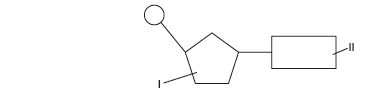
The image shows a DNA nucleotide. Which correctly identifies the parts labelled I and II?
30
I=ribose; II=adenine
I= base; II= phosphate
I=ribose; 2= uracil
I= deoxyribose; II= base
Q 2/11
Score 0
Which statements are characteristics of alleles?
I. Alleles differ significantly in number of base pairs.
II. Alleles are specific forms of a gene.
III. New alleles are formed by mutation.
30
I and II only
I, II and III
II and III only
I and III only
11 questions
Q.
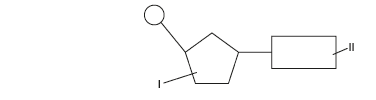
The image shows a DNA nucleotide. Which correctly identifies the parts labelled I and II?
1
30 sec
Q.
Which statements are characteristics of alleles?
I. Alleles differ significantly in number of base pairs.
II. Alleles are specific forms of a gene.
III. New alleles are formed by mutation.
2
30 sec
Q.
The system of sex determination in chimpanzees (Pan troglodytes ) is the same as in other mammals. A chimpanzee has 48 chromosomes in the nuclei of its body cells.
3
30 sec
Q.
Which statement correctly describes genome and proteome?
4
30 sec
Q.
What technique was used by John Cairns to measure the length of the
DNA molecule in Escherichia coli?
5
30 sec
Q.
What is common to RNA and DNA?
6
30 sec
Q.
Nucleic acids are polymers of nucleotides. What parts of nucleotides are
joined together in both DNA and RNA to make these polymers?
7
30 sec
Q.
What is the same in all parts of homologous chromosomes?
8
30 sec
Q.
What distinguishes an allele from a gene?
9
30 sec
Q.
The diploid number of chromosomes in humans (Homo sapiens) is 46 and the diploid number of chromosomes in rice (Oryza sativa ) is 24. What does this indicate about diploid chromosome numbers?
10
30 sec
Q.
A pregnant woman had fetal cells removed by chorionic villus sampling and tested. The following karyogram was produced. What does this show?