Loading...

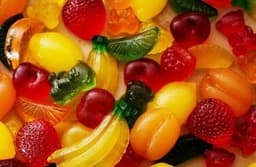
Ingredients for desserts and sweets
Quiz by Оксана Никитина
Customize this quiz to suit your class
Instantly translate to 100+ languages
Tag the questions with any skills you have. Your dashboard will track each student's mastery of each skill.
Give this quiz to my class
Зефир
Candy
Honey
Toffee
Marshmallow
Булочка
Buiscuit
Bun
Candy
Cake
Зефир
Булочка
Варенье
Леденец
Кунжут
Лесной орех
Голубика
Фруктовый лёд
Сладкая вата
Мармеладки
 La Isla de Pascua This 64-square mile island off Chile’s west coast goes by many names. Its English name is Easter Island, marking the day in 1722 when it was discovered by a European. In Spanish, it is called Isla de Pascua. The Rapa Nui, its first inhabitants, called it “The Navel of the World.” Experts do not agree on the history of Easter Island. It is unclear where the first people came from or when they arrived. Many people believe they came from neighboring Polynesia around AD 300. This culture built 900 enormous stone statues for which the island is famous. The statues are known as moai. Most of the moai are made of volcanic tuff. Tuff is a soft rock made from the ash that is forced out during a volcanic eruption. It is easier to carve than hard stones like marble, but it is not ideal for carving small details. The moai are considered megaliths (large stones that form prehistoric monuments). They stand up to 33 feet high when on their ceremonial platform (the average height is about 13 feet), and they weigh up to 82 tons. They usually have a trunk (body), inset arms, and an exaggerated head with angular edges. The head of each moai takes up about one-third of the total figure. It all shows that the people who created them could engineer monumental structures. Many moai stand with their backs to the sea. They watch the island like protective markers. Some low-relief carvings of religious deities were added to the backs of the moai at a later date. Experts are still trying to understand how they were carved and moved, and what they might mean. Chile took control of the island in 1888. At that time, its population was less than 200. The government used it for grazing livestock. Today, the mystery of Easter Island makes it a popular tourist spot. Valparaíso Valparaíso is a colorful blend of old and new traditions in Chile. This port city is an interesting example of daily life in Chile. Before the Panama Canal was opened in 1914, all ships traveling east to west had to pass all the way around South America. Valparaíso was ideally positioned as a stopping point in the Southern Pacific. Valparaíso has a long history of playing host to a large array of cultures and ideas. The city was known around the world as a place that embraced learning and new ideas. Pablo Neruda had a home in Valparaíso in the 1920s. After the Panama Canal was completed, shipping traffic declined significantly. Valparaíso was forgotten and fell upon hard times. In the 1990s, the government of Chile made an effort to revitalize the colorful port. Today it is a UNESCO (United Nations Educational, Scientific and Cultural Organization) World Heritage site. True to its history of embracing learning, it is also home to four universities. Tourists can visit the first stock exchange in Latin America. Valparaíso also has Chile’s first public library. Visitors stroll through cobblestone streets in the historic district. Here they can also view the city’s iconic colorful buildings. At night, music and street performers liven the experience. Try It Yourself Two Spanish words comprise the name of this city. Val means valley. Paraiso means paradise. The name Valparaíso means Paradise Valley. Can you recognize descriptive Spanish words in other Spanish place names? Start with names of places around you. Las Comidas Tradicionales To Chileans, nothing says home like pastel de choclo, a type of casserole made of beef and corn. The body of the casserole is flavorful. It contains beef, onions, raisins, and roasted chicken. It is topped off with a layer of creamed corn and then baked. Baking it brings out the sweetness in the corn, adding a contrast to the savory meat. The preferred type of corn is called choclo. This variety is grown in rugged conditions in the Andes. The kernels are large and hearty compared to other varieties. Another favorite dish in Chile is a type of meat stew called cazuela. Originally a native dish, it is now known as comfort food in Chile. Pork, beef, lamb, or chicken still on the bone is boiled in a traditional clay pot. To that, corn, potatoes, and other local vegetables are added. It is seasoned with onion and garlic. Pablo Rogat/Shutterstock When Chileans think about dessert, manjar is the first ingredient on their minds. It is a caramel sauce made from cooking milk, sugar, and vanilla. It is found in many desserts. It is used as filling in cakes, pies, and cookies. It is refrigerated to make puddings and custards. People even use it to sweeten their coffee.1. The following are ingredients in preparing pumping solution, EXCEPT; a. 5 kgs ham leg c. 1 cup saturated salt solution b. one tablespoon sugar d. 2 drops maplein 2. What is the value in grams of 6.4% refined salt if the amount of pork meat is 1 kilogram? a. 64 grams c. 640 grams b. 6.4 kilograms d. 6,400 grams 3. What is the main purpose of curing meat? a. To tenderize it c. To add color to it b. To prevent spoilage d. To increase its weight 4. What is the advantage of using pumping pickle over cover pickle and dry cure mixtures? a. It reduces the curing time. b. It enhances the flavor. c. It controls the concentration of salt. d. All of the above 5. What is the function of phosphate in curing solutions? a. It increases the water-holding capacity of the meat. b. It inhibits the growth of bacteria. c. It prevents oxidation of fat. d. It improves the texture of the meat. 6. What is the function of carrageenan in curing solutions? a. It acts as a thickener. b. It acts as a binder. c. It acts as a stabilizer. d. All of the above 7. In coloring salted eggs, how many teaspoons of vinegar must be added? a. 1 teaspoon b. 2 teaspoons c. 3 teaspoons d. 4 teaspoons 8. The following are factors that must be considered in packaging eggs. a. quality maintenance b. packaging design c. type of transport d. cost 9. In type 3 packaging material for eggs, what type of materials can these be made? a. burlap b. plastic c. paper board d. polystyrene 10. How many hours must be needed to bake the ham in an oven? a. 5 hours b. 3 hours c. 4 hours d. 2 hours 11. What is the ideal temperature of a smoke fish when storing it at home inside a refrigerator? a. 30℃ b. 38 ℃ c. 100 ℃ d. 50 ℃ 12. The following are ingredients for curing meat EXCEPT a. salt b. sugar c. vinegar d. cooking oil 13. What is the maximum period for commercial salted duck eggs? a. 18 days b. 21 days c. 14 days d. 30 days 14. What type of curing method is needed when fatty fish such as herring is being used? a. pickle curing b. dry curing c. cover pickle curing d. Pumping pickle curing 15. In making a pork ham, how many quarts of water must be needed to bring it to a boil? a. 2 quarts b. 3 quarts c. 4 quarts d. 5 quarts 16. In making a homemade skinless pork longganisa, what is the percentage of pork fats and lean meat? a. 20% fats, 80% lean meat b. 30% fats, 70% lean meat c. 40% fats, 60 lean meat d. 50% fats, 50% lean meat 17. It is a systematic procedure of producing a record for reference A. output C. documentation B. production report D. input 18. Anything produced, especially through a process, a product, a yield. A. documentation C. output B. input D. production report 19. It is the process of capturing data or translating information to a recording format. A. documentation C. production report B. reporting D. output 20. What is the value in grams of 6.4% refined salt if the amount of pork meat is 1 kilogram? a. 64 grams c. 640 grams b. 6.4 kilograms d. 6,400 grams 21. What is the difference between pumping pickle and cover pickle? a. Pumping pickle is injected into the meat, while cover pickle is poured over it. b. Pumping pickle is made with vinegar, while cover pickle is made with water. c. Pumping pickle is used for whole cuts of meat, while cover pickle is used for sliced meat. d. Pumping pickle is a dry mixture, while cover pickle is a liquid solution. 22. What is the main ingredient of dry cure mixtures? a. Sugar b. Salt c. Spices d. Phosphate 23. What is the function of vitamin C powder in curing solutions? a. It acts as an antioxidant. b. It enhances the color of the meat. c. It accelerates the curing reaction. d. All of the above 24. What is the ideal temperature for storing cured meat? a. Below 0°C b. Between 0°C and 4°C c. Between 4°C and 10°C d. Above 10°C 25. The following are advantages of packaging shell eggs EXCEPT. a. It protects against micro-organisms such as bacteria b. It prevents the loss of moisture. c. It protects the eggs from possible crushing while being handled, stored, or transported. d. It prolong the shelf life of the eggs. 26. How many pieces of eggs can be filled in a type 2 packaging materials, filler tray? a. 36 b. 12 c. 30 d. 24 27. How many hours must be needed in smoking ham? a. 10 to 19 hours b. 5 to 9 hours c. 15 to 24 hours d. 20 to 29 hours 28. It is a food packaging method that removes all air from a food-filled, plastic film package before sealing it. a. smoking b. drying c. vacuum packing d. weighing 29. Which is NOT TRUE about packaging a smoked fish? a. Sort cooled smoked fish according to size b. Pack or transfer smoked fish in bulk packaging materials by arranging the fish head and tail in any position. c. When the packaging material is nearly full, weigh the whole pack to check the product weight attained. d. Close or seal the packs. 30. The following nutrients can be found in an egg, EXCEPT. a. vitamins b. minerals c. omega 3 d. amino acids Hello friends, welcome to a new Happy Learning video. Have you ever wondered how plants feed? To answer this question, we need to understand... photosynthesis. Photosynthesis is a process in which plants make their own food to be able to grow and develop. In order to perform photosynthesis, they need various elements: sunlight, carbon dioxide obtained from air, and water, and chlorophyll, which is a green substance that all plants have and is fundamental for performing photosynthesis since it could not happen without it. By the way, chlorophyll is what gives all plants their green color. But how does photosynthesis take place? Look at this plant. As you can see, its roots are anchored to the ground. And through them, the plant absorbs water and minerals in the soil. Water with minerals are transported up the stem, reaching the leaves. The leaves are full of tiny pores called stomata which absorb carbon dioxide that the air in the surrounding contains. All this containing water, minerals and carbon dioxide is called raw sap. Now it's chlorophyll's turn. The chlorophyll in the leaves has all the necessary ingredients for photosynthesis to take place. And when it receives sunlight, the process begins by transforming the raw sap into elaborated sap, which also circulates around the plant and works as food. All plants feed from elaborated sap, and they store it in their roots like a carrot, or in their fruit, like an apple or a pear. Now we know how photosynthesis takes place, but why is it so important? Without plants, there would be no life on Earth. We wouldn't have oxygen to breathe or food to feed on. You already know that herbivores eat plants, and carnivores eat herbivores. Plants are fundamental for the food chain. And they are also fundamental for our respiration. Actually, when humans breathe, we turn oxygen into carbon dioxide. Quite the opposite of when plants perform photosynthesis. A curious fact you need to know is that at night, because plants don't have sunlight to photosynthesize, they breathe like humans do. They take in oxygen and release carbon dioxide. Remember that. And one last thing so you understand the importance of photosynthesis. When plants absorb dirty and contaminated gases, they transform them into pure air, into oxygen, and this way they clean the atmosphere and all nature. Plants are the best solution to fight against contamination, don't you think? Goodbye friends and don't forget to subscribe to Happy Learning TV.Searching for ingredients 13Q_Ingredients used for Sandwiches_ ASSESSMENT 2Writing the title, introduction and ingredients list for monster pizza instructions.Vegetable-origin ingredients in English for Italian students**Tools and Equipment** * **Spatula:** Used for leveling ingredients and spreading fillings. * **Butter Knife:** Used for spreading butter, peanut butter, and cream cheese. * **Chef's Knives:** Come in various sizes, used for general cutting. * **Deli Knife:** Designed for thick sandwiches, with an offset blade for easy slicing. * **Lettuce Knife:** Serrated knife specifically designed for slicing lettuce. * **Paring Knife:** Small knife with a sharp blade, used for peeling and coring foods. * **Sandwich Knife:** Similar to a deli knife but shorter, used for slicing sandwiches. * **Serrated Knife:** Used for slicing bread with hard crusts and soft insides. * **Cutting Board:** A surface for cutting and preparing food. * **Mixing Bowls:** Used for mixing ingredients. * **Rubber Scraper:** Used for scraping down bowls and pans. * **Measuring Cups:** Used for measuring liquids and solids. * **Utility Tray:** Used for holding food in place. * **Strainer:** Used for separating liquids from solids. * **Mixing Spoon:** Used for combining ingredients. * **Can Opener:** Used for opening cans. * **Measuring Spoons:** Used for measuring small quantities of ingredients. * **Grills/Griddles:** Flat heated surfaces for direct cooking. * **Ovens:** Enclosed equipment for heating food with hot air or infrared radiation. * **Microwave Ovens:** Use microwave radiation to heat food. * **Salamanders:** Small broilers used for browning or glazing. * **Bread Toaster:** Used for toasting bread. * **Slicer:** Used for slicing food evenly. * **Chillers:** Used for chilling sandwiches and other foods. * **Freezer:** Used for storing food for extended periods. * **Refrigerator:** Used for storing food at a temperature below room temperature.