Loading...

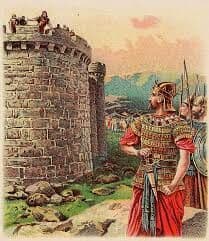
King David
Quiz by Elit Tamir
Customize this quiz to suit your class
Instantly translate to 100+ languages
Tag the questions with any skills you have. Your dashboard will track each student's mastery of each skill.
Give this quiz to my class
Who was the first king who ruled over Israel?
Saul
Rehoboam
Solomon
David
Who built the first Temple?
King David's son
King Rehoboam
King David
Who was the first king who ruled over Israel?
Who built the first Temple?
What did King David do to make Jerusalem a spiritual center?
What characteristics did King David show in handling Goliath?
What did King David's wife think about his dancing before the Aron?
Give 3-4 reasons for choosing Jerusalem as a capital
What was King Solomon's son's name?
What was the biggest difference between King Saul and King David?
How long did the dynasty of King David rule?
Why was King Solomon punished?
How many years between 586 BCE and 53CE?
How many years between 370 BCE and 840 BCE?
What came first? 485 BCE or 485 BC
What came first? 485 BCE or 485 CE
Who named Jerusalem the City of David?
How did King David conquer Jerusalem?
 King David Lesson 2 Review Solomon was the son of David. His mother’s name was Bathsheba. He became king after King David. He was the third king of Unified Israel. When he became king, he prayed to God for wisdom to rule the people of Israel. God responded to Solomon’s prayer for wisdom by granting Solomon wisdom, riches, and honour, as a result, he became a great leader and was the wisest man who ever lived. Knowledge consists of facts or ideas acquired by study, observation, or experience. Wisdom refers to the ability to make good decisions based on knowledge. James 1:5-6 states that anyone who lacks wisdom should ask God for it because He gives generously to all who ask in faith. Godly wisdom is more valuable than earthly riches and treasures. Solomon wrote proverbs so that people could learn godly wisdom, discipline, and discernment. Simply knowing the difference between right and wrong is not enough. A person must also listen to God, act on knowledge and godly wisdom, and choose to obey God. Psalm 111:10 teaches that fearing the Lord is the beginning of wisdom. Wisdom becomes part of a believer's life once he or she learns to fear and revere the Lord. Applying God's Word to everyday life is the foundation for wise living. Solomon wrote 3,000 proverbs and composed 1,005 songs; he was a scientist with great knowledge of many plants and animals.MYTH The British helped the Jews displace the native Arab population of Palestine. FACT Herbert Samuel, a British Jew who served as the first High Commissioner of Palestine, placed restrictions on Jewish immigration “in the ‘interests of the present population’ and the ‘absorptive capacity’ of the country.”1 The influx of Jewish settlers was said to force the Arab fellahin (native peasants) from their land. This was when less than a million people lived in an area that now supports more than nine million. The British limited the absorptive capacity of Palestine when, in 1921, Colonial Secretary Winston Churchill severed nearly four-fifths of Palestine—some thirty-five thousand square miles—to create a new Arab entity, Transjordan. As a consolation prize for the Hejaz and Arabia (which are both now Saudi Arabia) going to the Saud family, Churchill rewarded Sharif Hussein’s son Abdullah for his contribution to the war against Turkey by installing him as Transjordan’s emir. The British went further and placed restrictions on Jewish land purchases in what remained of Palestine. By 1949, the British had allotted 87,500 acres of the 187,500 acres of cultivable land to Arabs and only 4,250 acres to Jews. This contradicted Article 6 of the Mandate which stated that “the Administration of Palestine…shall encourage, in cooperation with the Jewish Agency…close settlement by Jews on the land, including State lands and waste lands not acquired for public purposes.”2 Ultimately, the British admitted that the argument about the country’s absorptive capacity was specious. The Peel Commission said, “The heavy immigration in the years 1933–36 would seem to show that the Jews have been able to enlarge the absorptive capacity of the country for Jews.”3 MYTH The British allowed Jews to flood Palestine while Arab immigration was tightly controlled. FACT The British response to Jewish immigration set a precedent of appeasing the Arabs, which was followed for the duration of the Mandate. The British restricted Jewish immigration while allowing Arabs to enter the country freely. Apparently, London did not feel that a flood of Arab immigrants would affect the country’s “absorptive capacity.” During World War I, the Jewish population in Palestine declined because of the war, famine, disease, and expulsion by the Turks. In 1915, approximately 83,000 Jews lived in Palestine among 590,000 Muslim and Christian Arabs. According to the 1922 census, the Jewish population was 83,000, while the Arabs numbered 643,000.4 Thus, the Arab population grew exponentially while that of the Jews stagnated. In the mid-1920s, Jewish immigration to Palestine increased primarily because of anti-Jewish economic legislation in Poland and Washington’s imposition of restrictive quotas.5 The record number of immigrants in 1935 (see table) was a response to the growing persecution of Jews in Nazi Germany. The British administration considered this number too large, however, so the Jewish Agency was informed that less than one-third of the quota it asked for would be approved in 1936.6 The British gave in further to Arab demands by announcing in the 1939 White Paper that an independent Arab state would be created within ten years and that Jewish immigration was to be limited to 75,000 for the next five years, after which it was to cease altogether. It also forbade land sales to Jews in 95% of the territory of Palestine. The Arabs, nevertheless, rejected the proposal. Jewish Immigration to Palestine7 1919 1,806 1931 4,075 1920 8,223 1932 12,533 1921 8,294 1933 37,337 1922 8,685 1934 45,267 1923 8,175 1935 66,472 1924 13,892 1936 29,595 1925 34,386 1937 10,629 1926 13,855 1938 14,675 1927 3,034 1939 31,195 1928 2,178 1940 10,643 1929 5,249 1941 4,592 1930 4,944 By contrast, throughout the Mandatory period, Arab immigration was unrestricted. In 1930, the Hope Simpson Commission, sent from London to investigate the 1929 Arab riots, said the British practice of ignoring the uncontrolled illegal Arab immigration from Egypt, Transjordan, and Syria had the effect of displacing the prospective Jewish immigrants.8 The British governor of the Sinai from 1922 to 1936 observed, “This illegal immigration was not only going on from the Sinai, but also from Transjordan and Syria, and it is very difficult to make a case out for the misery of the Arabs if at the same time their compatriots from adjoining states could not be kept from going in to share that misery.”9 The Peel Commission reported in 1937 that the “shortfall of land is…due less to the amount of land acquired by Jews than to the increase in the Arab population.”10 MYTH The British changed their policy to allow Holocaust survivors to settle in Palestine. FACT The gates of Palestine remained closed for the duration of the war, stranding hundreds of thousands of Jews in Europe, many of whom became victims of Hitler’s “Final Solution.” After the war, the British refused to allow the survivors of the Nazi nightmare to find sanctuary in Palestine. On June 6, 1946, President Truman urged the British government to relieve the suffering of the Jews confined to displaced persons camps in Europe by immediately accepting 100,000 Jewish immigrants. Britain’s foreign minister Ernest Bevin replied sarcastically that the United States wanted displaced Jews to immigrate to Palestine “because they did not want too many of them in New York.”11 Some Jews reached Palestine, many smuggled in on dilapidated ships organized by the Haganah. Between August 1945 and the establishment of the State of Israel in May 1948, sixty-five “illegal” immigrant ships, carrying 69,878 people, arrived from European shores. In August 1946, however, the British began to intern those they caught in camps on Cyprus. Approximately 50,000 people were detained in the camps, and 28,000 remained imprisoned when Israel declared independence.12 MYTH As the Jewish population grew, the plight of the Palestinian Arabs worsened. FACT In July 1921, Hasan Shukri, the mayor of Haifa and president of the Muslim National Associations, sent a telegram to the British government in reaction to a delegation of Palestinians that went to London to try to stop the implementation of the Balfour Declaration. Shukri wrote: We are certain that without Jewish immigration and financial assistance there will be no future development of our country as may be judged from the fact that the towns inhabited in part by Jews such as Jerusalem, Jaffa, Haifa, and Tiberias are making steady progress while Nablus, Acre, and Nazareth where no Jews reside are steadily declining.13 The Jewish population increased by 470,000 between World War I and World War II, while the non-Jewish population rose by 588,000.14 The permanent Arab population increased by 120% between 1922 and 1947.15 This rapid growth of the Arab population was a result of several factors. One was immigration from neighboring states—constituting 37% of the total immigration to pre-state Israel—by Arabs who wanted to take advantage of the higher standard of living the Jews had made possible.16 The Arab population also grew because of the improved living conditions created by the Jews as they drained malarial swamps and brought improved sanitation and health care to the region. Thus, for example, the Muslim infant mortality rate fell from 201 per thousand in 1925 to 94 per thousand in 1945, and life expectancy rose from 37 years in 1926 to 49 in 1943.17 The Arab population increased the most in cities where large Jewish populations had created new economic opportunities. From 1922–1947, the non-Jewish population increased by 290% in Haifa, 131% in Jerusalem, and 158% in Jaffa. The growth in Arab towns was more modest: 42% in Nablus, 78% in Jenin, and 37% in Bethlehem.18 MYTH Jews stole Arab land. FACT Despite the growth in their population, the Arabs continued to assert they were being displaced. From the beginning of World War I, however, part of Palestine’s land was owned by absentee landlords who lived in Cairo, Damascus, and Beirut. About 80% of the Palestinian Arabs were debt-ridden peasants, semi-nomads, and Bedouins.19 Jews went out of their way to avoid purchasing land in areas where Arabs might be displaced. They sought land that was largely uncultivated, swampy, cheap, and—most important—without tenants. In 1920, Labor Zionist leader David Ben-Gurion expressed his concern about the Arab fellahin, whom he viewed as “the most important asset of the native population.” He insisted that “under no circumstances must we touch land belonging to fellahs or worked by them.” Instead, he advocated helping liberate them from their oppressors. “Only if a fellah leaves his place of settlement,” Ben-Gurion added, “should we offer to buy his land, at an appropriate price.”20 Jews only began to purchase cultivated land after buying all the uncultivated territory. Many Arabs were willing to sell because of the migration to coastal towns and because they needed money to invest in the citrus industry.21 When John Hope Simpson arrived in Palestine in May 1930, he observed, “They [the Jews] paid high prices for the land and, in addition, they paid to certain of the occupants of those lands a considerable amount of money which they were not legally bound to pay.”22 In 1931, Lewis French conducted a survey of landlessness for the British government and offered new plots to any Arabs who had been “dispossessed.” British officials received more than 3,000 applications, of which 80% were ruled invalid by the government’s legal adviser because the applicants were not landless Arabs. This left only about 600 landless Arabs, 100 of whom accepted the government land offer.23 In April 1936, a new outbreak of Arab attacks on Jews was instigated by local Palestinian leaders who were later joined by Arab volunteers led by a Syrian guerrilla named Fawzi al-Qawuqji, the commander of the Arab Liberation Army. By November, when the British finally sent a new commission headed by Lord Peel to investigate, 89 Jews had been killed and more than 300 wounded.24 The Peel Commission’s report found that Arab complaints about Jewish land acquisition were baseless. It pointed out that “much of the land now carrying orange groves was sand dunes or swamp and uncultivated when it was purchased…There was at the time of the earlier sales little evidence that the owners possessed either the resources or training needed to develop the land.”25 Moreover, the Commission found the shortage was “due less to the amount of land acquired by Jews than to the increase in the Arab population.” The report concluded that the presence of Jews in Palestine, along with the work of the British administration, had resulted in higher wages, an improved standard of living, and ample employment opportunities.26 It is made quite clear to all, both by the map drawn up by the Simpson Commission and by another compiled by the Peel Commission, that the Arabs are as prodigal in selling their land as they are in useless wailing and weeping (emphasis in the original). —Transjordan’s king Abdullah27 Even at the height of the Arab revolt in 1938 (which began in April 1936 with the murder of two Jews by Arabs and the subsequent murder of two Arab workers by members of the Jewish underground28), the British high commissioner to Palestine believed the Arab landowners were complaining about sales to Jews to drive up prices for lands they wished to sell. Many Arab landowners had been so terrorized by Arab rebels they decided to leave Palestine and sell their property to the Jews.29 The Jews paid exorbitant prices to wealthy landowners for small tracts of arid land. “In 1944, Jews paid between $1,000 and $1,100 per acre in Palestine, mostly for arid or semiarid land; in the same year, rich black soil in Iowa was selling for about $110 per acre.”30 By 1947, Jewish holdings in Palestine amounted to about 463,000 acres. Approximately 45,000 were acquired from the mandatory government, 30,000 were bought from various churches, and 387,500 were purchased from Arabs. Analyses of land purchases from 1880 to 1948 show that 73% of Jewish plots were purchased from large landowners, not poor fellahin.31 Many leaders of the Arab nationalist movement, including members of the Muslim Supreme Council, and the mayors of Gaza, Jerusalem, and s sold land to the Jews. As’ad el-Shuqeiri, a Muslim religious scholar and father of Palestine Liberation Organization chairman Ahmed Shuqeiri, took Jewish money for his land. Even King Abdullah leased land to the Jews.32 MYTH The British helped the Palestinians to live peacefully with the Jews. FACT In 1921, Haj Amin el-Husseini first began to organize fedayeen (“one who sacrifices himself”) to terrorize Jews. El-Husseini hoped to duplicate the success of Kemal Atatürk in Turkey by driving the Jews out of Palestine just as Kemal had driven the invading Greeks from his country.33 Arab radicals gained influence because the British administration was unwilling to take effective action against them until they began a revolt against British rule. Colonel Richard Meinertzhagen, former head of British military intelligence in Cairo, and later chief political officer for Palestine and Syria, wrote in his diary that British officials “incline towards the exclusion of Zionism in Palestine.” The British encouraged the Palestinians to attack the Jews. According to Meinertzhagen, Col. Bertie Harry Waters-Taylor (financial adviser to the military administration in Palestine 1919–23) met with el-Husseini in 1920, a few days before Easter, and told him that “he had a great opportunity at Easter to show the world…that Zionism was unpopular not only with the Palestine administration but in Whitehall.” He added that “if disturbances of sufficient violence occurred in Jerusalem at Easter, both General [Louis] Bols [chief administrator in Palestine, 1919–20] and General [Edmund] Allenby [commander of the Egyptian force, 1917–19, then high commissioner of Egypt] would advocate the abandonment of the Jewish Home. Waters-Taylor explained that freedom could only be attained through violence.”34 El-Husseini took the colonel’s advice and instigated a riot. The British withdrew their troops and the Jewish police from Jerusalem, allowing the Arab mob to attack Jews and loot their shops. Because of el-Husseini’s overt role in instigating the pogrom, the British decided to arrest him. He escaped, however, and was sentenced to ten years in absentia. A year later, some British Arabists convinced High Commissioner Herbert Samuel to pardon el-Husseini and to appoint him Mufti (a cleric in charge of Jerusalem’s Islamic holy places). By contrast, Vladimir Jabotinsky and several followers, who had formed a Jewish defense organization during the unrest, were sentenced to 15 years. They were released a few months later.35 Samuel met with el-Husseini on April 11, 1921, and was assured “that the influences of his family and himself would be devoted to tranquility.” Three weeks later, riots in Jaffa and elsewhere left forty-three Jews dead.36 El-Husseini consolidated his power and took control of all Muslim religious funds in Palestine. He used his authority to gain control over the mosques, the schools, and the courts. No Arab could reach an influential position without being loyal to the Mufti. His power was so absolute that “no Muslim in Palestine could be born or die without being beholden to Haj Amin.”37 The Mufti’s henchmen also ensured he would have no opposition by systematically killing Palestinians who discussed cooperation with the Jews from rival clans. As the spokesman for Palestinian Arabs, el-Husseini did not ask that Britain grant them independence. On the contrary, in a letter to Churchill in 1921, he demanded that Palestine be reunited with Syria and Transjordan.38 The Arabs found rioting an effective political tool because of the lax British response toward violence against Jews. In handling each riot, the British prevented Jews from protecting themselves but made little effort to prevent the Arabs from attacking them. After each outbreak, a British commission of inquiry would try to establish the cause of the violence. The conclusion was always the same: The Arabs feared being displaced by the Jews. To stop the rioting, the commissions would recommend that restrictions be placed on Jewish immigration. Thus, the Arabs learned they could always stop the influx of Jews by staging riots. This cycle began after a series of riots in May 1921. After failing to protect the Jewish community from Arab mobs, the British appointed the Haycraft Commission to investigate the cause of the violence. Although the panel concluded the Arabs had been the aggressors, it rationalized the cause of the attack: “The fundamental cause of the riots was a feeling among the Arabs of discontent with, and hostility to, the Jews, due to political and economic causes, and connected with Jewish immigration, and with their conception of Zionist policy.”39 One consequence of the violence was the institution of a temporary ban on Jewish immigration. The Arab fear of being “displaced” or “dominated” was an excuse for their attacks on Jewish settlers. Note, too, that these riots were not inspired by nationalistic fervor—nationalists would have rebelled against their British overlords—they were motivated by economics, the radical Islamic views of the Mufti, and misunderstanding. In 1929, Arab provocateurs convinced the masses that the Jews had designs on the Temple Mount (a tactic still used today to incite violence). A Jewish religious observance at the Western Wall, which forms a part of the Temple Mount, served as a pretext for rioting by Arabs against Jews, which spilled out of Jerusalem into other villages and towns, including Safed and Hebron. Again, the British administration made no effort to prevent the violence, and, after it began, the British did nothing to protect the Jewish population. After six days of mayhem, the British finally brought troops in to quell the disturbance. By this time, most of Hebron’s Jews had fled or been killed. In all, 133 Jews were killed and 399 wounded in the pogroms.40 After the riots, the British ordered an investigation, resulting in the Passfield White Paper. It said the “immigration, land purchase and settlement policies of the Zionist Organization were already or were likely to become, prejudicial to Arab interests. It understood the mandatory government’s obligation to the non-Jewish community to mean that Palestine’s resources must be primarily reserved for the growing Arab economy.”41 This meant it was necessary to restrict Jewish immigration and land purchases. MYTH The Mufti was not a Nazi collaborator. FACT In 1941, Haj Amin al-Husseini, the Mufti of Jerusalem, fled to Germany and met with Adolf Hitler, Heinrich Himmler, Joachim Von Ribbentrop, and other Nazi leaders. He wanted to persuade them to extend the Nazis’ anti-Jewish program to the Arab world. The Mufti sent Hitler fifteen drafts of declarations he wanted Germany and Italy to make concerning the Middle East. One called on the two countries to declare the illegality of the Jewish home in Palestine. He also asked the Axis powers to “accord to Palestine and to other Arab countries the right to solve the problem of the Jewish elements in Palestine and other Arab countries in accordance with the interest of the Arabs, and by the same method that the question is now being settled in the Axis countries.”42 In November 1941, the Mufti met with Hitler, who told him the Jews were his foremost enemy. The Nazi dictator rebuffed the Mufti’s requests for a declaration in support of the Arabs, however, telling him the time was not right. The Mufti offered Hitler his “thanks for the sympathy which he had always shown for the Arab and especially Palestinian cause, and to which he had given clear expression in his public speeches.” He added, “The Arabs were Germany’s natural friends because they had the same enemies as had Germany, namely…the Jews.” Hitler told the Mufti he opposed the creation of a Jewish state and that Germany’s objective was destroying the Jewish element in the Arab sphere.43 In 1945, Yugoslavia sought to indict the Mufti as a war criminal for his role in recruiting twenty thousand Muslim volunteers for the SS, who participated in the killing of Jews in Croatia and Hungary. He escaped French detention in 1946, however, and continued his fight against the Jews from Cairo and later Beirut where he died in 1974. MYTH The bombing of the King David Hotel was part of a deliberate terror campaign against civilians. FACT British troops seized the Jewish Agency compound on June 29, 1946, and confiscated large quantities of documents. At about the same time, more than 2,500 Jews from all over Palestine were arrested. A week later, news of a massacre of 40 Jews in a pogrom in Poland reminded the Jews of Palestine how Britain’s restrictive immigration policy had condemned thousands to death. In response to the British provocations, and a desire to demonstrate that the Jews’ spirit could not be broken, the United Resistance Movement planned to bomb the King David Hotel, which housed the British military command and the Criminal Investigation Division in addition to hotel guests. The Haganah pulled out of the plot and left it up to the Irgun. Irgun leader Menachem Begin stressed his desire to avoid civilian casualties and the plan was to warn the British so they would evacuate the building before it was blown up. Three telephone calls were placed on July 22, 1946, one to the hotel, another to the French Consulate, and a third to the Palestine Post warning that explosives in the King David Hotel would soon be detonated. The call to the hotel was received and ignored. Begin quotes one British official who supposedly refused to evacuate the building, saying, “We don’t take orders from the Jews.”44 As a result, when the bombs exploded, the casualty toll was high: 91 killed and 45 injured. Among the casualties were 15 Jews. Few people in the main part of the hotel were injured.45 For decades, the British denied they had been warned. In 1979, however, a member of the British Parliament provided the testimony of a British officer who heard other officers in the King David Hotel bar joking about a Zionist threat to the headquarters. The officer who overheard the conversation immediately left the hotel and survived.46 In contrast to Arab attacks against Jews, which Arab leaders hailed as heroic actions, the Jewish National Council denounced the bombing of the King David.47 1 Aharon Cohen, Israel and the Arab World, (NY: Funk and Wagnalls, 1970), p. 172Please generate questions: 1 The proverbs of Solomon the son of David, king of Israel; 2 To know wisdom and instruction; to perceive the words of understanding; 3 To receive the instruction of wisdom, justice, and judgment, and equity; 4 To give subtilty to the simple, to the young man knowledge and discretion. 5 A wise man will hear, and will increase learning; and a man of understanding shall attain unto wise counsels: 6 To understand a proverb, and the interpretation; the words of the wise, and their dark sayings. 7 The fear of the Lord is the beginning of knowledge: but fools despise wisdom and instruction. 8 My son, hear the instruction of thy father, and forsake not the law of thy mother: 9 For they shall be an ornament of grace unto thy head, and chains about thy neck. 10 My son, if sinners entice thee, consent thou not.Prefix Letter(s) Meaning Example ו Vav "And" וַיֹּאמֶר – and he said ב Bet "In" / "With" בַּבַּיִת – in the house כ Kaf "Like" / "As" כְּמֶלֶךְ – like a king ל Lamed "To" / "For" לְדָוִד – to David ה Heh "The" (definite article) הַסֵּפֶר – the book מ Mem "From" מִבַּיִת – from a house ש Shin "That" / "Which" (less common) שֶׁאָמַר – that he said please make a quiz with thisWhen this lady died I descended like real estate in fee simple to her son Benjamin Stiles, Esq[uire]. About four years after her death, her two sons, Benjamin and David, were drafted to fight in the revolution. I also entered the banners of freedom. Alas! Poor African Slave, to liberate freemen, my tyrants. I had contemplated going to Barbados to avenge myself and my country… I went into Capt. [Samuel] Granger’s company, from hence I was drafted into Capt. [Samuel] Barker’s company of light infantry… ...I suddenly discovered a man riding up to me not more than eight rods distant on full speed with a pistol in his hand and ordered me to lay down my arms [weapons]... He said I must surrender to him who demanded me in the name of the King his majesty of Great Britain. I then plainly told him that neither him or his King’s majesty would get my arms unless he took them by force. He immediately cocked his pistol and fired. I fell flat upon the ground in order to dodge his ball… ...Finally, I was in the battles at Cambridge, White Plains, Monmouth, Princeton, Newark, Frog’s Point, Horseneck where I had a ball pass through my knapsack. All which battles the reader can obtain a more perfect account of in history than I can give. At last we returned to West Point and were discharged [1783], as the war was over. Thus was I, a slave for five years fighting for liberty. ...After we were disbanded, I returned to my old master at Woodbury [Connecticut], with whom I lived one year, my services in the American war having emancipated me from further slavery and from being bartered or sold. My master consented that I might go where I pleased and seek my fortune. Hearing flattering accounts of the new state of Vermont, I left Woodbury and travelled as far as the town of Lenox in Massachusetts, where for the first time I made a bargain as a freeman for labor. I let [hired] myself to a Mr. Elisha Orsborn for one month at the price of five dollars. When I had fulfilled this contract, I travelled to the town of Poltney in Vermont. There again I let myself to a Mr. Abiel Parker for the sum of thirteen pounds ten shillings, for six months. Here I enjoyed the pleasures of a freeman; my food was sweet, my labor pleasure: and one bright gleam of life seemed to shine upon me. Comprehension Test: Superbook – Revelation Theme: Forgiveness, Salvation, and God’s Victory 🔹 Remembering (Items 1–4) What mistake did Chris make at the beginning of the episode? A. He lied to his parents B. He started a fire accidentally C. He broke a valuable item D. He skipped school Answer: B Who are the three main characters in the episode? A. Peter, Mary, and John B. Chris, Joy, and Gizmo C. David, Sarah, and Eli D. Paul, Ruth, and Micah Answer: B Where does Superbook transport the children? A. To the Garden of Eden B. To the time of Jesus’ birth C. To the end times D. To the Exodus Answer: C Who receives visions in heaven during the episode? A. Moses B. Apostle Paul C. Apostle John D. King Solomon Answer: C 🔹 Understanding (Items 5–8) Why does Chris believe his mistake is unforgivable? A. He was punished severely B. He hurt someone intentionally C. He fears the consequences are too great D. He doesn’t understand forgiveness Answer: C What does the descent of the New Jerusalem symbolize? A. The end of all prophecy B. The beginning of war C. Eternal life and God’s promise D. The destruction of the earth Answer: C What lesson does Chris learn from his father? A. That mistakes are permanent B. That forgiveness is earned C. That God’s mercy is unconditional D. That punishment is necessary Answer: C What theme is emphasized throughout the episode? A. Justice and revenge B. Power and control C. Forgiveness and salvation D. Wealth and prosperity Answer: C 🔹 Applying (Items 9–12) If a student feels guilty for a mistake, what lesson from the episode could help them? A. Avoid responsibility B. Seek revenge C. Trust in God’s forgiveness D. Hide the truth Answer: C How might Joy’s experience in heaven help her understand God’s plan? A. She sees the consequences of sin B. She learns about ancient history C. She witnesses God’s ultimate victory D. She meets famous prophets Answer: C What action could reflect the message of salvation in daily life? A. Ignoring others’ mistakes B. Offering forgiveness to someone who hurt you C. Avoiding difficult conversations D. Seeking personal gain Answer: B How could Gizmo’s role support the group’s understanding of Revelation? A. By distracting them with jokes B. By translating the visions C. By guiding them through spiritual truths D. By fixing technical problems Answer: C 🔹 Analyzing (Items 13–16) What contrast is shown between Chris’s fear and the final message of the episode? A. Fear leads to punishment; forgiveness leads to peace B. Fear is stronger than faith C. Mistakes are never forgiven D. God ignores human emotions Answer: A Why is the battle between angels and Satan significant? A. It shows the power of war B. It represents the struggle for heaven C. It symbolizes the victory of good over evil D. It predicts future disasters Answer: C What does the episode suggest about the nature of sin? A. It is always punished B. It can be forgiven through God’s mercy C. It is inherited D. It defines a person’s worth Answer: B How do Chris’s emotions evolve throughout the episode? A. From joy to anger B. From guilt to hope C. From confusion to pride D. From fear to rebellion Answer: B 🔹 Evaluating (Items 17–18) Do you agree that no sin is too great for God’s forgiveness? Why might this be important for viewers? A. Yes, it teaches hope and redemption B. No, some sins are unforgivable C. Yes, but only for believers D. No, forgiveness must be earned Answer: A How effective is the use of apocalyptic imagery in teaching moral lessons? A. It confuses young viewers B. It dramatizes the message of salvation C. It distracts from the core message D. It promotes fear Answer: B 🔹 Creating (Items 19–20) If you were to write a reflection based on this episode, what theme would you focus on? A. The importance of punishment B. The beauty of heaven C. The power of forgiveness D. The fear of judgment Answer: C What title would best capture the message of the episode? A. “The Fire Within” B. “Mercy Wins” C. “The End of Days” D. “Judgment and Justice” Answer: B好的,根據您提供的表格 [NEW SOURCE],以下是表格中例句的中文意思: * **1. all** * **全部的**:**All** my friends were here with me. (我所有的朋友當時都在這裡。) * **全部**:**All** of us enjoyed the movie. (我們所有人都很喜歡這部電影。) * **都**:He got **all** wet. (他全身都濕透了。) * **2. along** * **沿著**:We walked **along** the river yesterday evening. (我們昨天傍晚沿著河邊散步。) * **帶……一起**:When my mother goes out, she takes my little brother **along**. (我媽媽外出時,會帶著我的小弟弟一起去。) * **3. angle** * **觀點**:We should look at the problems from different **angles**. (我們應該從不同的觀點來看待這些問題。) * **角度**:The picture is hanging at an **angle** of 45°. (這張畫以 45 度的角度懸掛著。) * **4. answer** * **答案**:Do you know the **answer** to the question? (你知道這個問題的答案嗎?) * **回答;回應**:Could you **answer** the phone for me? (你可以幫我接一下電話嗎?) * **5. back** * **後面**:She wrote her cellphone number down on the **back** of the paper. (她把她的手機號碼寫在紙的背面。) * **後面的**:Open the **back** door, please. (請打開後面的門。) * **回原處**:It’s time to go **back** home. (該回家了。) * **6. bat** * **蝙蝠**:Did you ever see a **bat** flying quickly in the sky at night? (你曾經看過蝙蝠在夜空中快速飛行嗎?) * **球棒**:Swing the **bat** higher. (把球棒揮高一點。) * **擊**:It’s your turn to **bat**. (輪到你打擊了。) * **7. bite** * **一口的量**:Jane took a **bite** of the guava. (珍咬了一口芭樂。) * **咬**:The dog **bit** the woman’s leg. (那隻狗咬了那個女人的腿。) * **8. book** * **書**:I’ve just started reading a **book** by Stephen King. (我剛開始讀一本史蒂芬·金的書。) * **預訂;預約**:They **booked** two seats at the theater. (他們在劇院預訂了兩個座位。) * **9. block** * **街區**:Nancy and I live on the same **block**. (南希和我住在同一個街區。) * **阻擋**:Those heavy boxes **blocked** my way to the restroom. (那些沉重的箱子擋住了我去洗手間的路。) * **10. bow** * **蝴蝶結**:David chose a gray **bow** tie to go with his black suit. (大衛選擇了一個灰色蝴蝶領結來搭配他的黑色西裝。) * **鞠躬**:The actor **bowed** to everyone before he left the stage. (那位演員在離開舞台前向大家鞠躬。) * **11. break** * **暫停;休息**:I’m tired. Can we take a **break**? (我累了。我們可以休息一下嗎?) * **分解**:These plastic forks are hard to **break** down. (這些塑膠叉子很難分解。) * **打破**:The glass is very expensive. Don’t **break** it. (這個玻璃很貴。不要打破它。) * **12. bright** * **晴朗的**:It’s a **bright** morning. Why not take a walk along the river? (這是個晴朗的早晨。何不沿著河邊散步呢?) * **明亮的**:The room isn’t **bright** enough. Let’s not read here. (這個房間不夠明亮。我們不要在這裡閱讀。) * **13. call** * **打電話**:I got a **call** from my old friend last night. (我昨晚接到我老朋友的電話。) * **打電話**:Tina **called** me last night. We talked a lot about music. (蒂娜昨晚打電話給我。我們聊了很多關於音樂的事。) * **呼喊**:Listen! Is that a **call** for help? (聽!那是求救的呼喊嗎?) * **呼喊**:Why did you **call** my name then? (那你當時為什麼喊我的名字?) * **14. camp** * **營隊**:Patrick joined a science **camp** this summer. (派屈克今年夏天參加了一個科學營隊。) * **露營**:They **camped** by the river yesterday. (他們昨天在河邊露營。) * **15. case** * **箱;盒**:The kids drank the whole **case** of Coke. (孩子們喝掉了一整箱可樂。) * **實例;情況**:The number of new **cases** of Covid-19 is growing. (新冠肺炎的新增病例數正在增加。) * **16. catch** * **接球**:Nice **catch**! My good dog. (接得好!我的好狗狗。) * **罹患(病)**:My head hurts. I may **catch** a cold. (我頭痛。我可能感冒了。) * **抓住**:I didn’t **catch** the ball. (我沒有接到那個球。) * **17. change** * **零錢;找零**:I think you’ve given me the wrong **change**. (我想你找錯錢了。) * **改變;交換**:The leaves **change** (in color) from green to red in the fall. (秋天時,樹葉的顏色從綠色變成紅色。) * **18. clean** * **打掃;清理**:Tom **cleans** the toilet once a week. (湯姆一週打掃一次馬桶。) * **乾淨的**:The water isn’t **clean**. Don’t drink it. (這水不乾淨。不要喝。) * **19. close** * **關;闔**:**Close** your books, students. Let’s have a pop quiz. (同學們,把你們的書闔上。我們要進行隨堂測驗。) * **靠近地**:Jane sat **close** to her husband at the party. (在派對上,珍緊挨著她的丈夫坐著。) * **20. cold** * **感冒**:I had a **cold** a week ago. (我一個星期前感冒了。) * **寒冷的**:It was **cold** last night. (昨晚很冷。)