Loading...

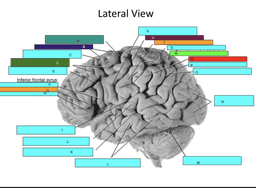
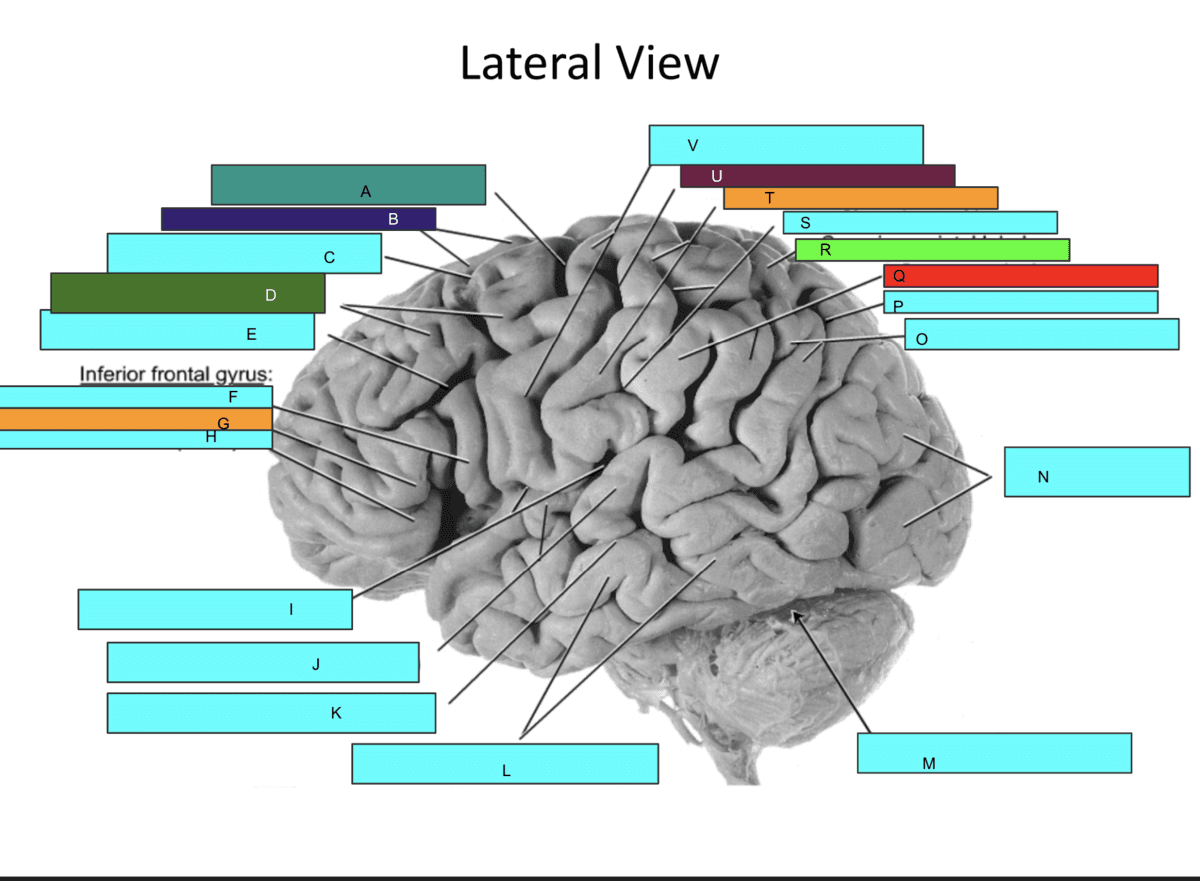
Lateral View
Quiz by Mitchell Hill
Customize this quiz to suit your class
Instantly translate to 100+ languages
Tag the questions with any skills you have. Your dashboard will track each student's mastery of each skill.
Give this quiz to my class
What is structure labeled A?
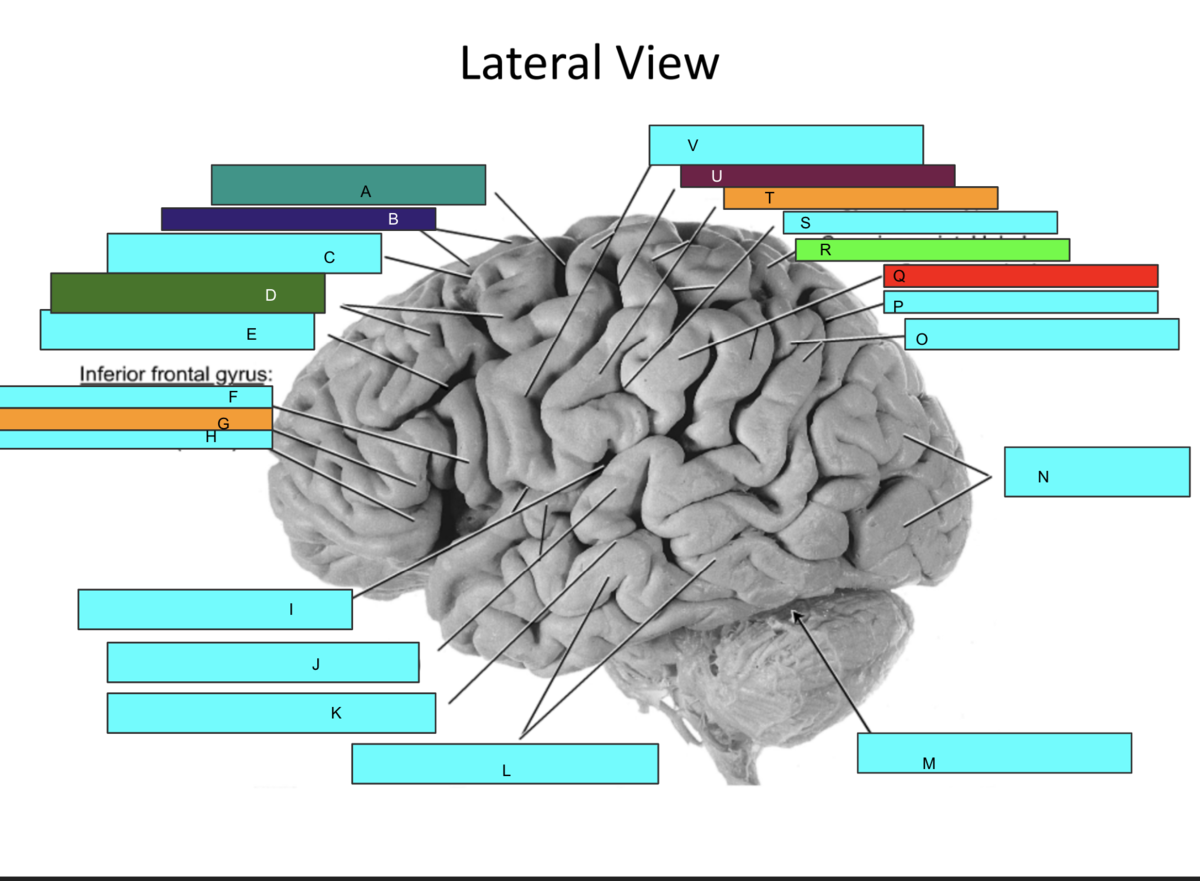
Median Sulcus
Precentral Sulcus
Central Sulcus
Lateral Sulcus
What is structure labeled B?
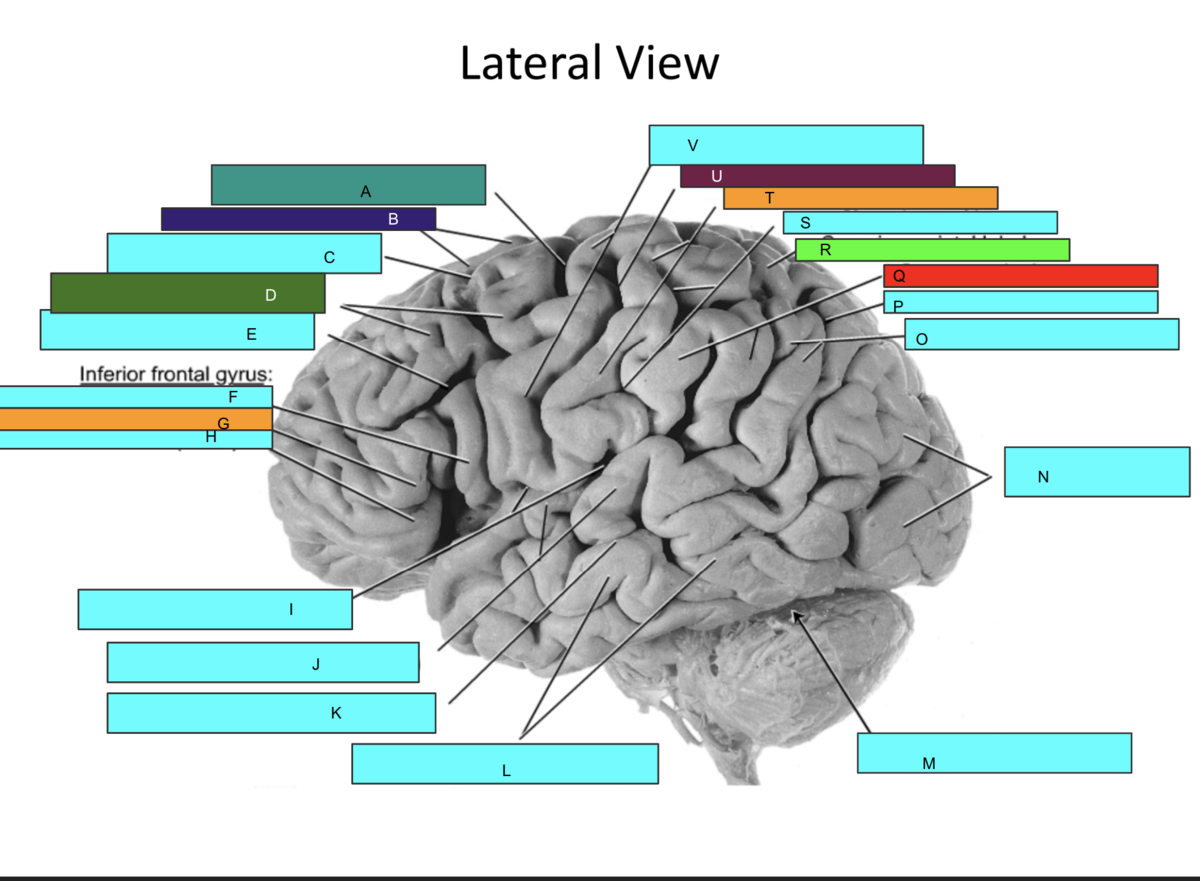
Lateral Fissure
Superior Frontal Sulcus
Superior Frontal Gyrus
Inferior Frontal Gyrus
What is structure labeled A?
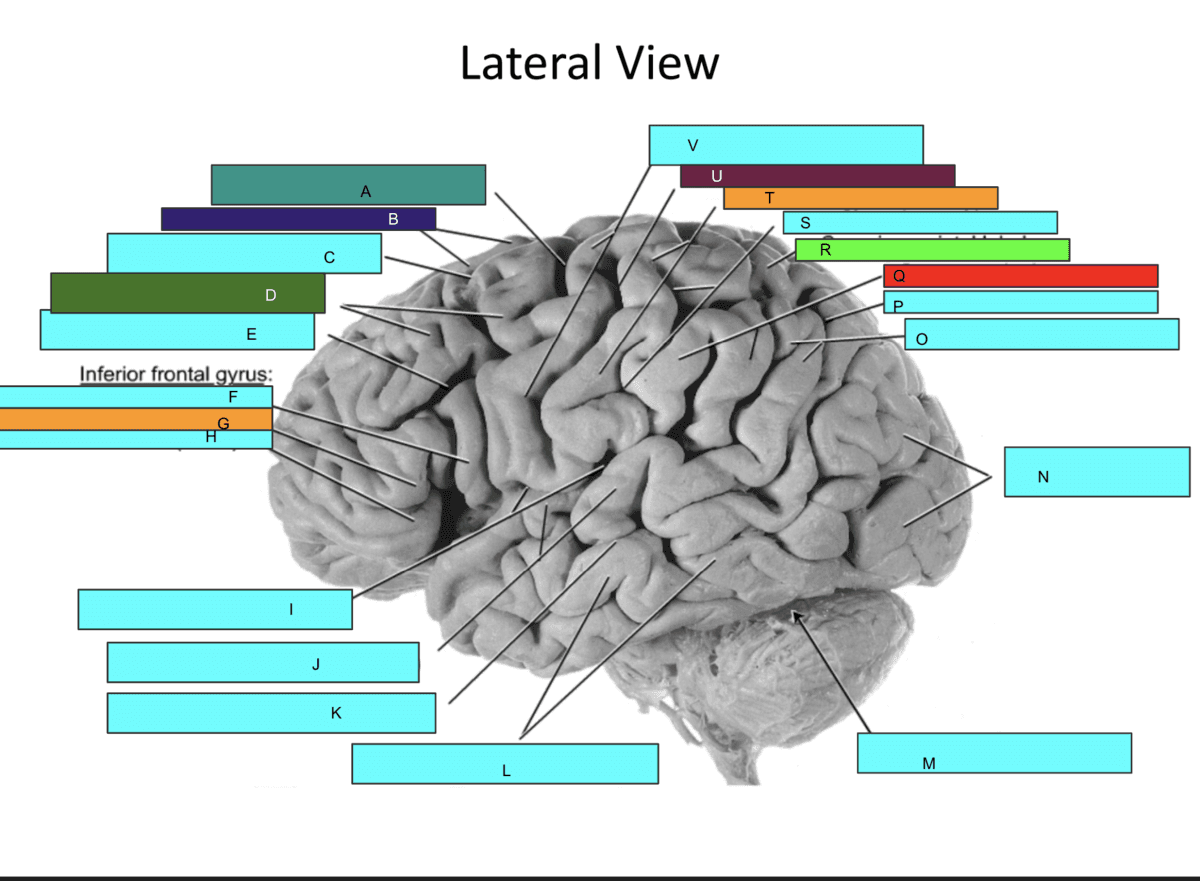
What is structure labeled B?
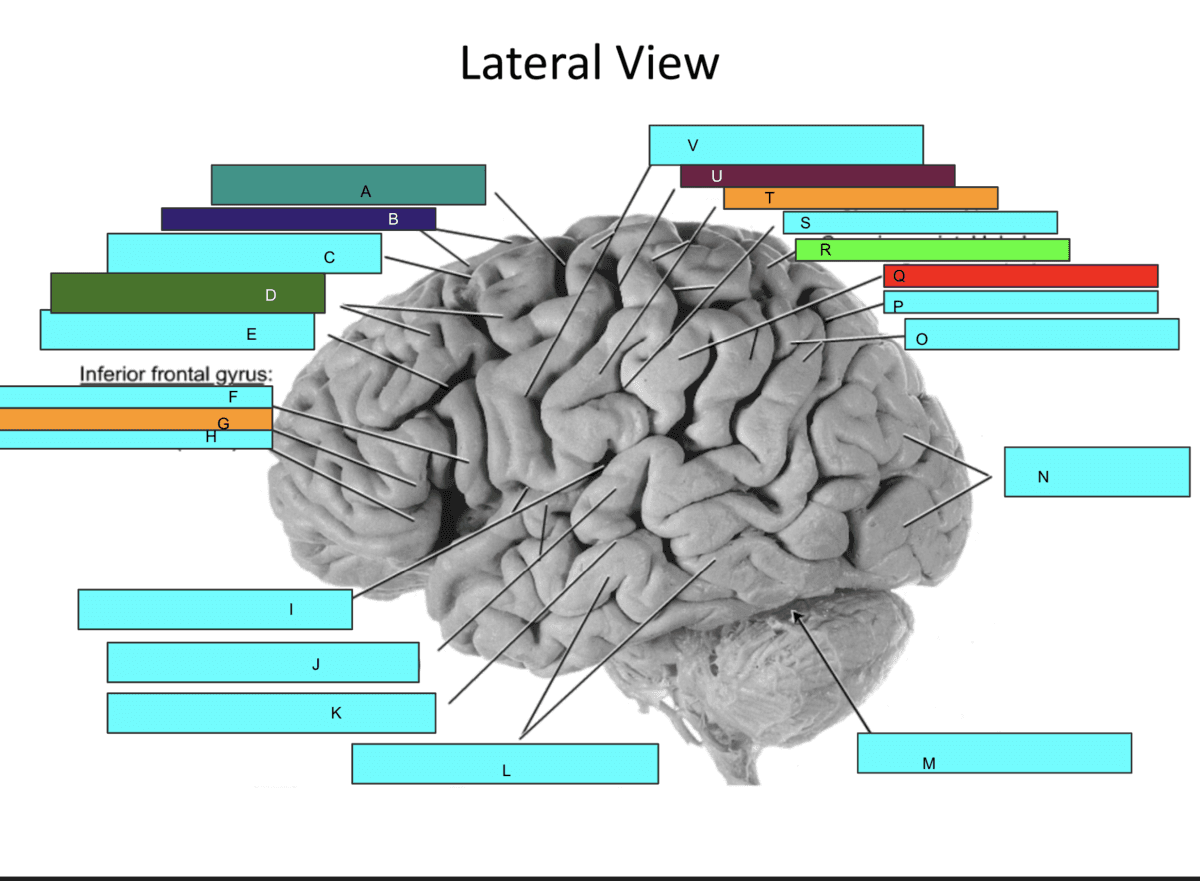
What is structure labeled C?
What is structure labeled D?
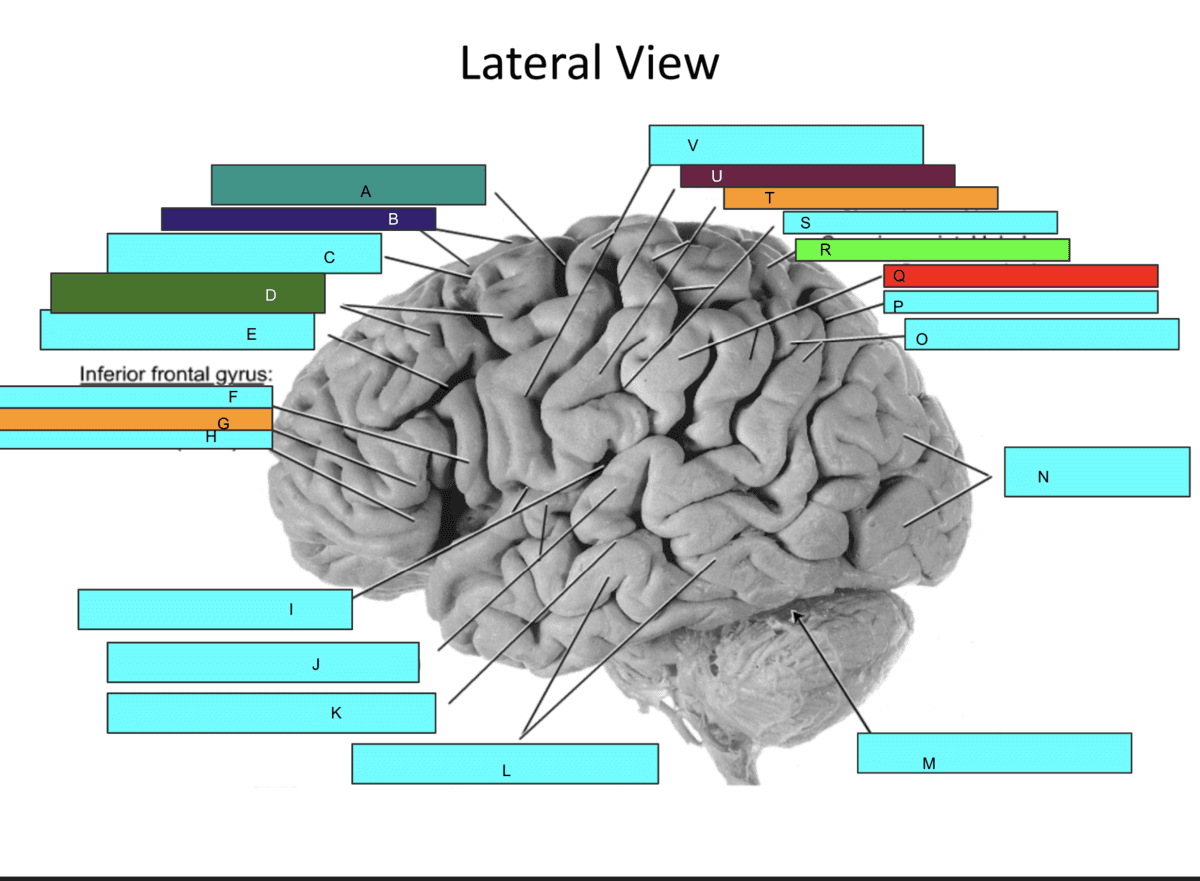
What is structure labeled E?
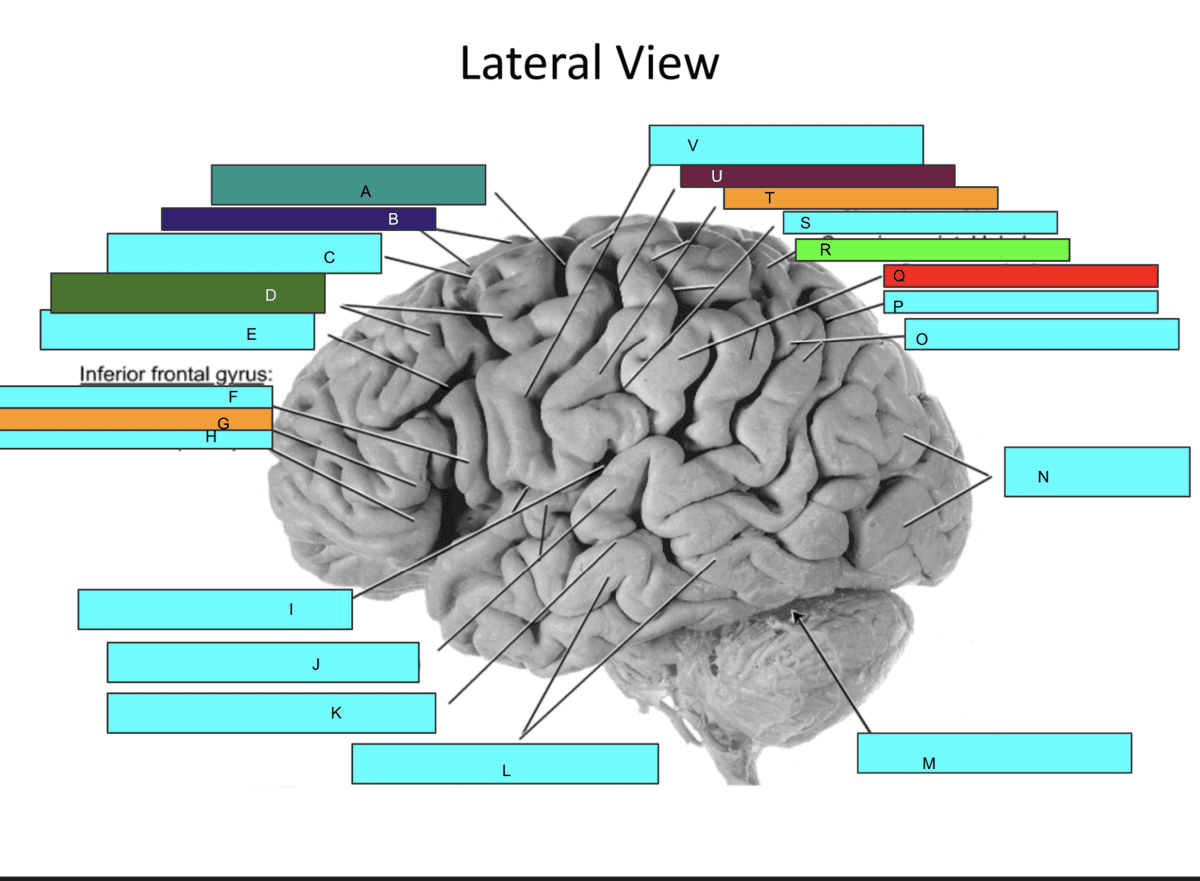
What is the structure labeled F?
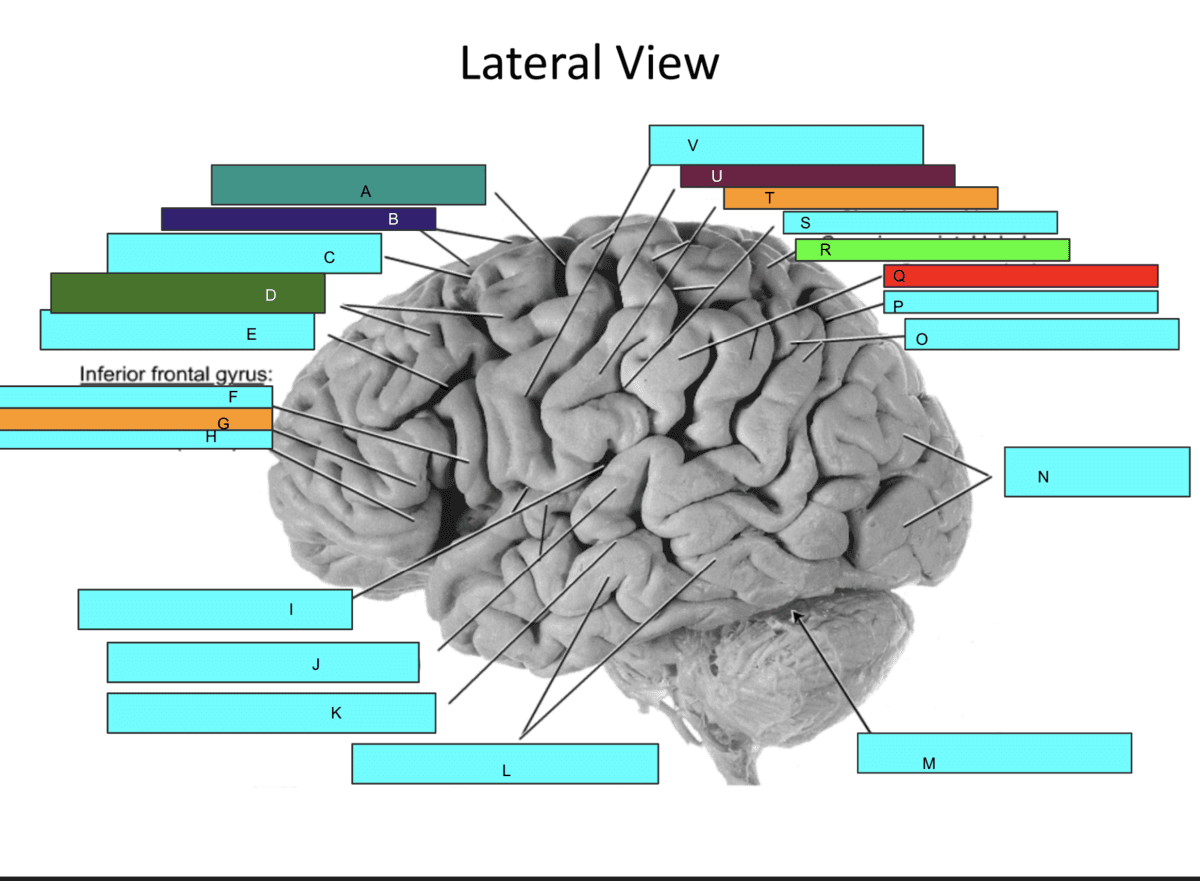
What is structure labeled G?
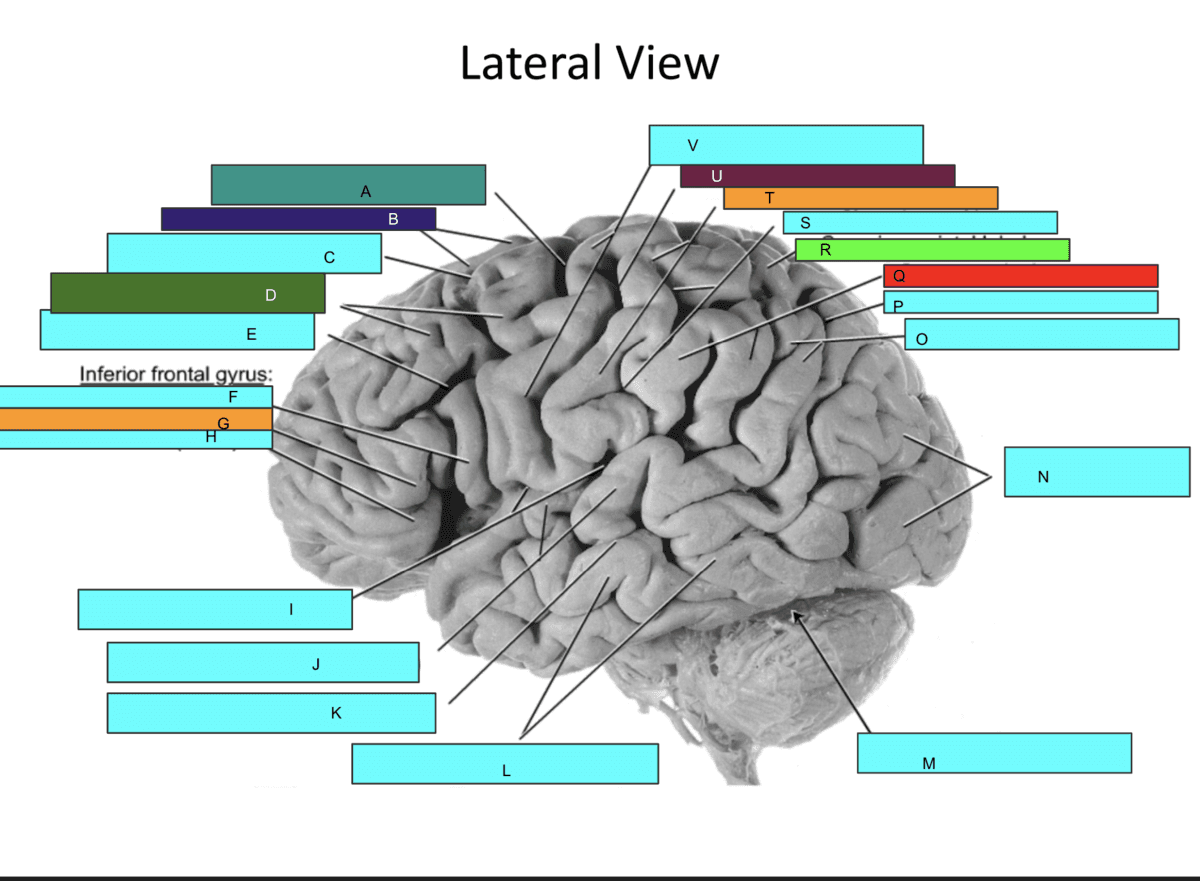
What is structure labeled H?
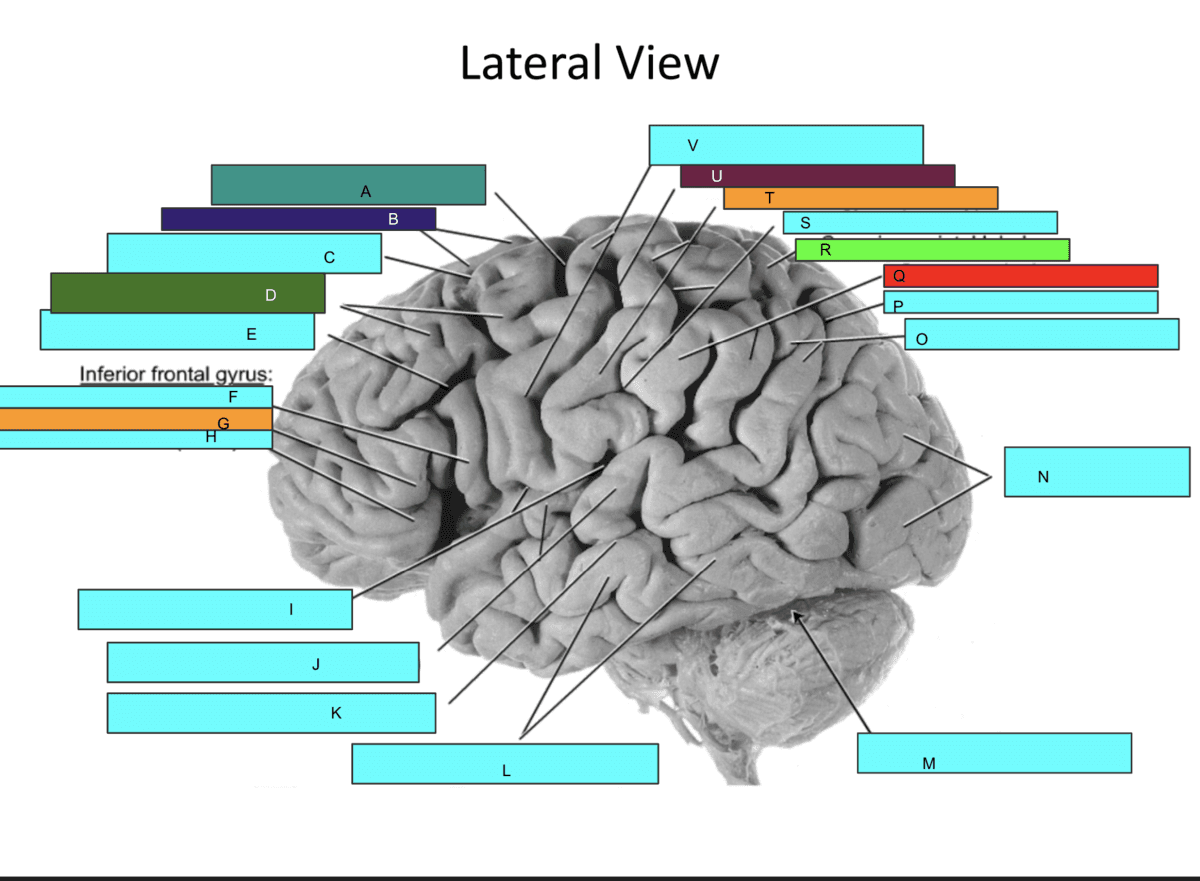
What is structure labeled I?
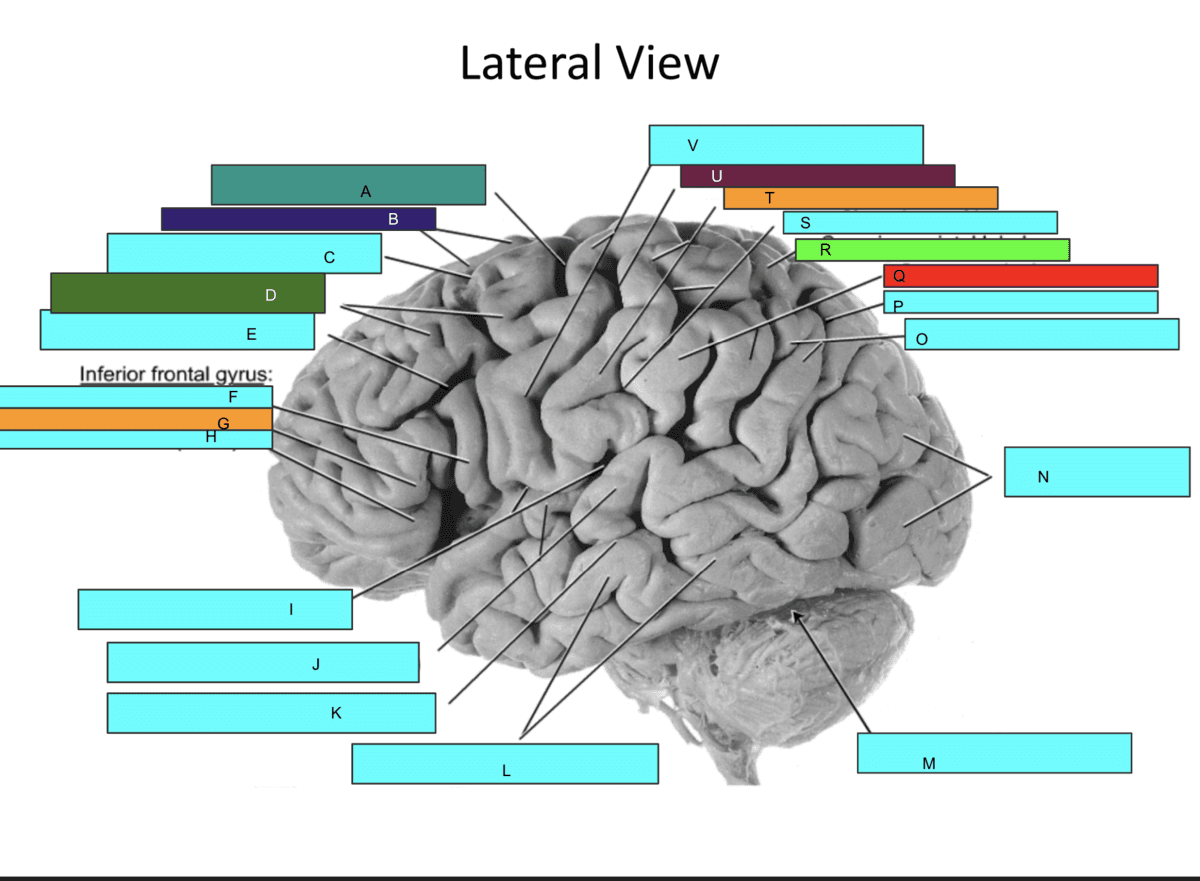
What is structure labeled J?
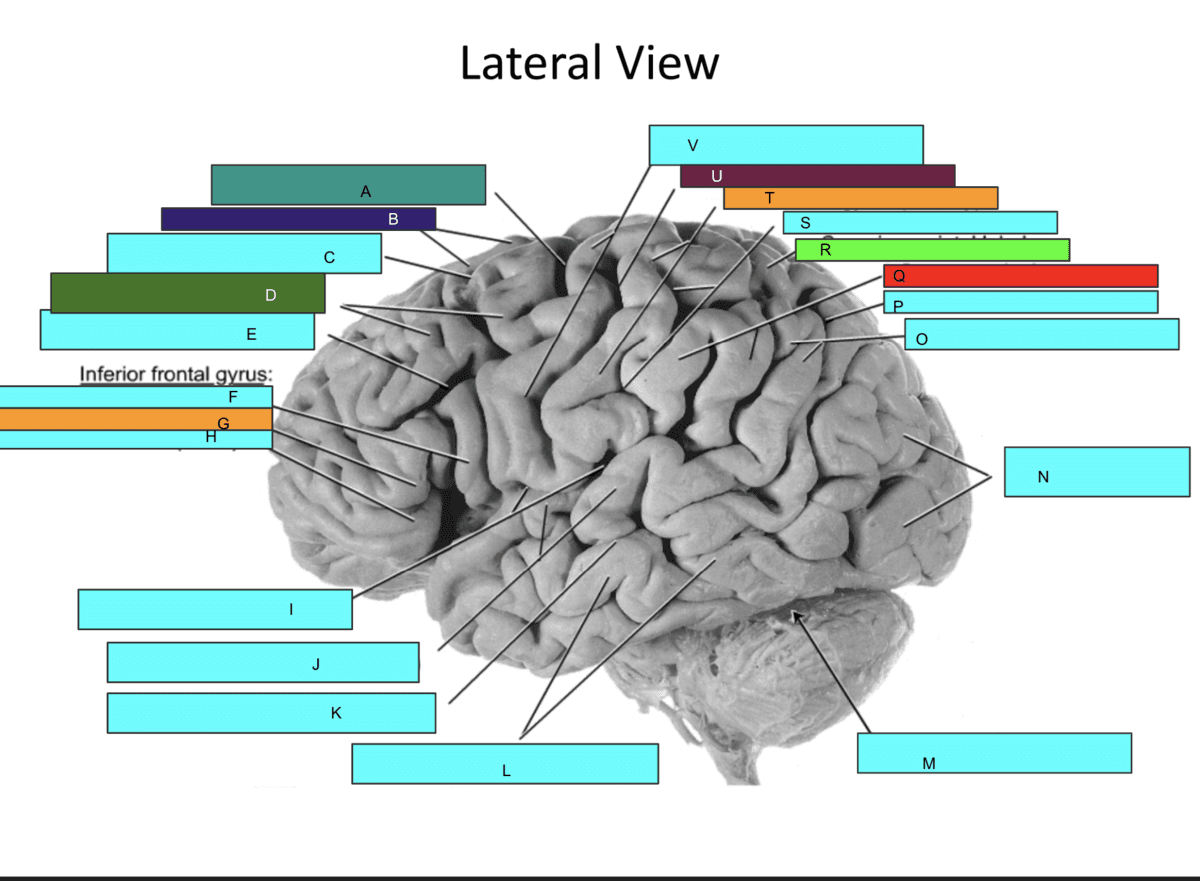
What is structure labeled K?
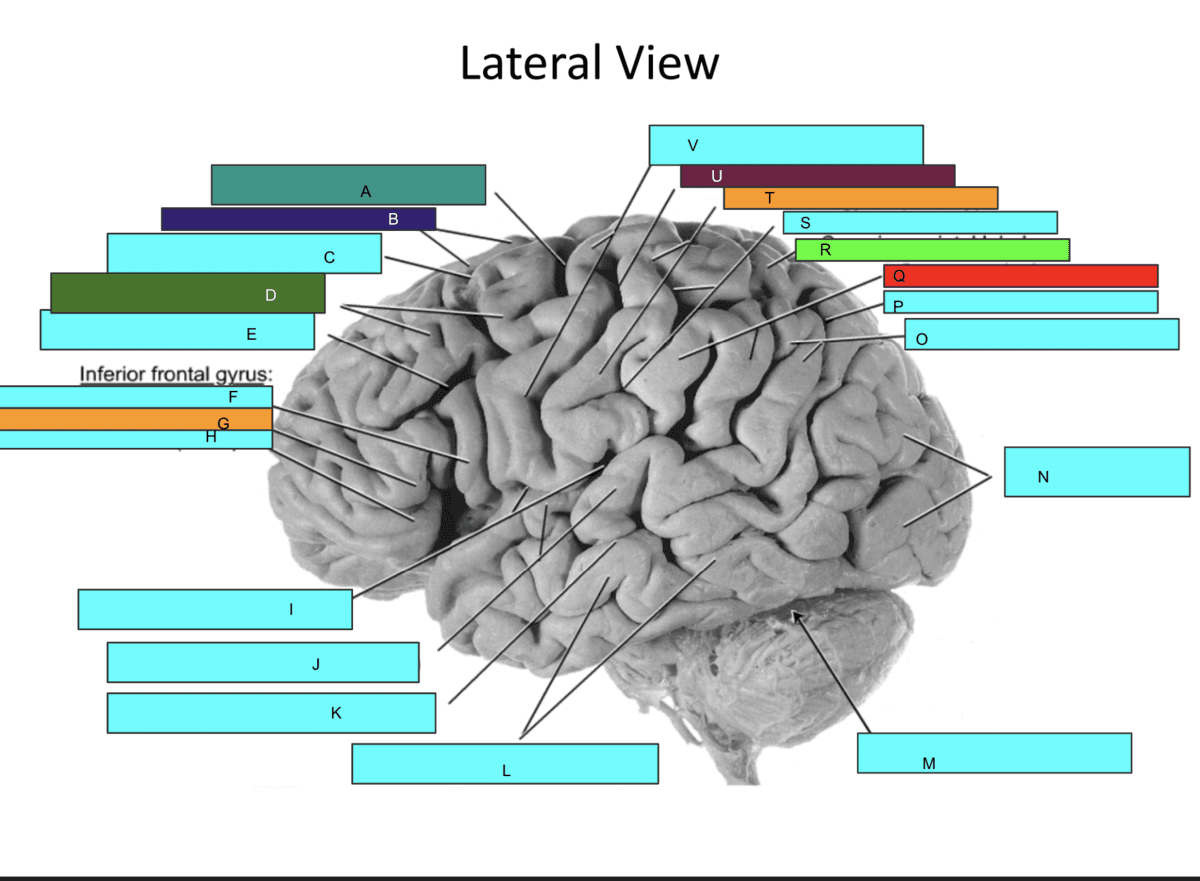
What is structure labeled L?
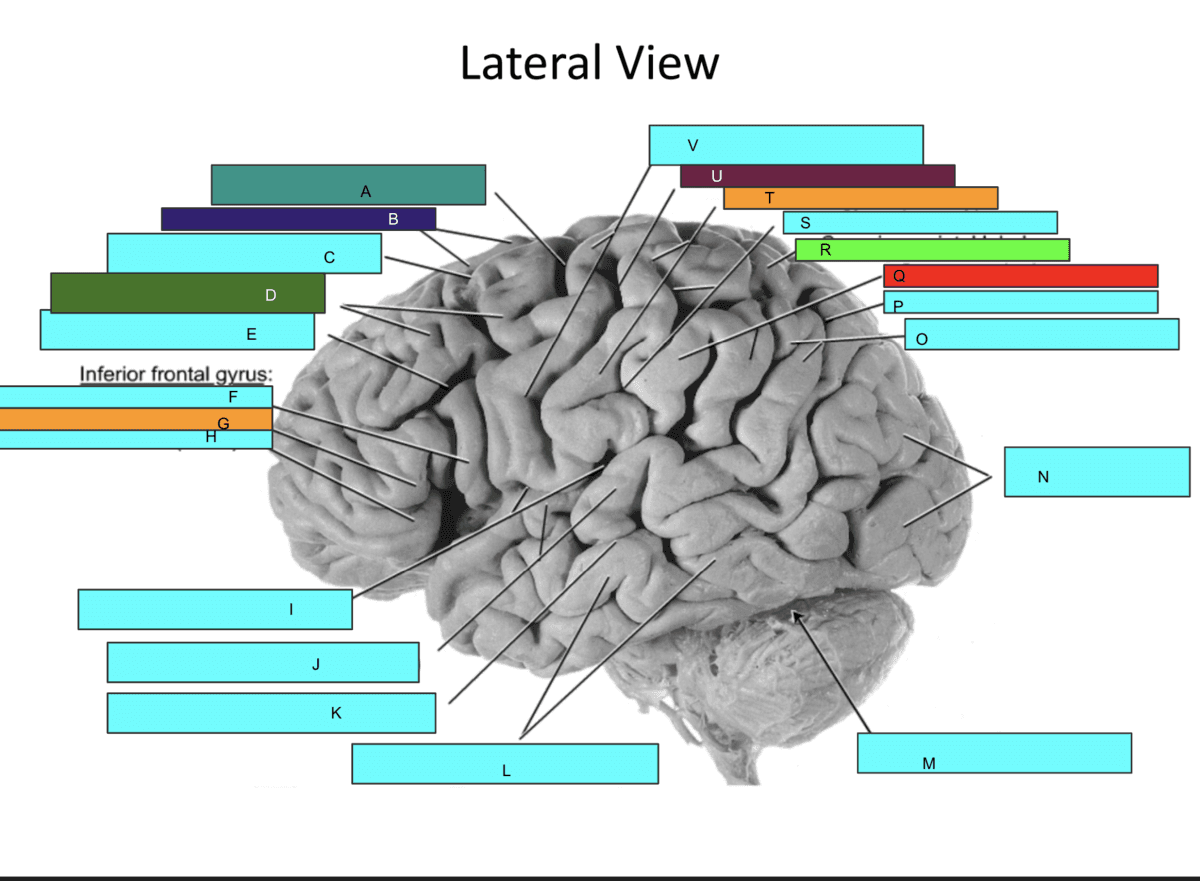
What is structure labeled M?
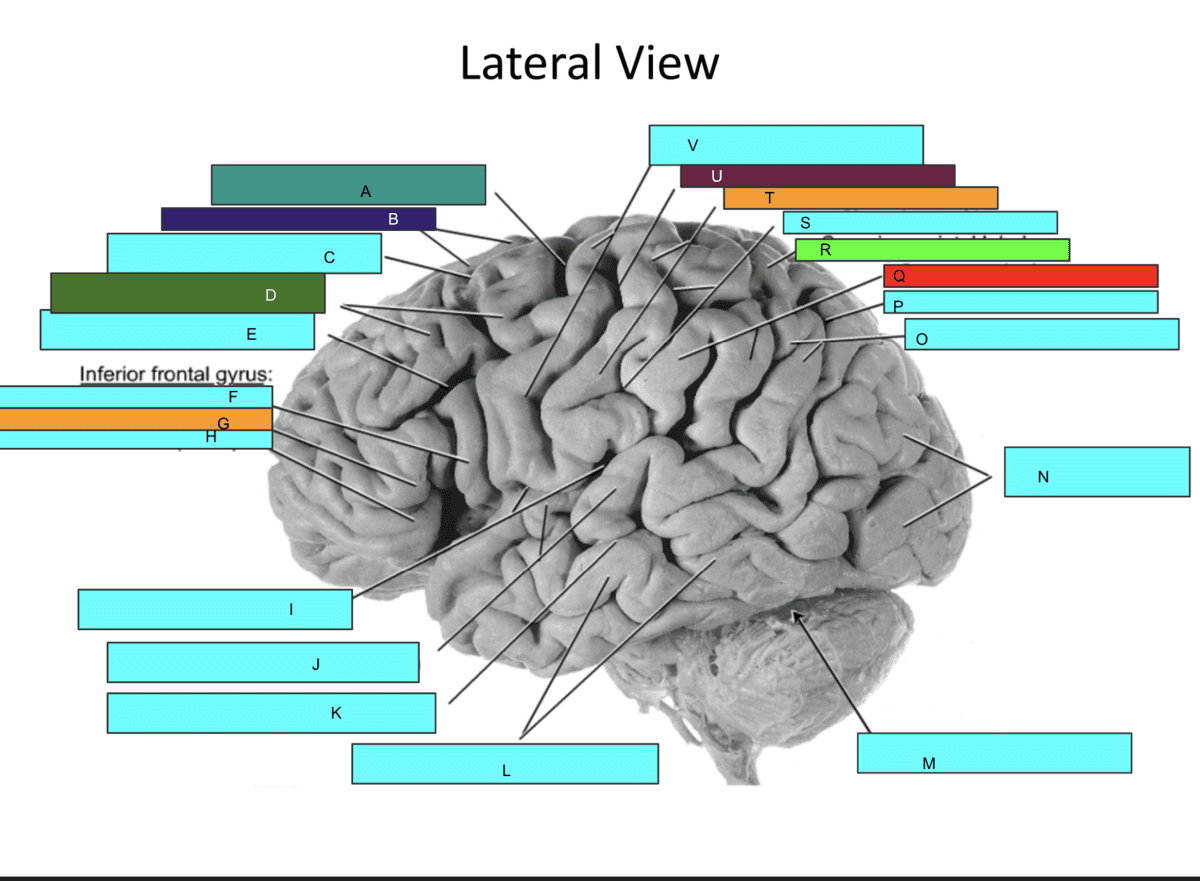
What is structure labeled N?
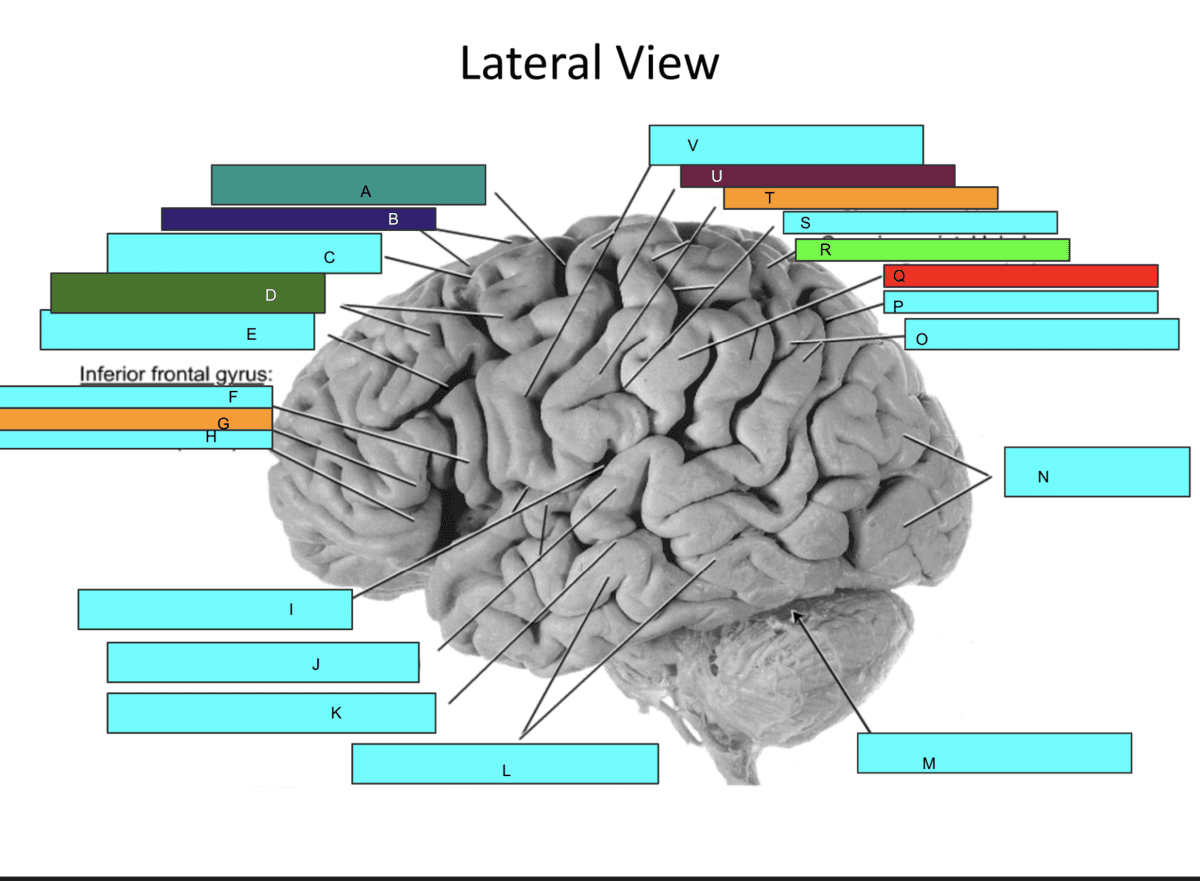
What is structure labeled O?
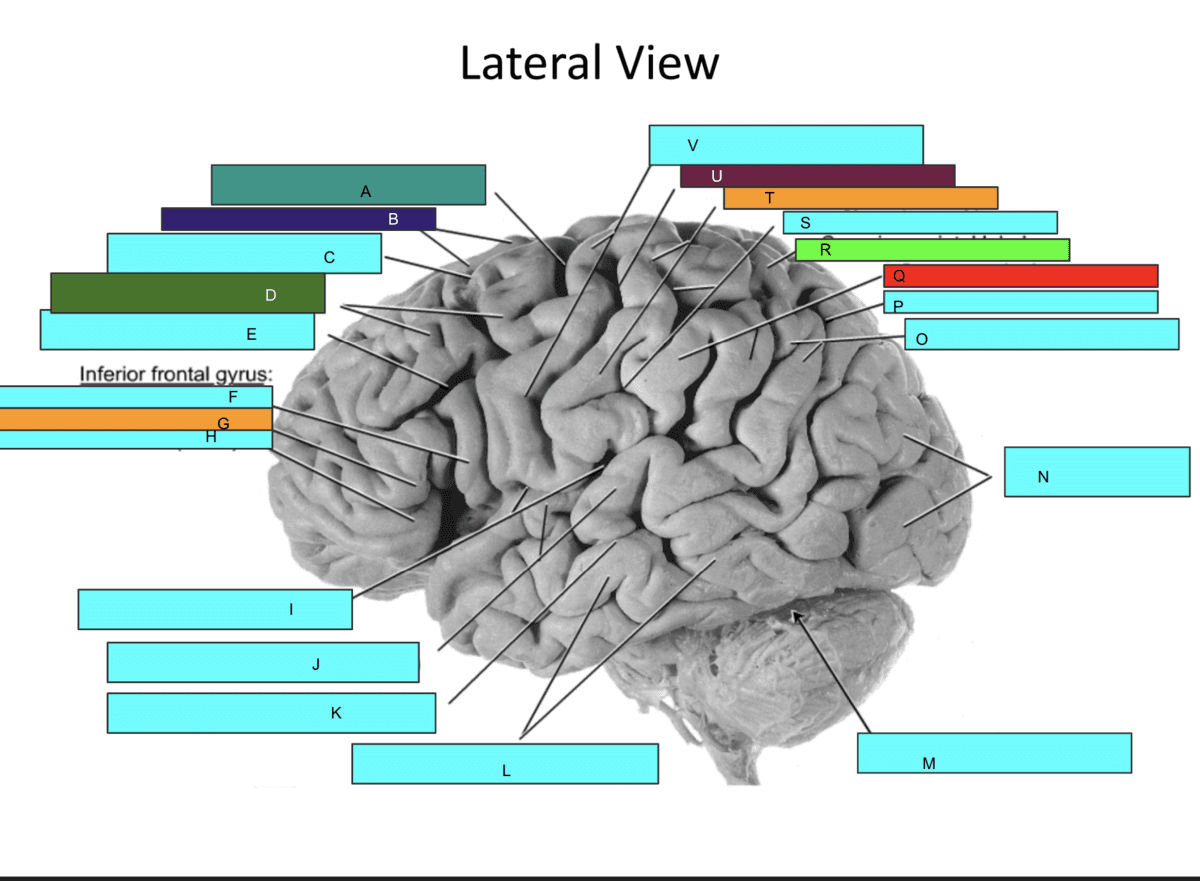
What is structure labeled P
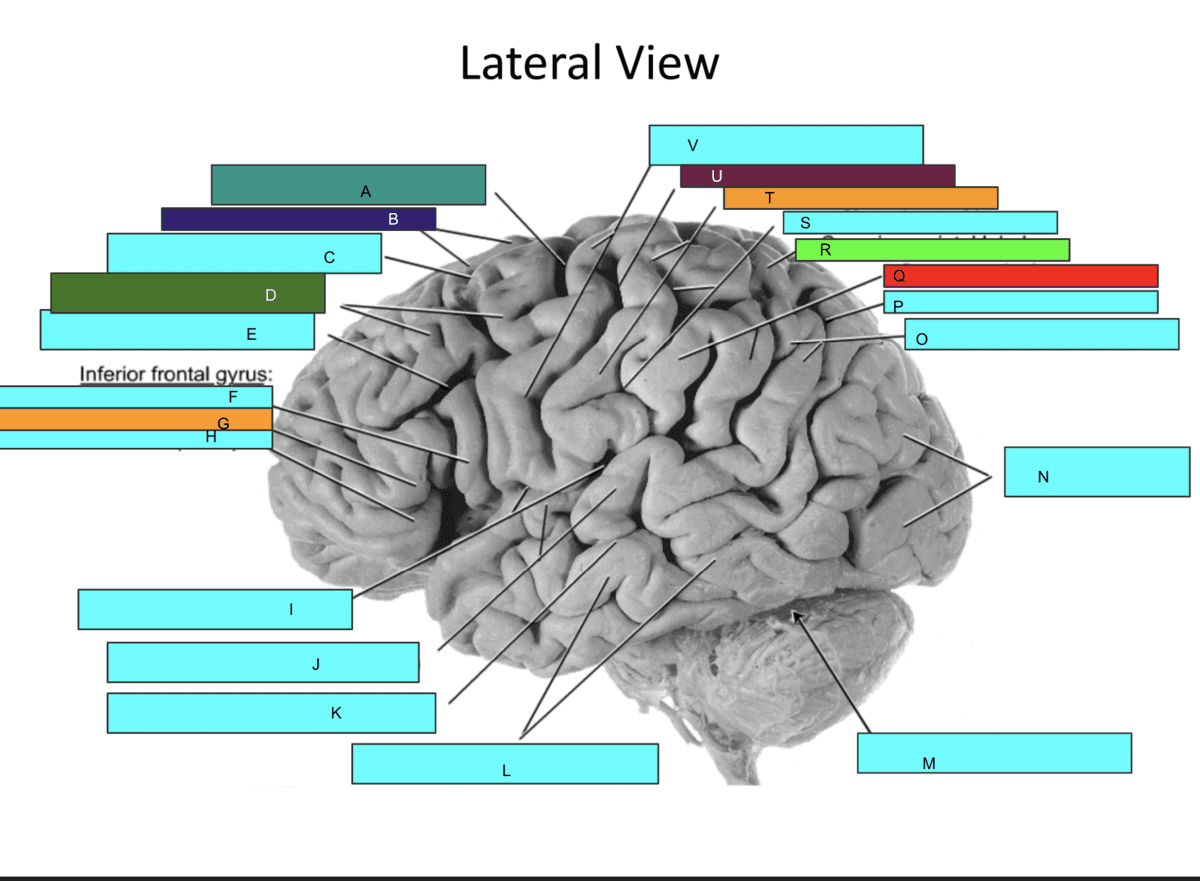
What is structure labeled Q?
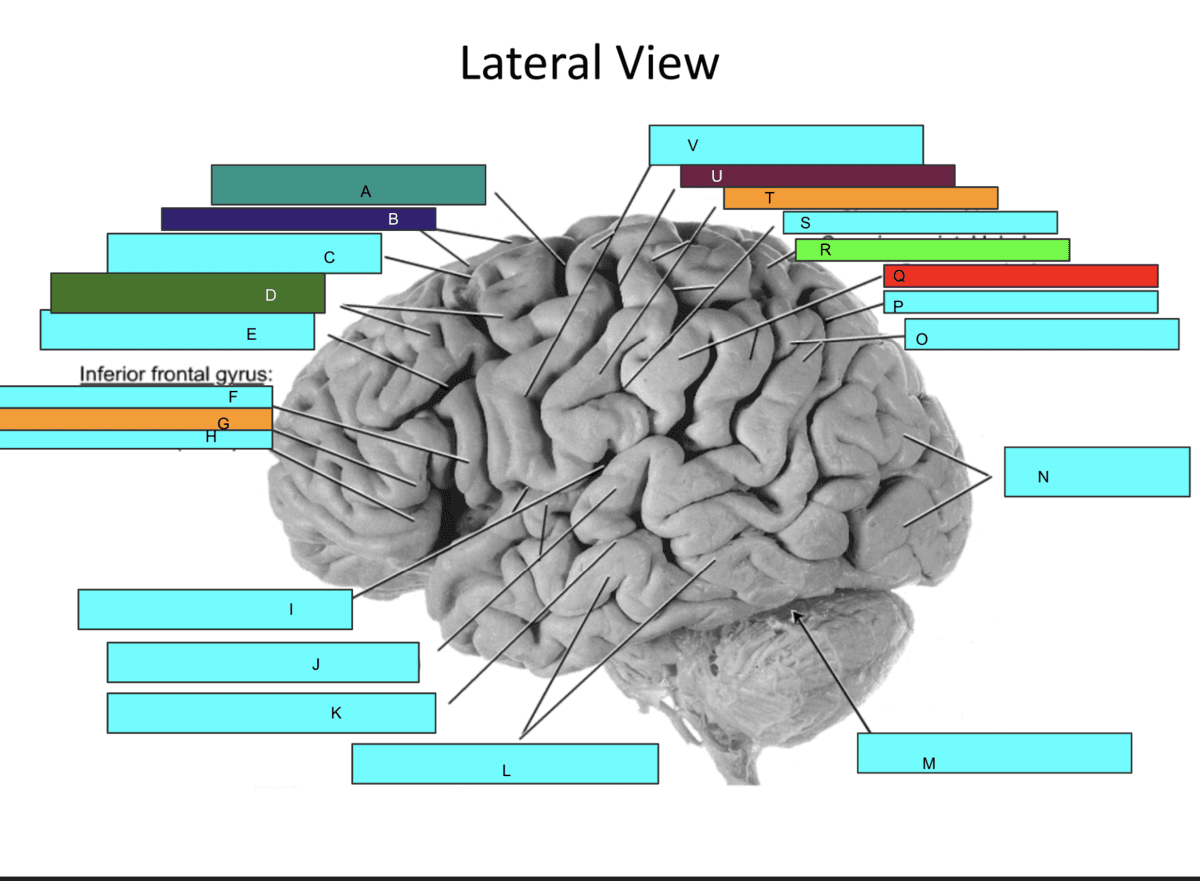
What is structure labeled R?
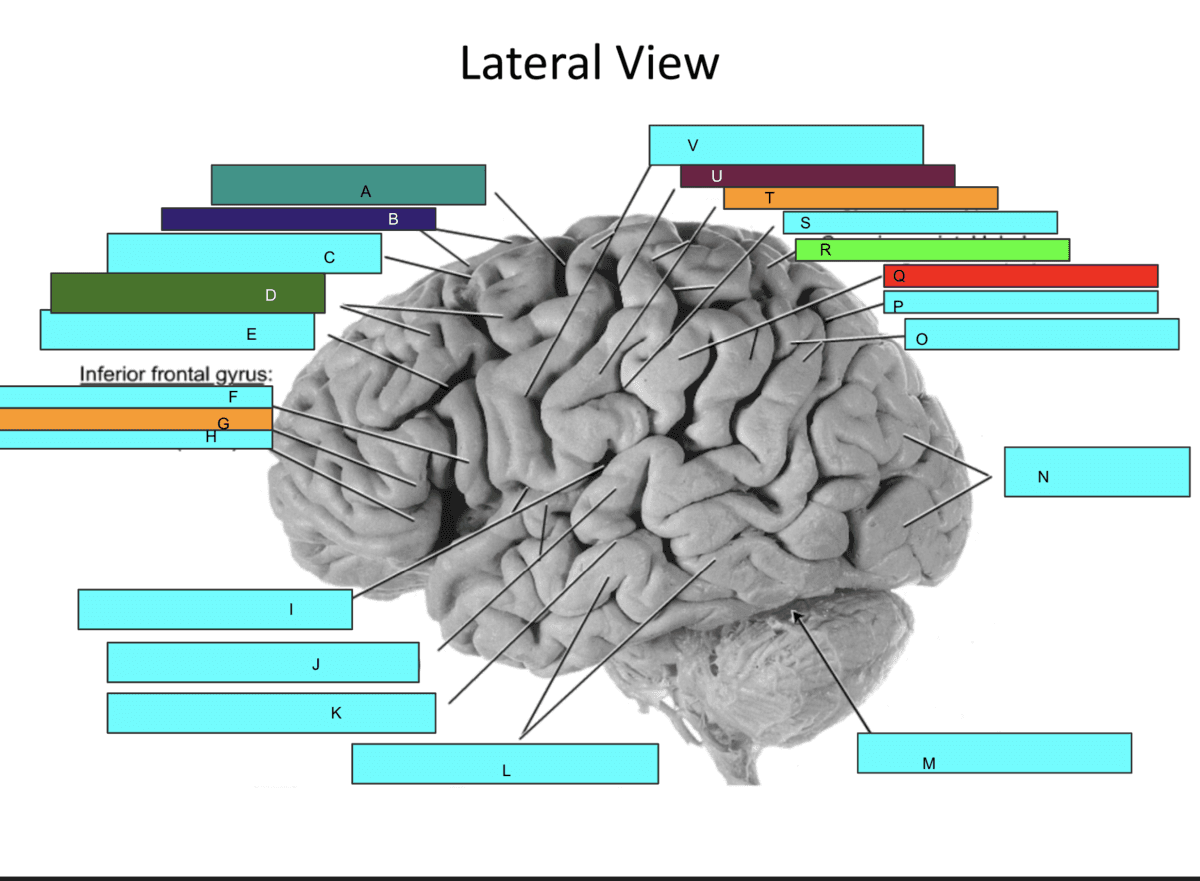
What is structure labeled S?
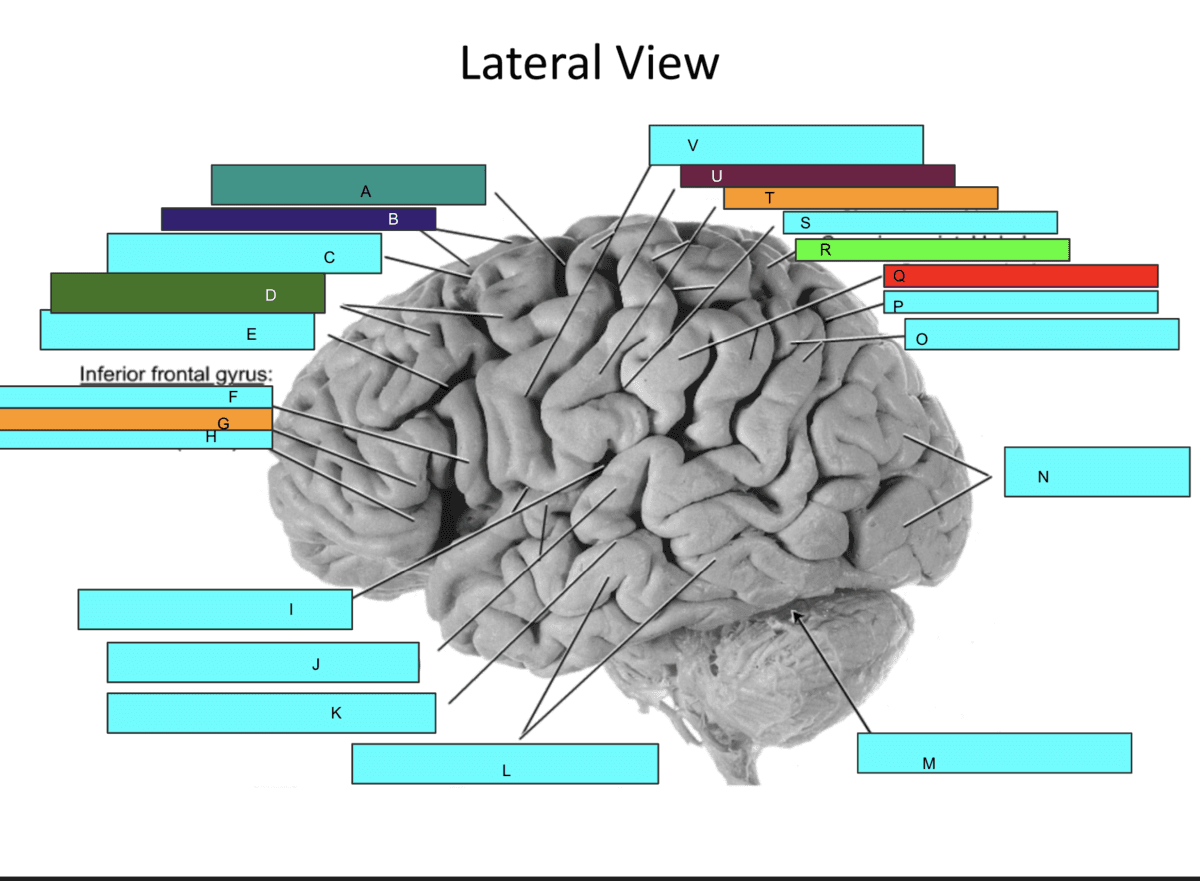
What is structure labeled T?
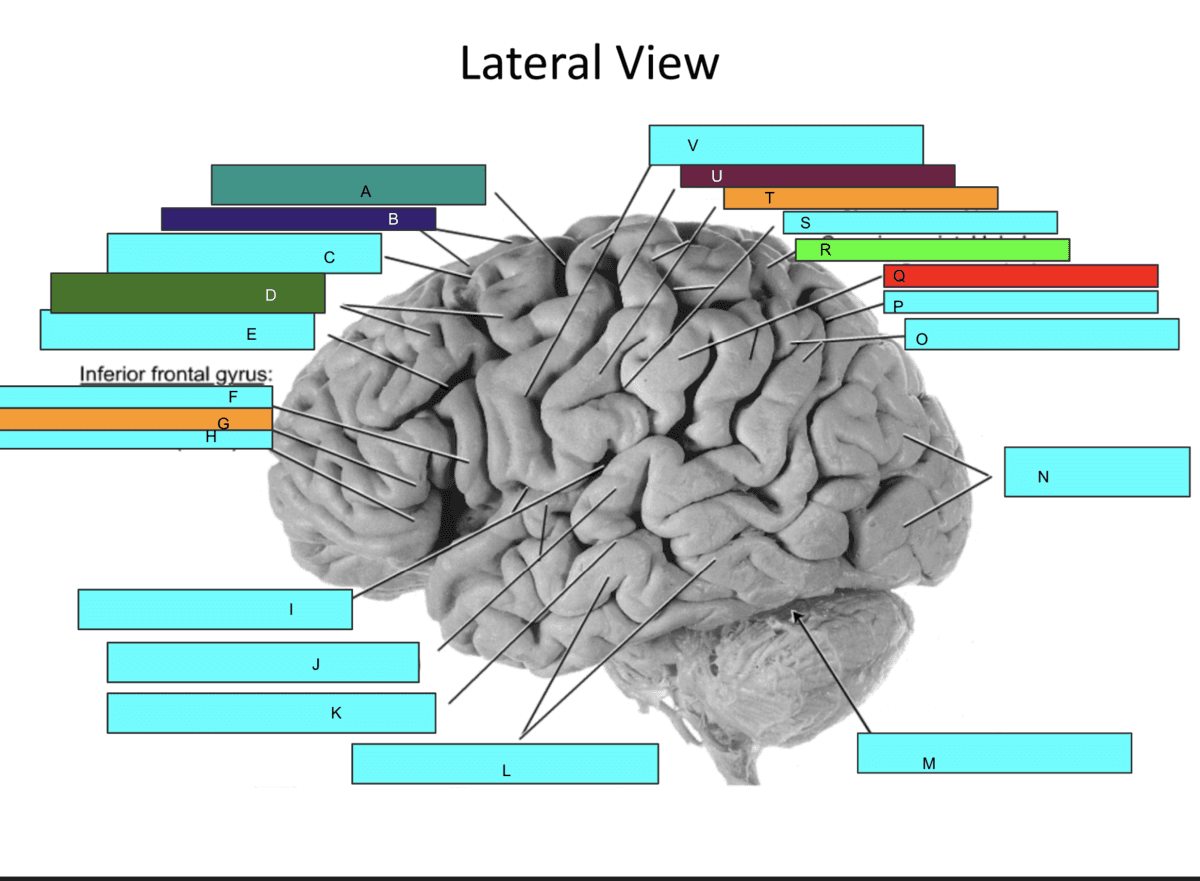
What is structure labeled U?
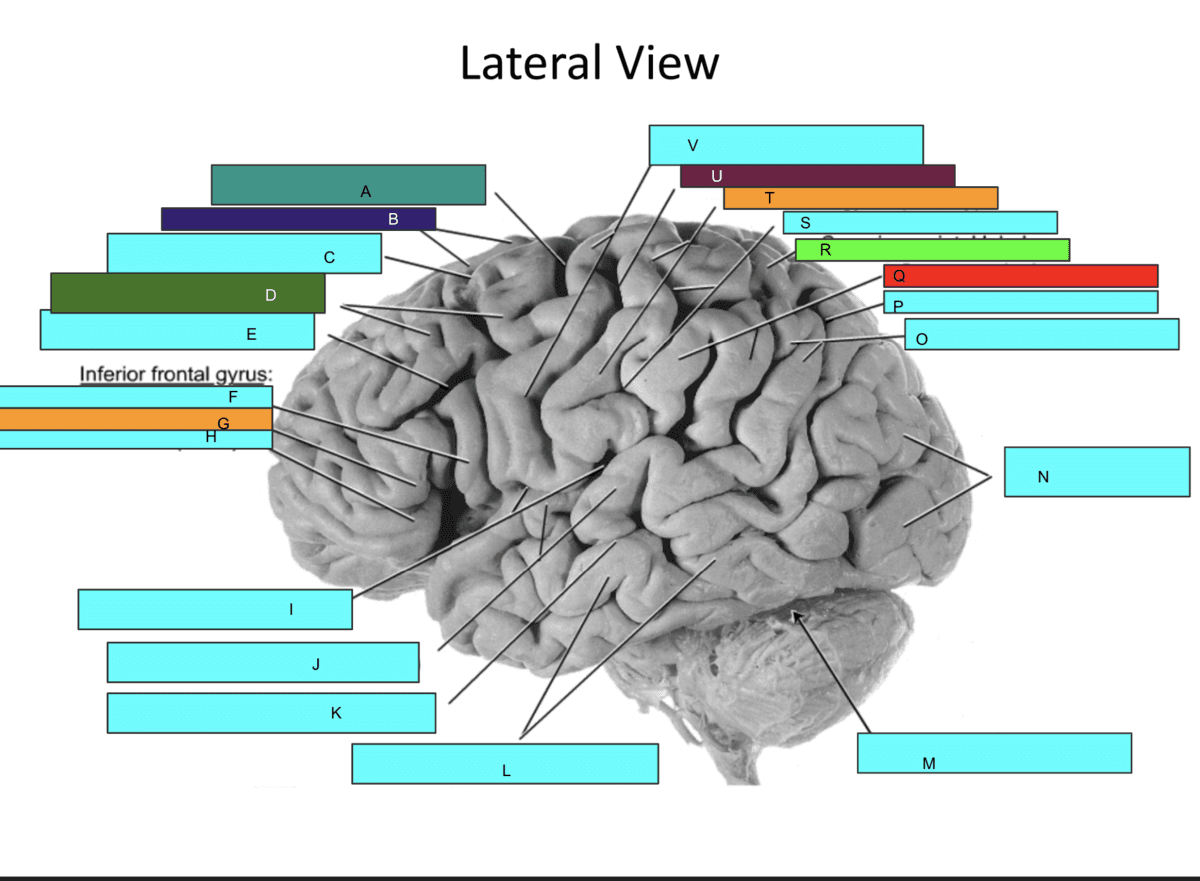
What is structure labeled V?
 Lab Practical #2: Skull Lateral ViewWhat is the relationship between faults and earthquakes? What happens to a fault when an earthquake occurs? Earthquakes occur on faults - strike-slip earthquakes occur on strike-slip faults, normal earthquakes occur on normal faults, and thrust earthquakes occur on reverse or thrust faults. When an earthquake occurs on one of these faults, the rock on one side of the fault slips with respect to the other. The fault surface can be vertical, horizontal, or at some angle to the surface of the earth. The slip direction can also be at any angle. What is a fault and what are the different types? A fault is a fracture or zone of fractures between two blocks of rock. Faults allow the blocks to move relative to each other. This movement may occur rapidly, in the form of an earthquake - or may occur slowly, in the form of creep. Faults may range in length from a few millimeters to thousands of kilometers. Most faults produce repeated displacements over geologic time. During an earthquake, the rock on one side of the fault suddenly slips with respect to the other. The fault surface can be horizontal or vertical or some arbitrary angle in between. Earth scientists use the angle of the fault with respect to the surface (known as the dip) and the direction of slip along the fault to classify faults. Faults which move along the direction of the dip plane are dip-slip faults and described as either normal or reverse (thrust), depending on their motion. Faults which move horizontally are known as strike-slip faults and are classified as either right-lateral or left-lateral. Faults which show both dip-slip and strike-slip motion are known as oblique-slip faults. The following definitions are adapted from The Earth by Press and Siever. normal fault - a dip-slip fault in which the block above the fault has moved downward relative to the block below. This type of faulting occurs in response to extension and is often observed in the Western United States Basin and Range Province and along oceanic ridge systems. Normal Fault Animation reverse (thrust) fault - a dip-slip fault in which the upper block, above the fault plane, moves up and over the lower block. This type of faulting is common in areas of compression, such as regions where one plate is being subducted under another as in Japan. When the dip angle is shallow, a reverse fault is often described as a thrust fault. Thrust Fault Animation Blind Thrust Fault Animation strike-slip fault - a fault on which the two blocks slide past one another. The San Andreas Fault is an example of a right lateral fault. Strike-slip Fault Animation A left-lateral strike-slip fault is one on which the displacement of the far block is to the left when viewed from either side. A right-lateral strike-slip fault is one on which the displacement of the far block is to the right when viewed from either side.SPANISH STUDENTS 10/22/25 In the sentence 'The author chose to juxtapose the wealthy neighborhood with the impoverished area to highlight social inequality,' what does 'juxtapose' most likely mean based on context clues? * 1 point to separate completely to describe in detail to criticize harshly to place side by side for comparison When reading 'This paradox confused everyone: the more he tried to save time, the less time he seemed to have,' what can you infer about a paradox? * 1 point a mathematical equation a simple solution a type of poem a contradictory statement that reveals truth The passage states: 'The author's use of symbolism was evident when the broken mirror represented the character's shattered dreams.' Based on this context, symbolism involves: * 1 point using objects to represent deeper meanings creating rhyming patterns writing in chronological order using literal descriptions only In the text 'Please elaborate on your answer by providing specific examples and detailed explanations,' the word 'elaborate' suggests the need to: * 1 point use simpler words change the topic add more detail make it shorter The critic wrote: 'The actor's performance captured every nuance of emotion, from subtle sadness to barely contained rage.' What does 'nuance' refer to in this context? * 1 point subtle variations in meaning simple emotions loud expressions obvious differences When the text says 'The implication of her silence was clear to everyone in the room, though she never spoke a word,' what does 'implication' mean? * 1 point a command given a direct statement a question asked a conclusion drawn indirectly The scientist stated: 'Based on our limited observations, our hypothesis suggests that plants grow faster with classical music.' What is a hypothesis? * 1 point a type of experiment a proven fact a final conclusion a possible explanation needing more evidence In 'Three witnesses were able to corroborate the defendant's alibi, strengthening his case significantly,' the word 'corroborate' most likely means: * 1 point to question or doubt to confirm or support to change the story to ignore completely The passage reads: 'The student needed to justify her controversial thesis with solid evidence and logical reasoning.' What does 'justify' mean here? * 1 point to make it longer to make excuses for to avoid explaining to prove something is reasonable When the text states 'The researcher was able to synthesize information from five different studies to create a comprehensive theory,' what does 'synthesize' involve? * 1 point copying one source exactly combining multiple sources to create something new rejecting all previous research focusing on only one idea When a reader encounters 'The symbolism in the novel was complex, with the recurring image of doors representing new opportunities throughout the story,' they should: * 1 point memorize all symbols skip symbolic passages look for deeper representational meanings focus only on the literal meaning If a teacher says 'Your essay needs more elaboration - expand on your main points with examples and analysis,' what critical thinking skill is being requested? * 1 point developing ideas with supporting details summarizing briefly using fewer examples changing the topic entirely In the passage 'The dark clouds gathering on the horizon seemed to foreshadow the troubles that would soon befall the village,' what literary technique is being demonstrated? * 1 point The author is using environmental details to hint at future plot developments The author is focusing on realistic weather descriptions The author is using weather to predict actual meteorological events The author is describing a coincidental weather pattern When analyzing 'Sarah knew the antagonist in her favorite novel wasn't just evil—he represented the fear of change that many people experience,' what deeper understanding about antagonists is revealed? * 1 point Antagonists are always completely evil characters Antagonists can represent abstract concepts or human struggles Antagonists must be human characters Antagonists only exist to create action scenes In the sentence 'The protagonist's journey wasn't just about reaching the destination—it was about discovering who she truly was,' what does this suggest about effective protagonists? * 1 point Protagonists must always succeed in their missions Protagonists should remain unchanged throughout the story Protagonists undergo both external and internal development Protagonists should focus only on external goals When the text states 'The word 'home' carried different connotations for each character—warmth and safety for some, confinement and obligation for others,' what critical reading skill is being highlighted? * 1 point Memorizing dictionary definitions Understanding that words have only one correct meaning Identifying grammatical structures Recognizing that word meanings can vary based on personal experience In 'While the denotation of 'snake' is simply a reptile, the author's use of it to describe the character suggests something far more sinister,' what analytical skill is required? * 1 point Understanding reptile biology Memorizing animal classifications Distinguishing between literal and figurative meanings Identifying sentence structure When examining 'The author's tone shifted from hopeful in the opening chapters to increasingly cynical as the story progressed,' what does this reveal about sophisticated writing? * 1 point Tone is unimportant in storytelling Tone changes reflect the author's developing attitude toward the subject Only the ending tone matters Authors should maintain the same tone throughout In analyzing 'The theme of the novel wasn't stated directly but emerged through the characters' repeated struggles with moral choices,' what does this demonstrate about themes? * 1 point Themes develop through patterns in the narrative Themes are only found in the conclusion Themes should always be explicitly stated Themes must be simple moral lessons When the passage reads 'From the character's nervous glances and hesitant speech, readers can infer that she's hiding something important,' what critical thinking process is being described? * 1 point Following explicit plot statements Memorizing character descriptions Making random guesses about character motivations Using textual evidence to draw logical conclusions In 'The ending was deliberately ambiguous, allowing readers to decide whether the character's actions were heroic or selfish,' what does this suggest about sophisticated literature? * 1 point Good stories always have clear, definitive endings Unclear endings indicate poor writing Ambiguity can enhance reader engagement and interpretation Authors should avoid confusing readers When analyzing 'The controversial decision to ban the book sparked debates about censorship versus protecting young readers,' what critical thinking skill is most important? * 1 point Choosing one side immediately Examining multiple perspectives before forming an opinion Avoiding difficult topics entirely Following popular opinion In 'Each character's perspective on the same event revealed how personal experiences shape our understanding of truth,' what deeper concept is being explored? * 1 point All perspectives are equally valid Perspective is unimportant in understanding events There is only one correct way to view any situation Personal background influences how we interpret events When the text states 'The community proved resilient, rebuilding not just their homes but their hope after the disaster,' what does this reveal about the concept of resilience? * 1 point Resilience encompasses both practical and emotional recovery Resilience is an innate trait that cannot be developed Resilience means avoiding all difficulties Resilience only involves physical recovery In analyzing 'The author's portrayal of the character's empathy—her ability to understand her enemy's pain even while fighting him—added complexity to the conflict,' what does this suggest about empathy? * 1 point Empathy means agreeing with everyone Empathy makes people weak in conflicts Empathy should be avoided in difficult situations Empathy can coexist with opposition and create moral complexity When examining 'The character's integrity was tested when telling the truth would hurt people she loved,' what does this reveal about integrity? * 1 point Integrity means always following rules regardless of consequences Integrity means never causing any harm to others Integrity is only important in public situations Integrity involves making difficult moral choices even when costly In 'The student learned to advocate for her ideas by presenting evidence rather than just stating opinions,' what critical skill is being developed? * 1 point Supporting positions with logical reasoning and evidence Avoiding controversial topics entirely Learning to argue loudly and persistently Always agreeing with authority figures If you rewrote a scene from 'The Birchbark House' from Omakayas's grandmother's first-person perspective instead of Omakayas's, how would this most likely change the reader's understanding? * 1 point Nothing would change since they're both female characters The language would become more formal and difficult The story would become less interesting because adults are boring Readers would gain wisdom from experience but lose the innocence of childhood discovery In a plot diagram, the rising action serves which critical purpose beyond simply building toward the climax? * 1 point To provide background information about the setting To confuse readers so the ending is surprising To develop character relationships and establish stakes that make the climax meaningful To make the story longer and more detailed When analyzing the falling action in 'The Birchbark House,' which element would be most important to consider when writing an alternate version? * 1 point Whether the consequences of the climax align with the new direction you want the story to take Making sure it's shorter than the rising action Including a moral lesson for readers How quickly the conflicts get resolved In the exposition of a story, conflict serves which essential function that many readers don't realize? * 1 point To immediately grab attention with action scenes To provide comic relief before serious events To show off the author's writing skills To establish what the characters characterization/personality, which determines what they' must learn to overcome as they face more problemsAuteur Theory is a way of looking at films that state that the director is the “author” of a film. A film is a reflection of the director’s artistic vision; so, a movie directed by a given filmmaker will have recognizable, recurring themes and visual queues that inform the audience who the director is (think a Hitchcock or Tarantino film) and shows a consistent artistic identity throughout that director’s filmography. The 3 Components of Auteur Theory Andrew Sarris, film critic for The New York Times, expanded on Truffaut’s writing and set out a more comprehensive definition for auteurs according to three main criteria: technical competence, distinguishable personality, and interior meaning. 1. Technical competence: Auteurs must be at the top of their craft in terms of technical filmmaking abilities. Auteurs always have a hand in multiple components of filmmaking and should be operating at a high level across the board. 2. Distinguishable personality: What separates auteurs from other technically gifted directors is their unmistakable personality and style. When looking at an auteur’s collected works, you can generally see shared filming techniques and consistent themes being explored. One of the primary tenets of auteur theory is that auteurs make movies that are unmistakably theirs. This is in sharp contrast with the standard studio directors of the era who were simply translating script to screen with little interrogation of the source material or editorial input. 3. Interior meaning: Auteurs make films that have layers of meaning and have more to say about the human condition. Films made by auteurs go beyond the pure entertainment-oriented spectacles produced by large studios, to instead reveal the filmmakers unique perspectives and ruminations on life. https://www.masterclass.com/articles/film-101-what-is-an-auteur#3ClNjwO6Gkgjd8ix2Cm5qI Who is the author of a TV program? It seems like it ought to be an easy question to answer, but it is not. There are, of course, scriptwriters, who are the literal authors of episodes in the sense of generating words that an actor eventually speaks, but in a soap opera or a sitcom there may be a dozen or more scriptwriters working on dialogue as the months go by. Is any one of them truly responsible for the overall tenor of the show, or are they just following rigid guidelines set down by other scriptwriters ahead of them? And the script is just the blueprint of an episode anyway. Actors, production designers, directors, videographers, editors, and on and on, are all necessary to construct an episode from that blueprint. Should we call one of them the author? And, at a more basic level, should we even bother looking for authors in television? Do viewers need to know who created a program in order to enjoy it? What does it add to our appreciation or understanding of television if we assign authorship of a program to an individual? In the closely related medium of the cinema, questions such as these have been answered by the auteur theory, which stems from the French word for “author,” auteur. Its basic precept is that a single individual is, and should be, the “author” of a work in order for it to be a good, artistically valuable work. A book, poem, film, or television show should express this individual’s personality, his “vision” (the masculine pronoun is significant; auteurist studies almost all focus on men). This notion stems from the nineteenth-century Romantic image of the author as a figure who sits alone in a dingy room, scratching out angst-ridden poems with a quill pen. The tormented, misunderstood author or artist is a cherished character type that can be traced back to the poet Lord Byron (1788–1824) and observed in numerous portrayals of demented painters, musicians, and writers in television programs and other media. Consider this: Have you ever seen or read a story about a creative person who wasn’t somehow strange or crazy? The auteur theory originated in French film criticism of the 1950s, where it was initially theorized that auteurs could be drawn from the ranks of producers, directors, scriptwriters, actors, and other filmmaking personnel.1 However, the vast bulk of auteurist film criticism has been about directors: Alfred Hitchcock, John Ford, and Quentin Tarantino, among many others.lateral thinking Lateral ceph reviewLateral and Total SA - Practice QuizLateral area and total area of cube