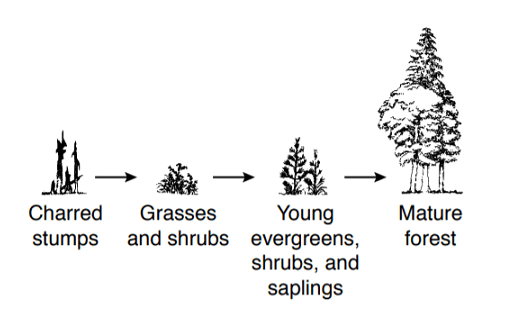
The environment may be altered through the activities of organisms. Alterations are sometimes abrupt. Some species may replace others over time, resulting in long- term gradual changes (ecological succession).
Track each student's skills and progress in your Mastery dashboards
Give this quiz to my class
Q 1/7
Score 0
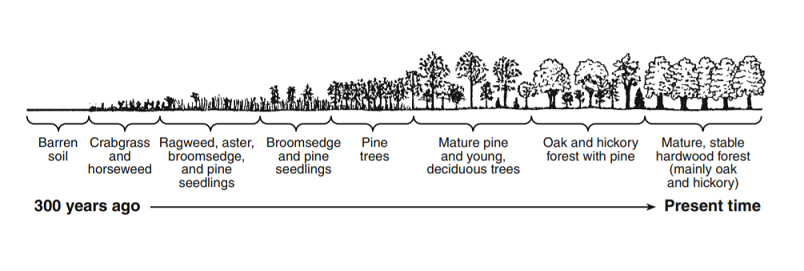
The diagram below shows how a plant community changed over 300 years.
Which process caused the gradual changes shown in this plant community?
60
urban growth
ecological succession
environmental pollution
global warming
Q 2/7
Score 0
60
7 questions
Q.
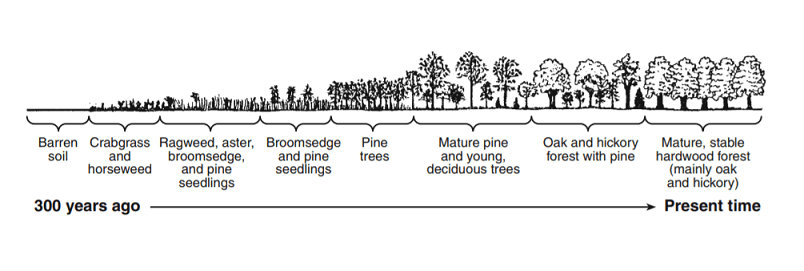
The diagram below shows how a plant community changed over 300 years.
Which process caused the gradual changes shown in this plant community?
1
60 sec
LE7.2b
Q.
2
60 sec
LE7.2b
Q.
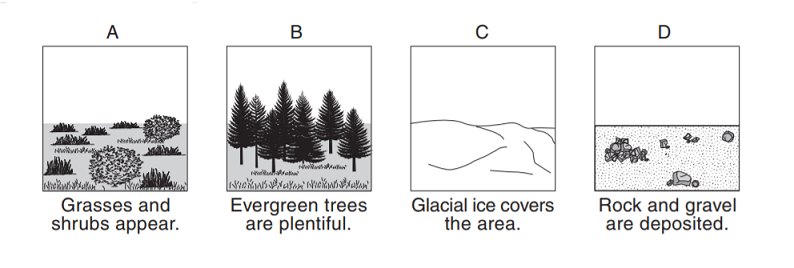
The diagrams below represent the same location over a period of many years.
The sequence of diagrams best shows that, over time.
3
60 sec
LE7.2b
Q.
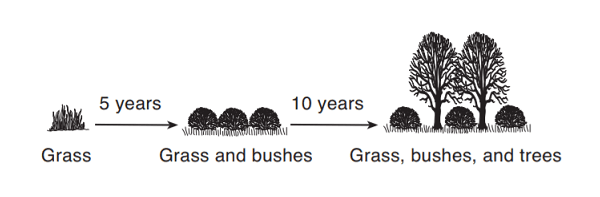
The diagram below represents changes in the main types of plant species found in a specific area over a
15-year period.
Which process is represented in the diagram?
4
60 sec
LE7.2b
Q.
The sequence of diagrams below represents the
plants present in the same area at different times
over a 200-year period following a forest fire.
Which process is best represented by this
sequence of diagrams?
5
60 sec
LE7.2b
Q.
In 1865, a pond was surrounded by open fi elds.
Today, the same area is swampy and surrounded
by a forest. Which process is responsible for this
change?
6
60 sec
LE7.2b
Q.
The diagram below represents changes in the types of plants growing in the same area during four different time periods. Different types of plants have been labeled for each time period.
This change in plant types over time is an example of