Loading...


Manger : les aliments et le vocabulaire associé
Quiz by Julia Turqueti
Customize this quiz to suit your class
Instantly translate to 100+ languages
Tag the questions with any skills you have. Your dashboard will track each student's mastery of each skill.
Give this quiz to my class
C'est ...

Une carotte
Un concombre
Une pomme de terre
Une tomate
C'est ...
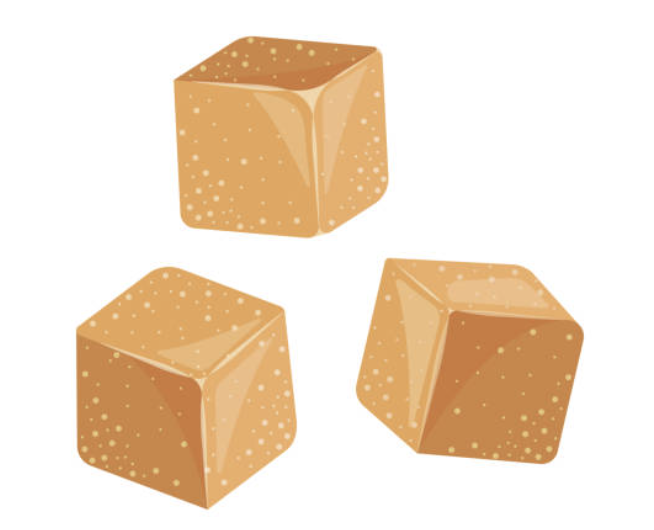
sugre
sucre
sougre
soucre
C'est ...

C'est ...

C'est

J'aime manger de la .....
C'est ....
Je (cuisiner) des légumes.
Nous (préparer) une omelette.
Ils (verser) la farine dans le bol.
C'est...
Je (cuisiner) toujours avec de l'huile d'olive.
Le vieillissement est l’ensemble des processus physiologiques et psychologiques qui modifient la structure et les fonctions de l’organisme à partir de l’âge mûr. Il résulte des effets combinés de facteurs génétiques et environnementaux auxquels est soumis l’organisme tout au long de sa vie. Il s’agit d’un processus lent et progressif qui est la conséquence de l’action du temps sur les fonctions de l’organisme. La sénescence est le processus de vieillissement biologique, la suite des changements irréversibles dans un organisme qui conduisent à la mort. Ce processus physiologique débute après la phase de maturité et se traduit par la dégradation progressive et inéluctable des fonctions vitales : reproduction, motricité, système immunitaire, etc. La sénilité est la détérioration pathologique (liée à une maladie) des facultés physiques et mentales d’un individu âgé. Il existe trois modalités différentes de vieillissement : le vieillissement réussi, avec une absence ou une atteinte minime des fonctions physiologiques et une absence de pathologies ; le vieillissement habituel, avec des atteintes considérées comme physiologiques, liées à l’âge, de certaines fonctions, mais sans pathologies invalidantes ; le vieillissement pathologique lié à des maladies sévères évolutives ou compliquées et responsable le plus souvent d’une dépendance importante. À ces trois notions, il est important d’ajouter la notion de fragilité qui correspond à un état d’équilibre précaire avec l’impossibilité de répondre de façon adaptée à un stress qu’il soit médical, psychologique ou social. Après 65 ans, 10 à 20% des personnes peuvent être considérées comme fragiles et jusqu’à 50% après 85 ans. Il s’agit de personnes à haut risque d’hospitalisation, d’institutionnalisation et de décès. Les psychologues décrivent 5 grands types de personnalité liés au vieillissement, plus ou moins présents chez chacun : le mature est actif, tolérant et il s’adapte parfaitement à son évolution ; le pantouflard est passif, indulgent envers lui-même et il utilise son âge pour valoriser son inactivité ; le blindé est mentalement rigide, il a peur de la déchéance et s’enferme dans ses souvenirs de jeunesse ; le mécontent est amer, intolérant et pessimiste, anxieux face à la mort ; il en veut au monde entier de son état et de ses échecs ; le déprécié est dépressif, insatisfait de sa vie, sans estime de soi et envahi de regrets sur le passé ; il envisage la mort comme une délivrance ou une finalité. La solitude a un effet important sur la santé. Si nous comparons des personnes âgées qui conservent un vaste réseau de relations sociales à d’autres qui sont isolées, ces dernières auraient un risque supérieur de mort prématurée. Parler et échanger avec les autres est essentiel au bien-être. Stimuler la mémoire d’une personne âgée lui permettra de conserver son autonomie et de retarder la dépendance. Pour rester en forme, le cerveau doit travailler de manière complète. Plusieurs activités peuvent donc permettre à la personne dépendante de garder une bonne mémoire le plus longtemps possible : tenir un agenda, rédiger un journal, jouer à des jeux ou encore pratiquer des activités de création. Pour stimuler l’activité sociale d’une personne âgée, faire des rencontres est le meilleur moyen de rester en forme : rencontrer des personnes, poursuivre les activités qu’on aime, se servir du téléphone et même d’internet si possible. Il y a des personnes âgées qui ne parlent à personne pendant des semaines. Pour d’autres, le contact se limite aux relations avec les caissières des supermarchés. Avec l’âge, certains de nos aînés sont murés dans le silence. Pas par choix. Mais parce que les liens familiaux se sont distendus ou n’existent plus. Ils se retrouvent alors seuls, sans échange, sans partage et sans affection. Un des grands défis à relever pour l’avenir est la lutte contre la solitude des personnes âgées. Il faut savoir que la solitude est désormais considérée comme un facteur de risque de la maladie d’Alzheimer. Lutter contre la solitude, c’est prévenir l’exclusion, la pauvreté et la perte d’autonomie. Quel est le secret pour préserver son corps malgré les années ? Un peu d’activité physique et des repas équilibrés ! Pour lutter contre l’apparition des rides ou la chute des cheveux et conserver ses capacités physiques et cognitives, mieux vaut surveiller son assiette. Inutile d’aller chercher des produits miracles pour rester jeune : il faut commencer par manger mieux! Car en fonction des aliments qu’on choisit, on préserve son capital santé et on garde la forme durant de longues années. Les problèmes alimentaires spécifiques au vieillissement apparaissent à des âges variables et sont beaucoup plus marqués après 85 ans. Une bonne nutrition a un rôle de prévention de mieux en mieux connu sur les pathologies liées à l’âge. Un bon régime pour un senior comprend beaucoup de fruits et de légumes, du pain, du riz, des pâtes et des fibres. Il ne faut pas oublier le poisson, surtout le thon, le saumon et les sardines, et limiter les viandes rouges, en préférant le poulet, la dinde ou le lapin. Il faut aussi réduire le sel et le sucre, et tous les aliments riches en graisses comme les frites, les fritures ou les gâteaux. L’eau est très importante, mais on peut aussi boire du thé, des jus de fruits sans sucre ou du lait écrémé ou demi – écrémé. Il faut aussi de la vitamine D pour garder les os en bonne santé. On peut la trouver dans le poisson, la margarine et les céréales du petit déjeuner. Le corps produit tout seul la vitamine D quand il est exposé au soleil, il est donc conseillé de profiter du soleil de temps en temps avec de la protection pour aider le corps à produire cette vitamine. Étape naturelle de la vie d’une femme, la ménopause mérite quelques attentions sur le plan nutritionnel à cause de la modification du statut hormonal. Beaucoup de femmes prennent du poids à la cinquantaine. Souvent tout simplement parce que leur mode de vie change, avec moins de dépenses physiques et plus de temps pour apprécier les plaisirs de la table ! Mais aussi parce que les transformations hormonales de la ménopause vont favoriser la mise en réserve de graisses. Le premier antidote contre ce risque de surpoids est une activité physique suffisante et, en complément, une alimentation allégée grâce à l’élimination des calories «inutiles». À éviter ou à consommer avec beaucoup de modération : les boissons sucrées comme les sodas, les bonbons, les biscuits salés ou sucrés, l’alcool sous toutes ses formes, les glaces et les pâtisseries, les plats riches en graisses, les frites et les fritures, les sauces classiques, la mayonnaise, les sauces barbecue et tous les laitages au lait entier. Les modifications hormonales et la diminution de l’activité physique ont également pour conséquence une “fonte” progressive de la masse musculaire. Pour lutter contre ce phénomène, il y a une seule solution : bouger !Il a dit tout tes morts, fils de pute j'vais les mangerLes verbes manger et boire au présentCdC1: D2: En route 1: Les verbes "Manger, Boire et Acheter"Here is the vocabulary I am teaching:I would not try Je n'essayerais pas because parce que I like J'aime are sont street food la cuisine de rue a food une nourriture to eat manger has a main ingredients les ingrédients principaux a drink une boisson I love J'adore without sans I would eat Je mangerais I prefer Je préfère with avec delicious délicieux to drink boire it looks ça a l'air at a food stand au stand de nourriture fries les frites I don't like Je n'aime pas at a food truck au camion-restaurant I would like Je voudrais to me that seems cela me semble disgusting dégoûtant I would not eat Je ne mangerais pas please s'il vous plaît brown sauce la sauce brune interesting (negatively) particulier I would not drink Je ne boirais pas I prefer to eat Je préfère manger I prefer to drink Je préfère boire I'm hungry J'ai faim in my opinion à mon avis I would drink Je boirais good bon is est cheese le fromage have ont I'm thirsty J'ai soif at a restaurant au restaurant I would try J'essayerais buckwheat very thin pancake like food une galette I don't like Je n'aime pas a meat une viande strawberries aux fraises the sauce la sauce the topping la garniture I prefer Je préfère sweet sucrée mushrooms aux champignons savory/salty salée chicken au poulet an other item une autre chose a vegetable une légume raspberries aux framboises hazelnut cream à la crème de noisette I love J'adore spinach aux épinards peaches aux pêches cheese au fromage I don't know Je ne sais pas ham au jambon thin pancake like food that has fillings une crêpe a fruit un fruit without sans I like J'aime cottage cheese au fromage cottage with avec banana à la banane chocolate au chocolat white chocolate au chocolat blancSalut Ursule, Ça va? Moi ça va très bien. Demain, c’est Pâques! La fête de Pâques est célébrée au printemps. C’est ma saison préférée car normalement, il fait chaud et il y a du soleil. De plus, il y a des petites fleurs dans les champs. C’est très joli. Les moutons ont des bébés, des petits agneaux adorables. J’adore Pâques en France. Le matin, les cloches distribuent des chocolats pour les enfants et les enfants font la chasse au oeufs. Il y a aussi des lapins et des poissons au chocolat. Les poissons en chocolat sont mes préférés. Après ça, certaines personnes vont à la messe. Puis, il y a un délicieux repas pour le déjeuner. On peut manger des asperges, des œufs mimosa, du poisson ou bien sûr de l’agneau rôti. Ce n’est pas idéal pour les végétariens! Pour le dessert, on mange un gâteau au chocolat ou une tarte aux fraises… ou les deux… Quel délice! Pour les vacances de Pâques, je vais aller en France avec ma famille. Il me tarde! Et toi? Qu’est ce que tu vas faire pour Pâques? A plus, ColetteFR II On Mange: Les Fruits et Les Légumes Why and How Managers Plan Importance of planning The planing process Benefits of planning Planning and time management Types of PLans used by managers Long term and short term plans Strageic and tactical plans Operational plans Planning Tools and Techiqunes Forecasting Contrigency planning Scenario planning Benchmaking Use of staff planners Implementing Plans to Achive Results Goal setting Goal management Goal alignment Participation and involvement Planning Def: The process of setting objectives and determining how best to accomplish them Planning at Eaton Corporation “Making the hard decision before events force them upon you, an anticipating the future needs of the market before the demand asset itself Objectives and goals Identifity the specific results or desired outcomes that one intends to achieve Plan Def: A statement of action steps to be taken in order to accomplish the objectives (goals) Steps in the planning process: Define your objectives Determine where you stand vis-a-vis objectives Develpo premises reagrdsing future conditions Analyze alternatives and make a plan Implement the plan and evaluate results What are the benefits of planning Improves focus and flexibility Imporves action orteitation Imporves coordination and control Imporves time management Time Managment Personal time management tips Do say “no” to request that distract you form what you should be doing Dont get bogged down inn details that can be addressed later Do screen telephone calls, emails and meeting request Dont let drop in visitors, text messaging use up your time Do prioritize your important and urgent work Dont become calendar bound by letting other control your schedule Do follow priorities; do most important and urgent work first Some 77% of mangers in one survey said that digital age has increased th number of decisions they have to make 43% said there was less time available to make these decisions Types of plans used by Managers What is teh time horizon Long term vs Short term Long term Look three or more years into teh future Short term plans Typically cover one year or less However: the increasing environmental complexity and dynamism of recent years has severely tested the concept of “long-term” planning Plans are subject to frequent revisions Most executives would likely agree that these complexities adn uncertainties challenge how er actually go about planning and how far ahead we can really plan At the very least we can conclude that there is a lot less permanency to long term plans today and that tey are subject to frequent revision Managment reaeracher Eillot Jaques believes tha people vary in their capability to think with different time horizons Types of Plans used by Managers (3 of 5) Strategic plans Set broad, comprehensive and linger term action directions for teh entire organization or major division Vision Clarifies purpose of the organization and what it hopes to be on the future Typical plans Specify how the organizations resources are used to implement strategy Tactical plans in business often take the form of functional plans Functional plans Incidate how different component within the organiztion will help accompnlish the overall strategy Production plans Finacial plans Facilites Plans Logisitc plans Marketing plans Human Resource Plans Operation plans Describe short-term activities to implement strategic plans Policies: Are standing plans that communicate guidelines for decisions Ex: Policies on office romances: The media is quick to report when a top executive or public figures runs into trouble over an office affair. Are there ant policies on office romances? Employer polices on office raltioshiis vary. One survey find teh following: 24% prohibit relationships among employees in the same department 13% prohibit relationships among employees who have the smae supervisor 80% prohibit relationships between supervisors and subordinates 5% have no restrictions on office romances Procedures: Are rules that describe actions to be taken in specific situations Budgets: are single use plans that commit resources to projects or activities Zero based budgets: allocate resources as if each budget were brand new There is no guarantee that any past funding will be renwer. All propsales, old and new, must compete for available funds at teh start of each new budget cycle Forcasting Attempts to predict the future Qualitaive forecasting uses expert opinions Quantitative forecasting uses mathematical models and statiscal aanylsis of historical data dna surveys Contingency planning Identify alternative course of action to take when things go wrong Anticipate changing conditions Contain trigger points to indicate when to activate plan (or a specific course of action) Scenario planning A long term version of contingency planning Identifying alternative future scenarios Plans made for each future scenario Increases organizations flexibility and preparation for future shocks Benchmarking Use of external and internal comparisons to better evaluate current performance Adopting best practices: things people adn organization do that lead to superior performance Staff Planners Experts who assist in all steps of the planning process They help bring focus and expertise to a wide variety of planning tasks Important: Communication between staff planers landline managers is essential for teh success of teh planning process Goal Setting - Always set SMART goal The solution: Goal Aligment Between Team Leader and Team Member Jonintly plan: Set objectives, set standards, choose actions Individually acy: Perform tasks (member), provide support (leader) Jointly control: Review results, discuss implications, renew cycle x4 Collective effort and commitment Participatroy planning Includes in all planning steps that people who will be affected by the plans adn askedd to help implement them Unloacks motivational potential of goal setting Management by objective (MBO) promotes participation Participation increases understanding and acceptance of plan and commitment to success Participatory planning - Number of people involved in teh decision making process Amazon is intensely focused on what it does. It believes in creating tight single-threaded teams, also known as “2 pizza team.” Data and Decision Making What are some of the important competencies managers must have today? Delegate Marketing and technology Manager must have Technological competency Ability to understand new technologies and to use them to their best advantage Information competency Ability to locate, gather, organize and display information for decision-making and problem solving Analytical competency Ability to evaluate and analyze information to make actual decisions and solve real problems What is the difference between Data and Information Data Raw facts and observation Information Data made useful and meaningful for decision-making Important concepts Big data Exists in huge quantities and is difficult to process without sophisticated mathematical and analytical techniques Data production today Bernard Marr is an internationally best-selling author. He helps organizations improve their business performance, use data more intelligently Data mining The process of analyzing data to produce useful information for decision-makers Management Analytics The systematic evaluation and analysis of data to make informed decision Information drives management Bad Data Refers to information that can be erroneous, misleading, and without general formatting The challenge: Can er use the data that is available in the “Big Data” Needs to be valid Can not trust everything out there Being ethical Look at the trends Data is structured and unstructured Data BIg Data = Structured + Unstructured Information Drive Management decision making What are the characteristics of useful information Easy to access If its credible Accurate Characteristics of useful information: Timely High quality Complete Relevant Understandable What about bad data It's not credible Miss information If it is not structured/ organized Bias based on opinions Confusing If its updated Bad data Refers to information that can be erroneous miss What are some examples of Management information system Business intelligence -BI Information systems to extract and report data in organized ways that are useful to decision-makers Executive dashboards Visually update and display key performance metrics (or Key Performance Indicators -KPIs) and information on a real-time basis Information needs in organization External Environment Information exchanges with the external environment Gather intelligence information Provide public information Information needs within the organizations (internal Enviroement) Information exchange within the organization Facilitate decision making Facilitate problem-solving Managers as information processors Continually gather, share and receive information Now as much electronic as it is face-to-face Always on, always connected How many people telecommute at least once a week 70% of people globally work remotely at least once a week, Work at home after covid 19 our forecast Our best estimate it that 25-30% of the workforce will be working form home multiple days a week by the end of 2021 As of 2023, 12.7% of full time employees work from home, while 28.2% work a hybrid model Managers as problem solvers Problem-solving The process of identifying a discrepancy between actual and desired performance and taking action to resolve it Ishikawa Fishbone diagram To identify the cause of problems Decision A choice among possible alternative courses of action Performance threat Something is wrong or has the potential to go wrong Performance opportunity The situation offers the chance for a better future if the right steps are taken Problem-solving approaches or style - from textbook Problem avoiders Inactive in information gathering and solving problems Problem seekers Proactive in anticipation of problems and opportunities and taking appropriate action to gain an advantage Problem solvers Reactive in gathering information and solving problem Managers - can approach problems in a systematic or intuitive manner Systematic thinking approaches problem in rational, step-by-step and analytical fashion Intuitive thinking approaches problems in a flexible and spontaneous fashion Multidimensional thinking- applies both intuitive and systematic thinking Managers face structured and unstructured problems Structure problems Are ones that are familiar, straight forward, and clear with respect to information needs Program decisions apply solutions that are readily available from past experiences to solve structured problems Know how to solve them Familiar Know what we are dealing with Unstructured problems Are ones that are full of ambiguities and information deficiencies Nonprogrammed decisions apply a specific solution to meet the demands of a unique problem Commonly faced by higher-level management Crisis decision making A crisis involves an unexpected problem that can lead to disaster if not resolved quickly and appropriately Ruled for crisis management Figure out what is going on Remember that speed matters Remember that slow counts, too Respect the danger of the unfamiliar Value the skeptic Be ready to “fight fire with fire” Managers make decisions with various amounts of information Certain environment Offers complete information on possible action alternatives and their consequences Risk environment Lacks complete information but offers probabilities of the likely outcomes for possible action alternatives Uncertain environment Lacks so much information that it is difficult to assign probabilities to the likely outcomes of alternative Ex: Certain and uncertain environments: The worldwide Governance Indicators for over 200 countries, comparing distinct environments (Canada-Brazil) Step 1-Identify and define the problem Focuses on information gathering information processing and deliberation Decision objectives should be established What are some common mistakes in definding problems? Common mistakes in defining problems Defining the problem too broadly or too narrowly Focusing on symptoms instead of causes Choosing the wrong problem to deal with Step 2- Generate and Evaluate Alternative Courses of Action Potential solutions are formulated and more information is gathered, data are analyzed, the advantages and disadvantages of alternative solutions are identified Common mistakes: Abandoning the search for alternatives too quickly Step 3- Decide on a preferred course of Action Two different approaches Behavioural model leads to satisficing decisions Classical model les to optimising decisions Behavioural Model Rationality is bounded because: There are limits our thinks capacity Available information (incomplete) Time constraints Step 4-Implement the decision Involves taking action to make sure the solution decided upon becomes a reality Managers need to have the willingness and ability to implement action plans Problems: Lack of participation error should be avoided Step 5 - Evaluate Results Involves comparing actual and desired results The positive and negative consequences of the chosen course of action should be examined If actual results fall short desire results, the manager returns to earlier steps in the decision-making process At all steps, check ethical reasoning Ask these spotlight questions Utility Does teh decision satisfy all constituents or stakeholders Rights Does the description respect the rights and duties of everyone? Justice Is the decision consistent with the canons of justice Caring Is the decision consistent with my responsibilities to care? Issues in decision-making How do errors happen? Heuristics: are strategies for simplifying decision-making Availability Bias: Bases a decision on recent information or events Representativeness bias: Bases a decision on similarity to other situations Anchoring and Adjustment Bias: Bases a decision on incremental adjustment from a prior decision point Framing error: Tring to solve a problem in the context perceived, positive or negative Confirmation Error: Focusing on information that confirms a decision already made Escalating commitment: Continuing a course of action even though it is not working Creative Decision making Creativity is the generation of a novel idea or unique approach that solves a problem or crafts an opportunity Big C: Creativity occurs when extraordinary things are done by exceptional people Little C: Creativity occurs when average people come up with unique ways to deal with daily events and situations The three types of situational creativity drivers Chapter review What are objectives and goals? The specific results or desired outcomes What are the 5 characteristics of great (SMART) goals? Forecasting - Attempts Qualitative forecasting uses options Quantitative forecasting uses mathematical models and statistical analysis of historical data and surveys Scenarios-Oracle’s crystal ball combines qualitative and quantitative methods