Loading...


MDC 4 Exam 2 - Respiratory
Quiz by Heather Silvani
Tag the questions with any skills you have. Your dashboard will track each student's mastery of each skill.
Which of the following interventions are appropriate for a client diagnosed with pneumothorax?
What are the signs and symptoms of tension pneumothorax?
Common signs of tension pneumothorax include:
Common signs and symptoms of a rib fracture:
Treatment options for a rib fracture include:
Two or more fractures of three or more adjacent ribs creating a free-floating fractured segment is called:
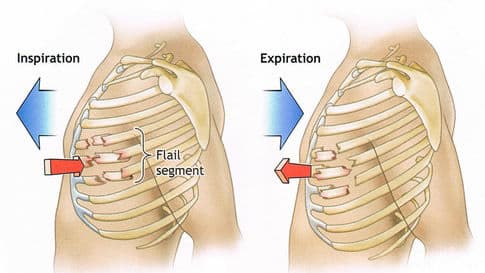
Common signs and symptoms of flail chest:
Treatment options for flail chest include:
Match the postop complication to the proper treatment:
A patient that is on a vent should always have what at the bedside?
When providing suction to a patient on a ventilator, what technique should be used?
When a ventilated patient has an alarm, what is your first priority?
While assessing a vented patient, you recognize the vent is not working. What do you do after auscultating the patient's lungs?
Match vent alarm and the cause:
Match vent alarm and the troubleshooting measure:
Preventions of Ventilator Acquired Pneumonia (VAP):
Providing mouth care for a patient on a ventilator is important, what are the appropriate nursing interventions?
True or False: Indication of the need for a rapid response team on newly extubated patient: Unable to maintain airway and/or respiratory decompensation
Nursing responsibilities in emergency care on a chest trauma in the ED:
Common signs and symptoms of Pulmonary Embolism:
What diagnostic tools are used for the assessment of Pulmonary embolism?
Place the anticoagulation therapy steps in order:
The indications of Respiratory Distress:
Cyanosis is a __________ sign of respiratory distress:
A client is on mechanical ventilation and the client's spouse wonders why ranitidine (Zantac) is needed since the client "only has lung problems." What response by the nurse is best?
A client is admitted to the ICU with a flair chest and placed on mechanical ventilation. The nurse should monitor for which of the following?
The nurse is caring for a client that has been in a car accident. The nurse notices the client's chest are movements are paradoxical (inward movement of the thorax with inspiration with outward movement of the thorax with expiration). The nurse knows this condition is:
The client sustained a blunt chest trauma and has a life threatening tension pneumothorax. Initial management of a tension pneumothorax is an immediate:
The nurse is preparing for which intervention when she gets the code (crash) cart, airway equipment box, calls for the appropriate personnel, and sets up suction?
A client with a pulmonary embolism may have which of the following interventions?:
An older adult client arrives in the emergency department after falling off a roof. The nurse observes “sucking inward” of the loose chest area during inspiration and a “puffing out” of the same area during expiration. Arterial blood gas results show severe hypoxemia and hypercarbia. Which procedure does the nurse prepare for?
A nurse is caring for a group of clients. Which client is at most risk for a pulmonary embolism?
A client is receiving warfarin after pulmonary embolism. The nurse evaluates the lab results and notifies the physician that the client's warfarin level is therapeutic when which of the following numbers is reported?
A client who has an endotracheal tube is being considered for a tracheostomy. Which of the following criteria would support the placement of a tracheostomy in this client?
The nurse is caring for a client who suffered a third-degree burn to his hands after a house fire. He presented with an airway injury secondary to smoke inhalation and has been intubated. The client is currently on a ventilator with 100% FiO2. Based on the information, which of the following would be a sign or symptom of acute respiratory distress syndrome?
Which actions are essential for the nurse caring for a mechanically ventilated client to prevent ventricular acquired pneumonia?
The pathophysiology of acute respiratory distress syndrome is characterized by which of the following?
A nurse is reviewing the health records of clients. Which client is least at risk for developing acute respiratory distress syndrome?
The nurse is caring for a ventilated client. Which intervention is appropriate for this client?
A client in respiratory failure is diagnosed with a flail chest. After the client is intubated, which treatment does the nurse expect to be implemented?