Loading...


Module 4.8b - Emotion: Expressing and Experiencing Emotion
Quiz by Dan Koch
Tag the questions with any skills you have. Your dashboard will track each student's mastery of each skill.
Carla, an introvert, lives with Cindy, an extravert. Cindy ate Carla’s last granola bar, but she told Carla that she did not know where the granola bar went. Which of the following is the most logical and objective conclusion that can be drawn about Carla’s ability to figure out the truth?
Dr. Bumpers asserted that, when shown photos of a variety of facial expressions, participants in his cross-cultural study were statistically significantly more accurate in detecting happiness than in detecting other emotions. Which of the following statements provides the most accurate interpretation of her results?
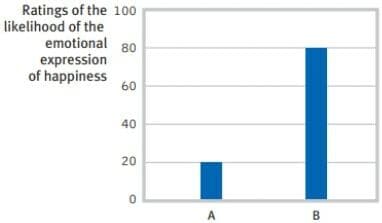
Based on the graph and what you know about people’s perceptions of emotional expressiveness, what are the likely labels for A and for B?
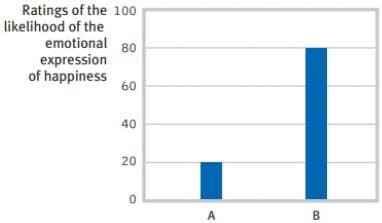
If the graph’s y-axis was changed to read “Ratings of the likelihood of the emotional expression of anger,” what changes, if any, should be made to the A and B labels on the x-axis?
Trixie, a 20-year-old woman, is watching the news with her roommate, Miguel, a 19-year-old man. They both become tearful when hearing a story about an abandoned dog who found his forever home. When their third roommate, Calliope, enters the room, which of the following best captures how she is likely to explain Trixie’s and Miguel’s tearfulness?
Paul Ekman found that facial expressions tend to be the same around the world. Which of the following statements best uses empirical evidence to explain the nuances of this finding?
Kimi grew up in Japan. When she moved to the United States, she was surprised by the intensity with which people expressed their emotions: Smiles seemed more exuberant, and scowls seemed angrier. Which of the following best explains Kimi’s experience?