Loading...

Muscle Identification: Canine Hindlimb
Quiz by Neelum
Tag the questions with any skills you have. Your dashboard will track each student's mastery of each skill.
This muscle is the most superficial of the caudal leg muscles. It is often called the calf muscle even though it is one of two muscles comprising the calf. It extends the tarsus and flexes the stifle. Due to its bulging belly shape, the first part of its name refers to the stomach. What is this muscle called?
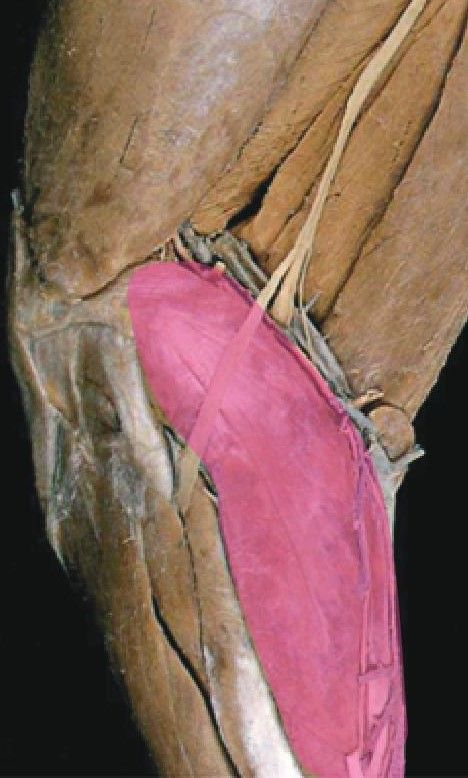
This muscle is the longest and widest in the thigh. It flexes the hip, extends the stifle, and extends the tarsus. The prefix in the first word of its name indicates there are two attachment sites at its origin. The second word refers to the long bone of the upper hind limb. What is this muscle called?
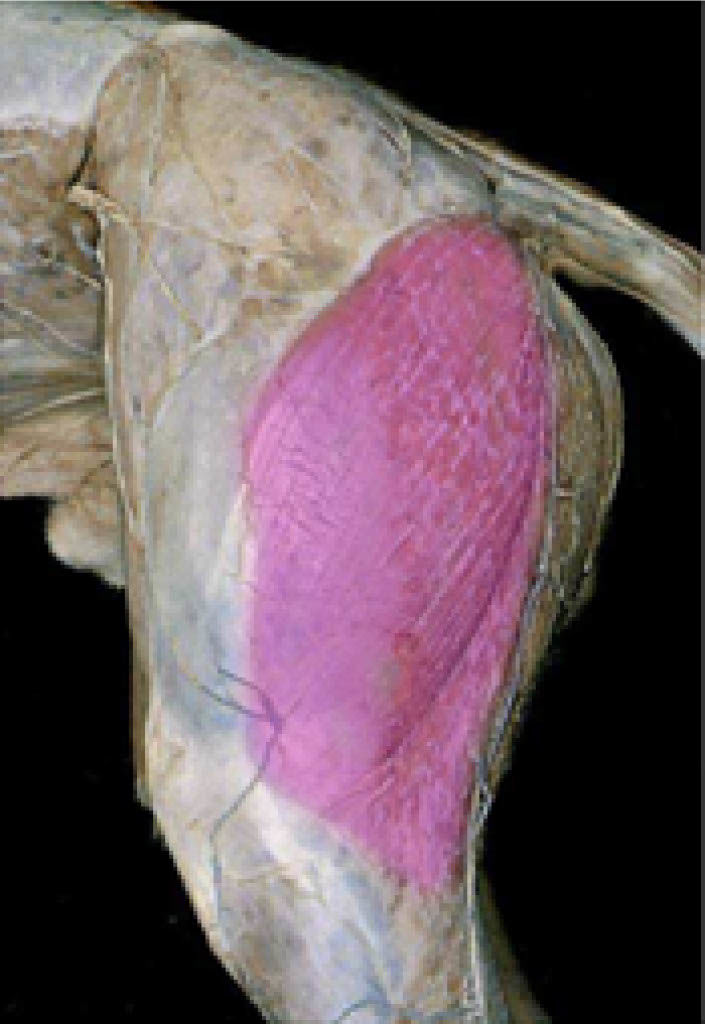
This muscle is the most superficial of the caudal leg muscles. It is often called the calf muscle even though it is one of two muscles comprising the calf. It extends the tarsus and flexes the stifle. Due to its bulging belly shape, the first part of its name refers to the stomach. What is this muscle called?
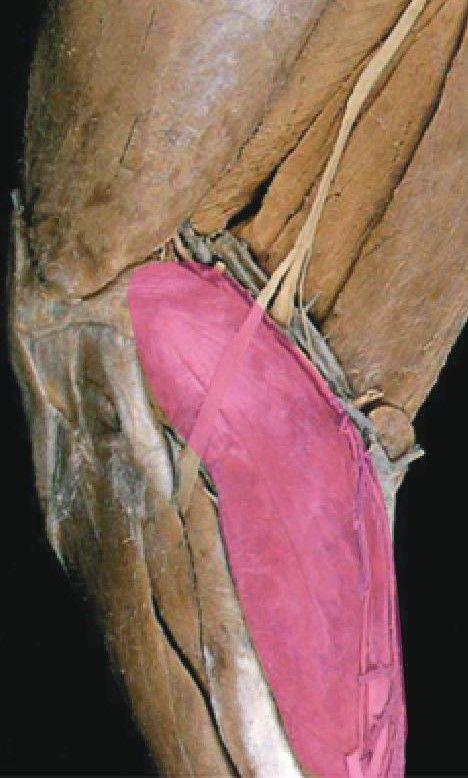
This muscle is the longest and widest in the thigh. It flexes the hip, extends the stifle, and extends the tarsus. The prefix in the first word of its name indicates there are two attachment sites at its origin. The second word refers to the long bone of the upper hind limb. What is this muscle called?

The superficial gluteal muscle is a small triangular muscle that

The superficial digital flexor muscle performs one specialized action: flexing the digits of the canine hind limb.
This muscle group lies just below the skin and does not have any bone connections. These thin and broad muscles are superficial and their only purpose is to twitch the skin. What muscle group is this?
This muscle is located on the dorsal section of the neck and helps the splenius extend the head and neck. In most animals it's origin is the nuchal ligament and it inserts at the spine of the scapula. This muscle is the trapezius.
The hamstring group of muscles contains which of the following muscles?
The latissimus dorsi is a deep muscle.
What is the muscle on the caudal aspect lateral to the lumbar vertebrae?
The quadriceps femoris helps a dog to wag its tail.
This muscle pulls the thighs together and rotates the upper leg inwards.
This muscle is one of the four quadricep muscles. It flexes the hip and extends the lower leg at the knee.
Which ligament of the hind leg tears and requires a specialized surgery known as a TPLO in order to repair it?
The origin of the sartorius muscle is near the crest of the ilium.
The quadriceps consists of four heads: the rectus femoris, the vastus lateralis, the vastus medialis, and the .....
The pectineus muscle is a __ shaped muscle and is located on the __ aspect of the hind limb.
