Represent equivalent fractions with area and length models by: • Composing and decomposing fractions into equivalent fractions using related fractions: halves, fourths and eighths; thirds and sixths. • Explaining that a fraction with the same numerator and denominator equals one whole. • Expressing whole numbers as fractions, and recognize fractions that are equivalent to whole numbers.
Interpret unit fractions with denominators of 2, 3, 4, 6, and 8 as quantities formed when a whole is partitioned into equal parts; • Explain that a unit fraction is one of those parts. • Represent and identify unit fractions using area and length models.
Compare two fractions with the same numerator or the same denominator by reasoning about their size, using area and length models, and using the >, <, and = symbols. Recognize that comparisons are valid only when the two fractions refer to the same whole with denominators: halves, fourths and eighths; thirds and sixths.
Interpret fractions with denominators of 2, 3, 4, 6, and 8 using area and length models. • Using an area model, explain that the numerator of a fraction represents the number of equal parts of the unit fraction. • Using a number line, explain that the numerator of a fraction represents the number of lengths of the unit fraction from 0.
Track each student's skills and progress in your Mastery dashboards
Give this quiz to my class
Q 1/12
Score 0
60
Q 2/12
Score 0
60
12 questions
Q.
1
60 sec
NC.3.NF.3
Q.
2
60 sec
NC.3.NF.3
Q.
3
60 sec
NC.3.NF.1
Q.
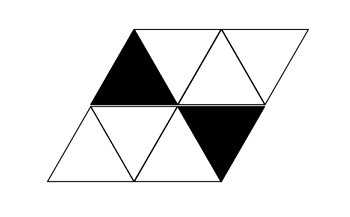
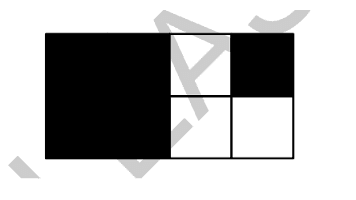
Which figure could be added to the diagram to make it true?
(*NO CALCULATOR*)
4
60 sec
NC.3.NF.4
Q.
5
60 sec
NC.3.NF.1
Q.
6
60 sec
NC.3.NF.2
Q.
A fraction of this circle is shaded.
Which circle has an equal fraction shaded?