Interpret products of whole numbers.
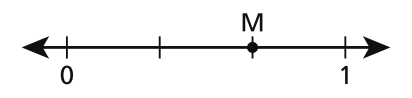
Represent a fraction a/b on a number line by marking of a lengths 1/b from 0. Recognize that the resulting interval has size a/b and that its endpoint locates the number a/b oin the number line.
Recognize area as additive. Find areas of figures composed of non-overlapping rectangles, and apply this technique to solve real world problems.
Measure and estimate liquid volumes and masses of objects using standard units of grams (g), kilograms (kg), and liters (l).
Apply properties of operations as strategies to multiply and divide.
Use multiplication and division within 100 to solve word problems in situations involving equal groups, arrays, and measurement quantities.
Multiply one-digit whole numbers by multiples of 10 in the range 10-90 using strategies based on place value and properties of operations.
Recognize a plane figure which can be covered without gaps or overlaps by n unit squares is said to have an area of n square units.
Determine the unknown whole number in a multiplication or division equation relating three whole numbers.
Recognize and generate equivalent fractions. Explain why the fractions are equivalent.
Represent a fraction 1/b on a number line by defining the interval from 0 to 1 as the whole and partitioning it into b equal parts. Recognize that each part has size 1/b and that the endpoint of the part starting at 0 locates the number 1/b on the number line.
Partition shapes into parts with equal areas. Express the area of each part as a unit fraction of the whole.
Identify and extend arithmetic patterns (including patterns in the addition table or multiplication table).
Compare two fractions with the same numerator or the same denominator by reasoning about their size. Recognize that comparisons rely on the two fractions referring to the same whole. Record the results of comparisons with the symbols >, =, or <, and justify the conclusions.
Interpret whole-number quotients of whole numbers.
Understand two fractions as equivalent (equal) if they are the same size, or the same point on a number line.
Track each student's skills and progress in your Mastery dashboards