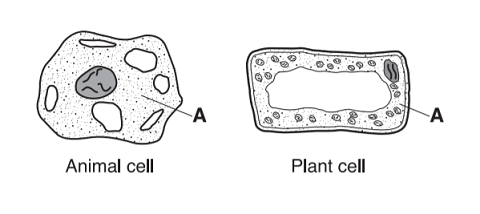
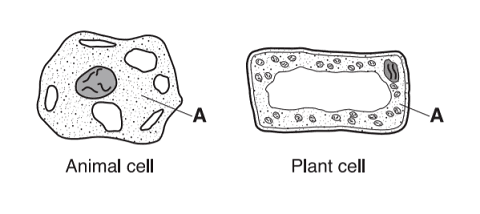
Most cells have cell membranes, genetic material, and cytoplasm. Some cells have a cell wall and/or chloroplasts. Many cells have a nucleus.
Cells are organized for more effective functioning in multicellular organisms. Levels of organization for structure and function of a multicellular organism include cells, tissues, organs, and organ systems.
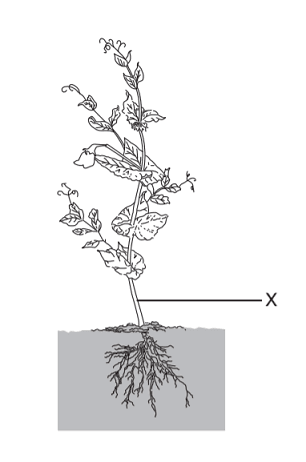
Many plants have roots, stems, leaves, and reproductive structures. These orga- nized groups of tissues are responsible for a plant’s life activities.
Locomotion, necessary to escape danger, obtain food and shelter, and reproduce, is accomplished by the interaction of the skeletal and muscular systems, and coordinated by the nervous system.
Photosynthesis is carried on by green plants and other organisms containing chlorophyll. In this process, the Sun’s energy is converted into and stored as chemical energy in the form of a sugar. The quantity of sugar molecules increases in green plants during photosynthesis in the presence of sunlight.
In all environments, organisms with similar needs may compete with one another for resources.
Hereditary information is contained in genes. Genes are composed of DNA that makes up the chromosomes of cells.
Changes in environmental conditions can affect the survival of individual organ- isms with a particular trait. Small differences between parents and offspring can accu- mulate in successive generations so that descendants are very different from their ances- tors. Individual organisms with certain traits are more likely to survive and have offspring than individuals without those traits.
Fertilization and/or development in organisms may be internal or external.
Given adequate resources and no disease or predators, populations (including humans) increase. Lack of resources, habitat destruction, and other factors such as pre- dation and climate limit the growth of certain populations in the ecosystem.
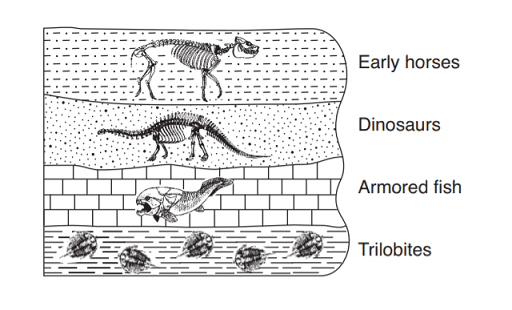
Many thousands of layers of sedimentary rock provide evidence for the long his- tory of Earth and for the long history of changing lifeforms whose remains are found in the rocks. Recently deposited rock layers are more likely to contain fossils resembling existing species.
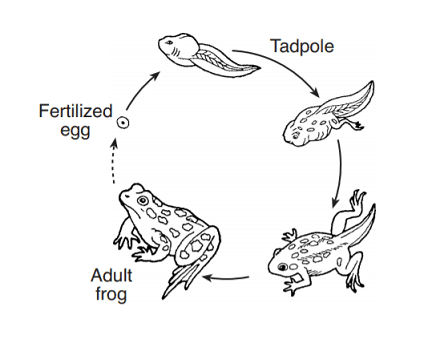
Patterns of development vary among animals. In some species the young resemble the adult, while in others they do not. Some insects and amphibians undergo metamor- phosis as they mature.
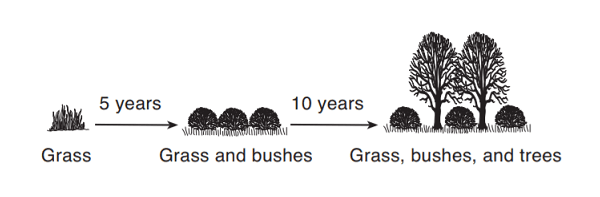
The environment may be altered through the activities of organisms. Alterations are sometimes abrupt. Some species may replace others over time, resulting in long- term gradual changes (ecological succession).
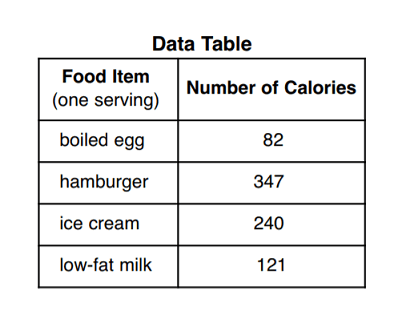
nergy in foods is measured in Calories. The total caloric value of each type of food varies. The number of Calories a person requires varies from person to person.
Human activities such as selective breeding and advances in genetic engineering may affect the variations of species.
In all environments, organisms interact with one another in many ways. Relationships among organisms may be competitive, harmful, or beneficial. Some species have adapted to be dependent upon each other with the result that neither could survive without the other.
During a physical change a substance keeps its chemical composition and proper- ties. Examples of physical changes include freezing, melting, condensation, boiling, evaporation, tearing, and crushing.
Earth’s Sun is an average-sized star. The Sun is more than a million times greater in volume than Earth.
Gravity is the force that keeps planets in orbit around the Sun and the Moon in orbit around the Earth.
Since the Industrial Revolution, human activities have resulted in major pollution of air, water, and soil. Pollution has cumulative ecological effects such as acid rain, global warming, or ozone depletion. The survival of living things on our planet depends on the conservation and protection of Earth’s resources.
The apparent motions of the Sun, Moon, planets, and stars across the sky can be explained by Earth’s rotation and revolution. Earth’s rotation causes the length of one day to be approximately 24 hours. This rotation also causes the Sun and Moon to appear to rise along the eastern horizon and to set along the western horizon. Earth’s revolution around the Sun defines the length of the year as 365 1/4 days.
Analysis of earthquake wave data (vibrational disturbances) leads to the conclu- sion that there are layers within Earth. These layers—the crust, mantle, outer core, and inner core—have distinct properties.
The Theory of Plate Tectonics explains how the “solid” lithosphere consists of a series of plates that “float” on the partially molten section of the mantle. Convection cells within the mantle may be the driving force for the movement of the plates.
The rock at Earth’s surface forms a nearly continuous shell around Earth called the lithosphere.
Air masses form when air remains nearly stationary over a large section of Earth’s surface and takes on the conditions of temperature and humidity from that location. Weather conditions at a location are determined primarily by temperature, humidity, and pressure of air masses over that location.
The rock cycle model shows how types of rock or rock material may be trans- formed from one type of rock to another.
Folded, tilted, faulted, and displaced rock layers suggest past crustal movement.
use appropriate tools and conventional techniques to solve problems about the natural world, including: measuring; observing; describing; classifying; sequencing
Atoms and molecules are perpetually in motion. The greater the temperature, the greater the motion.
There are more than 100 elements. Elements combine in a multitude of ways to produce compounds that account for all living and nonliving substances. Few elements are found in their pure form.
Most activities in everyday life involve one form of energy being transformed into another. For example, the chemical energy in gasoline is transformed into mechanical energy in an automobile engine. Energy, in the form of heat, is almost always one of the products of energy transformations.
Fossil fuels contain stored solar energy and are considered nonrenewable resources. They are a major source of energy in the United States. Solar energy, wind, moving water, and biomass are some examples of renewable energy resources.
Temperature affects the solubility of some substances in water.
Machines can change the direction or amount of force, or the distance or speed of force required to do work.
The latitude/longitude coordinate system and our system of time are based on celestial observations.
interpolate and extrapolate from data
formulate and defend explanations and conclusions as they relate to scientific phenomena
Light passes through some materials, sometimes refracting in the process. Materials absorb and reflect light, and may transmit light. To see an object, light from that object, emitted by or reflected from it, must enter the eye.
idependently formulate a hypothesis
use and interpret graphs and data tables
Track each student's skills and progress in your Mastery dashboards