Most cells have cell membranes, genetic material, and cytoplasm. Some cells have a cell wall and/or chloroplasts. Many cells have a nucleus.
The way in which cells function is similar in all living things. Cells grow and divide, producing more cells. Cells take in nutrients, which they use to provide energy for the work that cells do and to make the materials that a cell or an organism needs.
Some organisms are single cells; others, including humans, are multicellular.
Cells are organized for more effective functioning in multicellular organisms. Levels of organization for structure and function of a multicellular organism include cells, tissues, organs, and organ systems.
The digestive system consists of organs that are responsible for the mechanical and chemical breakdown of food. The breakdown process results in molecules that can be absorbed and transported to cells.
During respiration, cells use oxygen to release the energy stored in food. The respi- ratory system supplies oxygen and removes carbon dioxide (gas exchange).
The excretory system functions in the disposal of dissolved waste molecules, the elimination of liquid and gaseous wastes, and the removal of excess heat energy.
5.2c Metabolism is the sum of all chemical reactions in an organism. Metabolism can be influenced by hormones, exercise, diet, and aging.
In asexual reproduction, all the genes come from a single parent. Asexually pro- duced offspring are genetically identical to the parent.
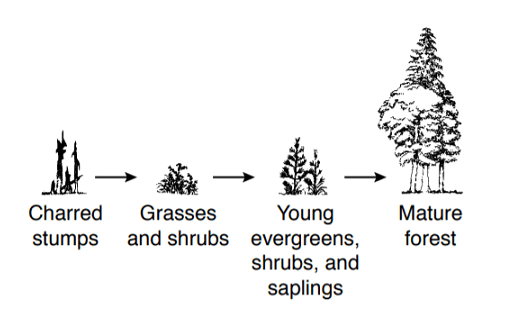
The environment may be altered through the activities of organisms. Alterations are sometimes abrupt. Some species may replace others over time, resulting in long- term gradual changes (ecological succession).
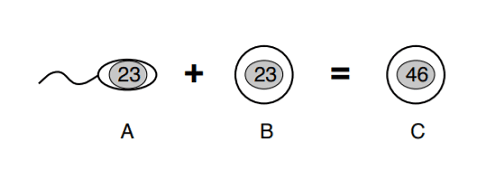
In sexual reproduction typically half of the genes come from each parent. Sexually produced offspring are not identical to either parent.
Cancers are a result of abnormal cell division.
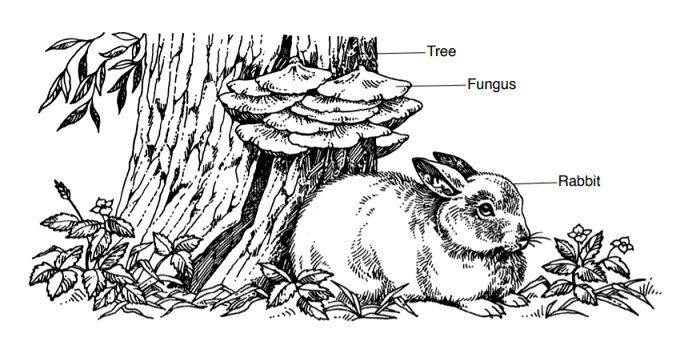
The methods for obtaining nutrients vary among organisms. Producers, such as green plants, use light energy to make their food. Consumers, such as animals, take in energy-rich foods.
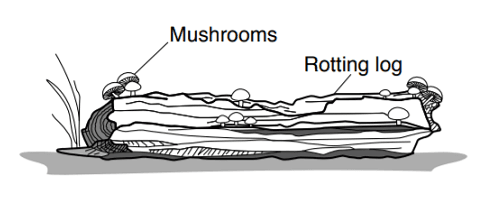
Herbivores obtain energy from plants. Carnivores obtain energy from animals. Omnivores obtain energy from both plants and animals. Decomposers, such as bacteria and fungi, obtain energy by consuming wastes and/or dead organisms.
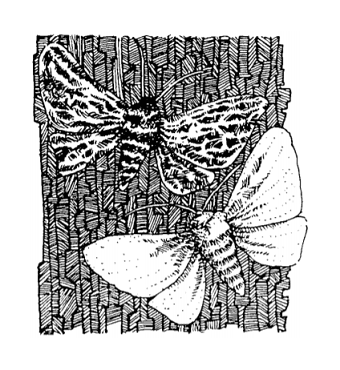
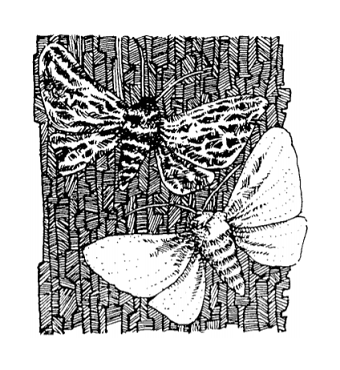
Changes in environmental conditions can affect the survival of individual organ- isms with a particular trait. Small differences between parents and offspring can accu- mulate in successive generations so that descendants are very different from their ances- tors. Individual organisms with certain traits are more likely to survive and have offspring than individuals without those traits.
Disease breaks down the structures or functions of an organism. Some diseases are the result of failures of the system. Other diseases are the result of damage by infection from other organisms (germ theory). Specialized cells protect the body from infectious disease. The chemicals they produce identify and destroy microbes that enter the body.
nergy in foods is measured in Calories. The total caloric value of each type of food varies. The number of Calories a person requires varies from person to person.
A population consists of all individuals of a species that are found together at a given place and time. Populations living in one place form a community. The commu- nity and the physical factors with which it interacts compose an ecosystem.
In all environments, organisms interact with one another in many ways. Relationships among organisms may be competitive, harmful, or beneficial. Some species have adapted to be dependent upon each other with the result that neither could survive without the other.
Patterns of development vary among animals. In some species the young resemble the adult, while in others they do not. Some insects and amphibians undergo metamor- phosis as they mature.
Analysis of earthquake wave data (vibrational disturbances) leads to the conclu- sion that there are layers within Earth. These layers—the crust, mantle, outer core, and inner core—have distinct properties.
The apparent motions of the Sun, Moon, planets, and stars across the sky can be explained by Earth’s rotation and revolution. Earth’s rotation causes the length of one day to be approximately 24 hours. This rotation also causes the Sun and Moon to appear to rise along the eastern horizon and to set along the western horizon. Earth’s revolution around the Sun defines the length of the year as 365 1/4 days.
Rocks are composed of minerals. Only a few rock-forming minerals make up most of the rocks of Earth. Minerals are identified on the basis of physical properties such as streak, hardness, and reaction to acid.
Light passes through some materials, sometimes refracting in the process. Materials absorb and reflect light, and may transmit light. To see an object, light from that object, emitted by or reflected from it, must enter the eye.
Moons are seen by reflected light. Our Moon orbits Earth, while Earth orbits the Sun. The Moon’s phases as observed from Earth are the result of seeing different por- tions of the lighted area of the Moon’s surface. The phases repeat in a cyclic pattern in about one month.
Every object exerts gravitational force on every other object. Gravitational force depends on how much mass the objects have and on how far apart they are. Gravity is one of the forces acting on orbiting objects and projectiles.
The rock at Earth’s surface forms a nearly continuous shell around Earth called the lithosphere.
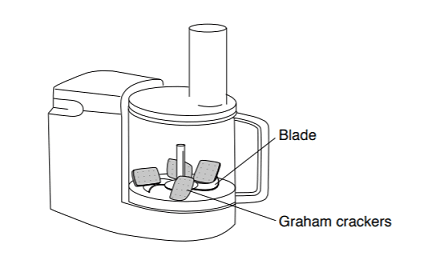
During a physical change a substance keeps its chemical composition and proper- ties. Examples of physical changes include freezing, melting, condensation, boiling, evaporation, tearing, and crushing.
Atoms and molecules are perpetually in motion. The greater the temperature, the greater the motion.
Hazardous weather conditions include thunderstorms, tornadoes, hurricanes, ice storms, and blizzards. Humans can prepare for and respond to these conditions if given sufficient warning.
Machines can change the direction or amount of force, or the distance or speed of force required to do work.
A liquid has definite volume, but takes the shape of a container.
A solid has definite shape and volume. Particles resist a change in position.
There are more than 100 elements. Elements combine in a multitude of ways to produce compounds that account for all living and nonliving substances. Few elements are found in their pure form.
Heat can be transferred through matter by the collisions of atoms and/or mole- cules (conduction) or through space (radiation). In a liquid or gas, currents will facilitate the transfer of heat (convection).
In chemical reactions, energy is transferred into or out of a system. Light, electric- ity, or mechanical motion may be involved in such transfers in addition to heat.
Most substances expand when heated and contract when cooled. Water is an exception, expanding when changing to ice.
Without direct contact, a magnet attracts certain materials and either attracts or repels other magnets. The attractive force of a magnet is greatest at its poles.
use and interpret graphs and data tables
Apply mathematical knowledge to solve real-world problems and problems that arise from the investigation of mathematical ideas, using representations such as pictures, charts, and tables.
differentiate among observations, inferences, predictions, and explanations
Track each student's skills and progress in your Mastery dashboards