Most cells have cell membranes, genetic material, and cytoplasm. Some cells have a cell wall and/or chloroplasts. Many cells have a nucleus.
Cells are organized for more effective functioning in multicellular organisms. Levels of organization for structure and function of a multicellular organism include cells, tissues, organs, and organ systems.
The digestive system consists of organs that are responsible for the mechanical and chemical breakdown of food. The breakdown process results in molecules that can be absorbed and transported to cells.
The nervous and endocrine systems interact to control and coordinate the body’s responses to changes in the environment, and to regulate growth, development, and reproduction. Hormones are chemicals produced by the endocrine system; hormones regulate many body functions.
During respiration, cells use oxygen to release the energy stored in food. The respi- ratory system supplies oxygen and removes carbon dioxide (gas exchange).
Multicellular organisms exhibit complex changes in development, which begin after fertilization. The fertilized egg undergoes numerous cellular divisions that will result in a multicellular organism, with each cell having identical genetic information.
Living things are classified by shared characteristics on the cellular and organism level. In classifying organisms, biologists consider details of internal and external struc- tures. Biological classification systems are arranged from general (kingdom) to specific (species).
Cancers are a result of abnormal cell division.
Foods contain a variety of substances, which include carbohydrates, fats, vitamins, proteins, minerals, and water. Each substance is vital to the survival of the organism.
Photosynthesis is carried on by green plants and other organisms containing chlorophyll. In this process, the Sun’s energy is converted into and stored as chemical energy in the form of a sugar. The quantity of sugar molecules increases in green plants during photosynthesis in the presence of sunlight.
use and interpret graphs and data tables
The processes of sexual reproduction and mutation have given rise to a variety of traits within a species.
The environment may be altered through the activities of organisms. Alterations are sometimes abrupt. Some species may replace others over time, resulting in long- term gradual changes (ecological succession).
Various body structures and functions change as an organism goes through its life cycle.
Food webs identify feeding relationships among producers, consumers, and decomposers in an ecosystem.
A population consists of all individuals of a species that are found together at a given place and time. Populations living in one place form a community. The commu- nity and the physical factors with which it interacts compose an ecosystem.
Given adequate resources and no disease or predators, populations (including humans) increase. Lack of resources, habitat destruction, and other factors such as pre- dation and climate limit the growth of certain populations in the ecosystem.
Since the Industrial Revolution, human activities have resulted in major pollution of air, water, and soil. Pollution has cumulative ecological effects such as acid rain, global warming, or ozone depletion. The survival of living things on our planet depends on the conservation and protection of Earth’s resources.
The process of weathering breaks down rocks to form sediment. Soil consists of sediment, organic material, water, and air.
All matter is made up of atoms. Atoms are far too small to see with a light microscope.
Fronts are boundaries between air masses. Precipitation is likely to occur at these boundaries.
The tilt of Earth’s axis of rotation and the revolution of Earth around the Sun cause seasons on Earth. The length of daylight varies depending on latitude and season.
The latitude/longitude coordinate system and our system of time are based on celestial observations.
Erosion is the transport of sediment. Gravity is the driving force behind erosion. Gravity can act directly or through agents such as moving water, wind, and glaciers.
Rocks are composed of minerals. Only a few rock-forming minerals make up most of the rocks of Earth. Minerals are identified on the basis of physical properties such as streak, hardness, and reaction to acid.
Atoms and molecules are perpetually in motion. The greater the temperature, the greater the motion.
Folded, tilted, faulted, and displaced rock layers suggest past crustal movement.
The periodic table is one useful model for classifying elements. The periodic table can be used to predict properties of elements (metals, nonmetals, noble gases).
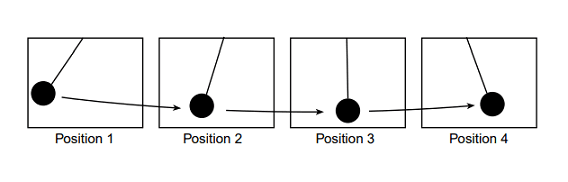
Energy can be considered to be either kinetic energy, which is the energy of motion, or potential energy, which depends on relative position.
Mixtures are physical combinations of materials and can be separated by physical means.
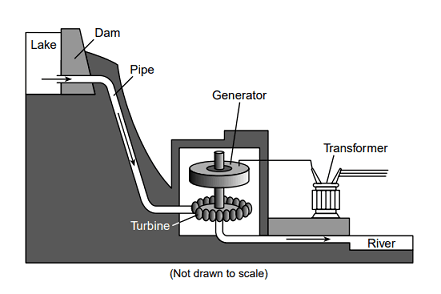
Fossil fuels contain stored solar energy and are considered nonrenewable resources. They are a major source of energy in the United States. Solar energy, wind, moving water, and biomass are some examples of renewable energy resources.
Without touching them, material that has been electrically charged attracts uncharged material, and may either attract or repel other charged material.
Heat can be transferred through matter by the collisions of atoms and/or mole- cules (conduction) or through space (radiation). In a liquid or gas, currents will facilitate the transfer of heat (convection).
Different forms of energy include heat, light, electrical, mechanical, sound, nuclear, and chemical. Energy is transformed in many ways.
Without direct contact, a magnet attracts certain materials and either attracts or repels other magnets. The attractive force of a magnet is greatest at its poles.
Energy cannot be created or destroyed, but only changed from one form into another.
A machine can be made more efficient by reducing friction. Some common ways of reducing friction include lubricating or waxing surfaces.
Simple machines include a lever, a pulley, a wheel and axle, and an inclined plane. A complex machine uses a combination of interacting simple machines, e.g., a bicycle.
During a physical change a substance keeps its chemical composition and proper- ties. Examples of physical changes include freezing, melting, condensation, boiling, evaporation, tearing, and crushing.
Every object exerts gravitational force on every other object. Gravitational force depends on how much mass the objects have and on how far apart they are. Gravity is one of the forces acting on orbiting objects and projectiles.
apply mathematical equations to describe relationships among variables in the natural world
interpolate and extrapolate from data
use appropriate scientific tools to solve problems about the natural world
generate and use scales, create legends, and appropriately label axes
Track each student's skills and progress in your Mastery dashboards