Loading...


Ocean Waves
Quiz by Susan Harlow
Customize this quiz to suit your class
Instantly translate to 100+ languages
Tag the questions with any skills you have. Your dashboard will track each student's mastery of each skill.
Give this quiz to my class



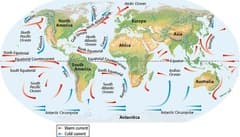
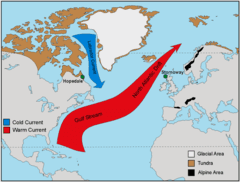
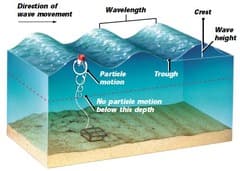
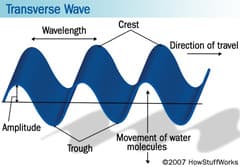
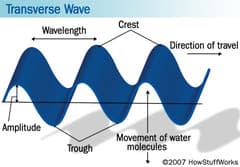

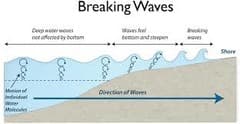 Into the Sea What Is Erosion? Have you ever made a sand castle at the beach? You must pick a good spot for it. If it is too close to the water, waves will quickly wash it away. Ocean waves and wind can also wash away land. They can change the shape of an island, which is land circled by water. When wind and water change the shape of Earth, it is called erosion. Waves are the biggest cause of erosion at the beach. Ocean waves are always active and moving onto the shore. They carry the sand away bit by bit. Strong waves are one of the properties of big storms. These waves explode as they crash onto the beach. Storm waves can move a lot of sand quickly. Erosion of Beaches. Some people build houses near the ocean. Waves take away the sand between the houses and the sea. As the beach disappears, the water gets closer to houses and other solid buildings on the beach. Some buildings can even be washed away. Erosion of Rocks. Erosion also happens on steep, rocky cliffs or sharp slopes. First, waves smash into the bottom of the cliffs. Then they carry away tiny pieces of rock. Over time, many small pieces of rock wash away from the bottom of the cliff. This makes the top of the cliff weak.The cliff can crumble and fall into the sea. Stopping Erosion. Some local communities work to stop erosion to nearby beaches. These towns have built sea walls of large boulders or rocks. The rocks are placed in a row in the sea. When waves hit the sea wall, they slow down. Then the waves can't pull sand away.Some towns make rules about buildings on the beach. New buildings must be far from the water. Then they won't wash away like a sand castle.Earth's Water Water Everywhere. Water fills oceans, lakes, and ponds. It flows in rivers, streams, and underground. It is even in the air. Some parts of Earth have snow and ice, which are frozen water. Water covers most of Earth's surface. Salt water in the oceans makes up much of Earth's water. Earth has much less fresh water. Many plants and animals need this fresh water to survive. Some of this fresh water is aboveground, while other fresh water is underneath Earth's surface. What are some ways you use Earth's water? Different Forms of Water. Liquid water is the most common state of Earth's water. It takes the shape of the container it is in. Liquid water is always moving even if you can't see it move. It flows in rivers and streams, and it crashes as ocean waves. Not all water is liquid. When liquid water gets very cold, it freezes to form ice. Ice is another state of water-solid water. Ice can float on liquid water. People form ice into different shapes. Artists even carve ice to make sculptures. Much of Earth's frozen water is at the North and South Poles, Earth's coldest areas. Some of Earth's water is in an invisible state as a gas called water vapor. While it's always invisible, water vapor is all around us. Changing Water. Earth's water is always changing from one state to another. When frozen water is heated, it melts and becomes liquid water. When liquid water is cooled, it freezes and becomes ice. Liquid water can become a gas, too. Have you ever seen a puddle of water dry up on a hot day? Energy from the Sun changed the liquid to a gas in a process called evaporation. Water evaporates from oceans, rivers, lakes, and puddles all over the world. When water vapor in the air cools down, it changes from a gas to a liquid. This process is called condensation. Clouds are made up of tiny drops of water formed by condensation. The tiny drops stick together, creating larger, heavier drops. Once they're large enough, they fall to the ground as rain or another type of precipitation. Water Is Important. Rain keeps plants alive and allows them to keep growing. People and other animals need water to survive. We also use it for other purposes, such as fighting fires. It is important to take care of Earth's water. Keeping waste and trash away from water keeps it from becoming dirty and unusable. Polluted water makes people, plants, and animals sick. Would you want to drink and play in polluted water?Write simple RCQ for A1 kids using: What’s that, Peter? This is my surfboard. I like to surf on waves in the ocean. Cool! Can you surf on a river or a pond? No, I can’t surf there. There aren’t many waves. Do you want to surf with me on the sea? No, I don’t. I like to look for seashells on the beach. How many can you find? I can find many seashells on the sand! They are very beautiful.What’s that, Peter? This is my surfboard. I like to surf on waves in the ocean. Cool! Can you surf on a river or a pond? No, I can’t surf there. There aren’t many waves. Do you want to surf with me on the sea? No, I don’t. I like to look for seashells on the beach. How many can you find? I can find many seashells on the sand! They are very beautiful.Life in the Oceans: Moving WavesWaves, Oceans, Heat, and Tides Waves, Tides, Oceans, and Sources of Heat Marine and Coastal Processes.What are the hazards that usually occur along marine and coastal areas? Coastal processes, such as waves, tides, sea level changes, crustal movement, and storm surges will result to coastal erosion, submersion, and saltwater intrusion. Coastal Erosion. Coastal erosion is the wearing down of the coastlines by the movement of wind and water. It is not a constant process; instead, the rate of erosion depends on other events such as cyclones. When cyclones occur along coastal areas, the winds and waves carry the sediment away from the shoreline. Shorelines play an important role to society. They are used in transportation, fishing, and tourism. Therefore, preventing coastal erosion is of utmost priority. There are three main classifications of stabilizing the shoreline: hard stabilization, soft stabilization, and retreat. 1. Hard stabilization is done by building structures that will slow down the erosion on areas that are prone to erosion. Examples of hard stabilization structures are jetties, sea walls, and breakwaters. Though they may slow down the erosion in one area, it may hasten the erosion in other areas. 2. Soft stabilization includes the process of beach nourishment, wherein sand from an offshore location is brought to an area with a receding shoreline. It does not make use of structures like the ones used in hard stabilization. 3. Retreat is the option taken by residents near areas where coastal erosion is already severe. At this point, the authorities no longer attempt to save the shoreline but rather limit the amount of human interference in the area. Submersion. Coastal erosion happens because of the interaction of the winds and waves on the shoreline. Submersion, on the other hand, happens because of the changes in the sea level, specifically, when it rises dangerously above the normal level. This is all due to the increase in the global temperature, which, in turn, melts the glacial deposits and increases the overall sea level. Another factor that may cause submersion is the vertical movement of the plates. Landmasses can be uplifted, which can also cause changes in the sea level. It can also be caused by tsunamis and storm surges. Submersion will most likely occur in reclaimed lands. These are the areas that were originally part of oceans, riverbeds, or lakebeds. They are low-lying flatlands, so even a small rise in sea level can cause great damage on the land. To prevent this from happening not only in reclaimed lands but also in coastal areas, a hard stabilization technique is used. Sea walls are built along the coastline to protect the land from being easily flooded. Aside from sea walls, dikes can also help prevent flooding. The government can also upgrade the infrastructures built in coastal areas, regenerate mangroves, or relocate the people. There are also other proposed strategies to mitigate coastal submersion, such as imposing of setback policies and construction regulations and creating adaptive plans for coastal management. Saltwater Intrusion. In coastal areas where there is an interaction between saltwater and fresh water, saltwater intrusion is one of the hazards that are evident in that area. Saltwater intrusion is the movement of saltwater into the freshwater aquifer. The natural flow is that the fresh water, which is less dense, moves towards the denser saltwater. But if the fresh water is being withdrawn faster than it is being replenished, then there will be a change in pressure and saltwater intrusion will occur.There are a few ways of preventing saltwater intrusion. One is to stop using the well where fresh water has been depleted and let the groundwater replenish naturally via the water cycle. The other method is to build two wells: a pumping well-built farther inland and an injection well-built closer to the coast. Using the injection well, fresh water is pumped into the aquifer to prevent the saltwater from intruding. The different marine and coastal hazards often occur in the Philippines, being an archipelago with the longest coastline. Manila Bay is one of the coastal areas of the Philippines that is facing various threats from both natural and anthropological causes. Saltwater intrusion occurs due to uncontrolled withdrawal of groundwater to be used by residential, commercial, and industrial areas built around the bay. It is also frequently flooded due to poor drainage systems and improper disposal of waste. Since Manila Bay is shared by four coastal provinces, four noncoastal provinces, and the National Capital Region, each local government unit and national agencies need to collaborate in planning, developing, and managing its marine and coastal resources. And it is not only Manila Bay but other parts as well, for as long as they are in coastal areas, hazards will mostly likely occur if not immediately addressed.