Loading...


Parallel lines or not?
Quiz by Melecio Niño Adoro
Customize this quiz to suit your class
Instantly translate to 100+ languages
Tag the questions with any skills you have. Your dashboard will track each student's mastery of each skill.
Give this quiz to my class
Parallel lines or not?
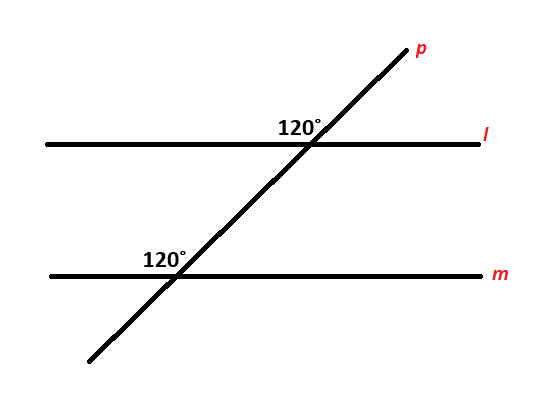
not parallel
parallel
Parallel lines or not?
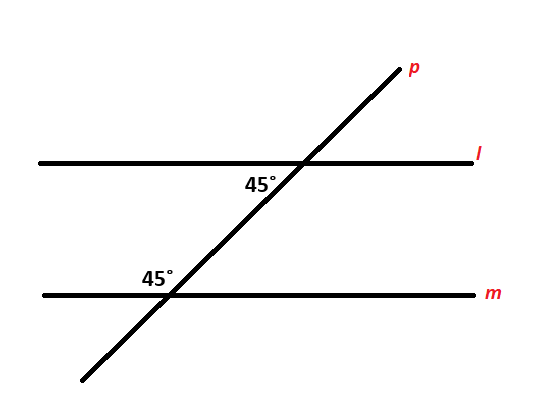
Not parallel
Parallel
Parallel lines or not?

Parallel lines or not?

Parallel lines or not?

Parallel lines or not?

Parallel lines or not?

Parallel lines or not?

Parallel lines or not?

Parallel lines or not?

Parallel lines or not?

Parallel lines or not?
 Electrostatics The section of CBSE Class 12 Physics electrostatic potential and capacitance notes mainly deals with the in-depth analysis of electromagnetic phenomena when they are not performing any movements. Additionally, it is divided into ten further sub-topics to study the companion processes of reaching the state. These are - 1. Electric charge In this section of Physics ch 2 Class 12 notes, you get to learn about the basic features of electric charge and its expression in Physics. Along with its basics, the sections help to understand the full potential of charge. Different aspects of Charge included in Class 12 Physics Chapter 2 notes are - Definition Type: Positive and Negative Charge Unit and dimensional formula Point Charge Properties of Charge Comparison of Charge and Mass Methods of Charging Electroscope 2. Coulomb's Law Force is created when charges of opposite signs attract each other, and they repulse if the signs are the same. Coulomb's law tries to define this phenomenon through a mathematical formula, explicitly mentioned in Physics Class 12 notes Chapter 2. Moreover, there is key information about the variation of the constant k and its effect on a medium. Coulomb's law's vector form and the principle of superimposition are also explained in ch 2 Physics Class 12 notes. (Image will be uploaded soon) 3. Electric Field As stated in Class 12 Physics Chapter 2 notes, every positively or negatively charged particle has their respective electric fields. It feels a force at the time of interaction which might be attraction or repulsion. As it arises from electric charge, it is crucial to know about its different parts like - Electric field intensity Relation between electric force and electric field Super imposition of electric field Point charge Continuous charge distributions Properties of Electric Field Lines Motion of Charged Particles in an Electric field Learning more about the electric field from electric potential and capacitance notes Class 12 helps a student to get a grasp of upcoming chapters. 4. Electric Potential Energy When energy helps a charge to move from an electric field, it is known as the Electric Potential Energy. This section of electrostatic chapter Class 12 notes requires a student to study the Electron volt (eV), and the potential energy that an n number of charges can hold. 5. Electric Potential This section of Class 12 Physics Chapter 2 notes focuses on in-depth learning of Electric Potential or Voltage. Basically, it defines the potential movement of energy. 6. Relation between Electric Field and Potential Apart from knowing more about the relationship between the two values, Physics Class 12 Chapter 2 notes also discuss equipotential surfaces. 7. Electric Dipole Essentially, 'Dipoles' are two opposite points of charge represented with q and –q, with their distance between each other being 2a. Electric Dipoles are crucial in your study of Physics Class 12 Chapter 2 notes to learn more about electric fields and their potential. Additionally, Class 12 Physics Chapter 2 notes focus on the influence of electric dipoles on a uniform electric field mainly through Force and Torque, Work, and Potential Energy. In the last part of Electrostatics, further focus is on using the formulas to their fullest potential. It includes subsections of Electric Field, Electric Potential Energy, Electric Potential, and Electric Dipole. In the notes for electrostatic potential and capacitance, you will find proper solutions accompanied by clear and crisp diagrams for better understanding. 8. Gauss's Law Apart from just discussing the Gauss's Law, in Physics Class 12 ch 2 notes there is a thorough explanation of its properties and applications. The Gauss' Law states that net electric flux passing through a hypothetical closed surface is equal to the net electric charge present within the same closed surface. Being a broad part of the whole chapter, you may need to spend a little more time on it. Moving forward, it starts discussing the properties of conductors in relation to Gauss's Law. The Class 12 Physics notes Chapter 2 perfectly defines the journey to Gauss' Law from Coulomb's Law. Here is the Gauss's Law present in the Class 12 Physics ch 2 notes, (image will be uploaded soon) 9. Capacitors There is a dedicated section about Capacitors in the Class 12 Physics Chapter 2 notes elucidating its functions and importance as storage of potential electric energy. After explaining the structure of a capacitor, it points out the different types, parallel plate, spherical and cylindrical. The section of Chapter 2 notes of Physics Class 12 is further divided into subheads like: Properties of an ideal battery Grouping of capacitors Simple circuits (Series and Parallel) Dielectric Van de Graaff generator Combination of drops Charge distribution method Wheatstone Bridge-based circuit Extended Wheatstone Bridge Infinite network of capacitors Redistribution of charge between two capacitors Vedantu prepares the Class 12 Physics Chapter 2 notes with help from subject matter experts. In the PDF, you get a comprehensive idea of the topic along with potential answers to the most asked questions. Furthermore, the detailed explanation on each section and subsections are written in a simple language allows a student to ace their exams with wholesome knowledge. These Physics Chapter 2 Class 12 notes are going to be one of the best supplementary study materials besides a student’s textbooks. Visit the Vedantu website or download the app to get your hands on all important notes! Important Questions A charge of 4 × 10⁻⁸C is uniformly distributed on the surface of a spherical conductor, having a radius of 15 cm. Determine the electric field just outside this sphere at a point that is 15 cm from the centre of this sphere. Determine the capacitance given that the distance between the two plates has been reduced by half and the parallel plate capacitor holds a capacitance of 20 pF (where 1pF = 10-12 F) having air between the two plates. What will be the total capacitance of a combination where three capacitors, each having a capacitance of 20 pF, are connected in series. A square having a side of 10 cm has a 500 µC charge at its centre. Determine the work done to move a charge of 10 µC between two points that are diagonally opposite each other on the square. At an equatorial point, what will be the electrostatic potential because of an electric dipole? Calculate the work done to move a test charge, q, through a length of 1 cm along the equatorial axis of an electric dipole? Polarisation A capacitor has its plates enclosed in a medium that can be filled by insulating substances. A net dipole moment is then induced by an electric field in the dielectric. This event causes the field in an opposite direction. Equipotential Surface An equipotential surface is a type of surface where the potential always has a constant value. If considered as a point charge, the concentric spheres that are centred at a particular area of this charge are basically equipotential surfaces. Advantages of Vedantu's Revision Notes: A Comprehensive Resource for Effective Learning There are several reasons why one may refer to Vedantu's revision notes for studying a subject like Electrostatic Potential and Capacitance. Here are some key points: Comprehensive Coverage: Vedantu's revision notes provide a comprehensive coverage of the entire topic, ensuring that all important concepts and subtopics are included. Concise and Organized: The notes are designed to be concise, focusing on the key points and core ideas. They are organized in a structured manner, making it easy for students to navigate and revise the content. Simplified Explanation: The revision notes offer simplified explanations of complex concepts, making them more accessible and easier to understand. This helps students grasp the material more effectively. Key Formulas and Equations: The notes highlight the key formulas and equations relevant to the topic, ensuring that students have a clear understanding of the mathematical aspects of Electrostatic Potential and Capacitance. Examples and Illustrations: Vedantu's revision notes often include examples and illustrations that help clarify concepts and provide practical applications, enabling students to better relate theory to real-world scenarios. Quick Recap: The revision notes serve as a quick recap of the important points, allowing students to review the material efficiently before exams or assessments. Exam-Oriented Approach: Vedantu's revision notes are designed with an exam-oriented approach, focusing on the topics and concepts that are frequently asked in examinations. This helps students prepare effectively and increase their chances of scoring well. Accessible Anytime: Vedantu's revision notes are easily accessible online, allowing students to study at their convenience and revise the material anytime, anywhere.Filmic Techniques Based on the work of Brad Smilanich Mis-en-Scene: originally a French theatrical term arrangements of all the visual elements of the stage area in film – “the contents of the frame and the way those contents are organized” include: lighting, costume, décor, props, camera movement or distance . . . all photographic decisions etc. Proxemics: Spatial relationship among characters within the mis-en-scene Rule of Thirds: a compositional rule of thumb in painting, design, photography etc. suggests image divided into 9 equal parts with two vertical and two horizontal lines important elements of the mis-en-scene should be placed along these lines and their intersections some suggest aligning with intersections makes for more interesting pictures than just centreing the subject Proxemics Camera Distance: Quite literally, how far the camera is from the subject being filmed The Hand Camera Camera Distance: Quite literally, how far the camera is from the subject being filmed Extreme Close Up: Singles out one small portion of the body or object Used to intensify emotion, or show reaction Camera Distance: Close up Shot: Shows head of character or small significant object Used to show emotions Camera Distance: Medium Shot: shows figures from the waist up allows character to be seen within background Camera Distance: Long Shot: shows figures from feet up similar to the “stage” in live theatre orients audience to figures within a location or surrounding Camera Distance: Extreme Long Shot: Sometimes called an ‘establishing shot’ Panoramic view of an exterior location orients audience to a location Camera Distance: Camera Angle: Camera’s angle of view relative to the subject being photographed High Angle Shot: looks down on the subject often used to make the subject look small and insignificant (in combination with camera distance) puts the camera (audience) in ‘power’ position Camera Angle: Low Angle Shot: looks up at the subject often used to make the subject look large and powerful puts the camera (audience) in a ‘submissive’ position Camera Angle: Flat Angle Shot: camera on same plane as the subject feels most ‘normal’ to an audience Camera Angle: Canted Shot: frame is unbalanced in relation to the subject may indicate a symbolic unbalance in the character Camera Angle: Camera Movement literally the camera moving with or around or to follow the subjects in the mis-en-scene or frame Camera Movement: Tilting Movement camera moves up or down on a horizontal axis similar to head nodding movement may be used to show subjects relation to surroundings Camera Movement: Panning Movement camera moves side to side on a vertical axis similar to head shaking movement may be used to establish setting Camera Movement: Dolly Movement camera mounted on a vehicle that moves along with the subject (camera moves, not pivots) follows the subject to signify something important Camera Movement: Crane Shot camera mounted on a crane or boom permits camera to move in & out, up & down, backward & forward often used for high aerial establishing shots Misc. Shots: Hand Held: camera carried to seem jerky, giving ‘realistic feel’ Push In: camera moves up to a character’s face to indicate an epiphany (realization) Spiral: camera circles subject for effect End for ELA 20-2 and 10-1 Shot Transitions/Editing: artificial editing done to string together multiple shots to create a narrative scene or sequence a cut is the change from one shot to another usually separated in to ‘soft’ and ‘hard’ cuts Jump Cut: an instantaneous change from one shot to another this can be very natural or may disorient the audience, depending on how it is used Transitions/Editing Swish Pan: A pan where the speed of the camera is so fast that images are blurry used often to connect events in different settings that are connected by time Transitions/Editing Dissolve: transition where one shot gradually dissapears while another shot gradually appears often used to suggest change of setting or long time passage i.e. flashbacks Transitions/Editing Fade In/Out: transition where the shot gradually overexposes to white or underexposes to black often used to suggest a lengthy passage of time or change in location Transitions/Editing Wipe: transition where one shot is gradually eliminated as another shot moves onto the screen can be vertically or horizontally often suggests movement of the camera to another location Transitions/Editing Iris In/Out: transition where one shot gradually appears as an expanding circle in the middle of an old image suggests . . .??? Transitions/Editing Shot-Reverse Shot: one character is shown looking (often off-screen) at another character, and then the other character is shown looking "back" at the first character. Since the characters are shown facing in opposite directions, the viewer unconciously assumes that they are looking at each other. Transitions/Editing Two-Shot: Face-up shot of two people. Often used in interviews, or when two presenters are hosting a show. A "One-Shot" could be a mid-shot of either of these subjects. A "Three-Shot", unsurprisingly, contains three people. Transitions/Editing Shot Transitions/Editing: Sound: used to reflect or enhance what is shown visually on the screen can include dialogue, music, sound effects, voiceover etc. Diegetic Sound: sound that has a source in the world of the story dialogue spoken by characters, sound made by objects, or music coming from a source grounded in the story of the film Non-diegetic Sound: sound that has a source outside the world of the story usually part of the score or the soundtrack Parallel Sound: sound that complements the image shown i.e. romantic music during a love scene Counterpoint Sound: sound that contradicts the ‘feeling’ of the image a happy song played while images of graphic violence are portrayed Voiceover: voice of a non-visible narrator laid over the scene often provides some comment about the narrative of the film Sound Bridge: used to ‘soften’ the transition between one scene and another takes sound from the next shot and overlays it on the current shot 2-3 seconds earlier than we see the image Examples of Diegetic/Non-Diegetic: In the first clip, the non-diegetic music changes to diegetic music when the main character moves inside of the convenience store. In the second clip, the “duhn duhn duuuuh” which often is non-diegetic becomes diegetic because it is the band in the passing bus playing that music! End for ELA 20-1 Lighting: Can be used by a director to: Control the mood of a scene guide a viewer’s eye to a specific place in mis-en-scene Emphasize and de-emphasize elements in frame Add texture and color Make people look beautiful, ugly, sinister, or angelic Standard 3-Point Lighting: uses three lights called the key light, fill light and back light forms the basis of most lighting. once you understand three point lighting you are well on the way to understanding all lighting. Key Light: main light usually the strongest and has the most influence on the look of the scene. it is placed to one side of the camera/subject so that side is well lit and other side has shadow. Fill Light: secondary light is placed on the opposite side of the key light used to fill the shadows created by key softer and less bright than key Back Light: placed behind the subject ; lights it from the rear. provides definition and subtle highlights around the subject's outlines. Separates subject from background provides a three-dimensional look. Standard 3-Point Lighting: http://www.zvork.fr/vls/ Try using this simulator to play with lighting with those 3 points.Earth's History. All the processes that have been discussed require long periods of time to create a noticeable change on Earth's surface. You can just imagine how long it would take to create an oceanS as vast as the Pacific Ocean if the ocean floor moves only at about 10 cm/year. It is then important to know the history of Earth to learn the complexities of its past and be able to use it to understand the present. Just like learning the history of a country that requires one to read a lot of books, learning the history of Earth involves studying a lot of rocks. Rocks, especially sedimentary rocks, contain a lot of information about Earth's past. It holds the key to most of the geologic processes that happened on Earth and the key to uncovering how life on Earth evolved. But these discoveries are worthless if there is no time perspective. Thus, one of the most important contributions of geologists to mankind is the geologic time scale, which holds a history that is exceedingly long.The geologic time scale divides the history of Earth into different blocks of time by using relative dating. Since geologists use rocks to understand Earth's history, dating does not give accurate numerical dates, it only tells that an event preceded the relative dating places these rocks in their proper sequence of formation. But relative other. This method is still widely used today, alongside a more accurate method called absolute dating, which uses radioactive elements. With relative and absolute dating. geologists can trace the history of Earth. Relative Dating. Relative dating requires one to know the basic principles such as law of super-position, principle of original horizontality, principle of cross-cutting relationships, and unconformities.Law of Superposition The law of superposition is the most basic principle in relative dating. It states that in an undeformed sequence of sedimentary rock, the layers found at the top are the youngest rocks and the layers at the bottom are the oldest. It may seem too obvious, but this principle has only been clearly stated in 1669 by the Danish anatomist, geologist, and priest, Nicolaus Steno. Principle of Original Horizontality Along with the law of superposition, Steno stated that an undeformed sequence is the one where the layers are still in a horizontal position. This follows the principle of original horizontality, which states that sediments are deposited horizontally. Principle of Cross-Cutting Relationships The principle of cross-cutting relationships determines which events occurred first depending on which rocks are affected. The geologic layer that cuts another is younger than the layer it cuts across.Unconformities Rock layers that have not been interrupted are considered conformable. These sites represent spans of geologic time. But there is no place on Earth that has a complete conformable stratum since external and internal processes have always interrupted the deposition of the sediments. These breaks in the record of the rock strata are called unconformities. Using unconformities, geologic events are determined. There are three basic types of unconformities angular unconformity, disconformity, and nonconformity. Angular unconformity is characterized by having tilted or folded sedimentary rocks below younger, horizontal layers of rock. Disconformity is determined where there are missing parallel rock layers. Erosion takes place and removes the younger top layers and then deposition would once again happen. Nonconformity is characterized by an igneous or metamorphic rock found below a sedimentary rock. Figure 3-13. Three basic types of unconformities Using these principles for relative dating, one can determine the order of events However, relative dating does not give a time element as to when they happened. Absolute Dating For a much more accurate method of determining the history of Earth, geologists make use of absolute dating. This method uses unstable elements to determine the exact age of rocks. Isotopes are elements that have the same number of protons but different number of neutrons. Most isotopes are stable but some may be unstable. This is because the forces that bind the protons and neutrons in the nucleus of the isotope are not strong enough to hold them together, resulting in a radioactive decay, The unstable isotopes are called radioactive isotopes or parent isotopes. When these parent isotopes undergo radioactive decay, new isotopes, known as daughter products, are formed. The time it takes for one-half of the nuclei in the sample to decay is called half-life. This amount of time is fixed for each kind of radioactive isotope no matter what physical conditions it is subjected to. The ratio of parent daughter isotope determines how many half-lives have passed. If it is 1:1, then one half-life has passed; if it is 1:3, then two half-lives have passed; and if 1:7, then three half-lives have passed, and so on. Therefore, using the concept of half-life and parent-daughter ratio, geologists can determine the exact age of the sample. This method is called radiometric dating. It uses five radioactive isotopes to determine the age of rocks. For dating rocks that are about a million years old, rubidium-87, thorium-232, and the two isotopes of uranium (U-238 and U-235) are used. The fifth radioactive isotope is potassium-40, which has a half-life of 1.3 billion years. With these radioactive elements, determining the accurate age of rocks becomes easier. For dating events that are more recent, radiocarbon dating is used. This method uses carbon-14. Carbon-14 has a half-life of 5730 years and can be used to date back events up to 75000 years. All organisms contain a small amount of carbon-14, which is proportional with the amount of carbon-12. When an organism dies, the carbon-14 decays and is no longer replaced. The amount of carbon-14 left in the sample is then compared to the amounts of carbon-12 present, and radiocarbon dates can then be determined. This method has been particularly useful for anthropologists, archeologists, historians, and geologists for events that are much more recent.Fossils Aside from rocks, geologists also use the remains of living organisms in understanding Earth's history. Some fossils are formed from parts of an organism (body fossil), while some provide signs or clues as to which life-forms were present at that time (Frace fossils). Fossils contain a lot of information about the past the kind of organisms that have lived, the environment where organisms lived, and the evolution organisms underwent as their environment changed. However, not all organisms turned into fossils, therefore, scientists cannot learn everything about the past using fossils alone. There are also fossils that are used to determine the age of a rock. These are index fossils and these are only found in rocks of a particular age. The organisms that turned into index fossils have a relatively short life-spanning from a few million years to a few hundred million years. Index fossils are also found in most of the common rocks around the world, which makes them easier to identify.The methods used for dating the age of rocks are also used for fossils. Absolute dating is more commonly used since it can give exact numerical dates for the age, but relative dating can also be used to determine which fossils are older.Proving triangle inequalities, parallel lines cut by transversal, conditions to determine lines or segments are parallel or perpendicular4.6.D Classify two-dimensional figures based on parallel/perpendicular lines or anglesGeometry: Lines and Area: Points, Lines, Line Segments, and Rays: Parallel, Intersecting, and Perpendicular Lines: Area of Square or RectangleSure! Here's a solid list of **AP English Literature vocabulary**—terms that often come up in class, essays, and the AP exam. I'll break it down into categories to make it easier to study. --- ### 📚 **Literary Devices & Techniques** 1. **Alliteration** – Repetition of initial consonant sounds 2. **Allusion** – A reference to another text, event, or figure 3. **Anaphora** – Repetition of a word or phrase at the beginning of successive clauses 4. **Antithesis** – Contrast of ideas in a balanced or parallel construction 5. **Apostrophe** – Addressing someone absent, dead, or nonhuman as if present and able to respond 6. **Assonance** – Repetition of vowel sounds within nearby words 7. **Asyndeton** – Omission of conjunctions between parts of a sentence 8. **Consonance** – Repetition of consonant sounds, often at the end of words 9. **Diction** – Word choice (formal, informal, colloquial, etc.) 10. **Enjambment** – Continuation of a sentence without pause beyond the end of a line in poetry --- ### 🧠 **Figurative Language** 1. **Hyperbole** – Extreme exaggeration 2. **Imagery** – Descriptive language that appeals to the senses 3. **Irony** - *Verbal*: Saying the opposite of what’s meant - *Situational*: When the outcome is the opposite of what's expected - *Dramatic*: Audience knows something characters don’t 4. **Metaphor** – A direct comparison without using "like" or "as" 5. **Metonymy** – Substituting the name of one thing with something closely related (e.g. "The crown" for royalty) 6. **Synecdoche** – A part representing the whole (e.g. "All hands on deck") 7. **Personification** – Giving human traits to nonhuman things 8. **Simile** – A comparison using "like" or "as" 9. **Symbol** – An object, character, or color that represents something beyond itself --- ### ✍️ **Poetic & Rhetorical Terms** 1. **Caesura** – A pause in a line of poetry, often marked by punctuation 2. **Couplet** – Two lines of poetry that usually rhyme 3. **Iambic Pentameter** – A line with five iambs (unstressed-stressed syllables) 4. **Blank Verse** – Unrhymed iambic pentameter 5. **Free Verse** – Poetry with no fixed meter or rhyme 6. **Elegy** – A mournful poem, often for the dead 7. **Ode** – A lyric poem expressing emotion, often in honor of something 8. **Sonnet** – A 14-line poem with a specific rhyme scheme (Shakespearean or Petrarchan) --- ### 📖 **Narrative & Structure Terms** 1. **Tone** – The author's attitude toward the subject 2. **Mood** – The feeling or atmosphere the reader experiences 3. **Theme** – The central idea or message in a work 4. **Motif** – A recurring element that has symbolic significance 5. **Foil** – A character who contrasts with another character to highlight traits 6. **Foreshadowing** – Clues or hints about what will happen later 7. **Juxtaposition** – Placing two elements side by side to present a contrast 8. **Point of View** – Perspective from which the story is told (1st, 2nd, 3rd person) 9. **Stream of Consciousness** – Narrative style that mimics thoughts and feelings 10. **Frame Narrative** – A story within a story --- Want me to make flashcards, a quiz, or a PDF study guide with these? Or need help using them in a literary analysis essay?Parallel lines