Loading...


PISA-LIKE QUESTION FOR SCIENCE
Quiz by Joshua Philip Nunez
Tag the questions with any skills you have. Your dashboard will track each student's mastery of each skill.
VR Stats for the Training &Education Industry in 2025
October 23, 2024 - Izaskun Olarreaga
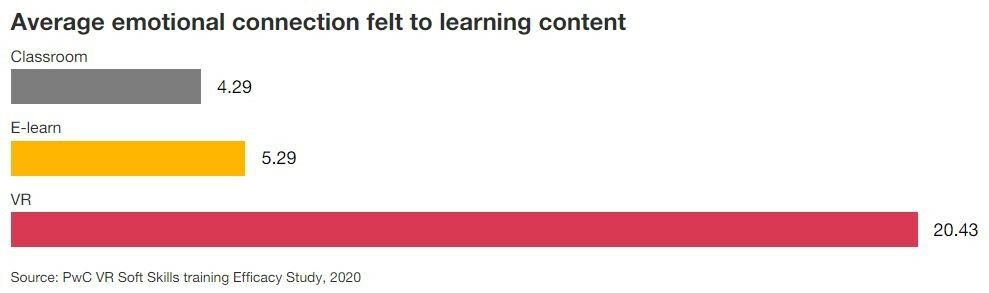
Virtual reality (VR) learners report feeling 2.3 times more emotionally attached to the training material than e-learners and 3.75 times more emotionally connected than those in traditional classrooms. Improved application and retention of information may result from this emotional bond.
Based on the given Bar Graph shown about emotional connection felt in learning, what does it entail with regards to traditional classroom teaching in the development of learners’ emotional connection to learning?
Virtual reality has surpassed the traditional teaching in providing emotional connection in learning.
Virtual reality will always provide effective learning due to the emotional connection it has with the learner.
Traditional way of teaching will become obsolete and ineffective in the future.
Traditional classroom discussions and e-learning are still effective approaches to learning.
VIRTUAL REALITY: A real-world review on a somewhat touchy subject
By: J.M. Zheng, et al.
Virtual reality (VR) is a cutting-edge human-computer interface that creates a realistic world. Participants have mobility inside the virtual environment. They are able to reach within, grasp it, modify it, and view it from many perspectives. There isn't a little screen with manipulable symbols or commands to make the machine perform anything.
Jason Lanier, the creator of VPL Research, is credited with coining the phrase "virtual reality." William Gibson first used the word "cyberspace" in his science fiction book Neuromancer, published in 1984. It is believed that cyberspace is the ultimate virtual environment. In this other computer reality, data is present in the form of light cities. Information workers access cyberspace and navigate its data highways using a specialized virtual reality device This gives them the experience of being physically free to go anywhere.
Virtual reality is influenced by many different industries. Instead of being a completely new field of technology, it is more of a synthesis of hitherto unrelated fields. Cybernetics, database design, real-time and distributed systems, simulation, computer graphics, human engineering, stereoscopy, human anatomy, electronic and mechanical engineering, and even artificial life are all included into virtual reality. The development of virtual reality systems presents several problems, including those related to hardware, software, human factors, and VR over fast networks.
What is the significance of including multiple fields in the development of virtual reality?
VR Stats for the Training &Education Industry in 2025
October 23, 2024 - Izaskun Olarreaga
Virtual reality (VR) learners report feeling 2.3 times more emotionally attached to the training material than e-learners and 3.75 times more emotionally connected than those in traditional classrooms. Improved application and retention of information may result from this emotional bond.
Based on the given Bar Graph shown about emotional connection felt in learning, what does it entail with regards to traditional classroom teaching in the development of learners’ emotional connection to learning?
VR Stats for the Training &Education Industry in 2025
October 23, 2024 - Izaskun Olarreaga
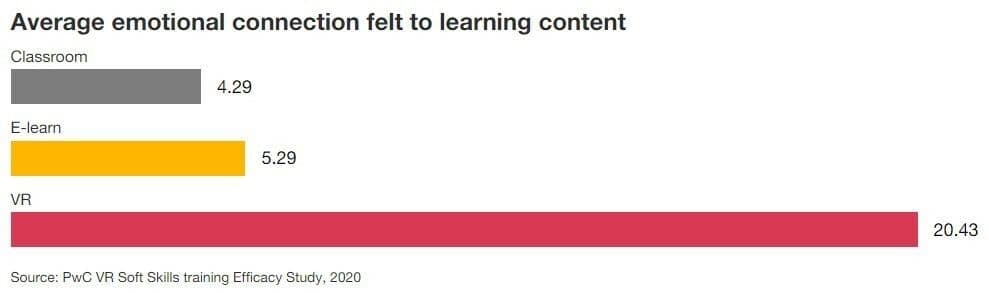
Virtual reality (VR) learners report feeling 2.3 times more emotionally attached to the training material than e-learners and 3.75 times more emotionally connected than those in traditional classrooms. Improved application and retention of information may result from this emotional bond.
According to the data, how much more emotionally connected do VR learners report feeling compared to those in traditional classrooms?

Virtual Reality: Ethical Challenges and Dangers
By Ben Kenwright on January 14th, 2019 in Editorial & Opinion, Ethics, Magazine Articles, Social Implications of Technology, Societal Impact
Including Ethics in the Design
Integrating ethics and moral sensitivity into design is referred to as “anticipatory technology ethics” by Brey and “responsible research and innovation” by Sutcliffe. These researchers emphasize the vital importance and responsibilities that designers have on technologies and their capacities, as well as designers’ moral obligations to the public. These obligations may include a wider long-term view, taking into account social involvement, environmental impacts, and other repercussions. Moral responsibilities related to technology have long been a subject of debate. For example, guidelines presented by Keith Miller and other researchers on the topic of moral responsibilities emphasize that people who design, develop, and deploy a computing artifact (hardware or software) are accountable for that artifact, and for the foreseeable effects of that artifact.
However, it is unclear how to predict the impact of virtual reality technologies (i.e., foreseeable effects). There is also a question of “foreseeable use” versus “intended use.” Hardware engineers may develop virtual reality technologies that are then used for unintended purposes in applications and by software developers.
In the wake of society’s exposure to VR, and due to today’s powerful computer systems, designers are able to create and develop complex interactive virtual worlds. These immersive environments offer numerous opportunities — both good and bad. But organizations and designers are not obligated to obey ethical restraints. There is also the element of hackers, and the issue of immoral exploitation of the technologies. These ethical questions arise partly because VR technologies are pervasive and difficult to classify and identify, and because it is difficult to predict their short- and long-term impacts. VR technologies also raise questions about legal responsibility, for example if software and hardware are used incorrectly or in unethical ways (see Figure2 for an outline of the ethical challenges connected with VR technologies).
So as VR has hit the mainstream, much debate has arisen over its ethical complexities. Traditional moral responsibilities do not always translate to the digital world. One aspect we argue is essential to ethical responsibility for virtual reality is that VR solutions must integrate ethical analysis into the design process, and practice dissemination of best practices. In the digital era, organizations and individuals need to uphold ethical and professional responsibilities to society and the public. Creativity should be combined with diligence. Decision making, ethics, and critical thinking should go hand in hand throughout the development process. Development needs to include future predictions, forecasting impact, evaluating and elaborating on possible consequences, and identifying any issues with openness and transparency.
InterrogatingCOVID-19 vaccine intent in the Philippines with a nationwide open-access online survey
By: Peer, J. 2022, February 16
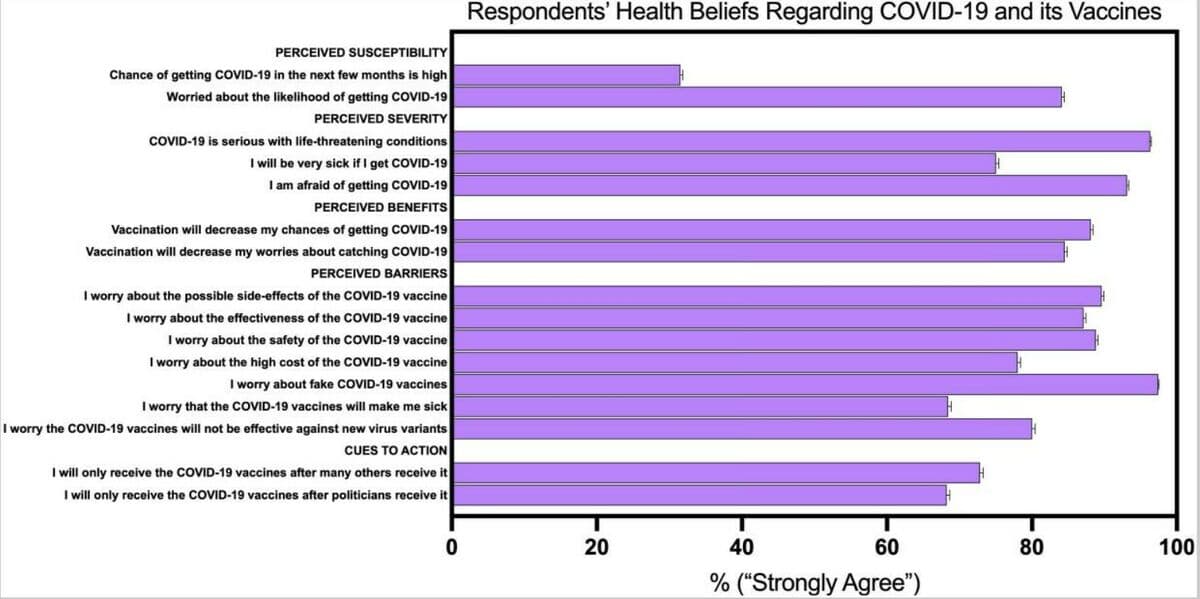
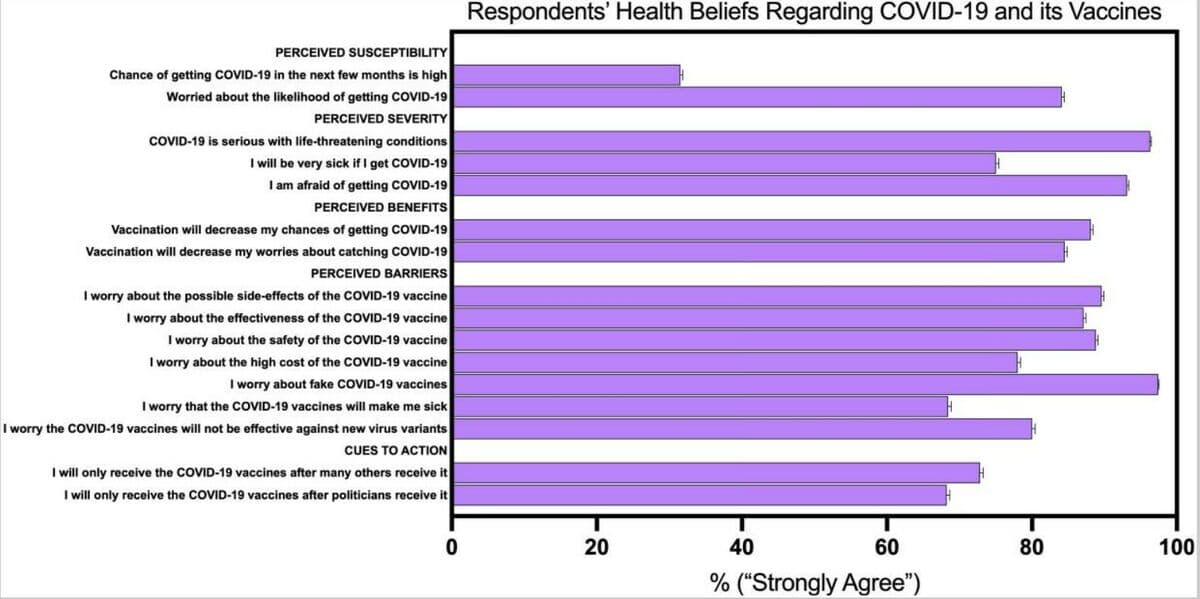
On January 30, 2020, the Department of Health (DOH) of the Philippines report edits first case of COVID-19, a novel respiratory disease first identified in Wuhan, China, that is caused by the coronavirus, SARS-CoV-2. With widespread human-to-human transmission, the virus is highly contagious, and the COVID-19pandemic is now of global concern. As of August 25, 2021, there have been 1,883,088 confirmed cases and 32,492 deaths from COVID-19 reported by the DOH throughout the archipelago. A study is conducted which interrogated COVID-19 vaccine intent in the country by deploying a nationwide open-access online survey, two months before the rollout of the national vaccination program. According to the results of health beliefs as shown in the figure below, with regards to perceived susceptibility to COVID-19 vaccines, the minority of participants reported that they thought that there was a high chance of personally contracting COVID-19 in the next few months (31.5%). However, when prompted to report worry about the likelihood of getting COVID-19, the majority of participants reported that they were worried (84.1%) and that COVID-19 is a serious illness with life-threatening conditions (96.3%). Furthermore, a significant majority (93.1%) reported that they were afraid of gettingCOVID-19, and that they would get very sick if they were infected with the virus (75%). The respondents in the survey reported significant perceived benefits for the COVID-19 vaccines. A large portion of participants noted that they believed that a COVID-19 vaccine would decrease the chances of gettingCOVID-19 (88.1%) and that the vaccine would alleviate their anxieties about catching the virus (84.5%). Notably, significant majorities of our respondents reported that they had worries about possible side-effects (89.6%),effectiveness (87.1%), safety (88.8%), and high cost (78%) of the vaccines. Nearly all were concerned about the possibility of fake jabs (97.4%). Many participants noted they would only receive the COVID-19 vaccines after many others had received it (72.8%) or after politicians had received it (68.2%).
Based on the passage, what are the main factors influencing the participants' intent regarding COVID-19 vaccination?
Interrogating COVID-19 vaccine intent in the Philippines with a nationwide open-access online survey
By: Peer, J. 2022, February 16
On January 30, 2020, the Department of Health (DOH) of the Philippines report edits first case of COVID-19, a novel respiratory disease first identified in Wuhan, China, that is caused by the coronavirus, SARS-CoV-2. With widespread human-to-human transmission, the virus is highly contagious, and the COVID-19pandemic is now of global concern. As of August 25, 2021, there have been 1,883,088 confirmed cases and 32,492 deaths from COVID-19 reported by the DOH throughout the archipelago. A study is conducted which interrogated COVID-19 vaccine intent in the country by deploying a nationwide open-access online survey, two months before the rollout of the national vaccination program. According to the results of health beliefs as shown in the figure below, with regards to perceived susceptibility to COVID-19 vaccines, the minority of participants reported that they thought that there was a high chance of personally contracting COVID-19 in the next few months (31.5%). However, when prompted to report worry about the likelihood of getting COVID-19, the majority of participants reported that they were worried (84.1%) and that COVID-19 is a serious illness with life-threatening conditions (96.3%). Furthermore, a significant majority (93.1%) reported that they were afraid of gettingCOVID-19, and that they would get very sick if they were infected with the virus (75%). The respondents in the survey reported significant perceived benefits for the COVID-19 vaccines. A large portion of participants noted that they believed that a COVID-19 vaccine would decrease the chances of gettingCOVID-19 (88.1%) and that the vaccine would alleviate their anxieties about catching the virus (84.5%). Notably, significant majorities of our respondents reported that they had worries about possible side-effects (89.6%),effectiveness (87.1%), safety (88.8%), and high cost (78%) of the vaccines. Nearly all were concerned about the possibility of fake jabs (97.4%). Many participants noted they would only receive the COVID-19 vaccines after many others had received it (72.8%) or after politicians had received it (68.2%).
Why is it important for the respondents to see politicians receive the vaccine before they do?

Interrogating COVID-19 vaccine intent in the Philippines with a nationwide open-access online survey
By: Peer, J. 2022, February 16
On January 30, 2020, the Department of Health (DOH) of the Philippines report edits first case of COVID-19, a novel respiratory disease first identified in Wuhan, China, that is caused by the coronavirus, SARS-CoV-2. With widespread human-to-human transmission, the virus is highly contagious, and the COVID-19pandemic is now of global concern. As of August 25, 2021, there have been 1,883,088 confirmed cases and 32,492 deaths from COVID-19 reported by the DOH throughout the archipelago. A study is conducted which interrogated COVID-19 vaccine intent in the country by deploying a nationwide open-access online survey, two months before the rollout of the national vaccination program. According to the results of health beliefs as shown in the figure below, with regards to perceived susceptibility to COVID-19 vaccines, the minority of participants reported that they thought that there was a high chance of personally contracting COVID-19 in the next few months (31.5%). However, when prompted to report worry about the likelihood of getting COVID-19, the majority of participants reported that they were worried (84.1%) and that COVID-19 is a serious illness with life-threatening conditions (96.3%). Furthermore, a significant majority (93.1%) reported that they were afraid of gettingCOVID-19, and that they would get very sick if they were infected with the virus (75%). The respondents in the survey reported significant perceived benefits for the COVID-19 vaccines. A large portion of participants noted that they believed that a COVID-19 vaccine would decrease the chances of gettingCOVID-19 (88.1%) and that the vaccine would alleviate their anxieties about catching the virus (84.5%). Notably, significant majorities of our respondents reported that they had worries about possible side-effects (89.6%),effectiveness (87.1%), safety (88.8%), and high cost (78%) of the vaccines. Nearly all were concerned about the possibility of fake jabs (97.4%). Many participants noted they would only receive the COVID-19 vaccines after many others had received it (72.8%) or after politicians had received it (68.2%).
If you were to develop a strategy to increase vaccination rates based on the concerns mentioned, which of the following steps would be most effective?
How the James Webb SpaceTelescope Works
By: Nicholas Gerbis &Sarah Gleim (June 9, 2023)
The James Webb Space Telescope (JWST) is a major advancement in our understanding of the universe. Telescopes have continuously evolved since they revolutionized astronomy around 400 years ago. The Hubble Space Telescope, launched more than 30 years ago, provided groundbreaking images of stellar nurseries and galaxy collisions.
The JWST, launched on December 22, 2021, from Kourou, French Guiana, by NASA, ESA, and CSA, aims to answer ambitious questions about the universe. It builds on the work of NASA's Great Observatories, observing in the near- and mid-infrared to see through dust clouds.
Key features and contributions of the JWST include:
Infrared Observation: Infrared light penetrates dust clouds, allowing observation of forming stars and planets, galaxy collisions, and life’s chemical building blocks.
First Stars and Galaxies: Insights into the formation of the first stars and galaxies and their relation to dark matter.
Four Instruments: Captures images and spectra of astronomical objects with unprecedented detail.
The JWST will help scientists explore unseen events, from galaxy births to the light of the first stars. It features a diamond-shaped sunshield made of thin Kapton layers, protecting the main reflector and instruments. Webb's unitized pallet structure houses support functions and a momentum trim tab.
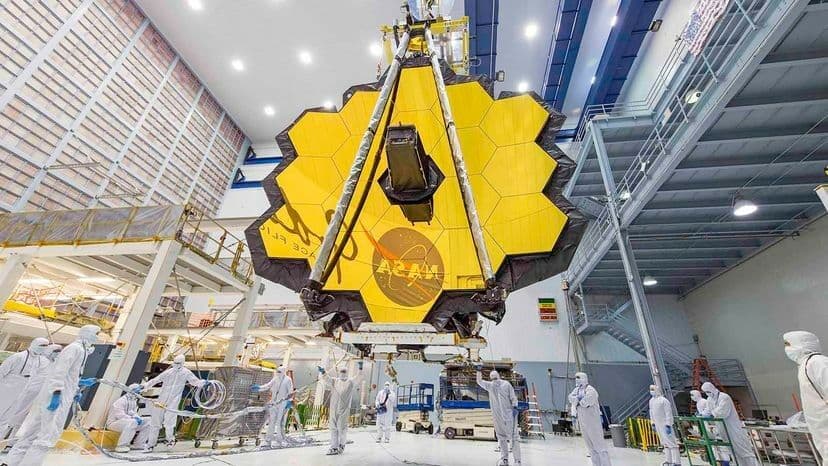
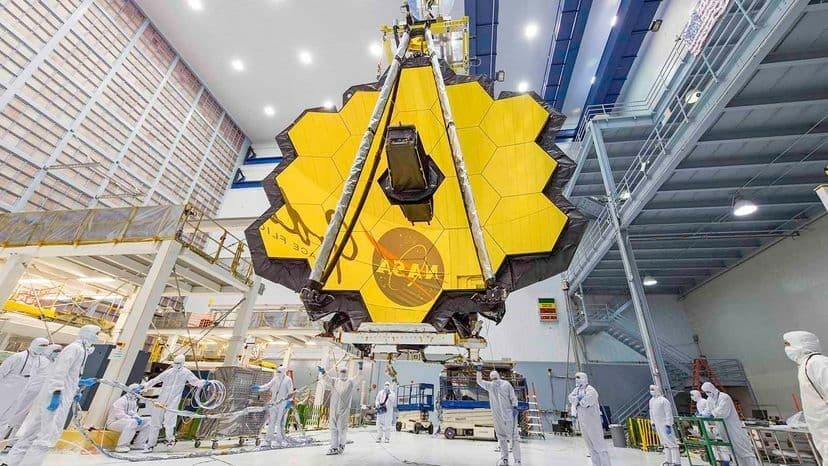
Above the sunshield are JWST's mirrors. The primary mirror, 21.4 feet (6.5 meters) across, captures light from distant galaxies. It consists of 18 hexagonal beryllium segments that unfold after launch, working together as one large, lightweight mirror.
What is a key feature of the James Webb Space Telescope (JWST)?

How the James Webb Space Telescope Works
By: Nicholas Gerbis &Sarah Gleim (June 9, 2023)
The James Webb Space Telescope (JWST) is a major advancement in our understanding of the universe. Telescopes have continuously evolved since they revolutionized astronomy around 400 years ago. The Hubble Space Telescope, launched more than 30 years ago, provided groundbreaking images of stellar nurseries and galaxy collisions.
The JWST, launched on December 22, 2021, from Kourou, French Guiana, by NASA, ESA, and CSA, aims to answer ambitious questions about the universe. It builds on the work of NASA's Great Observatories, observing in the near- and mid-infrared to see through dust clouds.
Key features and contributions of the JWST include:
Infrared Observation: Infrared light penetrates dust clouds, allowing observation of forming stars and planets, galaxy collisions, and life’s chemical building blocks.
First Stars and Galaxies: Insights into the formation of the first stars and galaxies and their relation to dark matter.
Four Instruments: Captures images and spectra of astronomical objects with unprecedented detail.
The JWST will help scientists explore unseen events, from galaxy births to the light of the first stars. It features a diamond-shaped sunshield made of thin Kapton layers, protecting the main reflector and instruments. Webb's unitized pallet structure houses support functions and a momentum trim tab.
Above the sunshield are JWST's mirrors. The primary mirror, 21.4 feet (6.5 meters) across, captures light from distant galaxies. It consists of 18 hexagonal beryllium segments that unfold after launch, working together as one large, lightweight mirror.
Why is the JWST designed to observe in the infrared spectrum?
How the James Webb Space Telescope Works
By: Nicholas Gerbis &Sarah Gleim (June 9, 2023)
The James Webb Space Telescope (JWST) is a major advancement in our understanding of the universe. Telescopes have continuously evolved since they revolutionized astronomy around 400 years ago. The Hubble Space Telescope, launched more than 30 years ago, provided groundbreaking images of stellar nurseries and galaxy collisions.
The JWST, launched on December 22, 2021, from Kourou, French Guiana, by NASA, ESA, and CSA, aims to answer ambitious questions about the universe. It builds on the work of NASA's Great Observatories, observing in the near- and mid-infrared to see through dust clouds.
Key features and contributions of the JWST include:
Infrared Observation: Infrared light penetrates dust clouds, allowing observation of forming stars and planets, galaxy collisions, and life’s chemical building blocks.
First Stars and Galaxies: Insights into the formation of the first stars and galaxies and their relation to dark matter.
Four Instruments: Captures images and spectra of astronomical objects with unprecedented detail.
The JWST will help scientists explore unseen events, from galaxy births to the light of the first stars. It features a diamond-shaped sunshield made of thin Kapton layers, protecting the main reflector and instruments. Webb's unitized pallet structure houses support functions and a momentum trim tab.
Above the sunshield are JWST's mirrors. The primary mirror, 21.4 feet (6.5 meters) across, captures light from distant galaxies. It consists of 18 hexagonal beryllium segments that unfold after launch, working together as one large, lightweight mirror.
If the primary mirror of the JWST is damaged, what challenge could this pose?