Solve problems involving operations (+, –, ×, and ÷) with whole numbers, decimals (through thousandths), straight computation, or word problems.
Interpret and compute quotients of fractions (including mixed numbers), and solve word problems involving division of fractions by fractions. Example 1: Given a story context for (2/3) ÷ (3/4), explain that (2/3) ÷ (3/4) = 8/9 because 3/4 of 8/9 is 2/3. (In general, (a/b) ÷ (c/d) = (a/b) × (d/c) = ad/bc.) Example 2: How wide is a rectangular strip of land with length 3/4 mi and area 1/2 square mi? Example 3: How many 2 1/4-foot pieces can be cut from a 15 1/2-foot board?
Find the greatest common factor of two whole numbers less than or equal to 100 and the least common multiple of two whole numbers less than or equal to 12.
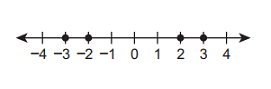
Determine the opposite of a number and recognize that the opposite of the opposite of a number is the number itself (e.g., – ( – 3) = 3; 0 is its own opposite).
Apply number theory concepts (specifically, factors and multiples).
Apply the distributive property to express a sum of two whole numbers, 1 through 100, with a common factor as a multiple of a sum of two whole numbers with no common factor. Example: Express 36 + 8 as 4(9 + 2).
Understand that positive and negative numbers are used together to describe quantities having opposite directions or values and locations on the number line and coordinate plane.
Write, interpret, and explain statements of order for rational numbers in real-world contexts. Example: Write – 3°C > – 7°C to express the fact that – 3°C is warmer than – 7°C.
Interpret the absolute value of a rational number as its distance from 0 on the number line and as a magnitude for a positive or negative quantity in a real-world situation. Example: For an account balance of – 30 dollars, write |– 30| = 30 to describe the size of the debt in dollars, and recognize that an account balance less than – 30 dollars represents a debt greater than 30 dollars.
Solve real-world and mathematical problems by plotting points in all four quadrants of the coordinate plane. Include use of coordinates and absolute value to find distances between points with the same first coordinate or the same second coordinate.
Solve real-world and mathematical problems involving division of fractions.
Represent quantities in real-world contexts using positive and negative numbers, explaining the meaning of 0 in each situation (e.g., temperature above/below zero, elevation above/below sea level, credits/debits, positive/negative electric charge).
Locate and plot integers and other rational numbers on a horizontal or vertical number line; locate and plot pairs of integers and other rational numbers on a coordinate plane.
Track each student's skills and progress in your Mastery dashboards