Apply properties of operations to add and subtract rational numbers, including real-world contexts.
Apply properties of operations to multiply and divide rational numbers, including real-world contexts; demonstrate that the decimal form of a rational number terminates or eventually repeats.
Determine the reasonableness of answer(s) or interpret the solution(s) in the context of the problem. Example: If you want to place a towel bar that is 9 3/4 inches long in the center of a door that is 27 1/2 inches wide, you will need to place the bar about 9 inches from each edge; this estimate can be used as a check on the exact computation.
Solve real-world and mathematical problems involving the four operations with rational numbers
Represent addition and subtraction on a horizontal or vertical number line.
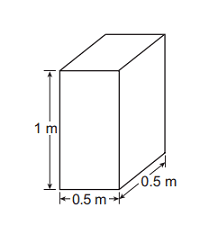
Solve real-world and mathematical problems involving area, volume, and surface area of twoand three-dimensional objects composed of triangles, quadrilaterals, polygons, cubes, and right prisms. Formulas will be provided.
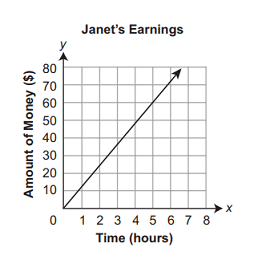
Determine whether two quantities are proportionally related (e.g., by testing for equivalent ratios in a table, graphing on a coordinate plane and observing whether the graph is a straight line through the origin).
Identify the constant of proportionality (unit rate) in tables, graphs, equations, diagrams, and verbal descriptions of proportional relationships.
Use proportional relationships to solve multi-step ratio and percent problems. Examples: simple interest, tax, markups and markdowns, gratuities and commissions, fees, percent increase and decrease.
Represent proportional relationships by equations. Example: If total cost t is proportional to the number n of items purchased at a constant price p, the relationship between the total cost and the number of items can be expressed as t = pn.
Explain what a point (x, y) on the graph of a proportional relationship means in terms of the situation, with special attention to the points (0, 0) and (1, r), where r is the unit rate.
Use variables to represent quantities in a real-world or mathematical problem and construct simple equations and inequalities to solve problems.
Solve word problems leading to equations of the form px + q = r and p(x + q) = r, where p, q, and r are specific rational numbers. Example: The perimeter of a rectangle is 54 cm. Its length is 6 cm. What is its width?
Solve word problems leading to inequalities of the form px + q > r or px + q < r, where p, q, and r are specific rational numbers, and graph the solution set of the inequality. Example: A salesperson is paid $50 per week plus $3 per sale. This week she wants her pay to be at least $100. Write an inequality for the number of sales the salesperson needs to make and describe the solutions.
Describe the two-dimensional figures that result from slicing three-dimensional figures. Example: Describe plane sections of right rectangular prisms and right rectangular pyramids.
Find the area and circumference of a circle. Solve problems involving area and circumference of a circle(s). Formulas will be provided.
Identify or describe the properties of all types of triangles based on angle and side measures.
Identify, use, and describe properties of angles and their measures.
Identify and use properties of angles formed when two parallel lines are cut by a transversal (e.g., angles may include alternate interior, alternate exterior, vertical, corresponding).
Use data from a random sample to draw inferences about a population with an unknown characteristic of interest. Example 1: Estimate the mean word length in a book by randomly sampling words from the book. Example 2: Predict the winner of a school election based on randomly sampled survey data.
Use statistical measures to compare two numerical data distributions.
Predict or determine whether some outcomes are certain, more likely, less likely, equally likely, or impossible (i.e., a probability near 0 indicates an unlikely event, a probability around 1/2 indicates an event that is neither unlikely nor likely, and a probability near 1 indicates a likely event).
Find the probability of a simple event, including the probability of a simple event not occurring. Example: What is the probability of not rolling a 1 on a number cube?
Find probabilities of independent compound events using organized lists, tables, tree diagrams, and simulation.
Track each student's skills and progress in your Mastery dashboards