Loading...


Psych Exam 3
Quiz by Omar Deleon Jr
Tag the questions with any skills you have. Your dashboard will track each student's mastery of each skill.
Largest part of the brain
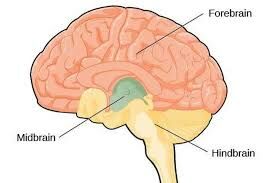
Forebrain
Connects the brain to the outside word
Largest part of the brain
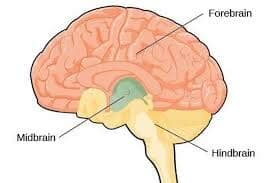
Surface of the brain, associated with our highest mental abilities
Concept that each hemisphere of the brain associated with specialized functions
Thick band of neural fibers connecting the brains two hemispheres. Allows communication between the two.
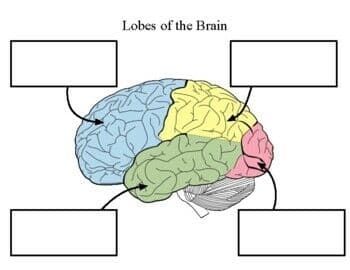
What are the four lobes of the brain?
Part of the cerebral cortex involved in reasoning, motor control, emotion , and language. (hint: only one with TWO cortex)
What are the two cortex's in the frontal lobe?
Strip of the cortex involved in planning and coordinating movement.
Area in the frontal lobe responsible for higher level cognitive functioning
Part of the cerebral cortex involved in processing various sensory and perceptual information.
What cortex is within the parietal lobe?
Essential for processing sensory information from across the body such as touch, temp, and pain. (Phantom pains come from this cortex.)
Part of the cerebral cortex associated with visual processing; contains the primary visual cortex.
Part of the cerebral cortex associated with hearing. memory, emotion, and some aspects of language.
Sensory relay station for the brain. (Except smell)
Match cortex's to lobes
Which Lobe is the BLUE Section?
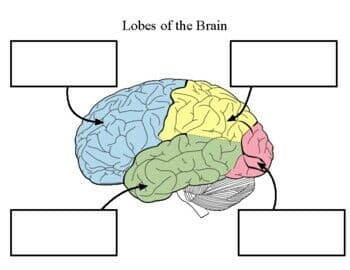
Which lobe is the yellow section.
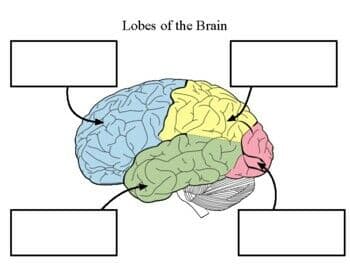
Which is the green?
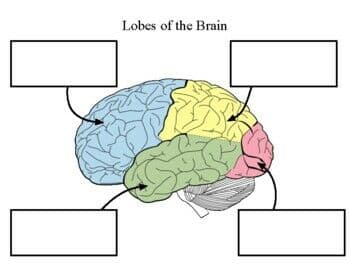
Now pink
A collection of structures involved in processing emotion and memory.
Which parts are of the limbic system
Structure in the temporal lobe that is associated with hearing and memory. (Pt 1 of limbic)
Structure in the limbic system involved in our experience of emotion and tying emotion and reasoning to our memories
Forebrain structure that regulates hunger and thirst and sexual motivation and behavior and a number of homeostatic processes.
Division of the brain located between the forebrain and the hindbrain.
Mid brain structure important in regulating the sleep/wake cycle, arousal, alertness, and motor activity.
Division of the brain containing the medulla, pons and cerebellum.
Parts of the hindbrain (choose 3)
Hindbrain structure that controls automated processes like breathing, blood pressure, and heart rate.
Hind brain stucture that connects the brain and spinal cords involved in regulating brain activity during sleep.
hindbrain structure that controls balance, coordination, movement, and motor skills, and it is thought to be important in processing some type of memory
Series of glands that produce chemical substances called hormones. (Does chemical messages but is slower than the nervous system.)
Chemical message released by endocrine glands travels through blood.
State marked by relatively low levels of physical activity and reduced sensory awareness.
Biological rhythm that occurs over approximately 24 hours.
Area of the hypothalamus in which the body's biological clock is located.
Hormone secreted by the endocrine gland that serves as an important regulator of the sleep/wake cycle.
Result of insufficient sleep on a chronic basis. (Your body tries to make up for missing sleep)
Sleep-deprived individuals will experience shorter sleep latentcies during subsequent opportunities for sleep.
Who is randy Gardener
Period of sleep where dreams and sleep paralysis occurs.
Occurs during REM sleep, prevents movement in sleep
Period of sleep outside REM sleep, movement is enabled and dreaming is little.
What we actually SEE in the dream
What is Latent Content
Consistent difficulty in falling or staying asleep for at least 3 nights a week over a months time.
A group of sleep disorders characterized by disruptive motor activity during sleep. Ex: Sleepwalking
Sleep disorder in which the muscle paralysis in REM sleep does not occur. High levels of physical activity during REM sleep.
Category of drugs that have strong anti-pain properties
State of extreme self-focus and attention in which minimal attention is given to external stimuli.
Clearing the mind in order to achieve a state of relaxed awareness and focus.
The brains ability to focus on multiple things at a time. Or failure to do so.
What happens when sensory information is detected by a sensory receptor. (The Biological bit)
Way that sensory information is interpreted and consciously experienced. (The psychological bit)
Match em
Conversion from sensory stimulus energy into action potential. (remember AXON)
Not preciving stimuli that remain relatively constant over prolonged periods of time. (Ex: Nose blindness)
The minimum amount of stimulus energy needed for a stimulus to be detected. (Ex: sound is too quiet to hear)
Message presented below the threshold of conscious behavior.
Difference in stimuli required to detect a difference between the stimuli. (Ex: some reds are more bright/darker than other reds)
Prior knowledge affects perception
Starting with the small bits and eventually working upward to "the big picture"
Failure to notice something that is completely visible because a lack of attention. (Ex: Texting and driving resulting in a crash.)