Loading...


Quiz on Light(reflection)Prelim Paper Questions
Quiz by Jessica Lew
Customize this quiz to suit your class
Instantly translate to 100+ languages
Tag the questions with any skills you have. Your dashboard will track each student's mastery of each skill.
Give this quiz to my class
Where is the image of the pin?
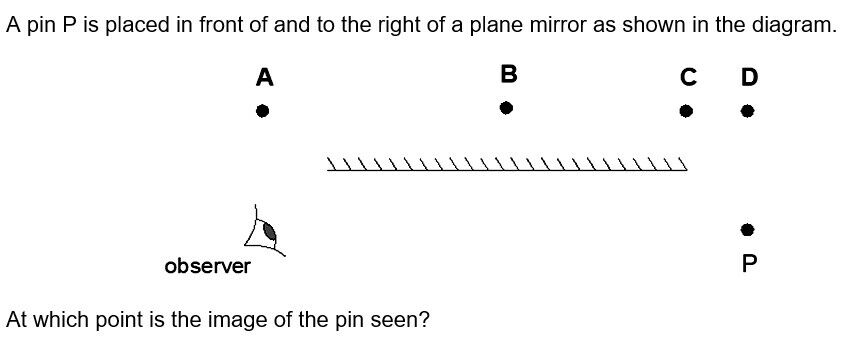
D
B
C
A
Ref to pic
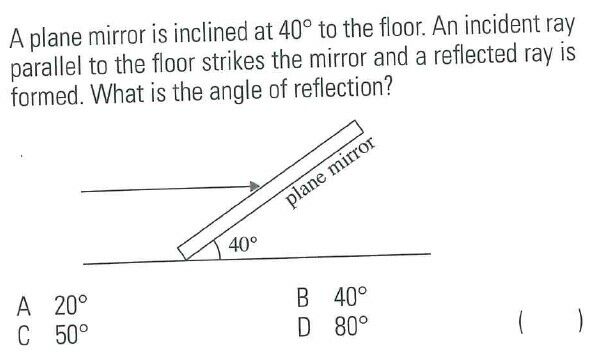
D
A
B
C
Where is the image of the pin?
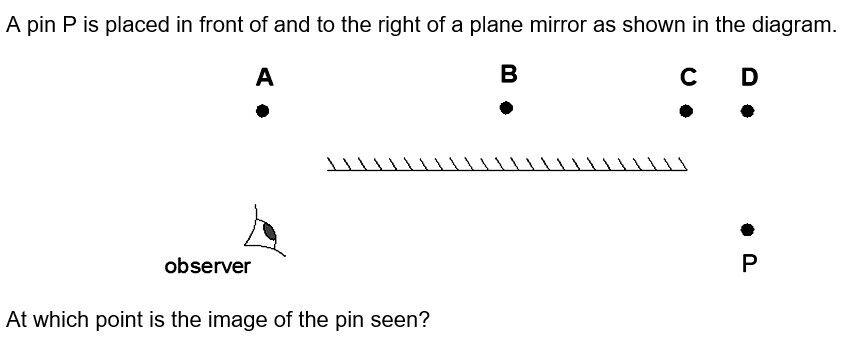
Ref to pic

Ref to the picture
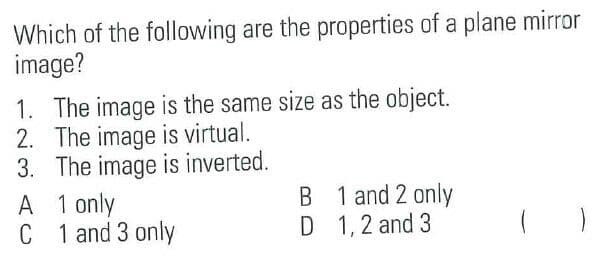
Ref to pic
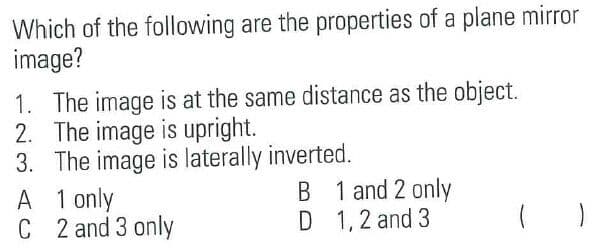
Ref to pic
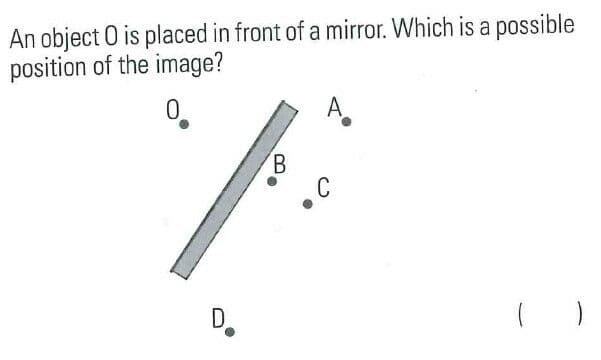
Ref to picture
 4E Pure Physics_Quiz on Light Reflection, Refraction, Total internal reflection(Publisher's Test Qn)Create quiz based on this information Who is the author of Letter 1, and who is the intended recipient? The author of Letter 1 is Robert Walton. The intended recipient is his sister, Mrs. Saville. What is the author's purpose in writing this letter? The author's purpose in writing this letter is to update his sister on his progress and feelings regarding his upcoming Arctic expedition. Where is the author currently located, and what is the significance of the setting? The author is currently in St. Petersburg, Russia. The significance of the setting is that it is the starting point of his journey towards the Arctic, and it sets the tone for the novel's exploration of extreme environments. Describe the author's feelings about the natural world and the northern journey. The author expresses excitement and confidence about his journey. He is inspired by the cold northern breeze, which fills him with delight and a sense of adventure. What is the author's fascination with the pole, and how does he describe it? The author is fascinated by the idea of the North Pole as a land of beauty and eternal light. He envisions it as a region of wonder and hopes to make groundbreaking discoveries there. What are some of the author's hopes and expectations for his journey? The author hopes to make significant discoveries, including a passage near the pole to shorten travel times and the secret of the magnet's power. He also wants to explore uncharted lands. How does the author's enthusiasm change as he writes the letter? At the beginning of the letter, the author is enthusiastic and confident. However, as he reflects on the challenges and uncertainties of his journey, his enthusiasm becomes mixed with doubt and a sense of the unknown. What role has reading played in the author's life, and how does it relate to his journey? Reading has played a significant role in the author's life, sparking his early interest in exploration. He initially wanted to embark on a seafaring life, but reading led him to poetry and later to his current expedition. How has the author prepared for his upcoming expedition? The author has prepared by enduring hardships, accompanying whale-fishers, studying mathematics, medicine, and physical science, and even working as an under-mate on a Greenland whaler to gain practical experience. What does the author express about his feelings, courage, and hopes for the future? The author expresses a strong desire to achieve a great purpose and a willingness to face the challenges and uncertainties of his expedition with courage. He hopes to return triumphant but acknowledges that success may take a long time, if ever.Create a twenty question multiple choice quiz for the following twenty words: Anemic (Adj) -weak; lacking energy Cumulus (N)--white, fluffy cloud with a low base Nimbus (N)--dark, rain cloud Linoleum (N)--a washable floor covering Strutted (V)--walked in a pompous way, Rogue: (n) a dishonest or unprincipled person. Scrutiny: (n) critical observation or examination. Vigilant (adj) keeping careful watch for possible danger or difficulties. Commence (v) begin; start. Illuminate (v) make (something) visible or bright by shining light on it; light upCreate a twenty word vocabulary quiz using the following ten words: Rogue: (n) a dishonest or unprincipled person. Scrutiny: (n) critical observation or examination. Vigilant (adj) keeping careful watch for possible danger or difficulties. Commence (v) begin; start. Illuminate (v) make (something) visible or bright by shining light on it; light up Anemic (Adj) -weak; lacking energy Cumulus (N)--white, fluffy cloud with a low base Nimbus (N)--dark, rain cloud Linoleum (N)--a washable floor covering Strutted (V)--walked in a pompous wayThe Pedestrian (adapted) by Ray Bradbury Mr. Leonard Mead loved to walk outside at night. The city was quiet at eight o’clock on a misty November evening. He liked to put his hands in his pockets and stroll along the cracked sidewalks, stepping over grass that grew between the concrete. He would stop at the corners, look down the empty streets, and choose which way to go. It didn’t really matter which way he picked, because he was always alone in the year 2053. Sometimes, Mr. Mead would walk for hours and miles, coming home only at midnight. As he walked, he saw houses with their windows dark, like he was walking through a graveyard. Sometimes, he saw tiny flashes of light from behind curtains or heard soft voices from open windows. Mr. Mead wore sneakers so his footsteps wouldn’t make noise. If he wore shoes with hard heels, the dogs would bark and people might look out their windows. He liked being quiet and unnoticed as he walked in the cool November air. On this night, Mr. Mead walked west, toward the sea. The air was cold and frosty, making his nose sting and his lungs feel fresh. He listened to the sound of his shoes in the fallen leaves and sometimes picked up a leaf to look at it under the streetlights. As he walked, he whispered to the houses, “Hello in there. What’s on TV tonight? Where are the cowboys? Is the cavalry coming?” But the street was silent and empty, with only his shadow moving. He checked his watch. “Eight-thirty. Is it time for a quiz show? Or a funny show?” He thought he heard laughter from a house, but nothing else happened. He kept walking, sometimes stumbling over the broken sidewalk. In all his years of walking, he had never seen another person out at night. He reached a big intersection where two highways crossed. During the day, it was full of cars, but now it was empty and quiet, like a dry riverbed. Mr. Mead turned onto a side street, heading home. Suddenly, a police car turned the corner and shined a bright light on him. He stood still, surprised by the light. A metallic voice from the car said, “Stand still. Don’t move! Put up your hands!” Mr. Mead obeyed. The police car asked, “What’s your name?” “Leonard Mead,” he answered. “What’s your job?” “I guess I’m a writer,” Mr. Mead said. The police car replied, “No profession.” Mr. Mead hadn’t written anything in years, since people didn’t buy books or magazines anymore. People just stayed inside their houses, watching TV. The car asked, “What are you doing out?” “I’m walking,” Mr. Mead said. “Walking? Just walking?” the car repeated. “Yes,” he said. “Where are you walking? Why?” “For air. To see things,” Mr. Mead answered. “Your address?” “Eleven South Saint James Street.” “Do you have air in your house? An air conditioner?” “Yes.” “Do you have a TV?” “No.” “No?” The car was quiet for a moment. “Are you married?” “No,” Mr. Mead said. “Not married,” the car said. The night was cold and quiet. “Just walking, Mr. Mead?” “Yes.” “But why?” “I told you. For air, to see, and just to walk.” “Do you do this often?” “Every night for years.” The police car was silent for a moment. Then it said, “Get in.” The back door opened. “Wait, I haven’t done anything!” Mr. Mead protested. “Get in,” the car repeated. Mr. Mead looked into the car. There was no one inside, just an empty front seat. The back seat was like a small jail cell, cold and hard. “Where are you taking me?” he asked. The car answered, “To the Psychiatric Center for Research on Regressive Tendencies.” Mr. Mead got in. The door closed, and the car drove away through the empty streets. As they passed his house, he saw that all the lights were on. “That’s my house,” he said, but no one answered. The car drove off into the night, leaving the streets empty and silent for the rest of the cold November night.Create vocab quiz for the following vocab: eco hotel (noun) a hotel that is made to minimise impact on the natural environment water sports (noun) sports that take place on or in water windsurfing (noun) a sport in which you sail across water by standing on a board and holding onto a large sail waterskiing (noun) a sport in which you are pulled along the surface of the water by a boat, while balancing on a pair of skis first-aid kit (noun) a box or bag containing basic medical equipment day trip (noun) a visit to a place in which you go there and come back on the same day picnic basket (noun) a light container made of thin strips of wood, metal or plastic, that holds an informal meal of sandwiches, etc. for eating outside roller skating (noun) the activity of moving along the ground using roller skates ice skating (noun) the sport or activity of moving on ice using ice skates theme park (noun) a large permanent area for public entertainment, with entertaining activities and big machines to ride on or play games on, restaurants, etc. national park (noun) an area of a country that is protected by the government because of its natural beauty or because it has a special history campsite (noun) an area where people stay in tents for a holiday hot spring (noun) a place where hot water naturally flows out from the ground, typically heated by underground volcanic activity insect repellent (noun) a substance used to repel very small animals such as mosquitos tennis court (noun) a rectangular area marked with lines on which tennis is played swimming pool (noun) an area of water that has been made for people to swim in beach umbrella (noun) a device for protection against the sun sightseeing tour (noun) a tour of a place, visiting interesting places boat trip (noun) a journey taken in a small vehicle travelling on waterMake mcq quiz with 4 option in which one is correct -'10 Basis of Material Science • .....;;;";;;"~~;;,,;;,,,,;.;.,,;;,,,;,,;.;,.,------------ 6. Temporary materials: Some materials are meant to be placed in the oral cavity for a short period of time for different reasons. • Temporary crowns: While a permanent crown is prepared in the dental laboratory, the patient must wait for few days before it can be fabricated and cemented into place. Does patient experience any problems during this time period? If the tooth is vital (the pulp is alive), the patient is likely to experience pain and sensitivity while eating and drinking, also it looks unesthetic. What can be done to solve this problem? A temporary crown is placed before the patient leaves the clinic. It is constructed and luted in the same appointment in which the crown preparation is done. Temporary crowns are not very strong or esthetic but they serve adequately till the permanent crown is ready to be cemented. • Temporary restorations: Sometimes it is difficult to decide immediately the best line of treatment for a particular tooth. The exact condition of the pulp may not be obvious to the dentist from the patient's symptoms. A dentist removes all or part of the decay and then places a temporary restoration to have time to observe the behaviour of the pulp or to give the pilip time to heal before deciding the further treatment required. Classification based on Location of Fabrication 4,9 Materials can be classified based on the location of fabrication into: • Direct restorative materials. • Indirect restorative materials Direct restorative materials: They include those materials which are used to restore cavity preparations directly in the oral cavity (Box 1.5). Box 1.5: Examples of direct restorative materials Amalgam, composites, glass ionomer and other materials, which set by chemical reactions in the mouth. Indirect restorative materials: It includes those restorations which must be fabricated outside the mouth, indirectly on a cast/ model/ die, because their processing condition would harm oral tissues. Materials used in the construction of such prosthesis are called indirect restorative materials (Box 1.6). Box 1.6: Examples of indirect restorative materials Gold inlays, crowns of metal, ceramic and polymers, which are processed at elevated temperatures. Some indirect composite restorations can be processed under specific wavelength of light, e.g. Ceramage. Classification based on Longevity of Use 1. Permanent restorations: These restorations are not planned to be replaced for a particular time period. Though they are referred to as permanent, actually they are not, e.g. fillings, crowns, bridges and dentures do not last forever (Fig. 1.5). 2. Temporary restorations: These restorations are planned to be replaced in a short period of time, such as few days to weeks. For ~ Permanent C/) c c -.2 0 c- :;::; Cll co Interim ~ Q; 0 .8ll::1iJ C/) o~ Cll a:: c:=:J Temporary Time period Fig. 1.5: Diagram depicting the time period of use of a restoration. (Arrow in permanent restoration depicts that such restorations are not planned to be replaced for a long period of time.) Introducton to Dental Materials Dental materials Box 1.7: Characteristics of metals 1. High thermal and electrical conductivity 2. Ductility (pure metals are very soft and they can be bent without breaking) 3. Opacity (they do not transmit light) 4. Luster (they have a surface that strongly reflects light and appears bright and shiny) 5. They tend to dissolve to some extent in water or other aqueous solutions, producing cations. 6. All metals are white (actually gray) except for gold, which is yellow, and copper, which is reddish. 7. All metals are solid at room temperature except mercury, which is liquid at room temperature and is used with silver alloys as amalgam. 8. All metals have high melting temperatures because of high strength of the metallic bond that holds the atoms together. 3. Polymers 4. Composites Composites are mixtures of two or more of the first three classes in which the different components remain distinct from one another in the final structure. A common example is composite resin. Fig. 1.7a: Three-dimensional structure of iron (metal) Metals Metals are the oldest of the three classes of materials that have been used as dental materials. Metals are characterized by metallic bonds (Box 1.7) which will be discussed in the next chapter. Metals solidify with their atoms in a regular or crystalline arrangement (see Chapter 2), often in the form of a cube (Fig. 1.7a). example, temporary fillings done in a tooth during root canal treatment, which have to be replaced within 2-4 days during subsequent visits. They are used to protect the tooth and provide function till the final restoration is done. 3. Interim restoration: At times, dental treatment requires "long-term" definite temporary restorations or "interim" restorations. For examle, a 7-year-old child, met with trauma and fractured one of his central incisors. A large composite build- up may serve his immediate requirement until the root formation is completed and a permanent crown is placed. 5 Classification based on the Chemical Nature of the Material These are the atoms that make up a material and the way they are bonded together determine the properties of that materiaLS Weak bonds make for weak materials and vice versa (Table 1.4). Materials can be classified into different categories based on their primary atomic bonds (Fig. 1.6): 1. Metals 2. Ceramics Fig. 1.6: Classification of dental materials based on chemical nature 12 Basis of Material Science Box 1.9: Benefits of ceramics in dentistry 1. Many ceramic oxides are used as pigmenting agents. These oxides produce good range of colors. Due to this characteristic, we are able to match almost any tooth color with good esthetic results. 2. They are inert, i.e. not chemically reactive. This quality provides ceramics with good bio- compatibility. 3. Ceramic materials are translucent, like natural teeth. This translucency gives the ceramic crown a more natural appearance than any other dental material. Fig. 1.7b: Internal arrangement of tetrahedral structure of ceramic (silica) four large oxygen atoms surround smaller silicon atom Ceramics A ceramic is a compound formed by the union of a metallic and a non-metallic element (Box 1.8). Most of these materials are oxides, formed by the union of oxygen with metals such as silicon, aluminum, calcium and magnesium (Fig.1.7b). Ceramics may be simple or complex. Examples of simple ceramics are alumina and silica. Examples of complex ceramics are feldspar (potassium aluminum silicate) and kaolin (hydrated aluminum silicate). Ceramics may be crystalline or non- crystalline (i.e. amorphous). Porcelain is a specific type of ceramic used extensively in dentistry (Box 1.9). Box 1.8: Characteristics of ceramics 1. High melting points. 2. Brittleness, which means they cannot be bent or deformed (no sliding) to any extent without actually cracking and breaking. 3. They are poor conductor of heat and electricity. 4. They are chemically inert. 5. They have excellent esthetic result in terms of matching natural teeth. Fig. 1.8: Stucture of synthetic polymer Polymers They are the latest addition (early to mid- 1900s) to dental materials. Most of the polymers are nowadays synthesized by humans. Polymers are giant, long-chain organic molecules (Fig. 1.8). Polymers are characterized by covalent bonds within each molecule, giving them tremendous strength in a single direction. Try to break a nylon rope by pulling it! They are poor conductors of heat and electri- city. Most polymers have a structure containing thousands of carbon atoms linked together like beads on a string. Others, such as silicone polymers are formed with silicon-oxygen bonds. Introducton to Dental Materials Table 1.4: Characteristics of different materials 13 Characteristics Bond Properties Crystal structure Metals Metallic bonding High strength and hardness, high electrical and thermal conductivity BCC, FCC, or HCP unit cells Ceramics Ionic or covalent bonding, or both High hardness and stiffness, electrically insulating, refractory, and chemically inert Crystalline or amorphous Polymers Covalent bonding Low sensitivity, high electrical resistivity, and low thermal conductivity, strength and stiffness vary widely Amorphous and crystalline Composites Composites are combinations of any of the basic ceramic, metallic and polymeric materials (Box 1.10). Each material that makes up composites is called a phase. Their properties tend to be somewhere between those of their basic constituents and are used to enhance their performance, longevity and handling chracterstics. Box 1.10: Types of composites in dentistry 1. Ceramic - metallic composite: Tungsten carbide bur. 2. Metal - polymer composite: Die materials in dental laboratory. 3. Ceramic - polymer composite: Enamel, dentin, bone and restorative composites. A composite is a kind of "combination" of materials, which compliment each other. The properties lacking in one material are compensated by those of the other material. For example, restorative composite has two phases, namely resin and fillers. Teeth and bones are examples of natural composites. Enamel is a composite of hydroxyapatite (which is a ceramic material) and protein (which is a polymer). EVALUATION OF DENTAL MATERIALS Most manufacturers of dental materials maintain a quality assurance programme (As per international standard like ADA specifications) and materials are thoroughly tested before being released into the market for dental practitioner (Fig. 1.9). Laboratory Evaluations Most ADA/ ANSI specifications involve laboratory tests. The tests performed as per these specifications are useful but they all are performed in vitro, (carried out in the laboratory away from the clinical conditions) which have a lot of limitations in clinical practice.lO Clinical Notes 1. For example, most of the direct restorative materials are tested for their compressive strength but ultimately the material is subjected to a combination of compressive, tensile and shear stresses, which may decide the final success or failure of the material under masticatory load. 2. Similarly upper dentures mostly fracture along the midline because of bending. Hence a bending or transverse strength ~B-a-s-is-o-f-M-a-t-e-ria-I-S~c-ie-n-c-e-------------- ---------. test is far more meaningful for denture base materials than a compression test. Clinical Trials The majority of new materials are subjected to extensive clinical trials normally in co-operation with a dental college or hospital departments prior to their release. CONCLUSION As the number of available materials is going up, it is important that the dentist remains more aware about new products so that their judgement about the selection of material remains successful. Materials which have not been thoroughly evaluated should be avoided, specially with clinical dentistry falling under Consumer Protection Act (CPA). I Research and development I iI Manufacturer/analysis Ideal requirements for clinical use: Thermal, optical, mechanical, chemical, biological Available materials and their properties are evaluated Launch of new I product Choice and selection of material by the dentist Critical assessment based on clinical performance I I H feedback to IDrawing concepts: LIght and Shading