Loading...


Read the text again and answer the following questions.
Quiz by Proyecto de grado
Customize this quiz to suit your class
Instantly translate to 100+ languages
Tag the questions with any skills you have. Your dashboard will track each student's mastery of each skill.
Give this quiz to my class
Where were the four Beatles born?

Liverpool
Madrid
Manchester
Where did The Beatles start their career?

The Cavern Club inLiverpool
The Cavern Club in Madrid
The famous Club in Manchester
Where were the four Beatles born?

Where did The Beatles start their career?

Whendid they appear there?

Whowas their manager?
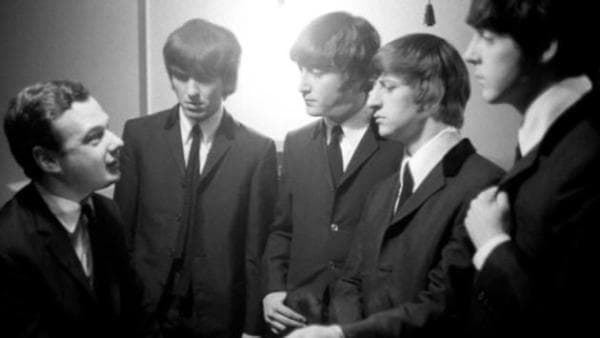
What was The Beatles new image?

What is the title of their single that was number 1 hit record in the UKcharts?

When did they give their first US concert?

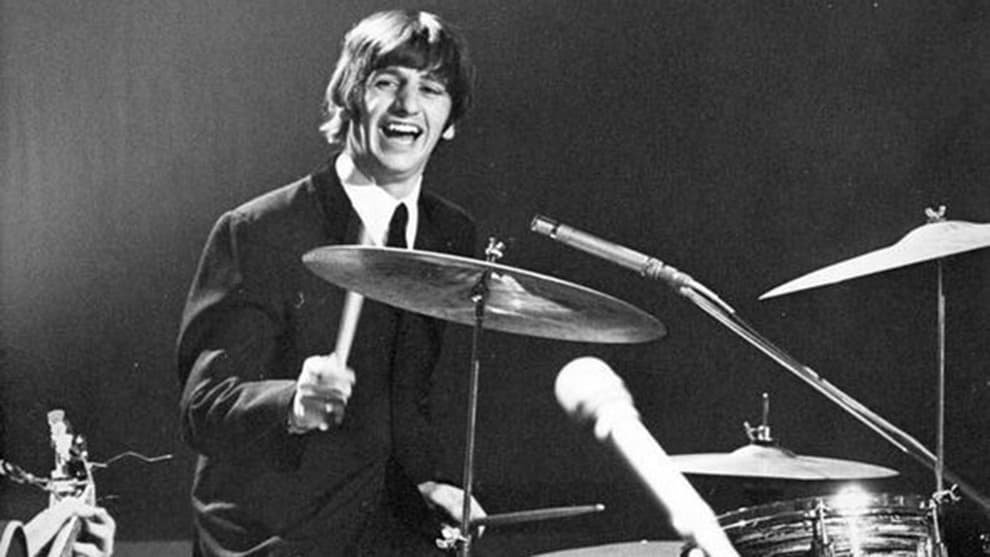
When did Ringo Starr join the group?
 Create MCQs from this text "For as long as we can remember, innovation has been a top priority—and a top frustration—for leaders. In a recent McKinsey poll, 84% of global executives reported that innovation was extremely important to their growth strategies, but a staggering 94% were dissatisfied with their organizations’ innovation performance. Most people would agree that the vast majority of innovations fall far short of ambitions. On paper, this makes no sense. Never have businesses known more about their customers. Thanks to the big data revolution, companies now can collect an enormous variety and volume of customer information, at unprecedented speed, and perform sophisticated analyses of it. Many firms have established structured, disciplined innovation processes and brought in highly skilled talent to run them. Most firms carefully calculate and mitigate innovations’ risks. From the outside, it looks as if companies have mastered a precise, scientific process. But for most of them, innovation is still painfully hit-or-miss. What has gone so wrong? The fundamental problem is, most of the masses of customer data companies create is structured to show correlations: This customer looks like that one, or 68% of customers say they prefer version A to version B. While it’s exciting to find patterns in the numbers, they don’t mean that one thing actually caused another. And though it’s no surprise that correlation isn’t causality, we suspect that most managers have grown comfortable basing decisions on correlations. Why is this misguided? Consider the case of one of this article’s coauthors, Clayton Christensen. He’s 64 years old. He’s six feet eight inches tall. His shoe size is 16. He and his wife have sent all their children off to college. He drives a Honda minivan to work. He has a lot of characteristics, but none of them has caused him to go out and buy the New York Times. His reasons for buying the paper are much more specific. He might buy it because he needs something to read on a plane or because he’s a basketball fan and it’s March Madness time. Marketers who collect demographic or psychographic information about him—and look for correlations with other buyer segments—are not going to capture those reasons. After decades of watching great companies fail, we’ve come to the conclusion that the focus on correlation—and on knowing more and more about customers—is taking firms in the wrong direction. What they really need to home in on is the progress that the customer is trying to make in a given circumstance—what the customer hopes to accomplish. This is what we’ve come to call the job to be done. We all have many jobs to be done in our lives. Some are little (pass the time while waiting in line); some are big (find a more fulfilling career). Some surface unpredictably (dress for an out-of-town business meeting after the airline lost my suitcase); some regularly (pack a healthful lunch for my daughter to take to school). When we buy a product, we essentially “hire” it to help us do a job. If it does the job well, the next time we’re confronted with the same job, we tend to hire that product again. And if it does a crummy job, we “fire” it and look for an alternative. (We’re using the word “product” here as shorthand for any solution that companies can sell; of course, the full set of “candidates” we consider hiring can often go well beyond just offerings from companies.)"Read the text and answer T or FRead the text and answer the following questions 2Read the text and answer the following Read the text and complete the sentences with the correct sequence.Carefully read the excerpts from the poems and respond to the questions that follow based on the text.Organization moment : Greeting. Checking home task. Set the lesson objectives, letting students know what to anticipate from the lesson. Warming up. Tell Ss to do matching task Vocabulary. Ex 1, p 87. The pictures show various types of energy. Label the pictures. Use: sound, thermal, light, mechanical, magnetic, and gravitational. Pre-reading. Ex 2, p 87. What is the difference between ‘kinetic’ and ‘potential’ energy? Tell Ss to watch video to find out. Reading. Ex 3, p 87. Tell Ss to read the text and do matching task Assessment criteria: read a wide range of extended fiction and non-fiction texts Gap filling. Ex 4, p 87. Fill in: reaction, movement, field, object, process. Speaking. Ex 5, p 87. What do you know about the other types of energy in Ex. 1? What else would you like to know? Write down two questions and ask classmates Assessment criteria: evaluate and comment on the views of others FEEDBACK Ask for the feedback Home task: Ex 6 p 87 1. What is the main purpose of including theme and main idea questions in a text? a) To test your reading comprehension skills b) To understand the overall message or lesson of the text c) To practice identifying specific details in the text d) To improve your vocabulary and word knowledge 2. What is the purpose of finding the theme in a text? a) To summarize the main idea of the text in a few words b) To identify the specific details and examples in the text c) To understand the order of events in the text d) To analyze the author's writing style and techniques 3. Which of the following represents the theme of a text? a) A long sentence that describes the setting of the story b) A single word or short phrase that captures the main idea of the text c) A list of characters and their traits d) A detailed description of the plot and conflict in the story 4. How does identifying the main idea of a paragraph help you understand the text? a) It allows you to make connections between different parts of the text b) It helps you identify the author's purpose for writing the text c) It enables you to predict what will happen next in the story d) It helps you remember the specific details and examples in the paragraph 5. Which of the following best describes the main idea of a paragraph? a) The specific details and examples that support the theme of the text b) The order of events and actions in the paragraph c) The overall message or lesson conveyed by the paragraph d) The vocabulary words and their definitions in the paragraph 6. In a short paragraph about dogs, what could be a possible theme? a) Running and playing in the park b) Different breeds of dogs and their characteristics c) The loyalty and companionship dogs provide d) How to train a dog to do tricks 7. What might be the main idea of a paragraph about the importance of recycling? a) Recycling reduces pollution and conserves natural resources b) The process of recycling and how it works c) The different types of materials that can be recycled d) The history of recycling and its impact on society 8. Which of the following could be the theme of a paragraph about the benefits of reading? a) The importance of reading for academic success b) How to choose the right book to read c) The different genres of literature and their characteristics d) The role of libraries in promoting reading 9. If a paragraph discusses the life cycle of a butterfly, what would be the most likely main idea? a) The different colors and patterns of butterfly wings b) The stages of a butterfly's life from egg to adult c) The habitats and environments where butterflies live d) The types of plants that attract butterflies for feeding 10. What is the purpose of including vocabulary words and their meanings in context in a text? a) To test your knowledge of different words and their definitions b) To understand the specific details and examples in the text c) To improve your reading comprehension skills d) To practice using new words in your own writing