Loading...

Social groups and institutions: Caribbean culture, diversity and history
Quiz by Martin Visser
Customize this quiz to suit your class
Instantly translate to 100+ languages
Tag the questions with any skills you have. Your dashboard will track each student's mastery of each skill.
Give this quiz to my class
Type the learning outcome of this paragraph below.
Type the verb used in the learning outcome below.
Type the learning outcome of this paragraph below.
Type the verb used in the learning outcome below.
What would the verb account for or to account for be in Papiamentu?
People who come from the same part of the world and share the same culture are known as a commercial group.
This is what we say about an area when ethnic groups from different parts of the world come there to live together and aspects of their different cultures are evidently visible.
Curaçao is NOT a culturally diverse island.
Curaçao has many ethnic groups living on the island.
From this island Portuguese speaking people came to our island.
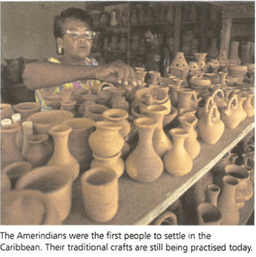
Look at the picture attached. Of what is what you can see in the picture an example?
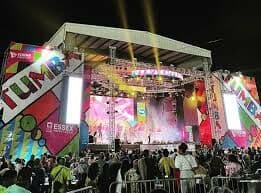
Look at the picture attached. Of what is what you can see in the picture an example?
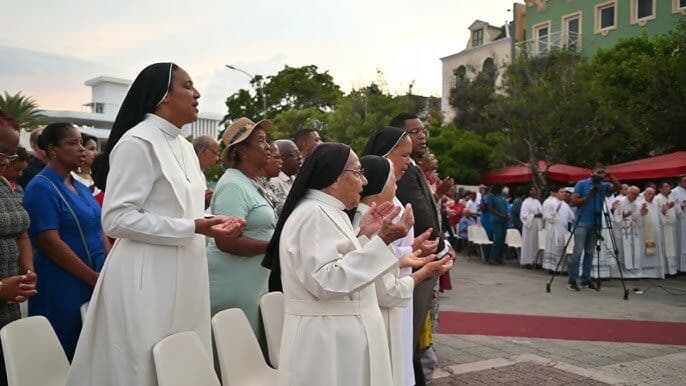
Look at the picture attached. Of what is what you can see in the picture an example?
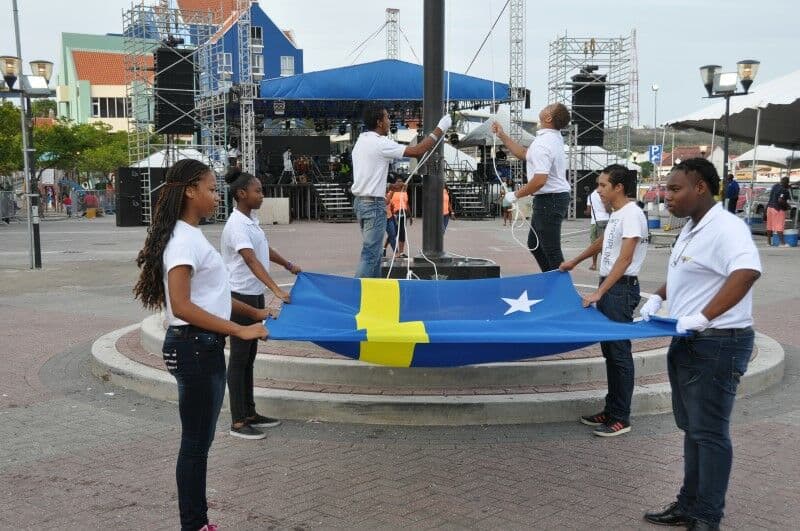
Name one (!) of the parts of the world where our forefathers came from.
What are the Amerindians called that used to live on Curaçao?
Where did the people who we call Amerindians came from?
Which Amerindian group came from the area of South America's Orinoco River in about 500 BC?
Name one (!) of the things that developed in the Caribbean during the arrival of Amerindian societies in the region.
Where does the abbreviation BC stand for?
Who destroyed the Amerindian settlements after 1492 and enslaved many of them?
Which person is deeply connected to the year 1492?
Christopher Columbus arrived in the Caribbean in the year 1492 Before Christ.
What fits or connects BEST concerning the arrival of the Amerindians in the region.
In what sequence did the following groups came to the Caribbean? That is to say, which came first, wich came second, and so on.
Which of the following groups of the Caribbean can you MOST likely recognize in the attached picture?

What is the earliest year we know that slaves from Africa were brought to the Caribbean?
What belongs together concerning the arrival of the Europeans in the Caribbean.
In this century slavery was abolished.
For about this period slaves were transported from Africa to the Caribbean and the Americas. (Or: Roughly this amount of years slaves were transported from...)
Name one (!) country cheap labourers came from following the end of slavery.
Name one (!) country that significant amounts of immigrants came from even after the arrival of indentured labourers in the nineteenth century.
Which enterprise that drew a lot of immigrants to Curaçao can you recognize BEST in the picture attached?
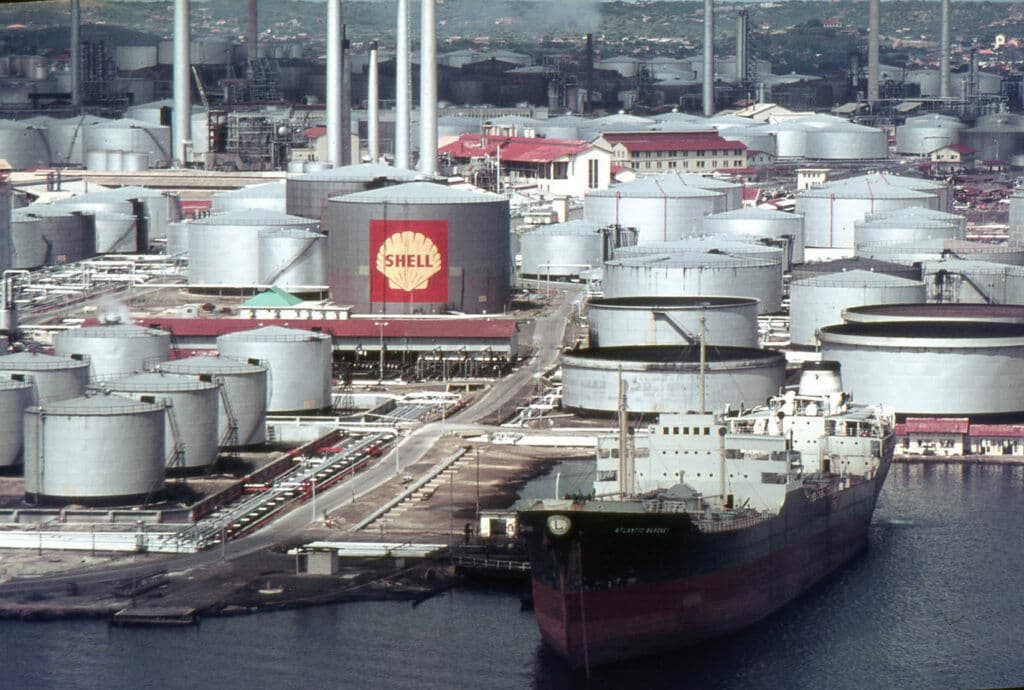
One of the things a diaspora retains often.
How many people of the former Dutch Antilles live approximately in the Netherlands currently?
This is what a specific diaspora often has amongst themselves.
This is ONE example of the cultural contribution of the Caribbean diaspora to Great Britain.
What connects BEST together when talking about culture, diversity and the diaspora in the Caribbean.
 Health 11/12 Review for Final Exam Core Concepts - Mental and Emotional Health, Substance Abuse Prevention, Safety and Violence Prevention, Family Life and Human Sexuality, Disease Prevention and Control, Healthy Eating Health Education Skills - goal setting, decision making, accessing information/resources, analyzing influences, communication, self-management, advocacy DIMENSIONS of Wellness - social, spiritual, emotional/mental, environmental, financial, intellectual, multicultural, occupational, physical, sexual RISK factors - anything that increases the risk of disease, injury, or illness. PROTECTIVE factors - anything that decreases the risk of disease, injury, or illness. INTERNAL health factors - health factors that can be either hereditary and genetic or acquired elements -- include smoking and personal diet or eating habits. Example – a genetic predisposition to an illness. EXTERNAL health factors - health factors that are part of the direct outer environment, the geographical location, micro-organisms, socio-economic elements that could affect an individual's health. Example – being unable to afford mental health services. Unit 1- Managing Personal and Community Wellness Explain Maslow’s Hierarchy of Needs in your own words using the image provided. Explain how each Social Determinant of Health may impact a person’s health. Levels of Disease Prevention • PRIMARY The goal is to avoid conditions altogether. • SECONDARY The goal is early detection. • TERTIARY The goal is to minimize the damage (manage). Define the following terms. Fads/Trends Sleep hygiene Driver safety Unit 2- Investigating Social Ecological Factors on Well-Being Socio-Ecological Model – The SEM examines how health behaviors form based on characteristics of individuals, communities, nations and levels in between. Each level overlaps with other levels signifying how the best public health strategies are those that encompass and target a wide range of perspectives. Interpersonal (personal) health vs. intrapersonal (relationship) health Health INEQUITY - systemic, ingrained and unjust barriers that prevent segments of the population from having the opportunity of health leading to health disparity. IMPLICIT BIAS - a form of bias that occurs automatically and unintentionally, that nevertheless affects judgments, decisions, and behaviors. Research has shown implicit bias can contribute to unequal access to quality healthcare, negative patient-provider relationships and interactions; and create mistrust in the healthcare system and practitioners among patients. This can contribute to health disparities. Health DISPARITY - represents a difference in health between populations. It is often used to describe disease burden and other negative health outcomes socially disadvantaged groups may face. Health EQUITY - The opposite of health inequity. It describes a system that supports a high standard of health and healthcare for all people. Racism - Beliefs, attitudes, institutional arrangements, and acts that tend to denigrate individuals or groups because of phenotypic characteristics or ethnic group affiliation. DISCRIMINATION - An unjust differential treatment of a person or a group. PRIVILEGE- The unearned access to resources and social power that are only available to some because of their membership within certain social groups. OPPRESSION is the act of taking away choices from others and can be defined as a system that maintains advantage and disadvantage based on social identities and that acts on multiple levels from interpersonal to institutional and societal. (internalized, interpersonal, institutional, structural) Systematic Oppression - Intentional disadvantage of groups of people based on their identity while advantaging members of dominant group (race, gender, sexual orientation, language, size, ability, etc.). Intersectionality - The complex, cumulative way in which the effects of multiple forms of discrimination (such as racism, sexism, and classism) combine, overlap, or intersect especially in the experiences of marginalized individuals or groups Unit 3- Accessing Resources and Communicating to Support Mental and Emotional Health What is anger? What is anxiety? What is stress? STRESSORS are the things that cause stress. Stressors can be internal and external. A stressor may be a one-time or short-term occurrence, or it can happen repeatedly over a long time. INTERNAL Stressors - are made by your belief system and the way you evaluate yourself. Examples include pessimistic attitude, negative self-talk, deep need to be perfect, low self-esteem or body image, unhealthy standards for self. EXTERNAL Stressors - are stressful things that happen in your surroundings and/or in your environment. Examples include busy schedules, work problems, family issues, financial trouble, social problems, injury, unforeseen circumstances. Socio-economic issues are also a part of external stressors such as poverty, violence, and racism. Define the following mental health conditions. Depression Eating disorders NSSI Non-suicidal self-injury Grief/Loss Suicide prevention A.C.T. • ACKNOWLEDGE- Tell them in a caring way that you recognize that they are having a problem • CARE- You can show you care by actively listening - put away anything else you are doing, make eye contact, sit down, ask questions. • TELL-(call 988 for additional help and support) - Tell them it is important that they speak with a trusted adult. Help them figure out who this may be and offer to go with your friend. A social norm is an unwritten, informal rule meant to guide behavior among the of society. It distinguishes between acceptable and unacceptable, good and bad, and so on. Social norms can influence a person with emotional or mental health disorders, access to care and stigmatize their situation. STIGMA- a mark of disgrace associated with a particular circumstance, quality, or person. • Self-stigma - This describes the internalized stigma that people with mental health conditions feel about themselves. • Public stigma - This refers to the negative attitudes around mental health from people in society. • Institutional stigma - This is a type of systemic stigma that arises from corporations, governments, and other institutions. Unit 4- Evaluating Risks of Substance Use and Abuse Harm Reduction - a set of practical strategies and ideas aimed at reducing negative consequences associated with drug use. Explain how each level of the Social Ecological Model is impacted by addiction. Individual Relationship Community Society SEM Level Contributing/Risk Factors to substance use Preventative/Protective Factors for substance use Individual Interpersonal/Relationship Community Society Unit 5- Analyzing Influences to Examine Ways to Increase Safety and Reduce Violence HATE CRIME - a crime, usually violent, motivated by prejudice or intolerance toward an individual’s national origin, ethnicity, color, religion, gender, gender identity, sexual orientation, or disability. Explain how the media influences violence in society. The Pyramid of Hate Explain the escalation of hate using the Pyramid of Hate visual. List several hate crime motivators. Example: age HEALTHY Relationship Signs - comfortable pace, trust, honesty, independence, respect, equality, kindness, taking responsibility, healthy conflict, fun UNHEALTHY Relationship Signs - intensity, possessiveness, manipulation, isolation, sabotage, belittling, guilting, volatility, deflecting responsibility, betrayal Sexual Assault is a sexual behavior WITHOUT consent. Human trafficking - the recruitment, harboring, transportation, provision, or obtaining of a person for labor or services, using force, fraud, or coercion for the purpose of subjection to involuntary servitude, peonage, debt bondage, or slavery. Sex trafficking - commercial sex act induced by force, fraud, or coercion, or in which the person induced to perform such an act has not attained 18 years of age. Trafficking happens using… • Force - using violence to control someone. • Fraud - using lies to control someone. • Coercion - using threats to control someone. Unit 6- Family Life and Human Sexuality Agency - A belief about yourself and the extent to which you can act on that belief. • The ability to choose freely one’s own narrative. • To embrace the idea that I am the cause (or agent) of my own thoughts and actions. • Personal agency is a personal responsibility for who we are, what we experience, what we do about that experience, and how we shape our world to give us more of the experiences we want. SEXUAL Agency • The ability to choose your own interests and desires vs. what we see in the media or others’ perceptions • The ability to identify, communicate, and negotiate one’s sexual needs • The ability to initiate behaviors that allow for the satisfaction of those needs Sexually Explicit Material - photographs, videos, films, magazines, and books whose primary themes, topics, or depictions involve sexuality that may cause sexual arousal. Sexual scripts - thoughts, patterns, or behavior that a person has about themselves in a romantic or sexual context. It is how people picture themselves or want to project themselves in front of others. Reproductive Rights of Teens - In Maryland, teens have the right to an abortion, keep their child, obtain and use birth control, paternity tests, adoption, give up custody of their child within 10 days of birth (Safe Haven Law). • REPRODUCTIVE RIGHTS- legal rights and the freedom of the individual to control decisions regarding contraception, abortion, sterilization and childbirth. • SAFE HAVEN LAW- a distressed parent who is unable or unwilling to care for their infant can safely give up custody of their baby, no questions asked. CONSENT is an agreement between participants to engage in sexual activity. • It is clearly and freely communicated, verbal, and affirmative. Consent CANNOT be given if… • A person is underage, one or both partners is intoxicated or incapacitated by drugs or alcohol, one partner is asleep or unconscious, one partner feels pressured, threatened or intimidated, or one partner holds a position of power or authority over the other. Unit 7- Advocating for Enhanced Nutrition, Food Systems, and Health Outcomes Dietary Guidelines for Americans Guideline 1: Follow a Healthy Dietary Pattern at Every Life Stage Guideline 2: Customize and Enjoy Food and Beverage Choices to Reflect Personal Preferences, Cultural Traditions, and Budgetary Considerations Guideline 3: Focus on Meeting Food Group Needs with Nutrient-Dense Foods and Beverages, and Stay Within Calorie Limits Guideline 4: Limit Foods and Beverages Higher in Added Sugars, Saturated Fat, and Sodium, and Limit Alcoholic Beverages FOOD DESERT- a neighborhood where there is little or limited access to healthy and affordable food such as fruits, vegetables, whole grains, low-fat milk and other foods that make up the full range of a healthy diet. FOOD INSEQURITY lack of access to a sufficient amount of food because of limited funds. More than 49 million American households are considered food insecure and are vulnerable to poor health as a result. PROCCESED FOODS- any raw agricultural commodities that have been washed, cleaned, milled, cut, chopped, heated, pasteurized, blanched, cooked, canned, frozen, dried, dehydrated, mixed or packaged — anything done to them that alters their natural state.Key Word Definition
Aid Assistance in the form of grants or loans at below market rates. For example, the UK provided aid to Nepal after the 2015 earthquake to help with reconstruction efforts.
Barriers to Trade Government constraints on the flow of international goods and services, such as tariffs and quotas. For example, the European Union imposes tariffs on certain agricultural products to protect its farmers.
BRICS An acronym for an association of five major emerging nations: Brazil, Russia, India, China, and South Africa. For example, BRICS nations often meet to discuss economic cooperation and development strategies.
Demographic Aging The rise in the median age of a population. For example, Japan is experiencing demographic aging, with a significant increase in the elderly population.
Economic Core Region The most highly developed region(s) in a country. For example, London is considered an economic core region in the UK due to its high level of development and economic activity.
GNP (Gross National Product) GDP plus overseas earnings, also known as GNI (Gross National Income). For example, the GNP of the United States includes the value of goods and services produced domestically and the income earned by its citizens abroad.
HIC (Higher Income Country) A country with a high level of income and development. For example, Germany is classified as a higher income country due to its high GDP per capita and advanced infrastructure.
NEE (Newly Emerging Economy) A country that is experiencing rapid economic growth and industrialisation. For example, China is an example of a newly emerging economy, having rapidly industrialised and grown economically over the past few decades.
LIC (Lower Income Country) A country with a low level of income and development. For example, Malawi is considered a lower income country, with a low GDP per capita and limited access to healthcare and education.
GDHI (Gross Disposable Household Income) The amount of money that households have available for spending and saving after taxes and social contributions. For example, in the UK, the GDHI varies significantly between regions, with London having one of the highest levels.
Gini Coefficient A measure of income inequality within a population, ranging from 0 (perfect equality) to 100 (perfect inequality). For example, South Africa has a high Gini coefficient, indicating significant income inequality within the country.
Trade Unions Organisations that promote trade between member countries, such as the East African Community (EAC). For example, the East African Community (EAC) works to promote economic integration and trade among its member states.
Fair Trade A movement aimed at helping producers in developing countries achieve better trading conditions and promote sustainability. For example, Fairtrade coffee ensures that farmers receive a fair price for their product and work under safe conditions.
FDI (Foreign Direct Investment) Investment made by a company or individual in one country in business interests in another country. For example, Toyota's investment in manufacturing plants in the UK is an example of foreign direct investment.
Debt Relief The partial or total remission of debts, especially those owed by developing countries to external creditors. For example, the Heavily Indebted Poor Countries (HIPC) initiative provides debt relief to eligible countries to help them achieve sustainable development.
International Aid Voluntary transfer of resources from one country to another, often in the form of financial assistance, goods, or services. For example, the UK provides international aid to various countries through its Department for International Development (DFID).
Top-Down Development Large-scale development projects led by national governments or international organisations. For example, the construction of the Three Gorges Dam in China is an example of a top-down development project.
Bottom-Up Development Small-scale development projects led by local communities or NGOs, focusing on the needs of the poorest and most vulnerable. For example, WaterAid's installation of hand pumps in rural villages in Africa is an example of a bottom-up development project.
Urbanisation The increase in the proportion of people living in urban areas compared to rural areas. For example, rapid urbanisation in India has led to the growth of megacities like Mumbai and Delhi.
Geopolitics The study of the effects of geography (human and physical) on international politics and relations. For example, the geopolitics of the Arctic region involves disputes over territorial claims and access to natural resources.
Quality of Life The general well-being of individuals and societies, outlining negative and positive features of life. For example, Scandinavian countries are often ranked high in quality of life due to their strong social welfare systems and high levels of happiness.
Poverty Cycle A set of factors or events by which poverty, once started, is likely to continue unless there is outside intervention. For example, lack of education and healthcare can trap families in a poverty cycle, making it difficult for future generations to improve their living standards.
Sustainable Development Economic development that is conducted without depletion of natural resources. For example, the use of renewable energy sources like wind and solar power is a key aspect of sustainable development.
Humanitarian Aid Material or logistical assistance provided for humanitarian purposes, typically in response to crises including natural disasters and man-made disaster. For example, humanitarian aid was provided to Haiti after the devastating earthquake in 2010 to help with immediate relief efforts.
Economic Growth An increase in the production of goods and services in an economy over a period of time. For example, China's economic growth over the past few decades has lifted millions of people out of poverty.
Social Indicators Measures that describe the well-being of individuals or communities, such as health, education, and income. For example, life expectancy and literacy rates are common social indicators used to assess development.
Environmental Sustainability Responsible interaction with the environment to avoid depletion or degradation of natural resources and allow for long-term environmental quality. For example, practices like recycling and conservation of natural habitats contribute to environmental sustainability.
Infrastructure The basic physical and organisational structures and facilities needed for the operation of a society or enterprise. For example, good infrastructure, such as roads, bridges, and schools, is essential for economic development.
Globalisation The process by which businesses or other organisations develop international influence or start operating on an international scale. For example, the globalisation of technology companies like Apple and Google has led to their products being available worldwide.
Microfinance Financial services provided to low-income individuals or groups who are typically excluded from traditional banking. For example, microfinance institutions like Grameen Bank provide small loans to entrepreneurs in developing countries to help them start or expand their businesses.
Spanish Version Lesson 1 Social Studies The Medieval World Chapter 1 Medieval Europe The Great Fall Beginning in the 300s CE, there was great turmoil in the Western Roman Empire. After decades of invasions by Germanic tribes, the empire fell in 476 CE. At its height, the Roman Empire had reached across Europe and included northern Africa and parts of Asia. Life in the empire before it collapsed was either luxurious or simple, depending on where you were within the social order. If you were a member of the political class, you lived well. You would have enjoyed parties, lived in a large home, and had servants or enslaved persons tending to your every need. You would have attended civic gatherings in ornate government buildings. Most people, though, lived modest lives If you were at the bottom of the social structure, you would have lived in a simple home and worked hard every day. When you were not working, you might have enjoyed watching chariot races or gladiator fights. What all Romans had in common, however, was the patriarchy. This was a system in which the oldest man in a family made all the public decisions. The women were responsible for taking care of the home and the children, and they had few rights. This rigid social structure was the backbone of Roman society for centuries. Even though the fall of the empire meant that Roman government no longer existed, day-to-day life went on as before for many people. Those living far from Rome probably did not even hear about the invasions or the fall of Rome. As a result, the language and the structure of society remained largely the same—at least for some time. The ten centuries that followed the fall of the Western Roman Empire in Europe are called the Middle Ages, or the medieval period. Three important groups shaped life in medieval Europe. These were the Church, the aristocracy, and the commoners. The Church included bishops, monks, and priests, known as clergy. People were part of the aristocracy if their family were also members of this group. Aristocrats held most of the land throughout Europe and most of the Vocabulary patriarchy, n. a social structure marked by the dominance of the father in the family Vocabulary medieval, adj. relating to the Middle Ages in Europe aristocracy, n. the upper or noble class whose members’ status is usually inherited clergy, n. in a Christian church, p military and political power. The commoners included everyone who was not aristocratic or part of the Church. Commoners ranged from wealthy merchants to poor people who owned nothing. Craftspeople, merchants, traders, and bankers were all part of the middle class of commoners. The Church was the only major institution in Europe that survived the fall of the empire. Building on the influence of Emperor Constantine and the gathering of church leaders at Nicaea in 325 CE, Emperor Theodosius I had made Christianity the official religion of the Roman Empire in 380 CE. After that, the Church organized itself with a structure similar to the old Roman government, with each region having headquarters in a major city. The leader of the entire Church was the pope. The pope was, and still is, the leader of the Catholic religion throughout the worldCreate me a multiple choice test questions with 4 options on the following topic:Consumer Education for Different Audience 1. Children and Youth: - Focus: Building foundational knowledge about basic consumer concepts, making safe choices, understanding money and value, and recognizing scams and unsafe situations. 2. Teens and Young Adults: - Focus: Building financial literacy, responsible debt management, understanding contracts and agreements, responsible technology use, online safety, and consumer rights. 3. Working Adults and Families: - Focus: Managing budgets, making informed purchasing decisions, understanding credit and debt, finding consumer protection resources, and navigating complex financial products (mortgages, insurance, investments). 4. Seniors: - Focus: Protecting themselves from scams and fraud, understanding common consumer issues like telemarketing, identity theft, and online scams, managing medications and healthcare costs, and accessing community resources. 5. Special Populations: - Focus: Adapting consumer education programs to the specific needs of people with disabilities, immigrants, refugees, and other marginalized communities. 6. Business and Industry:- Focus: Understanding ethical marketing practices, complying with consumer protection laws, and providing clear and accurate information to consumers. 7. Policymakers and Regulators: - Focus: Understanding consumer needs, developing effective consumer protection laws, enforcing regulations, and ensuring a fair and competitive marketplace. Adapting consumer education programs for children, teens, and seniors requires tailoring content and delivery methods to their unique needs and learning styles. Children (Ages 5-12): - Understanding the concept of money: Teaching children about saving, spending, and the value of money. - Developing basic budgeting skills: Helping children learn to make choices about how to spend their allowance or pocket money. EFFECTIVE STRATEGIES •Focus on basic concepts: Introduce core concepts like saving, spending, and budgeting in a fun and engaging way. Use simple language and relatable examples. •Real-life scenarios: Use age-appropriate scenarios to illustrate financial concepts, like buying toys or snacks. •Parental involvement: Encourage parent participation and provide resources to help them reinforce lessons at home. Teens (Ages 13-18): - Building budgeting and financial planning skills: Teaching teens how to manage their money, set financial goals, and plan for the future. - Navigating the digital marketplace: Equipping teens with the knowledge and skills to make safe and informed online purchases, understand digital marketing, and protect themselves from scams. EFFECTIVE STRATEGIES • Practical skills: Focus on skills relevant to teens, like managing money for social activities, saving for college, and understanding credit cards. • Digital literacy: Address the growing influence of online shopping, social media advertising, and financial scams. • Real-world applications: Connect financial concepts to real-life decisions teens make, like choosing a part-time job or making purchases online. Seniors (Ages 65+) - Managing retirement savings and healthcare costs: Providing information and resources on retirement planning, Medicare and Medicaid, and other healthcare options. - Navigating the digital world: Offering technology training and resources to help seniors access online services and information safely and securely. EFFECTIVE STRATEGIES • Addressing specific concerns: Focus on topics relevant to senior citizens, like retirement planning, managing healthcare expenses, and avoiding scams. • Clear and concise communication: Use simple language and visual aids to ensure easy understanding. • Social interaction: Create opportunities for seniors to share experiences and learn from each other. Teaching Financial Literacy in school and Communities In Schools: Curriculum Integration: Financial literacy concepts can be seamlessly integrated into existing subjects, making learning more relevant and engaging. - Math: Budgeting exercises, calculating interest rates, analyzing financial data, and understanding compound interest are all natural applications of math skills. - Social Studies: Exploring the history of money, financial institutions, economic systems, and the impact of financial decisions on society provide valuable context. - Economics: Discussions about supply and demand, inflation, investment, and the role of consumers in the economy enhance financial literacy. Dedicated Courses: Offering elective courses or workshops specifically focused on personal finance provides deeper dives into crucial topics. - Personal Finance: Cover budgeting, saving, investing, credit, debt management, and insurance. - Entrepreneurship: Introduce concepts like business planning, marketing, financial forecasting, and managing cash flow. In Communities: Community Centers and Libraries: Workshops, seminars, and classes tailored to adults and families provide accessible learning opportunities. - Financial Planning: Cover budgeting, retirement planning, debt management, and estate planning. - Homeownership: Provide guidance on buying, selling, and maintaining a home. - Consumer Protection: Educate individuals about their rights and how to avoid scams. Partnerships with Financial Institutions: Collaborations with banks, credit unions, and financial advisors offer valuable resources, workshops, and financial literacy programs. Consumer Education for Low-Income and Vulnerable Populations Low-income refers to individuals or households with limited financial resources, typically below a certain threshold. Low-income individuals may face challenges like: 1. Limited education and job opportunities 2. Poor living conditions and housing 3. Food insecurity and malnutrition Causes of low income: 1. Unemployment or underemployment 2. Low-paying jobs or minimum wage 3. Limited education or skills 4. Single parenthood or large family size Vulnerable population'' is a term that is used to describe a group of people who possess some sort of disadvantage. elderly people, people with low incomes, homeless people, people in prison, migrant workers, pregnant women, Family Consumer Education: Managing Household Finances and Resources Financial literacy is the ability to understand and manage personal finances effectively. 1. Debt Debt is money you spend that isn’t yours. If you borrow money from the bank, use a credit card, or take out a short-term loan, or a payday loan, you are accumulating debt. Good debt is considered money borrowed for things that are absolutely necessary for making a life e.g. a house and for advancing your money-making potential e.g. an education. Bad debt is considered borrowing money or using a credit card to pay for things you don’t need, such as expensive clothes, hi-tech electronics, eating out at restaurants, going on holidays, etc. 2. Saving Saving is an essential part of financial wellness, a secure present, and a happy future. 3. Budgeting Budgeting is the life skill of planning and managing your money. By understanding exactly where your money goes every month, you are empowered to create an actionable plan by which you can spend less, by curtailing those unnecessary expenses and saving more for the things you need and want. 4. Investing Investing is all about creating and growing the wealth you need to enjoy a financially secure and happy future. It’s about putting your money into something that will make you a profit over time, such as property, retirement funds, and unit trusts Integrating Consumer Education into the Home Economics Curriculum. Integrating consumer education into the home economics curriculum can provide students with essential skills for making informed choices about their personal finances, food, clothing, and overall well-being. Here are some strategies and ideas for effectively incorporating consumer education: Financial Literacy Budgeting: Teach students how to create and manage a personal budget, including setting financial goals, tracking expenses, and understanding savings. Saving and Investment: Cover the basics of saving, including different saving accounts, and introduce concepts related to investing. Food and Nutrition Food Label Literacy: Engage students in learning how to read and interpret food labels, including nutrition facts and ingredient lists. Grocery Shopping Skills: Teach students how to compare product costs, understand unit pricing, and make healthy, budget-friendly choices while shopping. Clothing and Textile Education Consumer Choices in Clothing:Discuss factors influencing clothing purchases, such as quality, price, and sustainability. Fashion and Trends: Analyze the impact of marketing and advertising on consumer behavior regarding clothing. Sustainable Purchasing Eco-Friendly Choices: Raise awareness about environmentally friendly products and the importance of sustainability in consumer choices. Project-Based Learning - Assign real-life projects where students must apply their knowledge, such as creating a meal plan within a budget, planning a shopping list based on nutrient needs, or evaluating the cost-effectiveness of different products. Technology Integration - Use technology to teach students about online shopping, price comparison websites, and apps that aid budgeting and financial planning. Collaborative Learning Opportunities - Organize team projects where students work together to solve consumer-related problems, emphasizing teamwork and communication skills. Assessment and Reflection - Incorporate assessments that allow students to reflect on what they have learned about consumer education and how they can apply these skills in their daily lives. On 8 August 1967, five leaders – the Foreign Ministers of Indonesia, Malaysia, the Philippines, Singapore and Thailand – sat down together in the main hall of the Department of Foreign Affairs building in Bangkok, Thailand and signed a document. By virtue of that document, the Association of Southeast Asian Nations (ASEAN) was born. The five Foreign Ministers who signed it – Adam Malik of Indonesia, Narciso R. Ramos of the Philippines, Tun Abdul Razak of Malaysia, S. Rajaratnam of Singapore, and Thanat Khoman of Thailand – would subsequently be hailed as the Founding Fathers of probably the most successful inter-governmental organization in the developing world today. And the document that they signed would be known as the ASEAN Declaration. It was a short, simply-worded document containing just five articles. It declared the establishment of an Association for Regional Cooperation among the Countries of Southeast Asia to be known as the Association of Southeast Asian Nations (ASEAN) and spelled out the aims and purposes of that Association. These aims and purposes were about cooperation in the economic, social, cultural, technical, educational and other fields, and in the promotion of regional peace and stability through abiding respect for justice and the rule of law and adherence to the principles of the United Nations Charter. It stipulated that the Association would be open for participation by all States in the Southeast Asian region subscribing to its aims, principles and purposes. It proclaimed ASEAN as representing “the collective will of the nations of Southeast Asia to bind themselves together in friendship and cooperation and, through joint efforts and sacrifices, secure for their peoples and for posterity the blessings of peace, freedom and prosperity.” It was while Thailand was brokering reconciliation among Indonesia, the Philippines and Malaysia over certain disputes that it dawned on the four countries that the moment for regional cooperation had come or the future of the region would remain uncertain. Recalls one of the two surviving protagonists of that historic process, Thanat Khoman of Thailand: “At the banquet marking the reconciliation between the three disputants, I broached the idea of forming another organization for regional cooperation with Adam Malik. Malik agreed without hesitation but asked for time to talk with his government and also to normalize relations with Malaysia now that the confrontation was over. Meanwhile, the Thai Foreign Office prepared a draft charter of the new institution. Within a few months, everything was ready. I therefore invited the two former members of the Association for Southeast Asia (ASA), Malaysia and the Philippines, and Indonesia, a key member, to a meeting in Bangkok. In addition, Singapore sent S. Rajaratnam, then Foreign Minister, to see me about joining the new set-up. Although the new organization was planned to comprise only the ASA members plus Indonesia, Singapore’s request was favorably considered.” And so in early August 1967, the five Foreign Ministers spent four days in the relative isolation of a beach resort in Bang Saen, a coastal town less than a hundred kilometers southeast of Bangkok. There they negotiated over that document in a decidedly informal manner which they would later delight in describing as “sports-shirt diplomacy.” Yet it was by no means an easy process: each man brought into the deliberations a historical and political perspective that had no resemblance to that of any of the others. But with goodwill and good humor, as often as they huddled at the negotiating table, they finessed their way through their differences as they lined up their shots on the golf course and traded wisecracks on one another’s game, a style of deliberation which would eventually become the ASEAN ministerial tradition. Now, with the rigors of negotiations and the informalities of Bang Saen behind them, with their signatures neatly attached to the ASEAN Declaration, also known as the Bangkok Declaration, it was time for some formalities. The first to speak was the Philippine Secretary of Foreign Affairs, Narciso Ramos, a one-time journalist and long-time legislator who had given up a chance to be Speaker of the Philippine Congress to serve as one of his country’s first diplomats. He was then 66 years old and his only son, the future President Fidel V. Ramos, was serving with the Philippine Civic Action Group in embattled Vietnam. He recalled the tediousness of the negotiations that preceded the signing of the Declaration that “truly taxed the goodwill, the imagination, the patience and understanding of the five participating Ministers.” That ASEAN was established at all in spite of these difficulties, he said, meant that its foundations had been solidly laid. And he impressed it on the audience of diplomats, officials and media people who had witnessed the signing ceremony that a great sense of urgency had prompted the Ministers to go through all that trouble. He spoke darkly of the forces that were arrayed against the survival of the countries of Southeast Asia in those uncertain and critical times. “The fragmented economies of Southeast Asia,” he said, “(with) each country pursuing its own limited objectives and dissipating its meager resources in the overlapping or even conflicting endeavors of sister states carry the seeds of weakness in their incapacity for growth and their self-perpetuating dependence on the advanced, industrial nations. ASEAN, therefore, could marshal the still untapped potentials of this rich region through more substantial united actionHi, I'm John Green, this is Crash Course U.S. History, and today, we're going to talk about slavery, which is not funny. 0:06 Yeah, so we put a lei on the eagle to try and cheer you up, but let's face it, this is going to be depressing. 0:10 With slavery, every time you think, like, "Aw, it couldn't have been that bad," it turns out to have been much worse. 0:14 Mr. Green, Mr. Green! But what about – 0:15 Yeah, Me from the Past, I'm going to stop you right there, because you're going to embarrass yourself. Slavery was hugely important to America. 0:20 I mean, it led to a civil war and it also lasted what, at least in U.S. history, counts as a long-ass time, from 1619 to 1865. 0:29 And yes, I know there's a 1200-year-old church in your neighborhood in Denmark, but we're not talking about Denmark! 0:35 But slavery is most important because we still struggle with its legacy. 0:38 So, yes, today's episode will probably not be funny, but it will be important. 0:42 [Theme Music] North & South economic ties 0:51 So the slave-based economy in the South is sometimes characterized as having been separate from the Market Revolution, but that's not really the case. 0:57 Without southern cotton, the North wouldn't have been able to industrialize, at least not as quickly, because cotton textiles were one of the first industrially products. 1:04 And the most important commodity in world trade by the nineteenth century, and 3/4 of the world's cotton came from the American South. 1:11 And speaking of cotton, why has no one mentioned to me that my collar has been half popped this entire episode, like I'm trying to recreate the Flying Nun's hat. 1:18 And although there were increasingly fewer slaves in the North as northern states outlawed slavery, cotton shipments overseas made northern merchants rich. 1:26 Northern bankers financed the purchase of land for plantations. 1:29 Northern insurance companies insured slaves who were, after all, considered property, and very valuable property. 1:35 And in addition to turning cotton into cloth for sale overseas, northern manufacturers sold cloth back to the South, where it was used to clothe the very slaves who had cultivated it. 1:45 But certainly the most prominent effects of the slave-based economy were seen in the South. Slave-based agriculture in the South 1:49 The profitability of slaved-based agriculture, especially King Cotton, meant that the South would remain largely agricultural and rural. 1:56 Slave states were home to a few cities, like St. Louis and Baltimore, but with the exception of New Orleans, 2:00 almost all southern urbanization took place in the upper South, further away from the large cotton plantations. 2:06 And slave-based agriculture was so profitable that it siphoned money away from other economic endeavors. 2:11 Like, there was very little industry in the South. 2:13 It produced only 10% of the nation's manufactured goods. 2:16 And, as most of the capital was being plowed into the purchase of slaves, there was very little room for technological innovation, like, for instance, railroads. 2:23 This lack of industry and railroads would eventually make the South suck at the Civil War, thankfully. 2:27 In short, slavery dominated the South, shaping it both economically and culturally, and slavery wasn't a minor aspect of American society. Popular attitudes concerning slavery 2:35 By 1860, there were four million slaves in the U.S., and in the South, they made up one third of the total population. 2:42 Although in the popular imagination, most plantations were these sprawling affairs with hundreds of slaves, 2:47 in reality, the majority of slaveholders owned five or fewer slaves. 2:51 And, of course, most white people in the South owned no slaves at all, though, if they could afford to, they would sometimes rent slaves to help with their work. 2:57 These were the so-called yeoman farmers who lived self-sufficiently, raised their own food, and purchased very little in the Market Economy. 3:04 They worked the poorest land and, as a result, were mostly pretty poor themselves. 3:08 But even they largely supported slavery, partly, perhaps, for aspirational reasons, and partly because the racism inherent to the system gave even the poorest whites legal and social status. 3:18 And southern intellectuals worked hard to encourage these ideas of white solidarity and to make the case for slavery. 3:23 Many of the founders, a bunch of whom you'll remember, held slaves, saw slavery as a necessary evil. 3:29 Jefferson once wrote, quote, "As it is, we have the wolf by the ear, and we can neither hold him, nor safely let him go. 3:37 Justice is on one scale, and self-preservation in the other." 3:41 The belief that justice and self-preservation couldn't sit on the same side of the scale was really opposed to the American idea, 3:47 and, in the end, it would make the Civil War inevitable. 3:50 But as slavery became more entrenched in these ideas of liberty and political equality were embraced by more people, 3:55 some southerners began to make the case that slavery wasn't just a necessary evil. 3:59 They argued, for instance, that slaves benefited from slavery. 4:03 Because, you know, because their masters fed them and clothed them and took care of them in their old age. 4:07 You still hear this argument today, astonishingly. 4:09 In fact, you'll probably see asshats in the comments saying that in the comments. 4:12 I will remind you, it's not cursing if you are referring to an actual ass. 4:15 This paternalism allowed masters to see themselves as benevolent and to contrast their family-oriented slavery with the cold, mercenary Capitalism of the free-labor North. 4:26 So yeah, in the face of rising criticism of slavery, some southerners began to argue that the institution was actually good for the social order. 4:33 One of the best-known proponents of this view was John C. Calhoun, who, in 1837, said this in a speech on the Senate floor: 4:40 "I hold that, in the present state of civilization, 4:43 where two races of different origin and distinguished by color and other physical differences as well as intellectual, are brought together, 4:51 the relation now existing in the slave-holding states between the two is, instead of an evil, a good. A positive good." 4:59 Now, of course, John C. Calhoun was a fringe politician, and nobody took his views particularly seriously. 5:04 Stan: Well, he was Secretary of State from 1844 to 1845. 5:07 John: Well, I mean, who really cares about the Secretary of State, Stan? 5:10 Danica: Eh, he was also Secretary of War from 1817 to 1825. 5:13 John: All right, but we don't even have a Secretary of War anymore, so... 5:16 Meredith: And he was Vice President from 1825 to 1832. 5:19 John: Oh my god, were we insane?! 5:21 We were, of course, but we justified the insanity with Biblical passages and with the examples of the Greeks and Romans, 5:28 and with outright racism, arguing that black people were inherently inferior to whites. 5:33 And that not to keep them in slavery would upset the natural order of things. 5:37 A worldview popularized millennia ago by my nemesis, Aristotle. God, I hate Aristotle. 5:42 You know what defenders of Aristotle always say? 5:44 "He was the first person to identify dolphins." 5:47 Well, ok, dolphin identifier. 5:50 Yes, that is what he should be remembered for, but he's a terrible philosopher! Lives & experiences of enslaved people 5:53 Here's the truth about slavery: 5:55 It was coerced labor that relied upon intimidation and brutality and dehumanization. 6:00 And this wasn't just a cultural system, it was a legal one. 6:03 I mean, Louisiana law proclaimed that a slave "owes his master... a respect without bounds, and an absolute obedience." 6:09 The signal feature of slaves' lives was work. 6:12 I mean, conditions and tasks varied, but all slaves labored, usually from sunup to sundown, and almost always without any pay. 6:20 Most slaves worked in agriculture on plantations, and conditions were different, depending on which crops are grown. 6:25 Like, slaves on the rice plantations of South Carolina had terrible working conditions, 6:29 but they labored under the task system, which meant that once they had completed their allotted daily work, they would have time to do other things. 6:36 But lest you imagine this is like how we have work and leisure time, bear in mind that they were owned and treated as property. 6:42 On cotton plantations, most slaves worked in gangs, usually under the control of an overseer, or another slave who was called a "driver." 6:49 This was back-breaking work done in the southern sun and humidity, and so it's not surprising that whippings – or the threat of them – were often necessary to get slaves to work. 6:58 It's easy enough to talk about the brutality of slave discipline, but it can be difficult to internalize it. 7:03 Like, you look at these pictures, but because you've seen them over and over again, they don't have the power they once might have. 7:09 The pictures can tell a story about cruelty, but they don't necessarily communicate how arbitrary it all was. 7:14 As, for example, in this story, told by a woman who was a slave as a young girl: 7:18 "[The] overseer... went to my father one morning and said, "Bob, I'm gonna whip you this morning." 7:22 Daddy said, "I ain't done nothing," and he said, "I know it, I'm going to whip you to keep you from doing nothing," 7:28 and he hit him with that cowhide – you know it would cut the blood out of you with every lick if they hit you hard." 7:33 That brutality – the whippings, the brandings, the rape – was real, and it was intentional, because, in order for slavery to function, slaves had to be dehumanized. 7:43 This enabled slaveholders to rationalize what they were doing, and it was hoped to reduce slaves to the animal property that is implied by the term "chattel slavery." 7:51 So the idea was that slaveholders wouldn't think of their slaves as human, and slaves wouldn't think of themselves as human. 7:57 But it didn't work. Let's go to the Thought Bubble. 7:59 Slaves' resistance to their dehumanization took many forms, but the primary way was by forming families. Family, love, & religion of enslaved people 8:05 Family was a refuge for slaves and a source of dignity that masters recognized and sought to stifle. 8:10 A paternalistic slave owner named Bennet H. Barrow wrote in his rules for the Highland Plantation: 8:15 "No rule that I have stated is of more importance than that relating to Negroes marrying outside of the plantation... It creates a feeling of independence." 8:23 Most slaves did marry, usually for life, and, when possible, slaves grew up in two-parent households. 8:28 Single-parent households were common, though, as a result of one parent being sold. 8:32 In the upper South, where the economy was shifting from tobacco to different, less labor-intensive cash crops, the sale of slaves was common. 8:40 Perhaps one-third of slave marriages in states like Virginia were broken up by sale. 8:45 Religion was also an important part of life in slavery. 8:47 While masters wanted their slaves to learn the parts of the Bible that talked about being happy in bondage, 8:52 slave worship tended to focus on the stories of Exodus, where Moses brought the slaves out of bondage, 8:57 or Biblical heroes, who overcame great odds, like Daniel and David. 9:01 And, although most slaves were forbidden to learn to read and write, many did anyway. And some became preachers. 9:07 Slave preachers were often very charismatic leaders, and they roused the suspicion of slave owners, and not without reason. 9:13 Two of the most important slave uprisings in the South were led by preachers. 9:16 Thanks, Thought Bubble. 9:17 Oh, it's time for the Mystery Document? Mystery Document 9:19 We're doing two set pieces in a row? All right. [buzzing noise] [music] 9:24 The rules here are simple. 9:26 I wanted to re-shoot that, but Stan said no. 9:29 I guess the author of the Mystery Document. 9:30 If I am wrong, I get shocked with the shock pen. 9:33 "Since I have been in the Queen's dominions I have been well contented, yes well contented for sure, man is as God intended he should be. 9:40 That is, all are born free and equal. 9:43 This is a wholesome law, not like the southern laws which puts man made in the image of God on level with brutes. 9:49 O, what will become of the people, and where will they stand in the day of judgment. 9:53 Would that the 5th verse of the 3rd chapter of Malachi were written as with a bar of iron, 9:59 and the point of a diamond upon every oppressor's heart that they might repent of this evil, and let the oppressed go free..." 10:06 All right, it's definitely a preacher, because only preachers have read Malachi. 10:10 Probably African American, probably not someone from the South. 10:13 I'm going to guess that it is Richard Allen, the founder of the African Methodist Episcopal Church? 10:18 [buzzing noise] DAAAH, DANG IT! 10:19 It's Joseph Taper, and Stan just pointed out to me that I should have known it was Joseph Taper because it starts out, 10:24 "Since I have been in the Queen's dominions..." 10:27 He was in Canada. He escaped slavery to Canada. The Queen's dominions! 10:31 All right, Canadians, I blame you for this, although, thank you for abolishing slavery decades before we did. 10:36 [electric sounds] AHHH! How people resisted & escaped slavery 10:37 So, the Mystery Document shows one of the primary ways that slaves resisted their oppression: by running away. 10:42 Although some slaves like Joseph Taper escaped for good by running away to northern free states, 10:47 or even to Canada, where they wouldn't have to worry about fugitive slave laws, even more slaves ran away temporarily, hiding out in the woods or the swamps, and eventually returning. 10:55 No one knows exactly how many slaves escaped to freedom, but the best estimate is that a thousand or so a year made the journey northward. 11:01 Most fugitive slaves were young men, but the most famous runaway has been hanging out behind me all day long: Harriet Tubman. 11:07 Harriet Tubman escaped to Philadelphia at the age of 29, and over the course of her life, she made about 20 trips back to Maryland to help friends and relatives make the journey north on the Underground Railroad. 11:17 But a more dramatic form of resistance to slavery was actual, armed rebellion, which was attempted. 11:22 Now, individuals sometimes took matters into their own hands and beat or even killed their white overseers or masters. 11:27 Like Bob, the guy who received the arbitrary beating, responded to it by killing his overseer with a hoe. 11:33 But that said, large-scale slave uprisings were relatively rare. 11:36 The four most famous ones all took place in a 35-year period at the beginning of the 19th century. Slave rebellions 11:41 Gabriel's Rebellion in 1800 – which we've talked about before – was discovered before he was able to carry out his plot. 11:45 Then, in 1811, a group of slaves upriver from New Orleans seized cane, knives, and guns, and marched on the city before militia stopped them. 11:52 And in 1822, Denmark Vesey, a former slave who had purchased his freedom, may have organized a plot to destroy Charleston, South Carolina. 11:59 I say "may have" because the evidence against him is disputed and comes from a trial that was not fair. 12:05 But regardless, the end result of that trial was that he was executed, as were 34 slaves. Nat Turner's Rebellion 12:09 But the most successful slave rebellion, at least in the sense that they actually killed some people, was Nat Turner's in August 1831. 12:15 Turner was a preacher, and with a group of about 80 slaves, he marched from farm to farm in South Hampton County, Virginia, 12:21 killing the inhabitants, most of whom were women and children, because the men were attending a religious revival meeting in North Carolina. 12:27 Turner and 17 other rebels were captured and executed, but not before they struck terror into the hearts of whites all across the American South. 12:34 Virginia's response was to make slavery worse, passing even harsher laws that forbade slaves from preaching, and prohibited teaching them to read. 12:42 Other slave states followed Virginia's lead and, by the 1830s, slavery had grown, if anything, more harsh. 12:47 So, this shows that large-scaled armed resistance was – Django Unchained aside – not just suicidal, but also a threat to loved ones and, really, to all slaves. How enslaved people resisted their oppression & why it matters 12:55 But, it is hugely important to emphasize that slaves did resist their oppression. 12:59 Sometimes this meant taking up arms, but usually it meant more subtle forms of resistance, 13:03 like intentional work slowdowns or sabotaging equipment, or pretending not to understand instructions. 13:08 And, most importantly, in the face of systematic legal and cultural degradation, they re-affirmed their humanity through family and through faith. 13:16 Why is this so important? 13:17 Because too often in America, we still talk about slaves as if they failed to rise up, 13:21 when, in fact, rising up would not have made life better for them or for their families. 13:26 The truth is, sometimes carving out an identity as a human being in a social order that is constantly seeking to dehumanize you, is the most powerful form of resistance. 13:34 Refusing to become the chattel that their masters believed them to be is what made slavery untenable and the Civil War inevitable, so make no mistake, slaves fought back. 13:45 And in the end, they won. I'll see you next week. Credits 13:48 Crash Course is produced and directed by Stan Muller. 13:50 The script supervisor is Meredith Danko. 13:52 Our associate producer is Danica Johnson. 13:54 The show is written by my high school history teacher Raoul Meyer and myself. 13:57 And our graphics team is Thought Cafe. 13:58 Every week, there's a new caption to the Libertage, but today's episode was so sad that we couldn't fit a Libertage in... 14:04 UNTIL NOW! [Libertage Rock Music] 14:08 Suggest Libertage caption in comments, where you can also ask questions about today's video that will be answered by our team of historians. 14:13 Thanks for watching Crash Course, and as we say in my home town, don't forget to be abolitionist.Social Cohesion, Social Groups and Social InteractionInterest Groups and Social Movements Review
Health 11/12 Review for Final Exam Core Concepts - Mental and Emotional Health, Substance Abuse Prevention, Safety and Violence Prevention, Family Life and Human Sexuality, Disease Prevention and Control, Healthy Eating Health Education Skills - goal setting, decision making, accessing information/resources, analyzing influences, communication, self-management, advocacy DIMENSIONS of Wellness - social, spiritual, emotional/mental, environmental, financial, intellectual, multicultural, occupational, physical, sexual RISK factors - anything that increases the risk of disease, injury, or illness. PROTECTIVE factors - anything that decreases the risk of disease, injury, or illness. INTERNAL health factors - health factors that can be either hereditary and genetic or acquired elements -- include smoking and personal diet or eating habits. Example – a genetic predisposition to an illness. EXTERNAL health factors - health factors that are part of the direct outer environment, the geographical location, micro-organisms, socio-economic elements that could affect an individual's health. Example – being unable to afford mental health services. Unit 1- Managing Personal and Community Wellness Explain Maslow’s Hierarchy of Needs in your own words using the image provided. Explain how each Social Determinant of Health may impact a person’s health. Levels of Disease Prevention • PRIMARY The goal is to avoid conditions altogether. • SECONDARY The goal is early detection. • TERTIARY The goal is to minimize the damage (manage). Define the following terms. Fads/Trends Sleep hygiene Driver safety Unit 2- Investigating Social Ecological Factors on Well-Being Socio-Ecological Model – The SEM examines how health behaviors form based on characteristics of individuals, communities, nations and levels in between. Each level overlaps with other levels signifying how the best public health strategies are those that encompass and target a wide range of perspectives. Interpersonal (personal) health vs. intrapersonal (relationship) health Health INEQUITY - systemic, ingrained and unjust barriers that prevent segments of the population from having the opportunity of health leading to health disparity. IMPLICIT BIAS - a form of bias that occurs automatically and unintentionally, that nevertheless affects judgments, decisions, and behaviors. Research has shown implicit bias can contribute to unequal access to quality healthcare, negative patient-provider relationships and interactions; and create mistrust in the healthcare system and practitioners among patients. This can contribute to health disparities. Health DISPARITY - represents a difference in health between populations. It is often used to describe disease burden and other negative health outcomes socially disadvantaged groups may face. Health EQUITY - The opposite of health inequity. It describes a system that supports a high standard of health and healthcare for all people. Racism - Beliefs, attitudes, institutional arrangements, and acts that tend to denigrate individuals or groups because of phenotypic characteristics or ethnic group affiliation. DISCRIMINATION - An unjust differential treatment of a person or a group. PRIVILEGE- The unearned access to resources and social power that are only available to some because of their membership within certain social groups. OPPRESSION is the act of taking away choices from others and can be defined as a system that maintains advantage and disadvantage based on social identities and that acts on multiple levels from interpersonal to institutional and societal. (internalized, interpersonal, institutional, structural) Systematic Oppression - Intentional disadvantage of groups of people based on their identity while advantaging members of dominant group (race, gender, sexual orientation, language, size, ability, etc.). Intersectionality - The complex, cumulative way in which the effects of multiple forms of discrimination (such as racism, sexism, and classism) combine, overlap, or intersect especially in the experiences of marginalized individuals or groups Unit 3- Accessing Resources and Communicating to Support Mental and Emotional Health What is anger? What is anxiety? What is stress? STRESSORS are the things that cause stress. Stressors can be internal and external. A stressor may be a one-time or short-term occurrence, or it can happen repeatedly over a long time. INTERNAL Stressors - are made by your belief system and the way you evaluate yourself. Examples include pessimistic attitude, negative self-talk, deep need to be perfect, low self-esteem or body image, unhealthy standards for self. EXTERNAL Stressors - are stressful things that happen in your surroundings and/or in your environment. Examples include busy schedules, work problems, family issues, financial trouble, social problems, injury, unforeseen circumstances. Socio-economic issues are also a part of external stressors such as poverty, violence, and racism. Define the following mental health conditions. Depression Eating disorders NSSI Non-suicidal self-injury Grief/Loss Suicide prevention A.C.T. • ACKNOWLEDGE- Tell them in a caring way that you recognize that they are having a problem • CARE- You can show you care by actively listening - put away anything else you are doing, make eye contact, sit down, ask questions. • TELL-(call 988 for additional help and support) - Tell them it is important that they speak with a trusted adult. Help them figure out who this may be and offer to go with your friend. A social norm is an unwritten, informal rule meant to guide behavior among the of society. It distinguishes between acceptable and unacceptable, good and bad, and so on. Social norms can influence a person with emotional or mental health disorders, access to care and stigmatize their situation. STIGMA- a mark of disgrace associated with a particular circumstance, quality, or person. • Self-stigma - This describes the internalized stigma that people with mental health conditions feel about themselves. • Public stigma - This refers to the negative attitudes around mental health from people in society. • Institutional stigma - This is a type of systemic stigma that arises from corporations, governments, and other institutions. Unit 4- Evaluating Risks of Substance Use and Abuse Harm Reduction - a set of practical strategies and ideas aimed at reducing negative consequences associated with drug use. Explain how each level of the Social Ecological Model is impacted by addiction. Individual Relationship Community Society SEM Level Contributing/Risk Factors to substance use Preventative/Protective Factors for substance use Individual Interpersonal/Relationship Community Society Unit 5- Analyzing Influences to Examine Ways to Increase Safety and Reduce Violence HATE CRIME - a crime, usually violent, motivated by prejudice or intolerance toward an individual’s national origin, ethnicity, color, religion, gender, gender identity, sexual orientation, or disability. Explain how the media influences violence in society. The Pyramid of Hate Explain the escalation of hate using the Pyramid of Hate visual. List several hate crime motivators. Example: age HEALTHY Relationship Signs - comfortable pace, trust, honesty, independence, respect, equality, kindness, taking responsibility, healthy conflict, fun UNHEALTHY Relationship Signs - intensity, possessiveness, manipulation, isolation, sabotage, belittling, guilting, volatility, deflecting responsibility, betrayal Sexual Assault is a sexual behavior WITHOUT consent. Human trafficking - the recruitment, harboring, transportation, provision, or obtaining of a person for labor or services, using force, fraud, or coercion for the purpose of subjection to involuntary servitude, peonage, debt bondage, or slavery. Sex trafficking - commercial sex act induced by force, fraud, or coercion, or in which the person induced to perform such an act has not attained 18 years of age. Trafficking happens using… • Force - using violence to control someone. • Fraud - using lies to control someone. • Coercion - using threats to control someone. Unit 6- Family Life and Human Sexuality Agency - A belief about yourself and the extent to which you can act on that belief. • The ability to choose freely one’s own narrative. • To embrace the idea that I am the cause (or agent) of my own thoughts and actions. • Personal agency is a personal responsibility for who we are, what we experience, what we do about that experience, and how we shape our world to give us more of the experiences we want. SEXUAL Agency • The ability to choose your own interests and desires vs. what we see in the media or others’ perceptions • The ability to identify, communicate, and negotiate one’s sexual needs • The ability to initiate behaviors that allow for the satisfaction of those needs Sexually Explicit Material - photographs, videos, films, magazines, and books whose primary themes, topics, or depictions involve sexuality that may cause sexual arousal. Sexual scripts - thoughts, patterns, or behavior that a person has about themselves in a romantic or sexual context. It is how people picture themselves or want to project themselves in front of others. Reproductive Rights of Teens - In Maryland, teens have the right to an abortion, keep their child, obtain and use birth control, paternity tests, adoption, give up custody of their child within 10 days of birth (Safe Haven Law). • REPRODUCTIVE RIGHTS- legal rights and the freedom of the individual to control decisions regarding contraception, abortion, sterilization and childbirth. • SAFE HAVEN LAW- a distressed parent who is unable or unwilling to care for their infant can safely give up custody of their baby, no questions asked. CONSENT is an agreement between participants to engage in sexual activity. • It is clearly and freely communicated, verbal, and affirmative. Consent CANNOT be given if… • A person is underage, one or both partners is intoxicated or incapacitated by drugs or alcohol, one partner is asleep or unconscious, one partner feels pressured, threatened or intimidated, or one partner holds a position of power or authority over the other. Unit 7- Advocating for Enhanced Nutrition, Food Systems, and Health Outcomes Dietary Guidelines for Americans Guideline 1: Follow a Healthy Dietary Pattern at Every Life Stage Guideline 2: Customize and Enjoy Food and Beverage Choices to Reflect Personal Preferences, Cultural Traditions, and Budgetary Considerations Guideline 3: Focus on Meeting Food Group Needs with Nutrient-Dense Foods and Beverages, and Stay Within Calorie Limits Guideline 4: Limit Foods and Beverages Higher in Added Sugars, Saturated Fat, and Sodium, and Limit Alcoholic Beverages FOOD DESERT- a neighborhood where there is little or limited access to healthy and affordable food such as fruits, vegetables, whole grains, low-fat milk and other foods that make up the full range of a healthy diet. FOOD INSEQURITY lack of access to a sufficient amount of food because of limited funds. More than 49 million American households are considered food insecure and are vulnerable to poor health as a result. PROCCESED FOODS- any raw agricultural commodities that have been washed, cleaned, milled, cut, chopped, heated, pasteurized, blanched, cooked, canned, frozen, dried, dehydrated, mixed or packaged — anything done to them that alters their natural state.Key Word Definition
Aid Assistance in the form of grants or loans at below market rates. For example, the UK provided aid to Nepal after the 2015 earthquake to help with reconstruction efforts.
Barriers to Trade Government constraints on the flow of international goods and services, such as tariffs and quotas. For example, the European Union imposes tariffs on certain agricultural products to protect its farmers.
BRICS An acronym for an association of five major emerging nations: Brazil, Russia, India, China, and South Africa. For example, BRICS nations often meet to discuss economic cooperation and development strategies.
Demographic Aging The rise in the median age of a population. For example, Japan is experiencing demographic aging, with a significant increase in the elderly population.
Economic Core Region The most highly developed region(s) in a country. For example, London is considered an economic core region in the UK due to its high level of development and economic activity.
GNP (Gross National Product) GDP plus overseas earnings, also known as GNI (Gross National Income). For example, the GNP of the United States includes the value of goods and services produced domestically and the income earned by its citizens abroad.
HIC (Higher Income Country) A country with a high level of income and development. For example, Germany is classified as a higher income country due to its high GDP per capita and advanced infrastructure.
NEE (Newly Emerging Economy) A country that is experiencing rapid economic growth and industrialisation. For example, China is an example of a newly emerging economy, having rapidly industrialised and grown economically over the past few decades.
LIC (Lower Income Country) A country with a low level of income and development. For example, Malawi is considered a lower income country, with a low GDP per capita and limited access to healthcare and education.
GDHI (Gross Disposable Household Income) The amount of money that households have available for spending and saving after taxes and social contributions. For example, in the UK, the GDHI varies significantly between regions, with London having one of the highest levels.
Gini Coefficient A measure of income inequality within a population, ranging from 0 (perfect equality) to 100 (perfect inequality). For example, South Africa has a high Gini coefficient, indicating significant income inequality within the country.
Trade Unions Organisations that promote trade between member countries, such as the East African Community (EAC). For example, the East African Community (EAC) works to promote economic integration and trade among its member states.
Fair Trade A movement aimed at helping producers in developing countries achieve better trading conditions and promote sustainability. For example, Fairtrade coffee ensures that farmers receive a fair price for their product and work under safe conditions.
FDI (Foreign Direct Investment) Investment made by a company or individual in one country in business interests in another country. For example, Toyota's investment in manufacturing plants in the UK is an example of foreign direct investment.
Debt Relief The partial or total remission of debts, especially those owed by developing countries to external creditors. For example, the Heavily Indebted Poor Countries (HIPC) initiative provides debt relief to eligible countries to help them achieve sustainable development.
International Aid Voluntary transfer of resources from one country to another, often in the form of financial assistance, goods, or services. For example, the UK provides international aid to various countries through its Department for International Development (DFID).
Top-Down Development Large-scale development projects led by national governments or international organisations. For example, the construction of the Three Gorges Dam in China is an example of a top-down development project.
Bottom-Up Development Small-scale development projects led by local communities or NGOs, focusing on the needs of the poorest and most vulnerable. For example, WaterAid's installation of hand pumps in rural villages in Africa is an example of a bottom-up development project.
Urbanisation The increase in the proportion of people living in urban areas compared to rural areas. For example, rapid urbanisation in India has led to the growth of megacities like Mumbai and Delhi.
Geopolitics The study of the effects of geography (human and physical) on international politics and relations. For example, the geopolitics of the Arctic region involves disputes over territorial claims and access to natural resources.
Quality of Life The general well-being of individuals and societies, outlining negative and positive features of life. For example, Scandinavian countries are often ranked high in quality of life due to their strong social welfare systems and high levels of happiness.
Poverty Cycle A set of factors or events by which poverty, once started, is likely to continue unless there is outside intervention. For example, lack of education and healthcare can trap families in a poverty cycle, making it difficult for future generations to improve their living standards.
Sustainable Development Economic development that is conducted without depletion of natural resources. For example, the use of renewable energy sources like wind and solar power is a key aspect of sustainable development.
Humanitarian Aid Material or logistical assistance provided for humanitarian purposes, typically in response to crises including natural disasters and man-made disaster. For example, humanitarian aid was provided to Haiti after the devastating earthquake in 2010 to help with immediate relief efforts.
Economic Growth An increase in the production of goods and services in an economy over a period of time. For example, China's economic growth over the past few decades has lifted millions of people out of poverty.
Social Indicators Measures that describe the well-being of individuals or communities, such as health, education, and income. For example, life expectancy and literacy rates are common social indicators used to assess development.
Environmental Sustainability Responsible interaction with the environment to avoid depletion or degradation of natural resources and allow for long-term environmental quality. For example, practices like recycling and conservation of natural habitats contribute to environmental sustainability.
Infrastructure The basic physical and organisational structures and facilities needed for the operation of a society or enterprise. For example, good infrastructure, such as roads, bridges, and schools, is essential for economic development.
Globalisation The process by which businesses or other organisations develop international influence or start operating on an international scale. For example, the globalisation of technology companies like Apple and Google has led to their products being available worldwide.
Microfinance Financial services provided to low-income individuals or groups who are typically excluded from traditional banking. For example, microfinance institutions like Grameen Bank provide small loans to entrepreneurs in developing countries to help them start or expand their businesses.
Spanish Version Lesson 1 Social Studies The Medieval World Chapter 1 Medieval Europe The Great Fall Beginning in the 300s CE, there was great turmoil in the Western Roman Empire. After decades of invasions by Germanic tribes, the empire fell in 476 CE. At its height, the Roman Empire had reached across Europe and included northern Africa and parts of Asia. Life in the empire before it collapsed was either luxurious or simple, depending on where you were within the social order. If you were a member of the political class, you lived well. You would have enjoyed parties, lived in a large home, and had servants or enslaved persons tending to your every need. You would have attended civic gatherings in ornate government buildings. Most people, though, lived modest lives If you were at the bottom of the social structure, you would have lived in a simple home and worked hard every day. When you were not working, you might have enjoyed watching chariot races or gladiator fights. What all Romans had in common, however, was the patriarchy. This was a system in which the oldest man in a family made all the public decisions. The women were responsible for taking care of the home and the children, and they had few rights. This rigid social structure was the backbone of Roman society for centuries. Even though the fall of the empire meant that Roman government no longer existed, day-to-day life went on as before for many people. Those living far from Rome probably did not even hear about the invasions or the fall of Rome. As a result, the language and the structure of society remained largely the same—at least for some time. The ten centuries that followed the fall of the Western Roman Empire in Europe are called the Middle Ages, or the medieval period. Three important groups shaped life in medieval Europe. These were the Church, the aristocracy, and the commoners. The Church included bishops, monks, and priests, known as clergy. People were part of the aristocracy if their family were also members of this group. Aristocrats held most of the land throughout Europe and most of the Vocabulary patriarchy, n. a social structure marked by the dominance of the father in the family Vocabulary medieval, adj. relating to the Middle Ages in Europe aristocracy, n. the upper or noble class whose members’ status is usually inherited clergy, n. in a Christian church, p military and political power. The commoners included everyone who was not aristocratic or part of the Church. Commoners ranged from wealthy merchants to poor people who owned nothing. Craftspeople, merchants, traders, and bankers were all part of the middle class of commoners. The Church was the only major institution in Europe that survived the fall of the empire. Building on the influence of Emperor Constantine and the gathering of church leaders at Nicaea in 325 CE, Emperor Theodosius I had made Christianity the official religion of the Roman Empire in 380 CE. After that, the Church organized itself with a structure similar to the old Roman government, with each region having headquarters in a major city. The leader of the entire Church was the pope. The pope was, and still is, the leader of the Catholic religion throughout the worldCreate me a multiple choice test questions with 4 options on the following topic:Consumer Education for Different Audience 1. Children and Youth: - Focus: Building foundational knowledge about basic consumer concepts, making safe choices, understanding money and value, and recognizing scams and unsafe situations. 2. Teens and Young Adults: - Focus: Building financial literacy, responsible debt management, understanding contracts and agreements, responsible technology use, online safety, and consumer rights. 3. Working Adults and Families: - Focus: Managing budgets, making informed purchasing decisions, understanding credit and debt, finding consumer protection resources, and navigating complex financial products (mortgages, insurance, investments). 4. Seniors: - Focus: Protecting themselves from scams and fraud, understanding common consumer issues like telemarketing, identity theft, and online scams, managing medications and healthcare costs, and accessing community resources. 5. Special Populations: - Focus: Adapting consumer education programs to the specific needs of people with disabilities, immigrants, refugees, and other marginalized communities. 6. Business and Industry:- Focus: Understanding ethical marketing practices, complying with consumer protection laws, and providing clear and accurate information to consumers. 7. Policymakers and Regulators: - Focus: Understanding consumer needs, developing effective consumer protection laws, enforcing regulations, and ensuring a fair and competitive marketplace. Adapting consumer education programs for children, teens, and seniors requires tailoring content and delivery methods to their unique needs and learning styles. Children (Ages 5-12): - Understanding the concept of money: Teaching children about saving, spending, and the value of money. - Developing basic budgeting skills: Helping children learn to make choices about how to spend their allowance or pocket money. EFFECTIVE STRATEGIES •Focus on basic concepts: Introduce core concepts like saving, spending, and budgeting in a fun and engaging way. Use simple language and relatable examples. •Real-life scenarios: Use age-appropriate scenarios to illustrate financial concepts, like buying toys or snacks. •Parental involvement: Encourage parent participation and provide resources to help them reinforce lessons at home. Teens (Ages 13-18): - Building budgeting and financial planning skills: Teaching teens how to manage their money, set financial goals, and plan for the future. - Navigating the digital marketplace: Equipping teens with the knowledge and skills to make safe and informed online purchases, understand digital marketing, and protect themselves from scams. EFFECTIVE STRATEGIES • Practical skills: Focus on skills relevant to teens, like managing money for social activities, saving for college, and understanding credit cards. • Digital literacy: Address the growing influence of online shopping, social media advertising, and financial scams. • Real-world applications: Connect financial concepts to real-life decisions teens make, like choosing a part-time job or making purchases online. Seniors (Ages 65+) - Managing retirement savings and healthcare costs: Providing information and resources on retirement planning, Medicare and Medicaid, and other healthcare options. - Navigating the digital world: Offering technology training and resources to help seniors access online services and information safely and securely. EFFECTIVE STRATEGIES • Addressing specific concerns: Focus on topics relevant to senior citizens, like retirement planning, managing healthcare expenses, and avoiding scams. • Clear and concise communication: Use simple language and visual aids to ensure easy understanding. • Social interaction: Create opportunities for seniors to share experiences and learn from each other. Teaching Financial Literacy in school and Communities In Schools: Curriculum Integration: Financial literacy concepts can be seamlessly integrated into existing subjects, making learning more relevant and engaging. - Math: Budgeting exercises, calculating interest rates, analyzing financial data, and understanding compound interest are all natural applications of math skills. - Social Studies: Exploring the history of money, financial institutions, economic systems, and the impact of financial decisions on society provide valuable context. - Economics: Discussions about supply and demand, inflation, investment, and the role of consumers in the economy enhance financial literacy. Dedicated Courses: Offering elective courses or workshops specifically focused on personal finance provides deeper dives into crucial topics. - Personal Finance: Cover budgeting, saving, investing, credit, debt management, and insurance. - Entrepreneurship: Introduce concepts like business planning, marketing, financial forecasting, and managing cash flow. In Communities: Community Centers and Libraries: Workshops, seminars, and classes tailored to adults and families provide accessible learning opportunities. - Financial Planning: Cover budgeting, retirement planning, debt management, and estate planning. - Homeownership: Provide guidance on buying, selling, and maintaining a home. - Consumer Protection: Educate individuals about their rights and how to avoid scams. Partnerships with Financial Institutions: Collaborations with banks, credit unions, and financial advisors offer valuable resources, workshops, and financial literacy programs. Consumer Education for Low-Income and Vulnerable Populations Low-income refers to individuals or households with limited financial resources, typically below a certain threshold. Low-income individuals may face challenges like: 1. Limited education and job opportunities 2. Poor living conditions and housing 3. Food insecurity and malnutrition Causes of low income: 1. Unemployment or underemployment 2. Low-paying jobs or minimum wage 3. Limited education or skills 4. Single parenthood or large family size Vulnerable population'' is a term that is used to describe a group of people who possess some sort of disadvantage. elderly people, people with low incomes, homeless people, people in prison, migrant workers, pregnant women, Family Consumer Education: Managing Household Finances and Resources Financial literacy is the ability to understand and manage personal finances effectively. 1. Debt Debt is money you spend that isn’t yours. If you borrow money from the bank, use a credit card, or take out a short-term loan, or a payday loan, you are accumulating debt. Good debt is considered money borrowed for things that are absolutely necessary for making a life e.g. a house and for advancing your money-making potential e.g. an education. Bad debt is considered borrowing money or using a credit card to pay for things you don’t need, such as expensive clothes, hi-tech electronics, eating out at restaurants, going on holidays, etc. 2. Saving Saving is an essential part of financial wellness, a secure present, and a happy future. 3. Budgeting Budgeting is the life skill of planning and managing your money. By understanding exactly where your money goes every month, you are empowered to create an actionable plan by which you can spend less, by curtailing those unnecessary expenses and saving more for the things you need and want. 4. Investing Investing is all about creating and growing the wealth you need to enjoy a financially secure and happy future. It’s about putting your money into something that will make you a profit over time, such as property, retirement funds, and unit trusts Integrating Consumer Education into the Home Economics Curriculum. Integrating consumer education into the home economics curriculum can provide students with essential skills for making informed choices about their personal finances, food, clothing, and overall well-being. Here are some strategies and ideas for effectively incorporating consumer education: Financial Literacy Budgeting: Teach students how to create and manage a personal budget, including setting financial goals, tracking expenses, and understanding savings. Saving and Investment: Cover the basics of saving, including different saving accounts, and introduce concepts related to investing. Food and Nutrition Food Label Literacy: Engage students in learning how to read and interpret food labels, including nutrition facts and ingredient lists. Grocery Shopping Skills: Teach students how to compare product costs, understand unit pricing, and make healthy, budget-friendly choices while shopping. Clothing and Textile Education Consumer Choices in Clothing:Discuss factors influencing clothing purchases, such as quality, price, and sustainability. Fashion and Trends: Analyze the impact of marketing and advertising on consumer behavior regarding clothing. Sustainable Purchasing Eco-Friendly Choices: Raise awareness about environmentally friendly products and the importance of sustainability in consumer choices. Project-Based Learning - Assign real-life projects where students must apply their knowledge, such as creating a meal plan within a budget, planning a shopping list based on nutrient needs, or evaluating the cost-effectiveness of different products. Technology Integration - Use technology to teach students about online shopping, price comparison websites, and apps that aid budgeting and financial planning. Collaborative Learning Opportunities - Organize team projects where students work together to solve consumer-related problems, emphasizing teamwork and communication skills. Assessment and Reflection - Incorporate assessments that allow students to reflect on what they have learned about consumer education and how they can apply these skills in their daily lives. On 8 August 1967, five leaders – the Foreign Ministers of Indonesia, Malaysia, the Philippines, Singapore and Thailand – sat down together in the main hall of the Department of Foreign Affairs building in Bangkok, Thailand and signed a document. By virtue of that document, the Association of Southeast Asian Nations (ASEAN) was born. The five Foreign Ministers who signed it – Adam Malik of Indonesia, Narciso R. Ramos of the Philippines, Tun Abdul Razak of Malaysia, S. Rajaratnam of Singapore, and Thanat Khoman of Thailand – would subsequently be hailed as the Founding Fathers of probably the most successful inter-governmental organization in the developing world today. And the document that they signed would be known as the ASEAN Declaration. It was a short, simply-worded document containing just five articles. It declared the establishment of an Association for Regional Cooperation among the Countries of Southeast Asia to be known as the Association of Southeast Asian Nations (ASEAN) and spelled out the aims and purposes of that Association. These aims and purposes were about cooperation in the economic, social, cultural, technical, educational and other fields, and in the promotion of regional peace and stability through abiding respect for justice and the rule of law and adherence to the principles of the United Nations Charter. It stipulated that the Association would be open for participation by all States in the Southeast Asian region subscribing to its aims, principles and purposes. It proclaimed ASEAN as representing “the collective will of the nations of Southeast Asia to bind themselves together in friendship and cooperation and, through joint efforts and sacrifices, secure for their peoples and for posterity the blessings of peace, freedom and prosperity.” It was while Thailand was brokering reconciliation among Indonesia, the Philippines and Malaysia over certain disputes that it dawned on the four countries that the moment for regional cooperation had come or the future of the region would remain uncertain. Recalls one of the two surviving protagonists of that historic process, Thanat Khoman of Thailand: “At the banquet marking the reconciliation between the three disputants, I broached the idea of forming another organization for regional cooperation with Adam Malik. Malik agreed without hesitation but asked for time to talk with his government and also to normalize relations with Malaysia now that the confrontation was over. Meanwhile, the Thai Foreign Office prepared a draft charter of the new institution. Within a few months, everything was ready. I therefore invited the two former members of the Association for Southeast Asia (ASA), Malaysia and the Philippines, and Indonesia, a key member, to a meeting in Bangkok. In addition, Singapore sent S. Rajaratnam, then Foreign Minister, to see me about joining the new set-up. Although the new organization was planned to comprise only the ASA members plus Indonesia, Singapore’s request was favorably considered.” And so in early August 1967, the five Foreign Ministers spent four days in the relative isolation of a beach resort in Bang Saen, a coastal town less than a hundred kilometers southeast of Bangkok. There they negotiated over that document in a decidedly informal manner which they would later delight in describing as “sports-shirt diplomacy.” Yet it was by no means an easy process: each man brought into the deliberations a historical and political perspective that had no resemblance to that of any of the others. But with goodwill and good humor, as often as they huddled at the negotiating table, they finessed their way through their differences as they lined up their shots on the golf course and traded wisecracks on one another’s game, a style of deliberation which would eventually become the ASEAN ministerial tradition. Now, with the rigors of negotiations and the informalities of Bang Saen behind them, with their signatures neatly attached to the ASEAN Declaration, also known as the Bangkok Declaration, it was time for some formalities. The first to speak was the Philippine Secretary of Foreign Affairs, Narciso Ramos, a one-time journalist and long-time legislator who had given up a chance to be Speaker of the Philippine Congress to serve as one of his country’s first diplomats. He was then 66 years old and his only son, the future President Fidel V. Ramos, was serving with the Philippine Civic Action Group in embattled Vietnam. He recalled the tediousness of the negotiations that preceded the signing of the Declaration that “truly taxed the goodwill, the imagination, the patience and understanding of the five participating Ministers.” That ASEAN was established at all in spite of these difficulties, he said, meant that its foundations had been solidly laid. And he impressed it on the audience of diplomats, officials and media people who had witnessed the signing ceremony that a great sense of urgency had prompted the Ministers to go through all that trouble. He spoke darkly of the forces that were arrayed against the survival of the countries of Southeast Asia in those uncertain and critical times. “The fragmented economies of Southeast Asia,” he said, “(with) each country pursuing its own limited objectives and dissipating its meager resources in the overlapping or even conflicting endeavors of sister states carry the seeds of weakness in their incapacity for growth and their self-perpetuating dependence on the advanced, industrial nations. ASEAN, therefore, could marshal the still untapped potentials of this rich region through more substantial united actionHi, I'm John Green, this is Crash Course U.S. History, and today, we're going to talk about slavery, which is not funny. 0:06 Yeah, so we put a lei on the eagle to try and cheer you up, but let's face it, this is going to be depressing. 0:10 With slavery, every time you think, like, "Aw, it couldn't have been that bad," it turns out to have been much worse. 0:14 Mr. Green, Mr. Green! But what about – 0:15 Yeah, Me from the Past, I'm going to stop you right there, because you're going to embarrass yourself. Slavery was hugely important to America. 0:20 I mean, it led to a civil war and it also lasted what, at least in U.S. history, counts as a long-ass time, from 1619 to 1865. 0:29 And yes, I know there's a 1200-year-old church in your neighborhood in Denmark, but we're not talking about Denmark! 0:35 But slavery is most important because we still struggle with its legacy. 0:38 So, yes, today's episode will probably not be funny, but it will be important. 0:42 [Theme Music] North & South economic ties 0:51 So the slave-based economy in the South is sometimes characterized as having been separate from the Market Revolution, but that's not really the case. 0:57 Without southern cotton, the North wouldn't have been able to industrialize, at least not as quickly, because cotton textiles were one of the first industrially products. 1:04 And the most important commodity in world trade by the nineteenth century, and 3/4 of the world's cotton came from the American South. 1:11 And speaking of cotton, why has no one mentioned to me that my collar has been half popped this entire episode, like I'm trying to recreate the Flying Nun's hat. 1:18 And although there were increasingly fewer slaves in the North as northern states outlawed slavery, cotton shipments overseas made northern merchants rich. 1:26 Northern bankers financed the purchase of land for plantations. 1:29 Northern insurance companies insured slaves who were, after all, considered property, and very valuable property. 1:35 And in addition to turning cotton into cloth for sale overseas, northern manufacturers sold cloth back to the South, where it was used to clothe the very slaves who had cultivated it. 1:45 But certainly the most prominent effects of the slave-based economy were seen in the South. Slave-based agriculture in the South 1:49 The profitability of slaved-based agriculture, especially King Cotton, meant that the South would remain largely agricultural and rural. 1:56 Slave states were home to a few cities, like St. Louis and Baltimore, but with the exception of New Orleans, 2:00 almost all southern urbanization took place in the upper South, further away from the large cotton plantations. 2:06 And slave-based agriculture was so profitable that it siphoned money away from other economic endeavors. 2:11 Like, there was very little industry in the South. 2:13 It produced only 10% of the nation's manufactured goods. 2:16 And, as most of the capital was being plowed into the purchase of slaves, there was very little room for technological innovation, like, for instance, railroads. 2:23 This lack of industry and railroads would eventually make the South suck at the Civil War, thankfully. 2:27 In short, slavery dominated the South, shaping it both economically and culturally, and slavery wasn't a minor aspect of American society. Popular attitudes concerning slavery 2:35 By 1860, there were four million slaves in the U.S., and in the South, they made up one third of the total population. 2:42 Although in the popular imagination, most plantations were these sprawling affairs with hundreds of slaves, 2:47 in reality, the majority of slaveholders owned five or fewer slaves. 2:51 And, of course, most white people in the South owned no slaves at all, though, if they could afford to, they would sometimes rent slaves to help with their work. 2:57 These were the so-called yeoman farmers who lived self-sufficiently, raised their own food, and purchased very little in the Market Economy. 3:04 They worked the poorest land and, as a result, were mostly pretty poor themselves. 3:08 But even they largely supported slavery, partly, perhaps, for aspirational reasons, and partly because the racism inherent to the system gave even the poorest whites legal and social status. 3:18 And southern intellectuals worked hard to encourage these ideas of white solidarity and to make the case for slavery. 3:23 Many of the founders, a bunch of whom you'll remember, held slaves, saw slavery as a necessary evil. 3:29 Jefferson once wrote, quote, "As it is, we have the wolf by the ear, and we can neither hold him, nor safely let him go. 3:37 Justice is on one scale, and self-preservation in the other." 3:41 The belief that justice and self-preservation couldn't sit on the same side of the scale was really opposed to the American idea, 3:47 and, in the end, it would make the Civil War inevitable. 3:50 But as slavery became more entrenched in these ideas of liberty and political equality were embraced by more people, 3:55 some southerners began to make the case that slavery wasn't just a necessary evil. 3:59 They argued, for instance, that slaves benefited from slavery. 4:03 Because, you know, because their masters fed them and clothed them and took care of them in their old age. 4:07 You still hear this argument today, astonishingly. 4:09 In fact, you'll probably see asshats in the comments saying that in the comments. 4:12 I will remind you, it's not cursing if you are referring to an actual ass. 4:15 This paternalism allowed masters to see themselves as benevolent and to contrast their family-oriented slavery with the cold, mercenary Capitalism of the free-labor North. 4:26 So yeah, in the face of rising criticism of slavery, some southerners began to argue that the institution was actually good for the social order. 4:33 One of the best-known proponents of this view was John C. Calhoun, who, in 1837, said this in a speech on the Senate floor: 4:40 "I hold that, in the present state of civilization, 4:43 where two races of different origin and distinguished by color and other physical differences as well as intellectual, are brought together, 4:51 the relation now existing in the slave-holding states between the two is, instead of an evil, a good. A positive good." 4:59 Now, of course, John C. Calhoun was a fringe politician, and nobody took his views particularly seriously. 5:04 Stan: Well, he was Secretary of State from 1844 to 1845. 5:07 John: Well, I mean, who really cares about the Secretary of State, Stan? 5:10 Danica: Eh, he was also Secretary of War from 1817 to 1825. 5:13 John: All right, but we don't even have a Secretary of War anymore, so... 5:16 Meredith: And he was Vice President from 1825 to 1832. 5:19 John: Oh my god, were we insane?! 5:21 We were, of course, but we justified the insanity with Biblical passages and with the examples of the Greeks and Romans, 5:28 and with outright racism, arguing that black people were inherently inferior to whites. 5:33 And that not to keep them in slavery would upset the natural order of things. 5:37 A worldview popularized millennia ago by my nemesis, Aristotle. God, I hate Aristotle. 5:42 You know what defenders of Aristotle always say? 5:44 "He was the first person to identify dolphins." 5:47 Well, ok, dolphin identifier. 5:50 Yes, that is what he should be remembered for, but he's a terrible philosopher! Lives & experiences of enslaved people 5:53 Here's the truth about slavery: 5:55 It was coerced labor that relied upon intimidation and brutality and dehumanization. 6:00 And this wasn't just a cultural system, it was a legal one. 6:03 I mean, Louisiana law proclaimed that a slave "owes his master... a respect without bounds, and an absolute obedience." 6:09 The signal feature of slaves' lives was work. 6:12 I mean, conditions and tasks varied, but all slaves labored, usually from sunup to sundown, and almost always without any pay. 6:20 Most slaves worked in agriculture on plantations, and conditions were different, depending on which crops are grown. 6:25 Like, slaves on the rice plantations of South Carolina had terrible working conditions, 6:29 but they labored under the task system, which meant that once they had completed their allotted daily work, they would have time to do other things. 6:36 But lest you imagine this is like how we have work and leisure time, bear in mind that they were owned and treated as property. 6:42 On cotton plantations, most slaves worked in gangs, usually under the control of an overseer, or another slave who was called a "driver." 6:49 This was back-breaking work done in the southern sun and humidity, and so it's not surprising that whippings – or the threat of them – were often necessary to get slaves to work. 6:58 It's easy enough to talk about the brutality of slave discipline, but it can be difficult to internalize it. 7:03 Like, you look at these pictures, but because you've seen them over and over again, they don't have the power they once might have. 7:09 The pictures can tell a story about cruelty, but they don't necessarily communicate how arbitrary it all was. 7:14 As, for example, in this story, told by a woman who was a slave as a young girl: 7:18 "[The] overseer... went to my father one morning and said, "Bob, I'm gonna whip you this morning." 7:22 Daddy said, "I ain't done nothing," and he said, "I know it, I'm going to whip you to keep you from doing nothing," 7:28 and he hit him with that cowhide – you know it would cut the blood out of you with every lick if they hit you hard." 7:33 That brutality – the whippings, the brandings, the rape – was real, and it was intentional, because, in order for slavery to function, slaves had to be dehumanized. 7:43 This enabled slaveholders to rationalize what they were doing, and it was hoped to reduce slaves to the animal property that is implied by the term "chattel slavery." 7:51 So the idea was that slaveholders wouldn't think of their slaves as human, and slaves wouldn't think of themselves as human. 7:57 But it didn't work. Let's go to the Thought Bubble. 7:59 Slaves' resistance to their dehumanization took many forms, but the primary way was by forming families. Family, love, & religion of enslaved people 8:05 Family was a refuge for slaves and a source of dignity that masters recognized and sought to stifle. 8:10 A paternalistic slave owner named Bennet H. Barrow wrote in his rules for the Highland Plantation: 8:15 "No rule that I have stated is of more importance than that relating to Negroes marrying outside of the plantation... It creates a feeling of independence." 8:23 Most slaves did marry, usually for life, and, when possible, slaves grew up in two-parent households. 8:28 Single-parent households were common, though, as a result of one parent being sold. 8:32 In the upper South, where the economy was shifting from tobacco to different, less labor-intensive cash crops, the sale of slaves was common. 8:40 Perhaps one-third of slave marriages in states like Virginia were broken up by sale. 8:45 Religion was also an important part of life in slavery. 8:47 While masters wanted their slaves to learn the parts of the Bible that talked about being happy in bondage, 8:52 slave worship tended to focus on the stories of Exodus, where Moses brought the slaves out of bondage, 8:57 or Biblical heroes, who overcame great odds, like Daniel and David. 9:01 And, although most slaves were forbidden to learn to read and write, many did anyway. And some became preachers. 9:07 Slave preachers were often very charismatic leaders, and they roused the suspicion of slave owners, and not without reason. 9:13 Two of the most important slave uprisings in the South were led by preachers. 9:16 Thanks, Thought Bubble. 9:17 Oh, it's time for the Mystery Document? Mystery Document 9:19 We're doing two set pieces in a row? All right. [buzzing noise] [music] 9:24 The rules here are simple. 9:26 I wanted to re-shoot that, but Stan said no. 9:29 I guess the author of the Mystery Document. 9:30 If I am wrong, I get shocked with the shock pen. 9:33 "Since I have been in the Queen's dominions I have been well contented, yes well contented for sure, man is as God intended he should be. 9:40 That is, all are born free and equal. 9:43 This is a wholesome law, not like the southern laws which puts man made in the image of God on level with brutes. 9:49 O, what will become of the people, and where will they stand in the day of judgment. 9:53 Would that the 5th verse of the 3rd chapter of Malachi were written as with a bar of iron, 9:59 and the point of a diamond upon every oppressor's heart that they might repent of this evil, and let the oppressed go free..." 10:06 All right, it's definitely a preacher, because only preachers have read Malachi. 10:10 Probably African American, probably not someone from the South. 10:13 I'm going to guess that it is Richard Allen, the founder of the African Methodist Episcopal Church? 10:18 [buzzing noise] DAAAH, DANG IT! 10:19 It's Joseph Taper, and Stan just pointed out to me that I should have known it was Joseph Taper because it starts out, 10:24 "Since I have been in the Queen's dominions..." 10:27 He was in Canada. He escaped slavery to Canada. The Queen's dominions! 10:31 All right, Canadians, I blame you for this, although, thank you for abolishing slavery decades before we did. 10:36 [electric sounds] AHHH! How people resisted & escaped slavery 10:37 So, the Mystery Document shows one of the primary ways that slaves resisted their oppression: by running away. 10:42 Although some slaves like Joseph Taper escaped for good by running away to northern free states, 10:47 or even to Canada, where they wouldn't have to worry about fugitive slave laws, even more slaves ran away temporarily, hiding out in the woods or the swamps, and eventually returning. 10:55 No one knows exactly how many slaves escaped to freedom, but the best estimate is that a thousand or so a year made the journey northward. 11:01 Most fugitive slaves were young men, but the most famous runaway has been hanging out behind me all day long: Harriet Tubman. 11:07 Harriet Tubman escaped to Philadelphia at the age of 29, and over the course of her life, she made about 20 trips back to Maryland to help friends and relatives make the journey north on the Underground Railroad. 11:17 But a more dramatic form of resistance to slavery was actual, armed rebellion, which was attempted. 11:22 Now, individuals sometimes took matters into their own hands and beat or even killed their white overseers or masters. 11:27 Like Bob, the guy who received the arbitrary beating, responded to it by killing his overseer with a hoe. 11:33 But that said, large-scale slave uprisings were relatively rare. 11:36 The four most famous ones all took place in a 35-year period at the beginning of the 19th century. Slave rebellions 11:41 Gabriel's Rebellion in 1800 – which we've talked about before – was discovered before he was able to carry out his plot. 11:45 Then, in 1811, a group of slaves upriver from New Orleans seized cane, knives, and guns, and marched on the city before militia stopped them. 11:52 And in 1822, Denmark Vesey, a former slave who had purchased his freedom, may have organized a plot to destroy Charleston, South Carolina. 11:59 I say "may have" because the evidence against him is disputed and comes from a trial that was not fair. 12:05 But regardless, the end result of that trial was that he was executed, as were 34 slaves. Nat Turner's Rebellion 12:09 But the most successful slave rebellion, at least in the sense that they actually killed some people, was Nat Turner's in August 1831. 12:15 Turner was a preacher, and with a group of about 80 slaves, he marched from farm to farm in South Hampton County, Virginia, 12:21 killing the inhabitants, most of whom were women and children, because the men were attending a religious revival meeting in North Carolina. 12:27 Turner and 17 other rebels were captured and executed, but not before they struck terror into the hearts of whites all across the American South. 12:34 Virginia's response was to make slavery worse, passing even harsher laws that forbade slaves from preaching, and prohibited teaching them to read. 12:42 Other slave states followed Virginia's lead and, by the 1830s, slavery had grown, if anything, more harsh. 12:47 So, this shows that large-scaled armed resistance was – Django Unchained aside – not just suicidal, but also a threat to loved ones and, really, to all slaves. How enslaved people resisted their oppression & why it matters 12:55 But, it is hugely important to emphasize that slaves did resist their oppression. 12:59 Sometimes this meant taking up arms, but usually it meant more subtle forms of resistance, 13:03 like intentional work slowdowns or sabotaging equipment, or pretending not to understand instructions. 13:08 And, most importantly, in the face of systematic legal and cultural degradation, they re-affirmed their humanity through family and through faith. 13:16 Why is this so important? 13:17 Because too often in America, we still talk about slaves as if they failed to rise up, 13:21 when, in fact, rising up would not have made life better for them or for their families. 13:26 The truth is, sometimes carving out an identity as a human being in a social order that is constantly seeking to dehumanize you, is the most powerful form of resistance. 13:34 Refusing to become the chattel that their masters believed them to be is what made slavery untenable and the Civil War inevitable, so make no mistake, slaves fought back. 13:45 And in the end, they won. I'll see you next week. Credits 13:48 Crash Course is produced and directed by Stan Muller. 13:50 The script supervisor is Meredith Danko. 13:52 Our associate producer is Danica Johnson. 13:54 The show is written by my high school history teacher Raoul Meyer and myself. 13:57 And our graphics team is Thought Cafe. 13:58 Every week, there's a new caption to the Libertage, but today's episode was so sad that we couldn't fit a Libertage in... 14:04 UNTIL NOW! [Libertage Rock Music] 14:08 Suggest Libertage caption in comments, where you can also ask questions about today's video that will be answered by our team of historians. 14:13 Thanks for watching Crash Course, and as we say in my home town, don't forget to be abolitionist.Social Cohesion, Social Groups and Social InteractionInterest Groups and Social Movements Review