Loading...

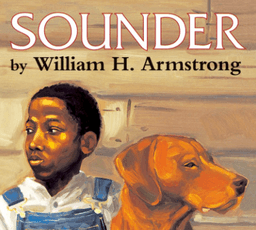
Sounder - Chapter 2 & 3
Quiz by Julie White
Customize this quiz to suit your class
Instantly translate to 100+ languages
Tag the questions with any skills you have. Your dashboard will track each student's mastery of each skill.
Give this quiz to my class
 Sounder Chapter 2-3Sounder Chapter 1Sounder - Chapter 1Sounder book reviewSounder Final QuestionsUnderstanding the Connection Diagram of Fire Detection and Alarm System (Four Stations) Assessment 1. What are the key components of a fire detection and alarm system? a. Only smoke detectors b. Heat detectors and manual call points c. Control panels and power supply units d. Alarm sounders and batteries 2. Why is the synchronized response of alarm activation at all stations essential in a fire detection and alarm system? a. To confuse occupants b. For individual station evacuation c. Quick evacuation and response to emergencies d. Delay emergency response 3. How are the stations wired to the control panel in the connection diagram? a. Through a single circuit b. Via a complex network of cables c. Through a series of circuits d. Wirelessly 4. What happens if a detector at any station is triggered by smoke or heat in the connection diagram? a. It activates the alarm sounders at one station b. It sends a signal to the control panel for deactivation c. It triggers the alarm sounders at all four stations d. It has no effect on the system 5. In the wiring configuration, what role does a series circuit play in the system? a. Activates the alarm at one station only b. Triggers the alarm at all stations c. Prevents alarms from sounding d. Bypasses the control panel 6. Why are parallel circuits used in the fire detection and alarm system? a. To save on wiring costs b. To independently connect each station to the control panel c. To limit the number of alarm sounders d. To increase the chance of false alarms 7. What is critical for ensuring the proper functioning of the fire detection and alarm system? a. Irregular testing b. Absence of testing c. Regular testing and maintenance d. Testing only alarms 8. What does regular testing and maintenance help identify in the system? a. Issues with batteries and control panels b. The presence of smoke or heat in the environment c. The need for new detectors d. Alarm sounder malfunctions 9. Why is the connection diagram important in maintaining system integrity? a. To confuse users during emergencies b. To ensure the system malfunctions c. To maintain the system's integrity d. To allow unauthorized access 10. What is the ultimate goal of understanding the connection diagram of a fire detection and alarm system? a. Increase the chances of disastrous consequences b. Confuse occupants in case of emergencies c. Ensure the safety of building occupants d. Promptly initiate false alarms Ostentatiously Definition: Doing something in a way that shows off or tries to impress others. Example: She ostentatiously wore her expensive jewelry to the party. 2. Laden Definition: Carrying or loaded with something heavy. Example: The truck was laden with boxes of food. 3. Easel Definition: A wooden stand used to hold a canvas for painting. Example: The artist placed her painting on the easel to work on it. 4. Palette Definition: A flat board that painters use to mix their colors. Example: He mixed blue and yellow on his palette to create green. 5. Diffidently Definition: Acting in a shy or unsure way because of a lack of confidence. Example: She diffidently raised her hand to answer the question. 6. Quizzical Definition: Looking or acting confused or curious. Example: He gave a quizzical look when he didn’t understand the joke. 7. Acoustics Definition: The way sound behaves in a room or space. Example: The acoustics in the concert hall made the music sound amazing. 8. Plausible Definition: Something that seems believable or possible. Example: Her excuse for being late sounded plausible, so the teacher didn’t get upset.Fall Forward, Spring Back It was the first Friday in November. Daylight Saving Time ended that Sunday. The fall parade was Sunday, too. "Remember to set your clocks back an hour on Saturday night," said Nola's teacher. "Spring forward, fall back," he added. Nola didn't pay much attention. She was always late for everything anyway. She figured she always would be. At dinner, though, she asked her mom if they could go to the parade. "I won't be here Sunday, but I'll bet Pablo could take you," Mom said. Nola looked at Pablo, her sleеру big brother. He nodded-and yawned. Saturday morning, their mom drove to the airport. Saturday night, Nola thought back to her teacher's words: "Spring forward, fall back." Or was it "Fall forward, spring back"? "Fall forward" sounded better, so she set her clock forward an hour. Just like that, it was past her bedtime. She was late again. "Time is not my friend," Nola sighed. The next morning when Nola woke, her clock said 10:15. The parade began at ten o'clock. Nola and Pablo ran to the parade route, but there was no parade. It seemed they'd missed the whole thing. They turned and headed home. On their way back, they spotted their neighbor Frank. He was climbing around next to an eight-foot pumpkin float. "The early bird gets the worm!" he shouted, then asked for their help. They worked on his float for more than an hour. Then Frank clapped his hands. "Let's get to that parade!" he cried. Nola and Pablo blinked in confusion. "Wait a minute," Nola said. "Wasn't the parade at ten o'clock today?" she asked. "Was at ten?" Frank asked. "Will be at ten is more like it!" he cried. He thrust his watch toward them. It said 9:30. Nola laughed for joy. She had jumped forward an hour when everybody else had jumped back. That meant she and Pablo were now two hours ahead of everybody else. For once in their lives, they were early! "The early bird gets the worm!" Nola cried. Frank nodded. "You've got it, missy," he said. Pablo yawned. It was all a big mistake, but it turned out to be a great mistake. It's why they rode in the parade that year, and every year since. It's also why, from that day on, Nola has been early for everything. Two minutes early, though-not two hours.