Loading...


Speaking Assessment (Task 1)
Quiz by Aisya Brilia
Customize this quiz to suit your class
Instantly translate to 100+ languages
Tag the questions with any skills you have. Your dashboard will track each student's mastery of each skill.
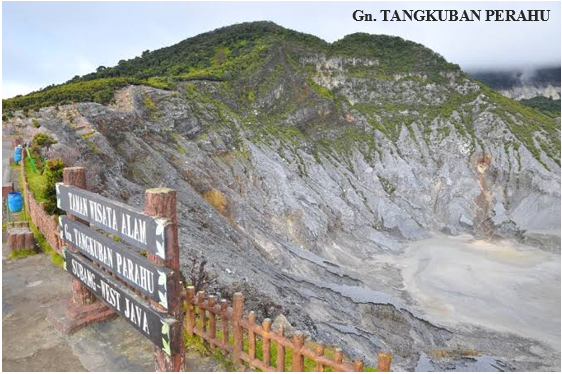
Directions: In this part of the test, you will describe and tell a brief folklore story of the picture on your screen in as much detail as you can.
You will have 5 minutes to prepare, record yourself, and submit the video through the link provided. Maximum length of your video: 1 minute.
The link will be closed 5 minutes after the time on your screen is running out.
Please type "Start" below.
Describe and tell a brief folklore story of the picture.
Submission link: https://forms.gle/G3BE1FwikesdoXB1A
Please type "Finish" below.
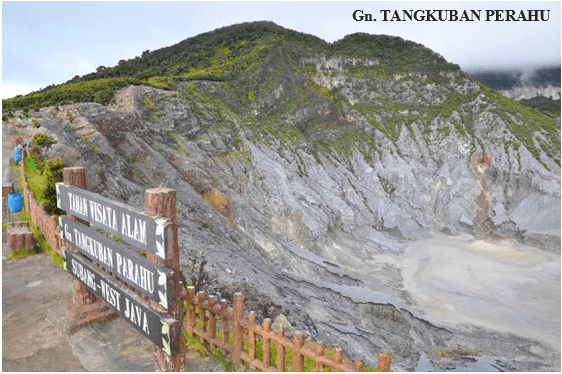
Directions: In this part of the test, you will describe and tell a brief folklore story of the picture on your screen in as much detail as you can.
You will have 5 minutes to prepare, record yourself, and submit the video through the link provided. Maximum length of your video: 1 minute.
The link will be closed 5 minutes after the time on your screen is running out.
Please type "Start" below.
Describe and tell a brief folklore story of the picture.
Submission link: https://forms.gle/G3BE1FwikesdoXB1A
Please type "Finish" below.
Give this quiz to my class
 Organization moment : Greeting. Checking home task. Set the lesson objectives, letting students know what to anticipate from the lesson. Warming up. Tell Ss to do matching task Vocabulary. Ex 1, p 87. The pictures show various types of energy. Label the pictures. Use: sound, thermal, light, mechanical, magnetic, and gravitational. Pre-reading. Ex 2, p 87. What is the difference between ‘kinetic’ and ‘potential’ energy? Tell Ss to watch video to find out. Reading. Ex 3, p 87. Tell Ss to read the text and do matching task Assessment criteria: read a wide range of extended fiction and non-fiction texts Gap filling. Ex 4, p 87. Fill in: reaction, movement, field, object, process. Speaking. Ex 5, p 87. What do you know about the other types of energy in Ex. 1? What else would you like to know? Write down two questions and ask classmates Assessment criteria: evaluate and comment on the views of others FEEDBACK Ask for the feedback Home task: Ex 6 p 87Teaching English Introduction to the course: Language learning and teaching A 2 Characteristics of the language learners: Studying a system that aligns with international standards. A3 Cognitive factors in language learning: Addressing questions and obtaining necessary information regarding phenomena such as transfer, interference, and generalization; A4 Inductive and deductive language learning: ability and intelligence; and the phenomenon of systematic forgetting A5 Language learning methods and strategies: Familiarizing with foreign language learning methods, strategies for learning foreign languages, and communication strategies A6 International Assessment System of language skills in CEFR, IELTS, TOEFL: effective methods and strategies used to improve language skills (listening, reading, writing, speaking) A7 Psychological factors in language learning: Exploring various psychological factors such as self-esteem, shyness, risk-taking, anxiety, attitude, and motivation A8 The effectiveness of authentic materials during the learning process: The role of tasks and games in teaching foreign languages A9 Errors in language learning: Discussing types of errors, identifying and describing errors, causes of errors, and fossilized errors A10 Error correction or error analysis approaches: developing students' ability to apply their knowledge in practicing error correction A11 Age-related factors in language learning: Exploring types of comparisonand contrast, focusing on topics such as the age hypothesis and bilingualism, and providing a detailed explanation of these concepts A12 Teaching grammar: Studying grammar teaching methods; deductive and inductive approaches in grammar teaching; A13 Teaching grammar through context: linguistic intuition; language phenomena; using grammatical dictionaries; analyzing grammatical tasks; and designing exercises, tasks, and tests through completing grammarbased activities. A14 Teaching vocabulary. Seeking answers to questions such as 'What is a word?' and 'What does it mean to learn a word?' A15 Teaching vocabulary in context: teaching lexical units/phrases/collocations; introducing new vocabulary; using corpus data for pedagogical purposes; developing students' vocabulary learning strategies A16 Assessing vocabulary tasks: designing vocabulary tasks, exercises, and tests. In international assessment systems such as CEFR, IELTS, and TOEFL, grammar accuracy and lexical resource A 17 Teaching pronunciation: Understanding the importance of pronunciation for successful communication; teaching stress; teaching intonation A18 Modern technologies in teaching pronunciation A19 Error correction methods: watching to various experiences in this area and analyzing video lessons from international experts in the field A20 Analysis of skill integration in language learning: Understanding the stages of developing skill integration; integration of the four language skills; task-based integration; and project-based integration. A21 Teaching listening comprehension A22 Modern technologies in teaching listening comprehension A23 Teaching Speaking A24 Modern technologies in teaching Speaking A25 Teaching Reading A26 Modern technologies in teaching Reading A27 Teaching Writing A28 Modern technologies in teaching Writing A29 The role and importance of translation in teaching a foreign language A30 Module 2. International standards for teaching and assessment Classroom Language: The teacher's actions; the teacher's voice; the teacher's intonation; using the foreign language in the classroom A31 Foreign language environment: asking questions in the foreign language, giving instructions in the foreign language, providing oral explanations in the foreign language, and issues related to the use of the native language in the foreign language class. A 32 Designing curriculum: Studying, analyzing, and working with curricula designed for schools, lyceums, and colleges. A33 Planning lessons and the structure of lesson plans: determining thesequence of lessons, objectives, tasks, and expected outcomes; choosing the lesson structure for planning A34 Designing tasks for different stages of the lesson: Starting the lesson; concluding the lesson; connecting tasks within the lesson A35 Time management: allocating appropriate time for tasks during the lesson; and providing homework assignments A36 Educational materials and resources: Effective use of existing educational materials and resources; anticipating and addressing potential issues Planning and adapting materials: to the situation during teaching and working on lesson planning for groups of students with different abilities. A37 Classroom research: Stages of classroom research, data collection, analysis, and planning; creating/preparing the materials needed for data collection; distinguishing between the positive and negative aspects of the research A38 Data analysis: creating/preparing the materials needed for data collection; distinguishing between the positive and negative aspects of the research. A39 Peer lesson observation: Observing lessons; conducting interviews; questionnaires for teachers and students; maintaining a daily record; discussing problematic situations/events; notes and other aspects; the process of lesson observation: stages of observation; presenting observation results both orally and in writing. A40 Educational materials and national values: important tool for implementing and promoting educational standards, as well as national values. A41 Differences between methods of teaching foreign languages: practical application of modern methods in language teaching; foreign experiences in language teaching: the grammar-translation method; the method of conducting lessons entirely in the foreign language; the audio-linguistic method; and communicative methods. A42 Methods used in the local environment and their analysis: Discussion of the positive and negative aspects of various methods; language and culture; teaching/learning processes; the role of the native language in learning a foreign language; and the psychological foundations of foreign language teaching. A43 Teaching a foreign language through computer technologies A44 Types of independent work and its implementation A45 Principles of Assessment in foreign language teaching А46 Issues in Language Assessment А47 Alternatives in Assessment А48 Test methods. Methods and criteria for assessing language aspects: written expression, reading, listening comprehension, speaking, А49 integrating language skills: vocabulary; grammar; alternative forms of assessment; planning assessment; critical analysis; principles for designingtest tasks: scientific rigor, consistency, conciseness, clarity, informality, logical sequence, and systematic approach. А50 Foreign language for ESP. Studying and analyzing needs; setting objectives for teaching a foreign language in a specific field or professional area; defining teaching approaches in curriculum development; and discussing topics related to these areas. А51 Selecting textbooks, materials and resources А52 Content-based Instruction (CBI) А53 Strategies-based Instruction А54 Lifelong Learning: Teacher development, PreSETT, InSETT А55 The Role of Teaching Practice A56 Organization and implementation of compulsory and non-compulsory course process in foreign language teaching A57 Organization in and outclass activities A58 Defining the goals and content of foreign language teaching at various levels of the education system in the Republic of Uzbekistan: evaluating educational materials; adapting educational materials; creating educational materials; and discussing the role of the foreign language teacher in specialized fields to gain relevant information. A59 The role of independent study skills: foreign language focused on reading, research and study skills; make revision questions. incclude mcq question. answer the question. true falseLISTENING AND SPEAKING ASSESSMENTAssessment (4th Grade Social Studies and Science) Standards: L.4.1 Demonstrate command of the conventions of standard English grammar and usage when writing or speaking. a. Use relative pronouns (who, whose, whom, which, that) and relative adverbs (where, when, why). b. Form and use the progressive (e.g., I was walking; I am walking; I will be walking) verb tenses. c. Use modal auxiliaries (e.g., can, may, must) to convey various conditions. d. Order adjectives within sentences according to conventional patterns (e.g., a small red bag rather than a red small bag). e. Form and use prepositional phrases. f. Produce complete sentences, recognizing and correcting inappropriate fragments and run-ons. g. Correctly use frequently confused words (e.g., to, too, two; there, their). 4.LS.1: Changes in an organism’s environment are sometimes beneficial to its survival and sometimes harmful. Pretend that you are a secondary teacher. Make me 10 HOTS-SOLO or PISA-like assessment test items or multiple choice test questions with answers and stimuli for grade 10 students. Start your questions with why, how, what, and which, align with this learning competency -Deliver a prepared or impromptu talk on an issue employing the techniques in public speakingCan you make a multiple choice of test questions regarding this information given which is Curriculum from Different Points of View There are many definitions of curriculum. Because of this, the concept of curriculum is sometimes characterized as fragmentary, elusive and confusing. However, the numerous definitions indicate dynamism that connotes diverse interpretations of what curriculum is all about. The definitions are influenced by models of thought, pedagogies, political as well as cultural experiences. Let us study some of these definitions. 1. Traditional Points of View of Curriculum In early years of the 20th century, the traditional concepts held of the “curriculum is that it is a body of subjects or subject matter prepaid by the teachers for the student’s to learn”. It was synonymous to the “course of study” and “syllabus” Robert M. Hutchins views curriculum as “permanent studies” where the rules of grammar, reading, rhetoric and logic and mathematics for basic education are emphasized. Basic education should emphasize the 3 Rs and college education should be grounded on liberal education. On the other, Arthur Bestor as an essentialist, believes that the mission of the school should be intellectual training, hence curriculum should focus on the fundamental intellectual disciplines of grammar, literature and writing. It should also include mathematics, science, history and foreign language. The definition leads us to the view of Joseph Schwab that discipline is the sole source of curriculum. Thus in our education system, curriculum is divided into chunks of knowledge we call subject areas in basic education such as English, Mathematics, Science, Social Studies and others. In college, discipline may include humanities, sciences, language and many more. To Phoenix, curriculum should consist entirely of knowledge which comes from various disciplines. Academic discipline became the view of what curriculum is after the cold war and the race to space. Joseph Schwab, a leading curriculum theorist coined the term discipline as a ruling doctrine for curriculum development. Curriculum should consist only of knowledge which comes from disciplines which is the sole source. Thus curriculum can be viewed as a field of study. It is made up of its foundations (philosophical, historical, psychological and social foundations); domains of knowledge as well as its research theories and principles. Curriculum is taken as scholarly and theoretical. It is concerned with broad historical, philosophical and social issues and academics. Most of the traditional ideas view curriculum as written documents or a plan of action in accomplishing goals. 2. Progressive Points of View of Curriculum On the other hand, to a progressivist, a listing of school subjects, syllabi, course of study, and a list of courses or specific discipline do not make a curriculum. These can only be called curriculum if the written materials are actualized by the learner. Broadly speaking, curriculum is defined as the total learning experiences of the individual. This definition is anchored on John Dewey’s definition of experience and education. He believed that reflective thinking is a means that unifies curricular elements. Thought is not derived from action but tested by application. Caswell and Campbell viewed curriculum as “all experiences children have under the guidance of teachers”. This definition is shared by Smith, Stanley and Shores when they defined “curriculum as a sequence of potential experiences set up in the schools for the purpose of disciplining children and youth in group ways of thinking and acting”. Marsh and Willis on the other hand view curriculum as all the “experiences in the classroom which are planned and enacted by the teacher, and also learned by the students”. Points of View on Curriculum Development From the various definitions and concepts presented, it is clear that curriculum is a dynamic process. Development connotes changes which are systematic. A change for the better means any alteration, modification or improvement of existing condition. To produce positive changes, development should be purposeful, planned and progressive. This is how curriculum evolves. Let us look at the two models of curriculum development and concepts of Ralph Tyler and Hilda Taba. Ralph Tyler Model: Four Basic Principles. This is also popularly known as Tyler’s Rationale. He posited four fundamental questions or principles in examining any curriculum in schools. These four fundamental principles are as follows: 1. What educational purposes should the school seek to attain? 2. What educational experiences can be provided that are likely to attain these purposes? 3. How can these educational experiences be effectively organized? 4. How can we determine whether these purposes are being attained or not? In summary, Tyler’s Model show that in curriculum development, the following considerations should be made: (1) Purpose of the school, (2) Educational experiences related to the purposes, (3) Organization of the experiences, and (4) Evaluation of the experiences. On the other hand, Hilda Taba improved on Tyler’s Rationale by making a linear model. She believed that teachers who teach or implement the curriculum should participate in developing it. Her advocacy was commonly called the grassroots approach. She presented seven major steps to her model where teachers could have a major input. These steps are as follows: 1. Diagnosis of learner’s needs and expectations of the larger society. 2. Formulation of learning objectives. 3. Selection of learning content. 4. Organization of learning content. 5. Selection of learning experiences. 6. Organization of learning activities. 7. Determination of what to evaluate and the means of doing it. Thus as you look into curriculum models, the three interacting processes in curriculum development are planning, implementing and evaluating. Types of Curriculum Operating in Schools From the various concepts given, Allan Glatthorn(2000) describes seven types of curriculum operating in the schools. These are (1) Recommended curriculum- proposed by scholars and professional organizations. (2) Written Curriculum- appears in school, district, division or country documents. (3) Taught Curriculum- what teacher’s implement or deliver in the classrooms and schools. (4) Supported Curriculum- resources-textbooks, computers, audio- visual materials which support and help in the implementation of the curriculum. (5) Assessed Curriculum- that which is tested and evaluated. (6) Learned Curriculum- which the students actually learn and what is measured and (7) Hidden Curriculum- the unintended curriculum. 1. Recommended Curriculum- Most of the school curricula are recommended. The curriculum may come from a national agency like the Department of Education, Commission on Higher Education (CHED), Department of Science and Technology (DOST) or any professional organization who has stake in education. For example the Philippine Association for Teacher Education (PAFTE) or the Biology Teacher Association (BIOTA) may recommend a curriculum to be implemented in the elementary or secondary education. 2. Written Curriculum- This includes documents, course of study or syllabi handed down to the schools, districts, division, departments or colleges for implementation. Most of the written curricula are made by curriculum experts with participation of teachers. These were pilot-tested or tried out in sample schools or population. Example of this is the Basic Education Curriculum (BEC). Another example is the written lesson plan of each classroom teacher made up of objectives and planned activities of the teacher. 3. Taught Curriculum- The different planned activities which are put into action in the classroom compose the taught curriculum. These are varied activities that are implemented in order to arrive at the objectives or purposes of the written curriculum. These are used by the learners with the guidance of teachers. Taught curriculum varies according to the learning styles of students and the teaching styles of teachers. 4. Supported Curriculum- In order to have a successful teaching, other than the teacher, there must be materials which should support or help in the implementation of a written curriculum. These refer to the support curriculum that includes material resources such as textbooks, computers, audio-visual materials, laboratory equipment, playgrounds, zoos and other facilities. Support curriculum should enable each learner to achieve real and lifelong learning. 5. Assessed Curriculum- This refers to a tested or evaluated curriculum. At the duration and end of the teaching episodes, series of evaluations are being done by the teachers to determine the extent of teaching or to tell if the students are progressing. This refers to the assessed curriculum. Assessment tools like pencil-and-paper tests, authentic instruments like portfolio are being utilized. 6. Learned Curriculum- This refers the learning outcomes achieved by the students. Learning outcomes are indicated by the results of the tests and changes in behavior which can either be cognitive, affective or psychomotor. 7. Hidden Curriculum- This is the unintended curriculum which is not deliberately planned but may modify behavior or influenced learning outcomes. There are lots of hidden curricula that transpire in the schools. Peer influence, school environment, physical condition, teacher-learner interaction, mood of the teachers and many other factors made up the hidden curriculum.She went by the name of Belisa Crepusculario, not because she had been baptized with that name or given it by her mother, but because she herself had searched until she found the poetry of "beauty" and "twilight" and cloaked herself in it. She made her living selling words. She journeyed through the country from the high cold mountains to the burning coasts, stopping at fairs and in markets where she set up four poles covered by a canvas awning under which she took refuge from the sun and rain to minister to her customers. She did not have to peddle her merchandise because from having wandered far and near, everyone knew who she was. Some people waited for her from one year to the next, and when she appeared in the village with her bundle beneath her arm, they would form a line in front of her stall. Her prices were fair. For five centavos she delivered verses from memory, for seven she improved the quality of dreams, for nine she wrote love letters, for twelve she invented insults for irreconcilable enemies. She also sold stories, not fantasies but long, true stories she recited at one telling, never skipping a word. This is how she carried news from one town to another. People paid her to add a line or two: our son was born, so-and-so died, our children got married, the crops burned in the field. Wherever she went a small crowd gathered around to listen as she began to speak, and that was how they learned about each others' doings, about distant relatives, about what was going on in the civil war. To anyone who paid her fifty centavos in trade, she gave the gift of a secret word to drive away melancholy. It was not the same word for everyone, naturally, because that would have been collective dece it. Each person received his or her own word, with the assurance that no one else would use it that way in this universe or the Beyond. Belisa Crepusculario had been born into a family so poor they did not even have names to give their children. She came into the world and grew up in an inhospitable land where some years the rains became avalanches of water that bore everything away before them and others when not a drop fell from the sky and the sun swelled to fill the horizon and the world became a desert. Until she was twelve, Belisa had no occupation or virtue other than having withstood hunger and the exhaustion of centuries. During one interminable drought, it fell to her to bury four younger brothers and sisters, when she realized that her turn was next, she decided to set out across the 2 plains in the direction of the sea, in hopes that she might trick death along the way. The land was eroded, split with deep cracks, strewn with rocks, fossils of trees and thorny bushes, and skeletons of animals bleached by the sun. From time to time she ran into families who, like her, were heading south, following the mirage of water. Some had begun the march carrying their belongings on their back or in small carts, but they could barely move their own bones, and after a while they had to abandon their possessions. They dragged themselves along painfully, their skin turned to lizard hide and their eyes burned by the reverberating glare. Belisa greeted them with a wave as she passed, but she did not stop, because she had no strength to waste in acts of compassion. Many people fell by the wayside, but she was so stubborn that she survived to cross through that hell and at long last reach the first trickles of water, fine, almost invisible threads that fed spindly vegetation and farther down widened into small streams and marshes. Belisa Crepusculario saved her life and in the process accidentally discovered writing. In a village near the coast, the wind blew a page of newspaper at her feet. She picked up the brittle yellow paper and stood a long while looking at it, unable to determine its purpose, until curiosity overcame her shyness. She walked over to a man who was washing his horse in the muddy pool where she had quenched her thirst. "What is this?" she asked. "The sports page of the newspaper," the man replied, concealing his surprise at her ignorance. The answer astounded the girl, but she did not want to seem rude, so she merely inquired about the significance of the fly tracks scattered across the page. "Those are words, child. Here it says that Fulgencio Barba knocked out El Negro Tiznao in the third round." That was the day Belisa Crepusculario found out that words make their way in the world without a master, and that anyone with a little cleverness can appropriate them and do business with them. She made a quick assessment of her situation and concluded that aside from becoming a prostitute or working as a servant in the kitchens of the rich there were few occupations she was qualified for. It seemed to her that selling words would be an honorable alternative. From that moment on, she worked at that profession, and was never tempted by any other. At the beginning, she offered her merchandise unaware that words could be written outside of newspapers. When she learned otherwise, she calculated the infinite possibilities of her trade and with her savings paid a priest twenty pesos to teach her to read and write, with her three 3 remaining coins she bought a dictionary. She poured over it from A to Z and then threw it into the sea, because it was not her intention to defraud her customers with packaged words. One August morning several years later, Belisa Crepusculario was sitting in her tent in the middle of a plaza, surrounded by the uproar of market day, selling legal arguments to an old man who had been trying for sixteen years to get his pension. Suddenly she heard yelling and thudding hoofbeats. She looked up from her writing and saw, first, a cloud of dust, and then a band of horsemen come galloping into the plaza. They were the Colonel's men, sent under orders of El Mulato, a giant known throughout the land for the speed of his knife and his loyalty to his chief. Both the Colonel and El Mulato had spent their lives fighting in the civil war, and their names were ineradicably linked to devastation and calamity. The rebels swept into town like a stampeding herd, wrapped in noise, bathed in sweat, and leaving a hurricane of fear in their trail. Chickens took wing, dogs ran for their lives, women and children scurried out of sight, until the only living soul left in the market was Belisa Crepusculario. She had never seen El Mulato and was surprised to see him walking toward her. "I'm looking for you," he shouted, pointing his coiled whip at her, even before the words were out, two men rushed her -- knocking over her canopy and shattering her inkwell -- bound her hand and foot, and threw her like a sea bag across the rump of El Mulato's mount. Then they thundered off toward the hills. Hours later, just as Belisa Crepusculario was near death, her heart ground to sand by the pounding of the horse, they stopped, and four strong hands set her down. She tried to stand on her feet and hold her head high, but her strength failed her and she slumped to the ground, sinking into a confused dream. She awakened several hours later to the murmur of night in the camp, but before she had time to sort out the sounds, she opened her eyes and found herself staring into the impatient glare of El Mulato, kneeling beside her. "Well, woman, at last you've come to," he said. To speed her to her senses, he tipped his canteen and offered her a sip of liquor laced with gunpowder. She demanded to know the reason for such rough treatment, and El Mulato explained that the Colonel needed her services. He allowed her to splash water on her face, and then led her to the far end of the camp where the most feared man in all the land was lazing in a hammock strung between two trees. She could not see his face, because he lay in the deceptive shadow of the leaves and the indelible shadow of all his years as a bandit, but she imagined from the way his 4 gigantic aide addressed him with such humility that he must have a very menacing expression. She was surprised by the Colonel's voice, as soft and well-modulated as a professor's. "Are you the woman who sells words?" he asked. "At your service," she stammered, peering into the dark and trying to see him better. The Colonel stood up, and turned straight toward her. She saw dark skin and the eyes of a ferocious puma, and she knew immediately that she was standing before the loneliest man in the world. "I want to be President," he announced. The Colonel was weary of riding across that godforsaken land, waging useless wars and suffering defeats that no subterfuge could transform into victories. For years he had been sleeping in the open air, bitten by mosquitoes, eating iguanas and snake soup, but those minor inconveniences were not why he wanted to change his destiny. What truly troubled him was the terror he saw in people's eyes. He longed to ride into a town beneath a triumphal arch with bright flags and flowers everywhere, he wanted to be cheered, and be given newly laid eggs and freshly baked bread. Men fled at the sight of him, children trembled, and women miscarried from fright, he had had enough, and so he had decided to become President. El Mulato had suggested that they ride to the capital, gallop up to the Palace, and take over the government, the way they had taken so many other things without anyone's permission. The Colonel, however, did not want to be just another tyrant, there had been enough of those before him and, besides, if he did that, he would never win people's hearts. It was his aspiration to win the popular vote in the December elections. "To do that, I have to talk like a candidate. Can you sell me the words for a speech?" the Colonel asked Belisa Crepusculario. She had accepted many assignments, but none like this. She did not dare refuse, fearing that El Mulato would shoot her between the eyes, or worse still, that the Colonel would burst into tears. There was more to it than that, however, she felt the urge to help him because she felt a throbbing warmth beneath her skin, a powerful desire to touch that man, to fondle him, to clasp him in her arms. All night and a good part of the following day, Belisa Crepusculario searched her repertory for words adequate for a presidential speech, closely watched by El Mulato, who could not take his eyes from her firm wanderer's legs and virginal breasts. She discarded harsh, cold words, words 5 that were too flowery, words worn from abuse, words that offered improbable promises, untruthful and confusing words, until all she had left were words sure to touch the minds of men and women's intuition. Calling upon the knowledge she had purchased from the priest for twenty pesos, she wrote the speech on a sheet of paper and then signaled El Mulato to untie the rope that bound her ankles to a tree. He led her once more to the Colonel, and again she felt the throbbing anxiety that had seized her when she first saw him. She handed him the paper and waited while he looked at it, holding it gingerly between thumbs and fingertips. "What the shit does this say," he asked finally. "Don't you know how to read?" "War's what I know," he replied. She read the speech aloud. She read it three times, so her client could engrave it on his memory. When she finished, she saw the emotion in the faces of the soldiers who had gathered round to listen, and saw that the Colonel's eyes glittered with enthusiasm, convinced that with those words the presidential chair would be his. "If after they've heard it three times, the boys are still standing there with their mouths hanging open, it must mean the thing's damn good, Colonel" was El Mulato's approval. "All right, woman. How much do I owe you?" the leader asked. "One peso, Colonel." "That's not much," he said, opening the pouch he wore at his belt, heavy with proceeds from the last foray. "The peso entitles you to a bonus. I'm going to give you two secret words," said Belisa Crepusculario. "What for?" She explained that for every fifty centavos a client paid, she gave him the gift of a word for his exclusive use. The Colonel shrugged. He had no interest at all in her offer, but he did not want to be impolite to someone who had served him so well. She walked slowly to the leather stool where he was sitting, and bent down to give him her gift. The man smelled the scent of a mountain cat issuing from the woman, a fiery heat radiating from her hips, he heard the terrible whisper of her hair, and a breath of sweetmint murmured into his ear the two secret words that were his alone. "They are yours, Colonel," she said as she stepped back. "You may use them as much as you 6 please." El Mulato accompanied Belisa to the roadside, his eyes as entreating as a stray dog's, but when he reached out to touch her, he was stopped by an avalanche of words he had never heard before; believing them to be an irrevocable curse, the flame of his desire was extinguished. During the months of September, October, and November the Colonel delivered his speech so many times that had it not been crafted from glowing and durable words it would have turned to ash as he spoke. He travelled up and down and across the country, riding into cities with a triumphal air, stopping in even the most forgotten villages where only the dump heap betrayed a human presence, to convince his fellow citizens to vote for him. While he spoke from a platform erected in the middle of the plaza, El Mulato and his men handed out sweets and painted his name on all the walls in gold frost. No one paid the least attention to those advertising ploys; they were dazzled by the clarity of the Colonel's proposals and the poetic lucidity of his arguments, infected by his powerful wish to right the wrongs of history, happy for the first time in their lives. When the Candidate had finished his speech, his soldiers would fire their pistols into the air and set off firecrackers, and when finally they rode off, they left behind a wake of hope that lingered for days on the air, like the splendid memory of a comet's tail. Soon the Colonel was the favorite. No one had ever witnessed such a phenomenon: a man who surfaced from the civil war, covered with scars and speaking like a professor, a man whose fame spread to every corner of the land and captured the nation's heart. The press focused their attention on him. Newspapermen came from far away to interview him and repeat his phrases, and the number of his followers and enemies continued to grow. "We're doing great, Colonel," said El Mulato, after twelve successful weeks of campaigning. But the Candidate did not hear. He was repeating his secret words, as he did more and more obsessively. He said them when he was mellow with nostalgia; he murmured them in his sleep; he carried them with him on horseback; he thought them before delivering his famous speech; and he caught himself savoring them in his leisure time. And every time he thought of those two words, he thought of Belisa Crepusculario, and his senses were inflamed with the memory of her feral scent, her fiery heat, the whisper of her hair, and her sweetmint breath in his ear, until he began to go around like a sleepwalker, and his men realized that he might die before he ever sat in the presidential chair. "What's got hold of you, Colonel," El Mulato asked so often that finally one day his chief broke 7 down and told him the source of his befuddlement: those two words that were buried like two daggers in his gut. "Tell me what they are and maybe they'll lose their magic," his faithful aide suggested. "I can't tell them, they're for me alone," the Colonel replied. Saddened by watching his chief decline like a man with a death sentence on his head, El Mulato slung his rifle over his shoulder and set out to find Belisa Crepusculario. He followed her trail through all that vast country, until he found her in a village in the far south, sitting under her tent reciting her rosary of news. He planted himself, spraddle-legged, before her, weapon in hand. "You! You're coming with me," he ordered. She had been waiting. She picked up her inkwell, folded the canvas of her small stall, arranged her shawl around her shoulders, and without a word took her place behind El Mulato's saddle. They did not exchange so much as a word in all the trip; El Mulato's desire for her had turned into rage, and only his fear of her tongue prevented his cutting her to shreds with his whip. Nor was he inclined to tell her that the Colonel was in a fog, and that a spell whispered into his ear had done what years of battle had not been able to do. Three days later they arrived at the encampment, and immediately, in view of all the troops, El Mulato led his prisoner before the Candidate. "I brought this witch here so you can give her back her words, Colonel," El Mulato said, pointing the barrel of his rifle at the woman's head. "And then she can give you back your manhood." The Colonel and Belisa Crepusculario stared at each other, measuring one another from a distance. The men knew then that their leader would never undo the witchcraft of those accursed words, because the whole world could see the voracious-puma eyes soften as the woman walked to him and took his hand in hers. Copyright © 1989 by Isabel Allende From The Stories of Eva Luna, Translated by Margaret Sayers PedenSpeaking