Simplify numeric and algebraic expressions using the laws of exponents, including integral and rational exponents.
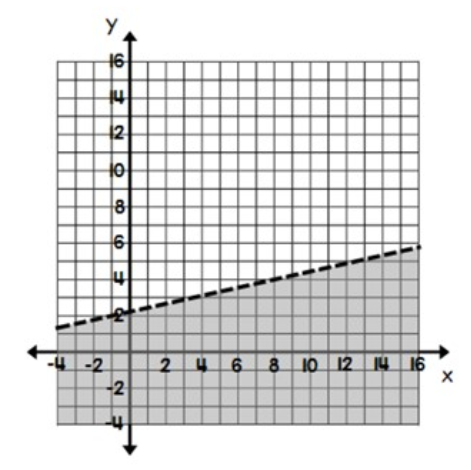
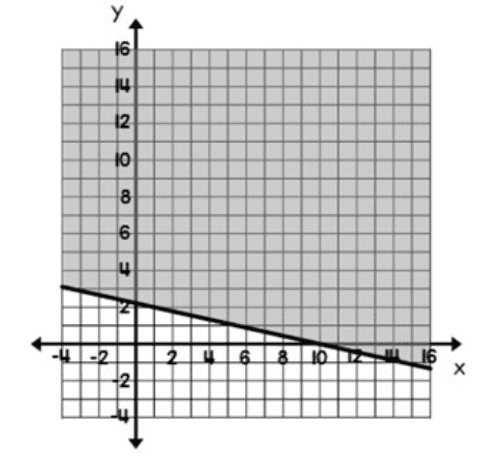
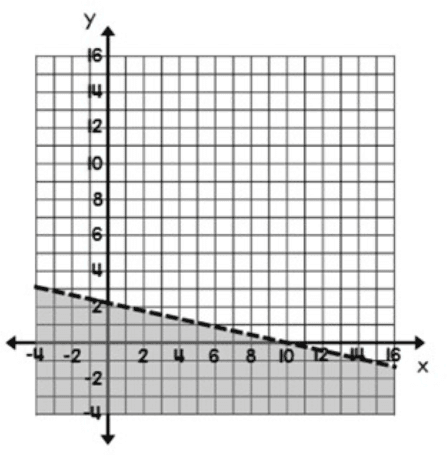
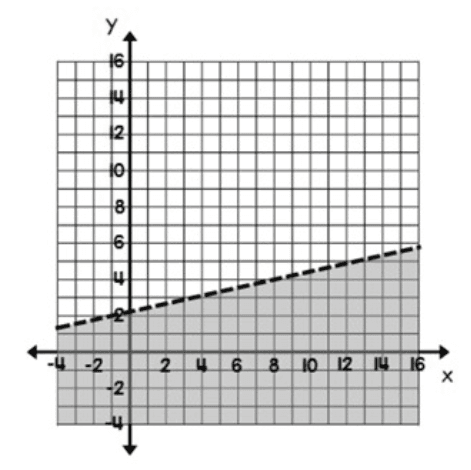
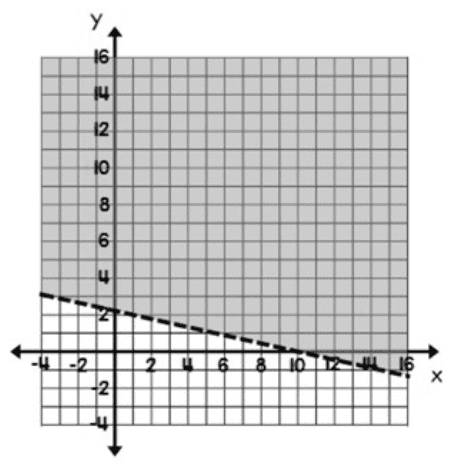
Graph the solution set of linear inequalities in two variables on the coordinate plane.
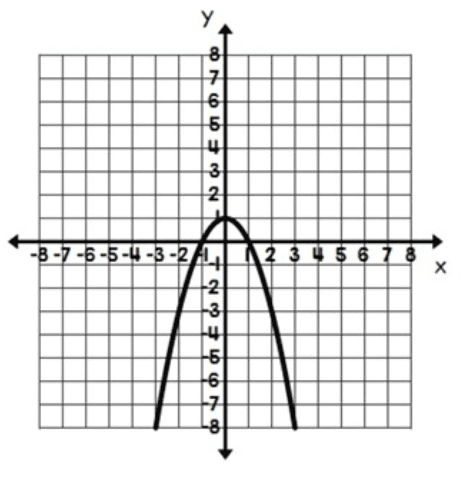
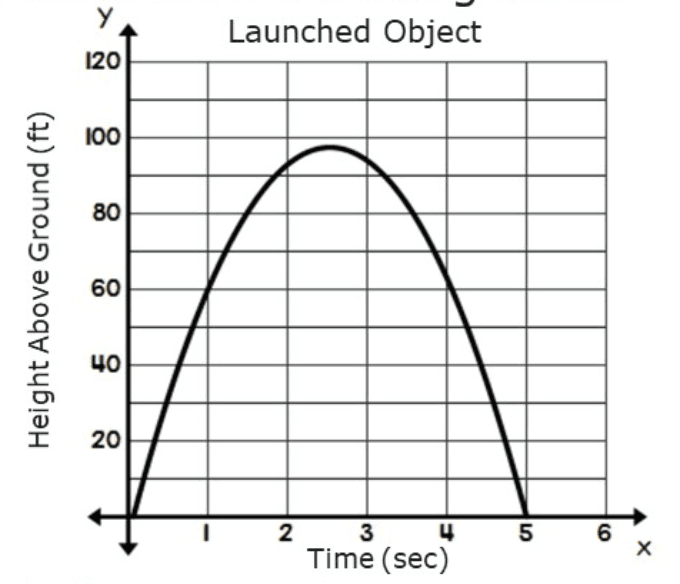
Graph quadratic functions on the coordinate plane and use the graph to identify key attributes, if possible, including x-intercept, y-intercept, zeros, maximum value, minimum values, vertex, and the equation of the axis of symmetry.
Solve quadratic equations having real solutions by factoring, taking square roots, completing the square, and applying the quadratic formula.
Graph systems of two linear equations in two variables on the coordinate plane and determine the solutions if they exist.
Write quadratic functions when given real solutions and graphs of their related equations.
Solve systems of two linear equations with two variables for mathematical and real-world problems.
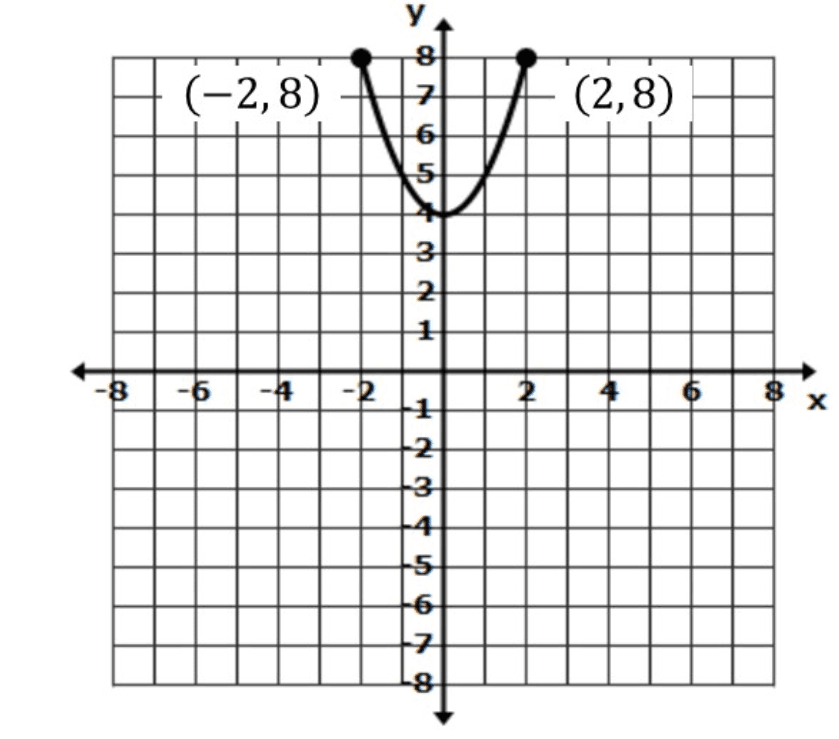
Write equations of quadratic functions given the vertex and another point on the graph, write the equation in vertex form (f(x) = a(x - h)2+ k), and rewrite the equation from vertex form to standard form (f(x) = ax2+ bx + c).
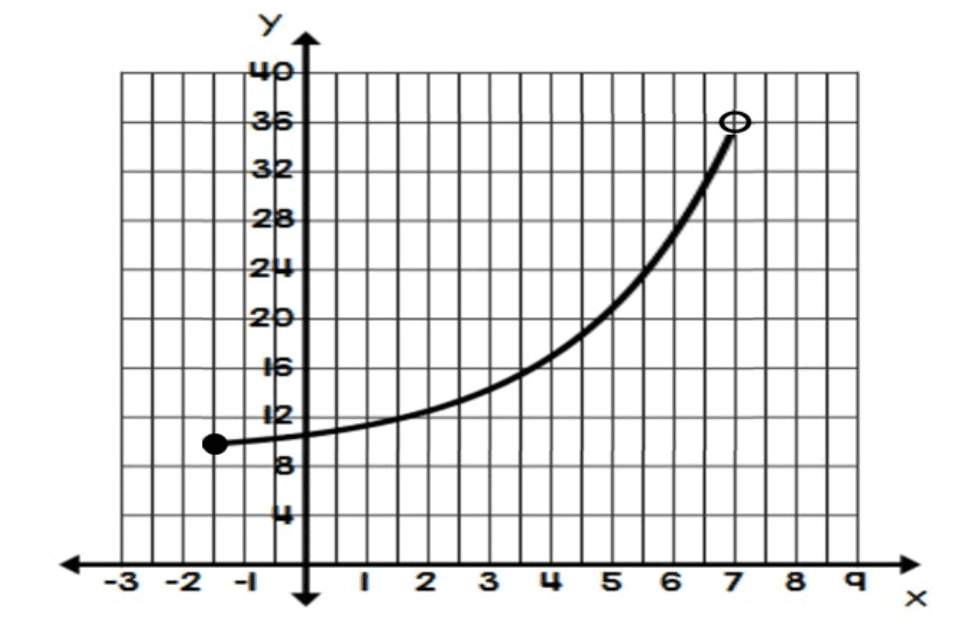
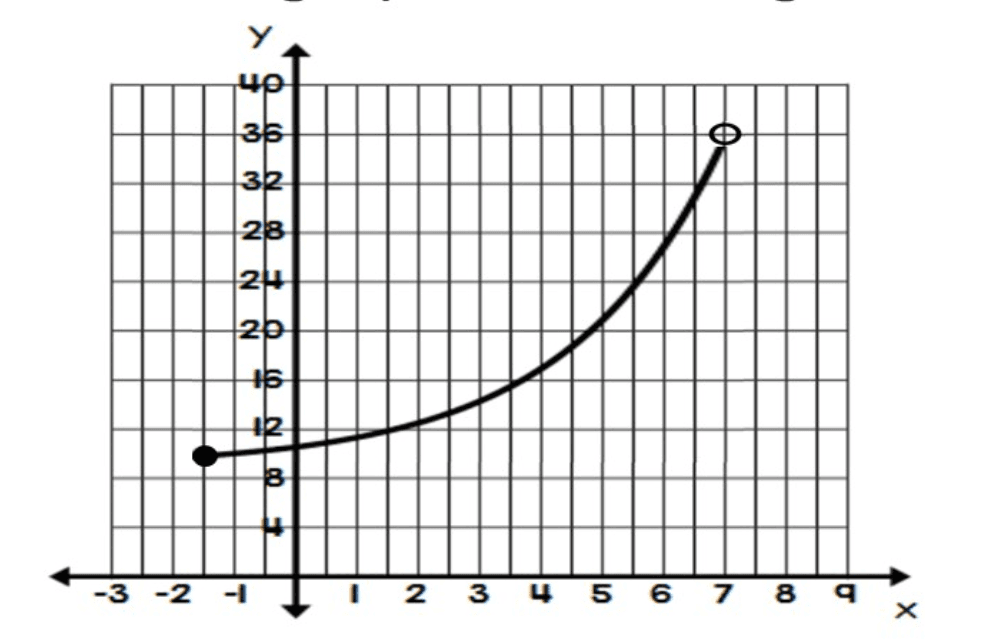
Determine the domain and range of exponential functions of the form f(x) = abx and represent the domain and range using inequalities.
Factor, if possible, trinomials with real factors in the form ax2 + bx + c, including perfect square trinomials of degree two.
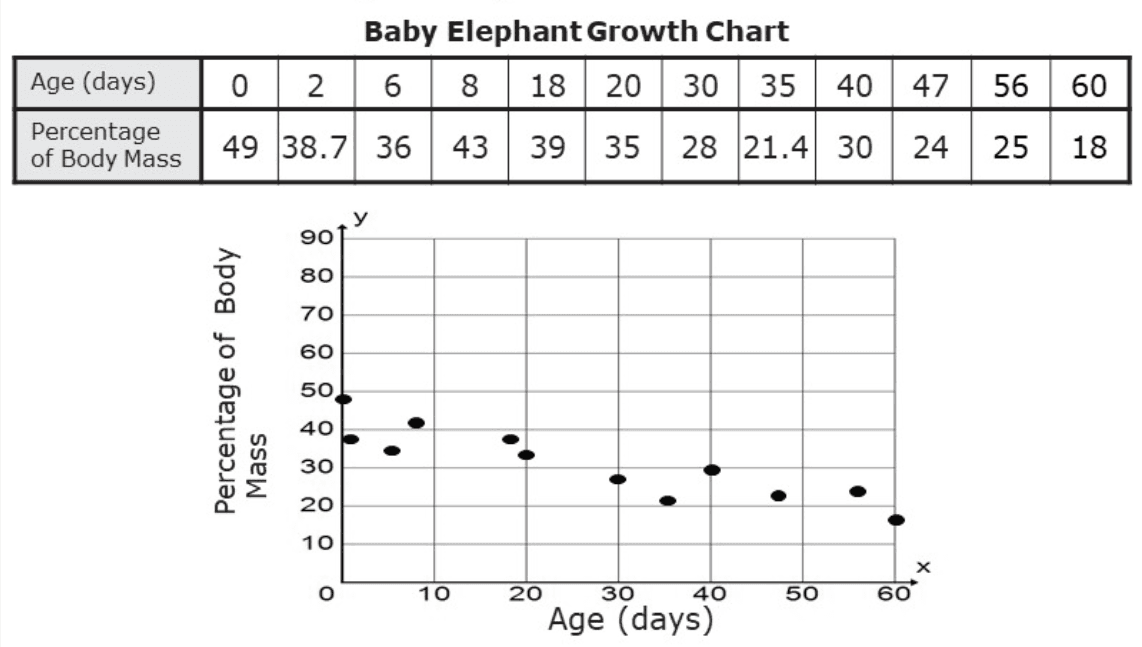
Write, with and without technology, linear functions that provide a reasonable fit to data to estimate solutions and make predictions for real-world problems.
Write an equation of a line that is parallel or perpendicular to the X or Y axis and determine whether the slope of the line is zero or undefined.
Compare and contrast association and causation in real-world problems.
Determine the domain and range of quadratic functions and represent the domain and range using inequalities.
Rewrite polynomial expressions of degree one and degree two in equivalent forms using the distributive property.
Graph linear functions on the coordinate plane and identify key features, including x-intercept, y-intercept, zeros, and slope, in mathematical and real-world problems.
Evaluate functions, expressed in function notation, given one or more elements in their domains.
Determine the effects on the graph of the parent function f(x) = x when f(x) is replaced by af(x), f(x) + d, f(x - c), f(bx) for specific values of a, b, c, and d.
Write exponential functions in the form f(x) = abx (where b is a rational number) to describe problems arising from mathematical and real-world situations, including growth and decay.
Write a formula for the nth term of arithmetic and geometric sequences, given the value of several of their terms.
Track each student's skills and progress in your Mastery dashboards