Loading...


Story time 2-4th
Quiz by Tr.Hanadi
Customize this quiz to suit your class
Instantly translate to 100+ languages
Tag the questions with any skills you have. Your dashboard will track each student's mastery of each skill.
Give this quiz to my class
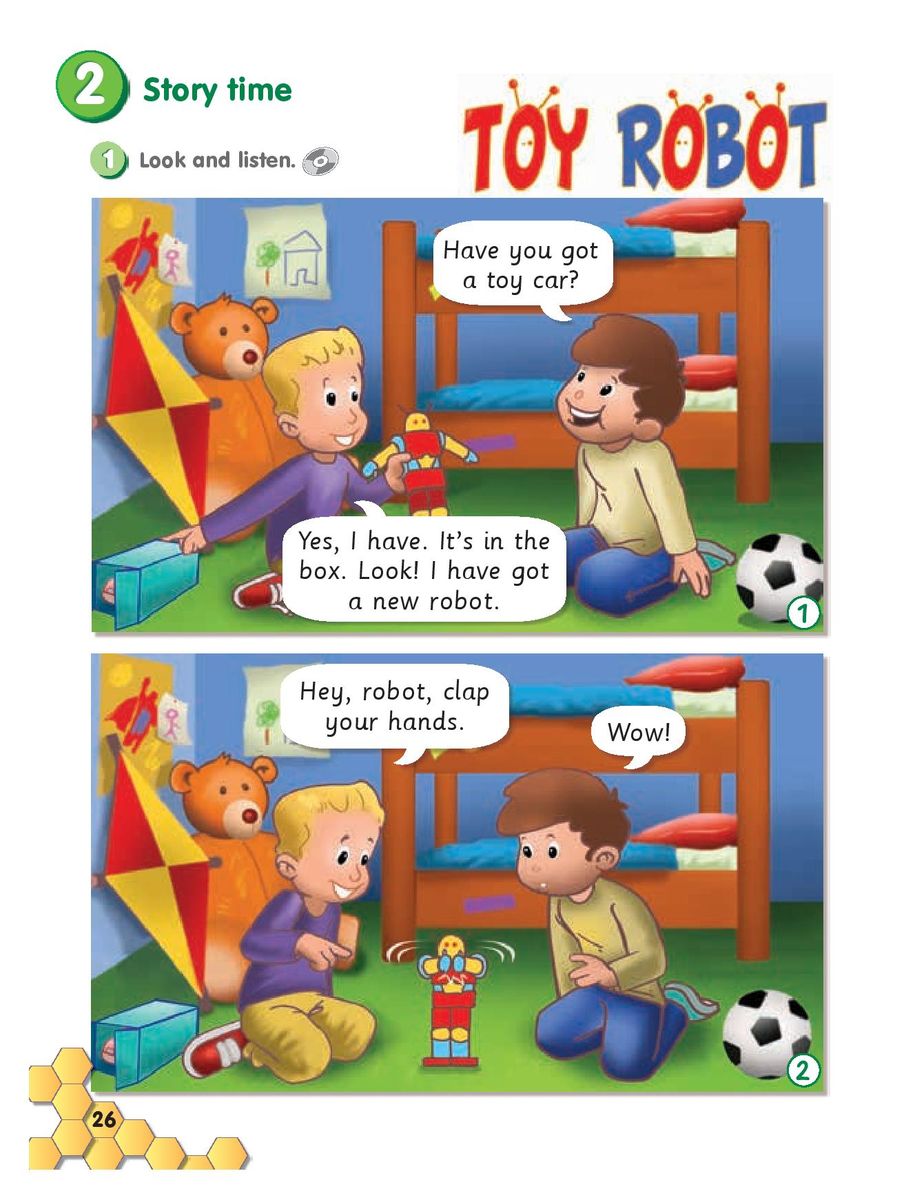

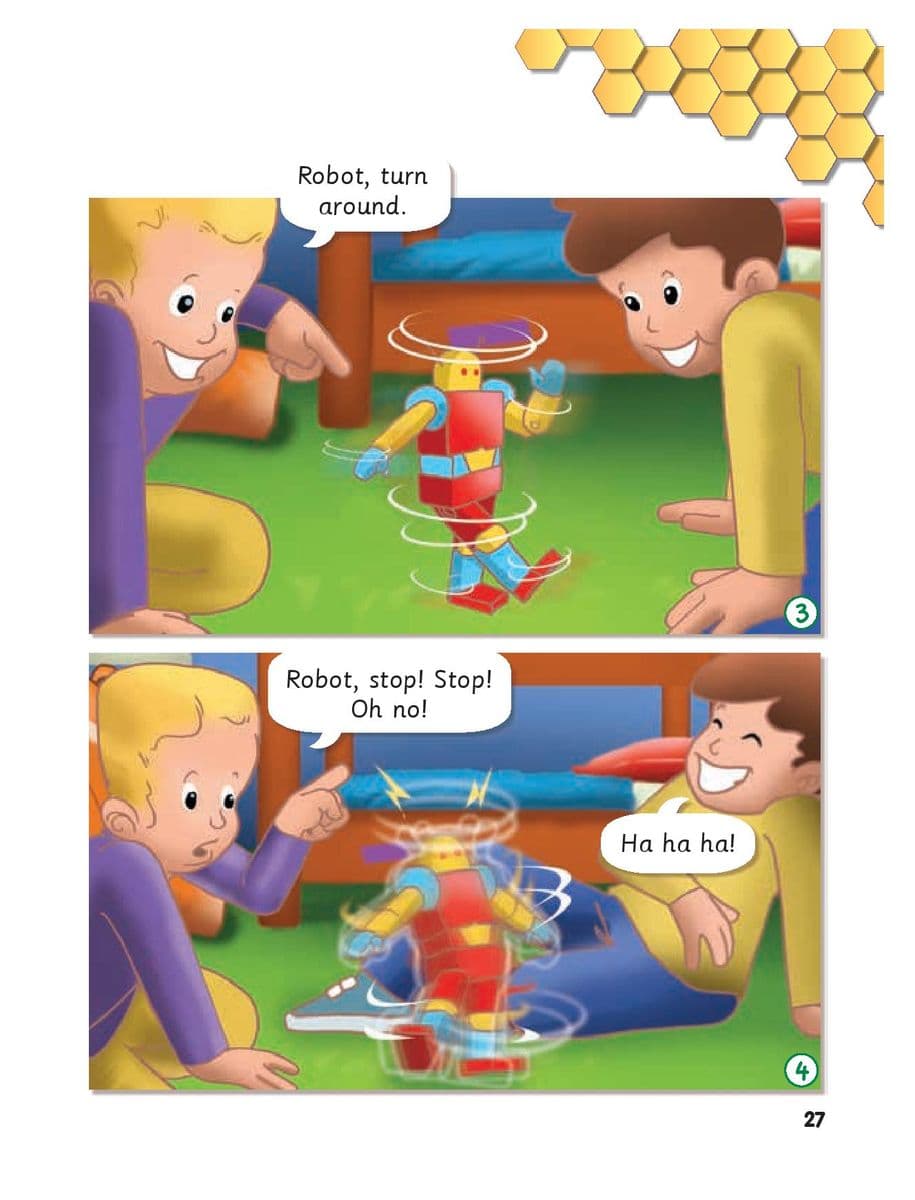
 G1-M8-Story time-2Quiz 2 Spanish Version Omakayas is a young Ojibwe girl who lived a long, long time ago in a place called the Great Lakes region. That's where parts of the United States and Canada are today. The Ojibwe people were Native Americans who lived close to nature. They didn't have houses like ours; instead, they built homes from the bark of trees, called wigwams. They hunted animals for food, gathered berries and plants, and fished in the clear, cold lakes. Life was hard but full of adventure. People worked together to survive, and family was very important. Children learned from their elders how to live off the land and respect nature. In The Birchbark House, you'll follow Omakayas as she learns about the world around her and grows up in this amazing, but sometimes challenging, way of life. Overcoming Challenges with Resilience Omakayas faces many hardships, but she never gives up. She learns to be strong and brave. This story teaches us that even when things are tough, we can find a way to keep going. The Value of Learning and Growing Omakayas is always eager to learn new things. She learns about plants, animals, and how to survive in the wilderness. LESSON 2 Early Theories on the Origin of Life • Identify the different theories on the origin of life. • Describe each theory and determine their differences What are the characteristics of living things? Before learning about the history of Earth based on geological evidence, early scientists explored the possibilities of how the first life-form existed. There are several theories about the origin of life. Theory of Catastrophism The theory of catastrophism supported by French scientists Georges Cuvier (1769-1832) and Alcide Dessalines d'Orbigny (1802-1857), is said to be a modification of the creation story of the Bible. It states that there have been several living creations from God, each encountered a catastrophe that completely destroyed them. Each new creation consisted of new life-forms, which happen to be different from the previous ones. Theory of Abiogenesis The theory of abiogenesis, or the spontaneous generation theory, states that living things were naturally created from nonliving things such as simple organic compounds. The theory supposes that abiogenesis occurred between 3.8 and 4 Gya. The experiment performed by Stanley Miller in 1953 gave way to many speculations and studies on how life on Earth really began. His research involved a simulation of the possible environment on Earth in the past. He demonstrated how an electric spark (which is a simulation for lightning) when passed through simple organic gases (similar to the early Earth atmosphere), resulted in the formation of amino acids, which are now known as the building blocks of proteins and the components of living tissues. Theory of Biogenesis The theory of biogenesis presented a strong argument against abiogenesis. This theory states that living things come from living things. Experiments of Francesco Redi and Louis Pasteur disproved the thought of spontaneous generation during their time (figure 5-1). Louis Pasteur argued that life comes from preexisting life and not from nonliving material. However, it should be noted that the "abiogenesis" or "spontaneous generation" that he opposed referred to any modern, existing, fully-formed organisms, not the original generation of life. Louis Pasteur's law of biogenesis contradicted the common belief during his time that cattle dung gives rise to flies, or old clothes with rotten food gives rise to mice. The idea of spontaneous generation was popular until near the seventeenth century. Even famous scientists of that period, such as Descartes, Galileo, and Jan Baptista van Helmont, believed in this theory. CIENCE PIONEER Francesco Redi (1626-1697). Francesco Redi is a physician, a naturalist, and a poet. His works challenged the popular theory of spontaneous generation. He disproved the idea that living things may arise from nonliving things. He also worked on toxicology using viper's venom. He discovered and worked on some parasites that caused disease in humans. SCIENCE CAREER Evolutionary Biologist An evolutionary biologist studies the descent of species and the origin of new species of living things. Working as evolutionary biologist means studying and researching species diversity, their interaction with the environment, their adaptation to change, their ancestors, and their possible origins. This career is important in the field of science because it seeks an answer to the questions about how life began on Earth.The story of The Resurrection of Jesus is very amazing. Resurrection: meaning Jesus rising from the dead. Jesus is alive again. Jesus proved to the people that He is the “Son of God”. Would you like to know the amazing story? Let’s read on! Jesus is Alive! After Jesus died a man named Joseph from Arimathea put Jesus in His tomb. Before Joseph left, he and some men rolled a large heavy stone in front of the tomb. Mary and Mary Magdalene made spices and oils as a sign of respect to Jesus, and went very early to the tomb on the third day to go see Jesus' body. As they were just about at the tomb the earth suddenly shook and an angel came down from heaven. He easily rolled away the stone at the entrance of the tomb and sat on top of it. The women looked at each other and rubbed their eyes, they couldn't believe what they had seen. The angel was so bright, almost as bright as lightning. His clothes were as white as snow. There had been guards watching the tomb so no one would steal Jesus' body. When they saw the angel they fell over and they couldn't move or speak because they were so afraid. Christian Living Education 2 SEIBO COLLEGE 5 Then the angel said to the women, "Do not be afraid. I know you are looking for Jesus who has died. But He isn't here; He has risen just as He said He would! Come and see for yourself, the tomb is empty." The women were confused. How could this happen? They were sure Jesus had died, and now He was alive? They looked in the tomb and the cloths Jesus was wrapped in were lying on the ground, and the tomb was empty. Then the angel spoke again, "If you want to find Jesus He's on his way to Galilee." So the women hurried away. They had been so sad that Jesus was dead and now they were so excited He was alive! They just knew they had to find Jesus, and they had to tell the disciples the good news. As they were running down the path they turned a corner, and there was Jesus. "Greetings," He said. The ladies fell at His feet and worshiped him. Then Jesus said to them, "Do not be afraid. Go and tell my disciples to come to Galilee, which is where they will see me." The disciples came to Galilee, and had heard by this time that Jesus was alive. They were sitting around talking about it, when Jesus walked into the room and said to them, "Peace be with you." The disciples immediately stopped talking. Even though they had heard Christian Living Education 2 SEIBO COLLEGE 6 He was alive, they were shocked to see Him standing there with them. Jesus said to them, "Why do you look at me like you've just seen a ghost? Why don't you believe what you're seeing? Look at the scars in my hands and feet. It is really me! Touch me and see, I am not a ghost but a real person." The disciples’ mouths were open in amazement because they still didn't know what to think. They were so full of joy, and yet it was so impossible. Jesus understood what they were thinking, so He said, "This is what I told you would happen, that everything must happen that has already been written in the Bible." Then Jesus told them, "You have seen these things that have happened, so stay in the city and soon I am going to give you what God has promised you, the Holy Spirit. Jesus had one more person to see. His name was Thomas, and he was one of the disciples that weren’t there when Jesus met with them. Thomas had also heard that Jesus was alive, but would not believe until he saw Jesus with his own eyes. A week later when Thomas finally saw Jesus, Jesus said to him, "Put your finger here; see my hands. Stop doubting and believe." But Jesus continued, "Because you have seen me, you have believed; but it is more amazing for those who don't see me, and believe anyway." Christian Living Education 2 SEIBO COLLEGE 7 Jesus is actually talking to us when He said this. If you believe in Him, without seeing Him He thinks you're very special! That is exactly what faith is, believing in God even though you can't see Him. When we become Christians Jesus automatically gives us the Holy Spirit to live inside of us. The Holy Spirit makes us know when we have done something wrong. We might feel sick to our stomach, or just get a bad feeling, that is the Holy Spirit reminding us that we are doing something wrong, or that we need to stop and say sorry and ask for forgiveness for what we've done. Do you know what we celebrate during Easter Sunday? We celebrate the rising of Jesus from the dead. We celebrate because Jesus shared His new life with us. Through His rising from the dead, we are saved. We also have new life. What do you think we should do with our new life? How can we thank Jesus for sharing His new life with us? Of course, we should do good deeds. When we say good deeds, it is anything that we do that is good. It doesn’t matter how big or small as long as it is good. It would make Jesus very happy if we stop our bad ways and change for the betterAbstract An abbreviated synopsis of a longer work of scholarship or research 2. Active Voice A verb is in the ____ ____ when it expresses an action performed by its subject. 3. Adage A saying or proverb containing a truth based on experience and often couched in metaphorical language 4. Allegory A story in which the narrative or characters carry an underlying symbolic, metaphorical, or possibly and ethical meaning 5. Alliteration A repetition of one or more initial consonants in a group of words or lines of poetry or prose 6. Allusion A reference to a person, place, or event meant to create an effect or enhance the meaning of an idea. 7. Ambiguity A vagueness of meaning: a conscious lack of clarity meant to evoke multiple meanings and interpretation 8. Anachronism A person, scene, or event, or other element in literature that fails to correspond with the time or era in which the work is set 9. Analogy A comparison that points out similarities between two dissimilar things 10. Annotation A brief explanation, summary, or evaluation of text or work of literatureMake a quiz using the following words and definitions: 1. narrative a story 2. narrate to tell a story 3. pronounce to speak in a certain way; to say aloud 4. denounce to criticize; to blame 5. fabulous amazing; fantastic 6. fabled legendary; famous 7. mythical not existing in reality; made up 8. mythology a group of stories associated with a subject or culture 9. recount to tell; to describe 10. discount to put down; to say or believe something is not worth much 11. idealistic believing in the idea of perfection or a perfect world 12. ideal perfectly suitable 13. idealize to think of as perfect 14. conscience the part of the mind that tells the diference between right and wrong 15. scientifc based on proven facts 16. savvy cleverness; understanding 17. savor to take time to enjoy 18. certify to prove good or true; to declare correct 19. certainty something about which there is no doubt; a fact 20. concerted done together; combined 21. ascertain to fgure out through reasoning. Use all 21 words in the multiple choice quiz; create distractor items in the answer choices.All About Kites Introduction. A kite is one of the oldest toys. And it's very simple to make. Kites come in many sizes, shapes, and colors. Did you know that kites can be both toys and tools? History of Kites. Kites were named after the kite bird. The kite bird has wide wings and easily floats high in the sky. No one knows who made the first kite. But one famous Chinese story about a kite was written over 2,000 years ago. The story is about a man who used a kite to attack a fort. He couldn't find a way to get inside the fort. So he tied himself to a huge kite. He flew over the wall of the fort and scared the soldiers! The inventor Ben Franklin had the idea that lightning was made of electricity. He wanted to prove his idea. One day when it was stormy, he tied a metal key to a kite string. Then he flew the kite up into the storm clouds. Lightning from the storm hit his kite. The electricity ran down the wet string to the metal key. When he reached for the key, he got a surprise. The electricity jumped from the key and gave him a shock! Do not try this yourself. It's not safe to do. When Ben Franklin tried to do it again, he was hurt badly. Many Uses for Kites. Some people have used kites for fishing. They put a fishhook and bait on the long kite tail. The kite tail dragged in the water. When a fish saw it, it bit the bait and was caught on the hook. Then the kite was pulled in. Weather kites carried scientific gauges into the sky. The gauges measured how fast the wind was blowing and how cool the air was. Years ago, some armies used kites with cameras to spy on enemy troops. Kites were also used as flying targets. The kites trained soldiers to aim better. Soldiers shot at the kites. The moving kites were hard to hit with bullets. Different shapes of kites fly in different ways. Flat, diamond-shaped kites fly easily. Box-shaped kites can hang still in the air for a long time. Stunt kites twist and twirl on many strings. Large parafoil kites act almost like parachutes. Giant dragon kites flutter. Fighting kites can be used to cut other kites' strings. On a breezy day, take your kite to a flat, open area. Be sure that there are no power lines or big trees. Look at the ground around you. Is there anything you could trip over? Hold your kite up by the bridle and run into the wind. Let go of the kite and slowly let out some string. Then let out a little more until your kite is high in the sky. Happy flying!Got a presentation to make? Easy enough. Think of this as an opportunity to convince someone to see your point of view. One effective way to do that is by using data. Data is facts, numbers, and figures used to report the results of the research. Using data can be helpful to explain complex subjects. Here's how to do it. Research your topic to find data to support your presentation. Step 2. Be sure that any facts or figures you use are from reliable sources, like government, university, and scientific websites or trusted news outlets. You have to be careful. There is a lot of fake information floating around. Step 3. Take the time to edit your data so you're only using what's important and relevant to your topic. Reciting a long list of facts and numbers can put your audience to sleep. Step 4. Remember your data has to tell a story. Choose the right words and phrases to describe your findings. Reports indicate a sharp decrease in costs. Step 5. Take your facts and numbers and turn them into something exciting. This chart shows we had a boom in exports. Almost any data can be used to create colorful and eye-catching graphics and charts. In this graph, you can see a dramatic increase. Which makes it more memorable and 100% more entertaining to watch. Thank you.