Loading...

Suspension System part 1
Quiz by AHMED MOHAMED ALI IBRAHIM
Customize this quiz to suit your class
Instantly translate to 100+ languages
Tag the questions with any skills you have. Your dashboard will track each student's mastery of each skill.
Give this quiz to my class

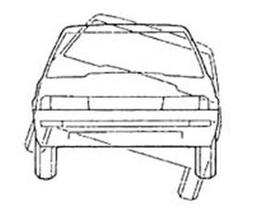
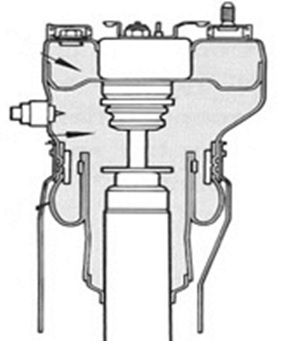
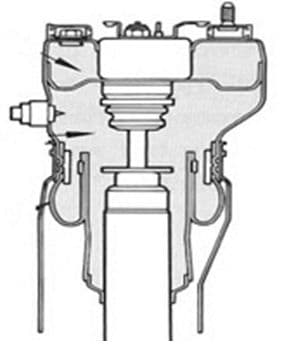

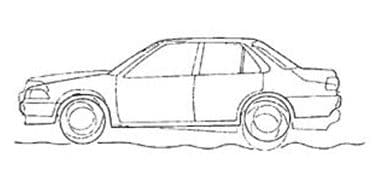
suspension system
Lide 1: Introduction to Bioreactor A bioreactor is a vessel used for growing microorganisms, plant or animal cells Provides controlled conditions for biological reactions Maintains optimum pH, temperature, oxygen, and nutrients Widely used in fermentation, enzyme, vaccine, and antibiotic production Ensures sterile and aseptic environment Scale ranges from laboratory to industrial production Slide 2: Basic Design Requirements of a Bioreactor Must be constructed with non-toxic, corrosion-resistant materials Should allow effective mixing and mass transfer Provision for sterilization (in situ sterilization) Must maintain uniform temperature and pH Easy sampling without contamination Should support scalability and automation Slide 3: Materials Used in Bioreactor Construction Stainless steel (SS-316) for industrial bioreactors Glass for laboratory-scale bioreactors Plastic (polycarbonate) for disposable bioreactors Materials must withstand heat and pressure Should be smooth to prevent microbial attachment Resistant to chemicals and cleaning agents Slide 4: Main Parts of a Bioreactor Vessel: holds the culture medium and microorganisms Agitator (impeller): provides mixing Sparger: supplies sterile air Baffles: prevent vortex formation Sensors: monitor pH, temperature, dissolved oxygen Ports: used for inoculation, sampling, and feeding Slide 5: Agitation System Ensures uniform mixing of nutrients and cells Improves oxygen transfer rate Common impellers: Rushton turbine, marine propeller Speed controlled by motor Prevents settling of cells Affects shear stress on cells Slide 6: Aeration System Supplies oxygen for aerobic fermentation Air introduced through sparger Types of spargers: ring, nozzle, sintered Maintains dissolved oxygen concentration Air is filtered for sterility Essential for high cell density cultures Slide 7: Temperature and pH Control Temperature controlled by heating/cooling jackets pH maintained using acid or alkali addition Sensors continuously monitor parameters Automated control systems used Ensures optimal microbial growth Prevents enzyme denaturation Slide 8: Foam Control System Foam formed due to protein and agitation Excess foam reduces oxygen transfer Mechanical foam breakers used Chemical antifoam agents added Foam sensor detects foam formation Maintains efficient fermentation Slide 9: Types of Bioreactors – Based on Mode of Operation Batch bioreactor Fed-batch bioreactor Continuous bioreactor Choice depends on product type Widely used in industrial fermentation Controls productivity and yield Slide 10: Batch Bioreactor All nutrients added at the beginning No addition or removal during process Simple and easy to operate Low risk of contamination Used for antibiotics and enzymes Limited control over nutrient depletion Slide 11: Fed-Batch Bioreactor Nutrients added during fermentation Prevents substrate inhibition High product yield Widely used in industrial fermentation Allows better control of growth rate Used in insulin and enzyme production Slide 12: Continuous Bioreactor Fresh medium continuously added Culture removed at same rate Maintains steady-state conditions High productivity Risk of contamination is high Used in wastewater treatment and SCP production Slide 13: Types of Bioreactors – Based on Design Stirred tank bioreactor Airlift bioreactor Bubble column bioreactor Packed bed bioreactor Fluidized bed bioreactor Photobioreactor Slide 14: Stirred Tank Bioreactor (STR) Most commonly used bioreactor Mechanical agitation using impellers Suitable for aerobic fermentation Excellent mixing and oxygen transfer Used for bacteria and fungi Easy scale-up Slide 15: Airlift Bioreactor Mixing achieved by air circulation No mechanical agitator Low shear stress Energy efficient Suitable for shear-sensitive cells Used in wastewater treatment Slide 16: Bubble Column Bioreactor Air bubbles provide mixing Simple design and low cost No moving parts Limited mixing efficiency Used for microbial fermentation Suitable for large-scale operations Slide 17: Packed Bed Bioreactor Contains immobilized cells or enzymes Substrate flows through packed matrix High cell density Used in continuous processes Limited oxygen transfer Used in enzyme and wastewater treatment Slide 18: Fluidized Bed Bioreactor Immobilized particles kept in suspension Better mass transfer than packed bed Reduced clogging Suitable for continuous operation Used in biotransformations Higher operational complexity Slide 19: Photobioreactor Designed for photosynthetic organisms Provides light source Used for algae and cyanobacteria Controls light, CO₂, and temperature Used in biofuel and pigment production Can be tubular or flat-plate design Slide 20: Applications of Bioreactors Production of antibiotics and vaccines Enzyme and organic acid production Single cell protein production Wastewater treatment Biofertilizer and biopesticide production Biopharmaceutical manufacturing
Suspension systems in a car
Steering and suspension systems
SISTEM SUSPENSI
Suspension
Suspension Bridges
Suspensión del Contrato de Trabajo