
TEK 7.12 BDF Science
Quiz by Jennifer Davis
Feel free to use or edit a copy
includes Teacher and Student dashboards
Measures 3 skills from
- edit the questions
- save a copy for later
- start a class game
- automatically assign follow-up activities based on students’ scores
- assign as homework
- share a link with colleagues
- print as a bubble sheet
- Q1
Which two body systems are primarily responsible for locomotion?
skeletal and muscular system
integumentary and excretory system
nervous and circulatory system
respiratory and digestive system
120s7.12b - Q2
What are the main functions of the human skeletal system?
to regulate the composition of body fluids by removing metabolic waste and retaining a balance of water, salt, and other nutrients
to enable the diffusion of oxygen into the blood stream and the removal of carbon dioxide from the bloodstream
to regulate the main body functions by producing more hormones and releasing them into the bloodstream
to support the body, protect the organs, and store calcium
120s7.12b - Q3
This drawing shows a human body system. What is the primary function of this body system?
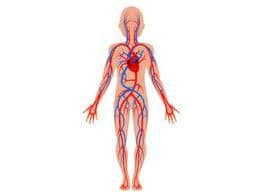
the production of hormones that regulate growth and metabolism
the protection of vital organs from injury
the chemical breakdown of food into smaller pieces
the transport of nutrients, water, and oxygen to the body cells
120s7.12b - Q4
Part of the human body system is pictured. The main function of this system is to -
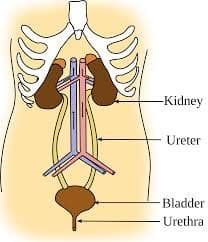
control reproduction
produce hormones
transport oxygen
remove waste
120s7.12b - Q5
When people run long distances, their muscles require increased amounts of oxygen. Which system is responsible for carrying this oxygen to the muscles?
Respiratory
Circulatory
Nervous
Digestive
120s7.12b - Q6
Students view two different cells under a microscope. They record their observations in the table shown. Based on the organelles observed, the students determine that cell 2 is a plant cell because it has an organelle that -
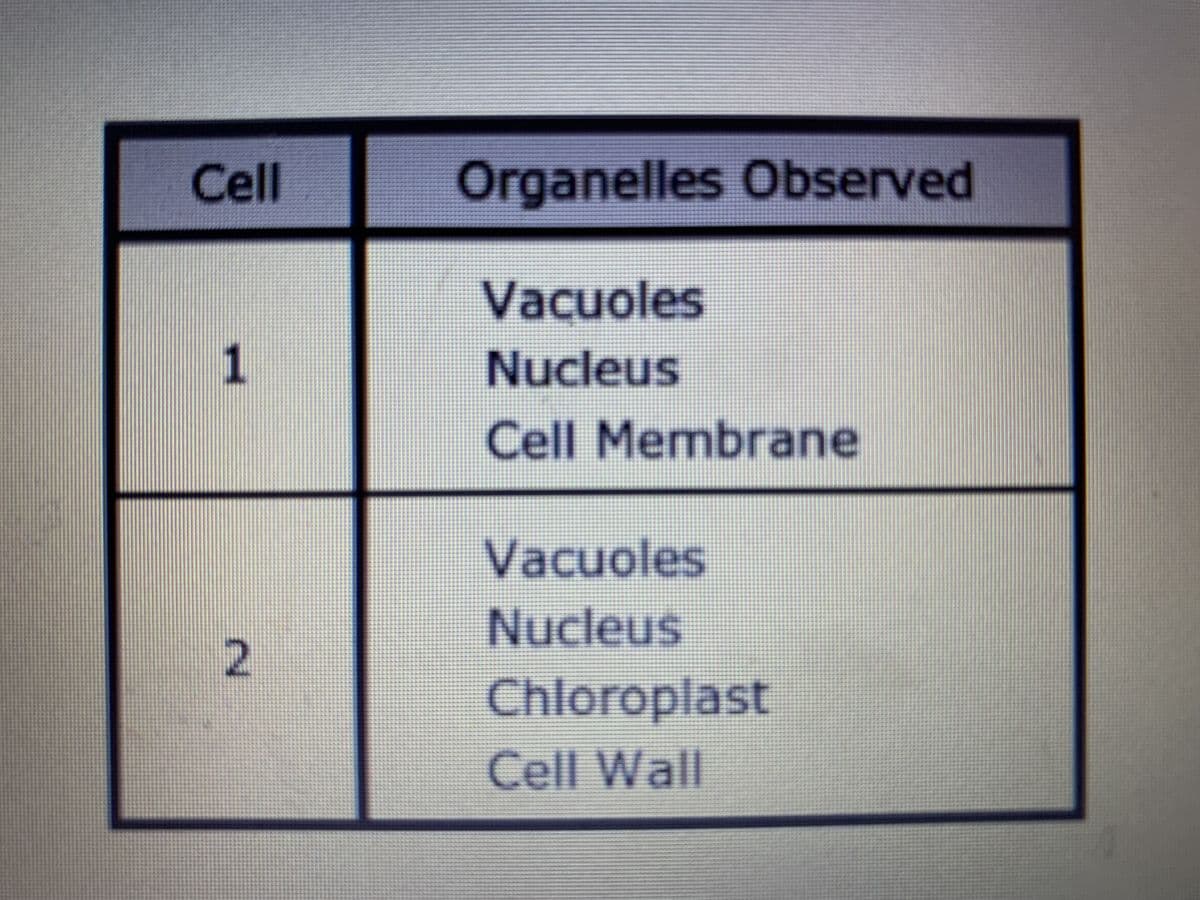
produces its own food
allows water to enter and exit the cell
contains genetic information
stores water and nutrients
120s7.12d - Q7
Plants use energy from sunlight, water, carbon dioxide to produce sugar. Which structure is found only in plant cells and helps plants capture energy from sunlight?
nucleus
cell membrane
chloroplast
vacuole
120s7.12d - Q8
Which statement best describes cell theory?
cells perform a single life function, and most cells come from existing cells
cells are the basic unit of structure for all organisms, and all cells come from existing cells
cells are part of complex organisms that work together to produce new cells
cells use energy from food to be able to perform life functions and work together to produce new cells
120s7.12f - Q9
In the 1800s two scientist, Theodore Schwann and Matthias Schleiden, studied different types of organisms. After many years of studying a great variety of organisms, they are similar but independent conclusions about their observations.
Schwann studied animals and concluded that all animals are made up of cells.
Schleiden studied plants and concluded that all plants are made up of cells
Which statement was developed most directly from these conclusions and is part of the modern cell theory?
cells exists only in multicellular organisms
the function of living things occur in cells
living things are composed of cells
cells contain hereditary information
120s7.12f - Q10
In 1838 botanist Matthias Schleiden determined that all plants are composed of cells.
In 1839 anatomist Theodor Schwann proposed that all animals are composed of cells. In 1855 biologist Rudolph Virchow added to Schleiden's and Schwann's observations and proposed that all living things are composed of cells.
Which statement is also part of Virchows cells theory?
all cells have a cell wall
all cells are capable of photosynthesis
all cells arise from pre-existing cells
all cells can develop into any other type of cell
120s7.12f