Demonstrate that light travels in a straight line until it strikes an object and is reflected or travels through one medium to another and is refracted; and
Design a simple experimental investigation that tests the effect of force on an object
Track each student's skills and progress in your Mastery dashboards
Give this quiz to my class
Q 1/10
Score 0
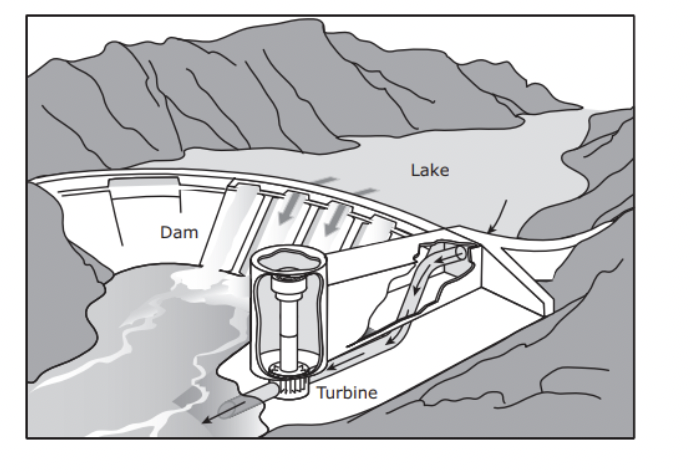
Water flows through turbines in dams like the one shown. The flowing water makes the turbines spin. What type of energy is used to make the turbines spin in this type of dam?
30
Light energy
Thermal energy
Mechanical energy
Sound energy
Q 2/10
Score 0
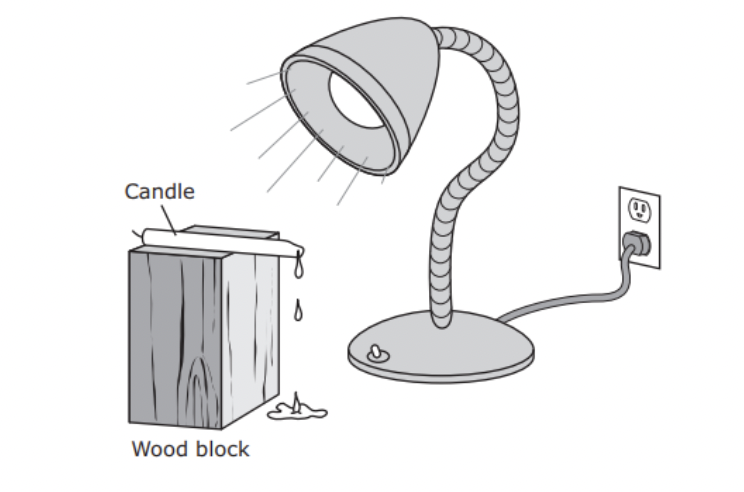
A class is learning about states of matter. The teacher shows the students how to set up the investigation shown in the diagram. What kinds of energy are needed in this investigation to change the state of matter of the candle?
30
Thermal and mechanical
Electrical and thermal
Light, mechanical, and thermal
Mechanical, light, and electrical
10 questions
Q.
Water flows through turbines in dams like the one shown. The flowing water makes the turbines spin. What type of energy is used to make the turbines spin in this type of dam?
1
30 sec
5.6a
Q.
A class is learning about states of matter. The teacher shows the students how to set up the investigation shown in the diagram. What kinds of energy are needed in this investigation to change the state of matter of the candle?
2
30 sec
5.6a
Q.
Which of these changes to the electric circuit shown above will cause the lightbulb to light up?
3
30 sec
5.6b
Q.
Most cars have lights, power locks, radios, and other equipment that use electricity. Electric circuits power this equipment. Each circuit has a fuse that completes it. The picture below shows one type of fuse a car may have. Which of these describes one thing that could happen if the wire in a car fuse burns out?
4
30 sec
5.6b
Q.
Which of these best demonstrates the reflection of light?
5
30 sec
5.6c
Q.
When light travels through air into a prism, it bends and separates into many colors. In which other situation does light bend?
6
30 sec
5.6c
Q.
A string of lights with small bulbs is shown. The bulbs are connected by wire that is covered with an insulator. When the lights are on, electricity travels in
7
30 sec
5.6b
Q.
The picture shows a child standing in a swimming pool. Why does the lower part of the child appear so much different in size from the upper part?
8
30 sec
5.6c
Q.
A student observes that the craters on the moon are different sizes. The student designs an experiment to study the formation of craters. The materials for the experiment are marbles and a pan of flour. The student makes a hypothesis that the size of the craters made on the surface of the flour will depend on the height from which the marble is dropped. Some of the steps in the student’s experiment are described. Which of these is most likely Step 3 in the student’s experiment?
9
30 sec
5.6d
Q.
A student designs an experiment to test the force of a spring using a spring launcher and four spheres with the same diameter but with different masses. What other piece of equipment would be most useful for this experiment?