Loading...

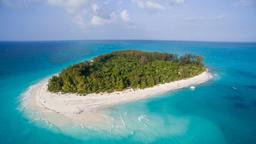
THE MOST BEAUTIFUL ISLANDS AROUND THE WORLD
Quiz by Gabriela Salazar
Customize this quiz to suit your class
Instantly translate to 100+ languages
Tag the questions with any skills you have. Your dashboard will track each student's mastery of each skill.
Give this quiz to my class
 The Philippine Flag Our country is officially identified through our flag. The Philippine flag has three colors: white, blue, and red. White signifies purity; blue means hope and peace; and red denotes bravery. The three stars symbolize the three big groups of islands of our country-the Luzon, Visayas, and Mindanao. The eight rays of the sun signify the eight provinces that first revolted against the Spaniards. These are Bulacan, Pampanga, Tarlac, Nueva Ecija, Laguna, Batangas, Manila, and Cavite. We respect our flag to show that we respect our country. We should not treat it like an ordinary cloth because it symbolizes our country. An old flag should be burned and not be used as a rag. Title: National Hero Body text: Dr. Jose Rizal was from a middle-class family from Calamba, Laguna. He is regarded as a genius who fought the Spaniards through his writings, especially the novels "Noli Me Tangere" and "El Filibusterismo." The two novels exposed the anomalies and wrongdoings of the Spanish government against the Filipino people. He wrote the poem "Mi Ultimo Adios" the eve before his execution in Bagumbayan (now known as Rizal Park). National Fruit A mango is sour when it is green, but very sweet when it is ripe. This heart-shaped fruit symbolizes the kindness of the Filipinos. It has a big tree that bears fruits abundantly during summer. National Animal A carabao is a model of hard work and industry. It is the best companion of farmers in the field. It is black and looks like a tamaraw. A carabao is a very strong animal in terms of work. It symbolizes the Filipinos as hardworking and patient. National Bird The Philippine eagle, also known as haribon, stands over 5 feet (1.6 m) tall. It has a large, sharp, and aggressive beak and has powerful talons. Philippine eagles are excellent hunters, and live in tropical rainforests. These eagles lay just one or two eggs each year. National Tree The narra is a hardy tree that grows big and is found mainly in the Bicol Region, Mindanao, and Cagayan Valley forests. Most of the desks and tables in schools are made of narra. It signifies the strong personality of Filipinos in facing trials in life. National Flower The sampaguita has white, star-shaped petals with a sweet fragrance. It is made into garlands, which are given to visitors and special persons on occasions. It signifies purity and among Filipino women. National Fish Bangus or milkfish is our national fish. It grows in ponds or freshwater and tastes delicious. Its white, shiny scales signify our beautiful country. National Dance Cariñosa is a dance of love using a handkerchief and a fan. It symbolizes the true love expressed by Filipinos. National House A nipa hut is a small but beautiful house made from bamboo and sawali or cogon leaves. Filipinos used this kind of house during the olden times. At present, there are still people using this as a dwelling place, but most of the time, they use it as a rest place or cottage. National Costume Barong Tagalog is the national costume for Filipino men. It is made from pineapple fiber or other native materials. Filipinos wear this on special occasions such as formal events or weddings. Baro at Saya is the national dress for Filipino women. Most of them are made from jusi or pineapple fiber and other native materials. This dress shows the gracefulness of Filipino women. National Leaf Our national leaf is a palm tree. It is wide and narrow like an open fan. Farmers use this to protect their crops from the harsh sunlight and rain. It grows like a tree with thorns in its body. National Language Our national language is Filipino, which is based in Tagalog. Through the efforts of former President Manuel L. Quezon (known as the "Father of the National Language"), Filipino was widely disseminated and is now used in all parts of the country. With this, Filipinos in different cultures and native tongues can still communicate with each other. National Food Lechon (litson) is an important dish served at many occasions, especially on fiestas. Lechon is a suckling pig, slowly roasted over live coals to make it crispy and tasty. National Footwear Bakya is the national footwear of the Philippines. It was most popular from the 1950s to the 1970s before the introduction of rubber slippers. There are several colors and designs of bakya that suit the taste of most Filipinos. Valuing Our National Symbols Symbols represent a country and its people. We have to respect and value these symbols because they tell something about our country and of who we are as Filipinos. Here are some ways of valuing our national symbols: When singing the national anthem, stand straight and place your right hand on your left chest. Remove your cap or close your umbrella. Ask the people walking to stop while the flag is being raised. Tell other children to stop chatting while singing the national anthem. Most importantly, sing the national anthem wholeheartedly. Retirement of a Flag: A worn-out flag should be disposed of respectfully. It should be burned in a dignified ceremony, not thrown away or used for other purposes. Help in saving and conserving our forests. They serve as habitat of our national bird and other animals. You may also help organizations that promote reforestation, clean and green programs, and tree planting activities. Do not pick flowers when visiting parks. Instead, help in keeping these places clean and beautiful. Avoid throwing thrash in their surroundings. Patronize products that are made here in our country and made by Filipinos. Tell your family and friends to buy products of the Philippines especially those of which are our national symbol. Aside from patronizing our own products, let us use and love our national language. It is good to learn foreign languages, but do not forget to use our own language correctly and proudly.A. Hiking in Finland I've just come back from Finland. My friends from university invited me to join them on an eight-day hike. The walk is called the Bear Trail and it is in the Oulanka National Park in north-eastern Finland. It's a beautiful walk through forests and across rivers and lakes. We stayed at campsites and carried clothes, food and tents on our backs. I'm not the fittest person in the world but I was able to finish. I loved the incredibly clear air, the beautiful views and the sounds of nature. In my opinion, it is perfect for anyone who wants to start long distance walking as it is almost completely flat and well-signposted. Just try not to fill your backpack up with things which you won't need. B. Camino di Santiago It was the walk of a lifetime. Eight hundred kilometres from the south of France, over the Pyrenees mountains and across northern Spain to Santiago de Compostela. It all started so well. The path up to the Pyrenees was magical and it was good to meet other people doing the same walk. Everyone was enthusiastic about the walk ahead. But in Spain, the route often followed roads. It was noisy and monotonous, with unchanging views for hours and hours. More and more people joined the walk. They were generally friendly but it wasn't the experience I expected. I'd like to go back to the Pyrenees and hike there again but I'll stop there next time. C. The GR20, Corsica Corsica is a magnificent island with some wonderfully picturesque walks along the coast and inland. But for walkers, it is famous for the GR20, Europe's most difficult long distance walk. It goes from north to south and up and down from two hundred metres to over 2,200 metres above sea level. The frighteningly steep and rocky paths are beautiful but very demanding. Our guides will help you to complete the whole 180 km in fifteen days. The price includes transport, accommodation in tents and food. You should be in good health with experience of mountain walking and a good head for heights. No climbing experience is necessary.Argentina Where Is It? Argentina is the second-largest country in South America. It is the eighth-largest country in the world. Five countries share borders with Argentina. About forty-three million people live in Argentina. The capital of Argentina is Buenos Aires. Its name means "fair winds." About fifteen million people live in Buenos Aires. People. Most people in Argentina live in large cities. Other people live in the country. Some of these people are farmers. They grow crops such as wheat and grapes. Men, women, and children from all over the world live in Argentina. Many people are from Europе. Most people in Argentina speak Spanish. Land. Argentina has mountains, lakes, and rivers. The Andes Mountains are in the west. They are the longest group of mountains in the world. Argentina has many different kinds of animals. Monkeys, wild cats, and many other animals live there. Some of the most beautiful places in Argentina are rivers. Some of the river water falls from very high places. The falls are some of the biggest in the world. History. People have lived in Argentina for thousands of years. Long ago, the Spanish ruled the country. Then, army leaders took control. The army leaders did not let people have any say in their rules. This was unfair for most people. Today, people in Argentina can help make rules. They choose leaders who share their ways of thinking. Celebration. One of the biggest parties in Argentina lasts for days. People dress up as clowns and animals. They have a lot of fun. There is music, dancing, and a big parade. Food. Argentine pies can be filled with lots of different things. A family cooks meat on a grill. People in Argentina eat meat cooked on a grill. They also eat little pies filled with meat, vegetables, or cheese. Conclusion. Argentina is a country with people from all over the world. They help to make it a great place with a bright tomorrow.Most Beautiful Places in the PhilippinesCheck reading comprehension of the following text:Last weekend was one of the most exciting weekends of my life. My friends and I decided to go on a hiking trip to the nearby forest. We started early in the morning, and as we walked, we chatted and laughed, enjoying the fresh air and the beautiful scenery. The sun was shining, and the birds were singing, and we felt free and adventurous. We were wearing comfortable shoes and carried backpacks with snacks and water. As we walked deeper into the forest, we suddenly heard a rustling sound in the bushes. We stopped and listened, and soon enough, a small black bear emerged from the trees. We froze, not knowing what to do, but our guide quickly instructed us to stay still and not to make any sudden movements. The bear seemed to be curious and sniffed around us, but eventually wandered off back into the forest. After the encounter with the bear, we were a bit shaken but also excited. We continued our hike, keeping a closer eye on our surroundings and being extra cautious. We talked about the bear encounter for the rest of the trip, and it became a story to tell to our friends and family back home. Even though it was a scary moment, it made the adventure even more memorable.The following days are a jumble of gunfire, digging, gobbled food, soldiers running in and out of the forest in small groups, distant explosions, stray shells, bandaged heads and unexpected lulls. On the very first day, before dawn, I am ordered into one of the newly dug trenches. I huddle there, squeezing my magic buttons and singing songs to the dog. When the fighting stops, the dog disappears, but a new companion takes his place. A strange little soldier crawls along the trench toward me. ‘Private Sasha!’ he cries. ‘I’ve been looking for you all day long!’ He’s old, like a grandfather, a dedushka. He has a black patch over one eye, a tape measure around his neck and a row of pins threaded into his sleeve. Hanging from his belt is the most enormous pair of scissors I have ever seen and I wonder if he uses them as a weapon. He doesn’t tell me his name, so in my head he becomes Dedushka. Dedushka squats, cups his hand to his ear, peers over the top of the trench and smiles. ‘It’s safe to be upright . . . for now.’ He helps me to my feet, dusts me off and commands me to stand as tall and straight as I can. Then he measures me. Everything from head to toe – even my toes! He writes numbers in a little notebook, strings his tape measure back around his neck, salutes and hurries away. It’s all very strange, and I wonder if Dedushka has been bumped on the head during the battle and is now a little bit muddled. I should have given him a hug before he left. I chase after him but stop when I’m hit by a shovelful of flying dirt. Sleepy Bear is digging a cave! ‘Are you going to hibernate?’ I ask. Sleepy Bear chuckles. ‘No, although that would be wonderful! I could do with a lo-o-o-ong sleep.’ He sighs and closes his eyes. He doesn’t open them again and I realise that he has gone to sleep. Standing up! I shake his arm, and he opens his eyes and keeps talking. ‘No, I’m not hibernating. I’m digging a little nook where I can sleep and eat. I’ll hang up my raincape as a door that can open and close so it feels just like a real home . . . except for the lice . . . and the bad smells . . . and the bombs that make the walls shake and crumble.’ He points further along the trench to where other soldiers are digging. ‘We’re all making little houses in the ground.’ ‘Like rabbits and moles,’ I say. Sleepy Bear chuckles. ‘Yes! And soldiers who need to hide from German bullets and bombs.’ He stops digging to roll a cigarette. ‘Should I be making a house?’ I ask. ‘I want to hide from German bullets and bombs, too.’ Sleepy Bear flops to the ground, lights his cigarette, closes his eyes and takes a deep puff. I wait for him to answer, but, instead, he begins to snore! I poke him in the side. He snorts and he murmurs, ‘I think someone has already built you a house, Sasha. Keep going along this beautiful village street and you are sure to find it.’ He falls asleep once more. I kiss his dusty cheek and whisper, ‘Thank you, Sleepy Bear.’ A little way along, I see Cook in a cloud of smoke. He has lit a fire, right here in the middle of the trench, and is stirring a cauldron full of kasha. He squats as he stirs. ‘What are you doing?’ I ask. ‘Cooking supper, of course!’ he cries. ‘But why are you doing it here?’ Cook points his spoon at the ground above the trenches. ‘Because if I do it up there, my pot will be filled with holes from German bullets and all of the kasha will leak out onto the ground. It’s bad enough that our supplies can’t get through German lines and there’s nothing to cook but buckwheat for kasha. But if we lost the kasha, too . . .’ ‘Hungry soldiers,’ I say. Cook nods. ‘And grumpy!’ ‘Like Boris!’ I gasp. ‘Even worse,’ warns Cook. I picture the kasha pot full of bullet holes. And then I realise that if the kasha pot were full of holes, then Cook would be, too. I wrap my arms around Cook’s neck and say, ‘I think this is a very good place for cooking our supper.’ I kiss his smoky cheek and run along. At the end of the trench, I find the biggest hole of all. It’s wide and deep and as busy as a beehive in a blossom tree. Above, a group of soldiers is rolling logs into place for a roof, while below, typewriters rattle and pencils scratch and papers flutter and voices crackle out of five different radios. Their words tangle together to tell a strange wartime fairy tale about German guns and a loving father called Stalin and a Red Army regiment that is lost in the deep, dark forest and a wicked beast called Hitler and a delivery of vegetables that was hit by a bomb and blown into a million tiny pieces too small even to make soup. In the middle of it all, wrestling with a rumpled map, his rifle still slung over his shoulder, is Major Scruff. ‘Major Scruff!’ I run and jump into his arms. ‘Is this our new home?’ ‘Yes, Sasha. I suppose it is.’ ‘Is it safe from German bullets and bombs?’ I ask. He stares at me. ‘Were you scared in the trenches today, Sasha?’ ‘No,’ I reply. ‘I had magic buttons and a dog and some songs to sing. Were you scared in the forest, Major Scruff?’ ‘Yes,’ he says. ‘Poor Major Scruff!’ I press my hand against his cheek. The dark, rough stubble is grubby with grit and his eyelids are taking a long time to open after every blink. ‘You need a shave and a nap!’ I scold. He chuckles. ‘I am too tired to shave and too busy to nap.’ I scrunch my nose while I consider his problem. ‘I know!’ I cry. ‘You nap and I will shave your whiskers. That will be two jobs tumbled into one!’ And so that’s what we do. Major Scruff slumps into a chair and snoozes while I lather his face with soapy water and shave his whiskers. The soap suds travel from his face, up into his hair and down the front of his uniform, and I have to shave his jaw and chin three times because I keep missing bits, but I finally get it all done. I am just wiping his cheeks dry when the dog appears. He licks my hand, then stretches up and licks soap suds from Major Scruff’s ear. Major Scruff wakes with a start. He feels his newly shaved face and cries, ‘Wonderful, Sasha! I feel smooth, clean, rested and ready for action.’ He ruffles my hair. ‘We must do this again tomorrow. Although next time, you might wake me with a gentle shake of the shoulder instead of licking my ear.’Rhetorical questions - a question that doesn’t require an answer Emotive words: evoke feelings and emotions from the reader Superlatives, Exaggeration and Positive Adjectives: suggest something is the best, e.g. most beautiful, cheapest, etc. Personal Pronouns: you, me, us, we Anecdotes: stories/quotations from personal experience Imperatives: command words or phrases. Facts and Statistics: make people believe you Offer Visitors Something Special tell them how they will benefit Recommendations: from people who have done it beforeWrite reading comprehension questions based on the text: Apple's design genius. I've always loved great design. Ever since I can remember I've been fascinated by the shape and look of objects. In n opinion, Apple Inc. is the number one company in the world for product design. In the time that 'you're reading this article, around 750 iPhone and 300 iPads will be sold internationally. These iconic devices generate millions of pounds a day for Apple, and the man behind their iconic look is known as a 'design genius'. In 2013, Time Magazine listed him as one of the 100 most influential people in the world, but can you name him? If you said Steve Jobs, you'd be wrong, although it was Jobs who first recognised this man's talent. His name is Jony Ive. Born in London, Jony Ive studied industrial design at Newcastle Polytechnic. After graduating, he helped set up the London design agency Tangerine. In 1992, while he was working at Tangerine, he accepted a job offer from Apple. His first years in the job were tough and the design work wasn't very interesting. The company was also struggling to make money. However, when Steve Jobs returned to Apple in 1997 and saw the design work that Ive had produced, he immediately recognised Ive's ability and promoted him. Ive's first success in his new role was the design of the original, colourful iMac in 1998, which was quickly followed by the first iPod in 2001. Thanks to Ive's simple, elegant designs, Apple became one of the most successful companies in the world. Since then, he has been responsible for the iPhone, iPad and Apple Watch. Ive's design involves not only the way these products look but also the way they work. He believes devices have to be both beautiful and practical. Jony Ive's key contribution to Apple is now being recognised and he has received numerous awards. There is no doubt that Steve Jobs was a larger-than-life ideas man and businessman who created a hugely successful company. However, without Jony Ive's design talent, Apple may not have become such a huge success. So what have I learnt from Jony Ive? That the best designs are often the simplest.