Loading...

The Sixth Amendment (Flocabulary Quiz)
Quiz by Steven Jones
Customize this quiz to suit your class
Instantly translate to 100+ languages
Tag the questions with any skills you have. Your dashboard will track each student's mastery of each skill.
Give this quiz to my class
slow and steady
public and televised
regulated and private

in a public school auditorium
in a neighboring state
in the area where the defendant lives

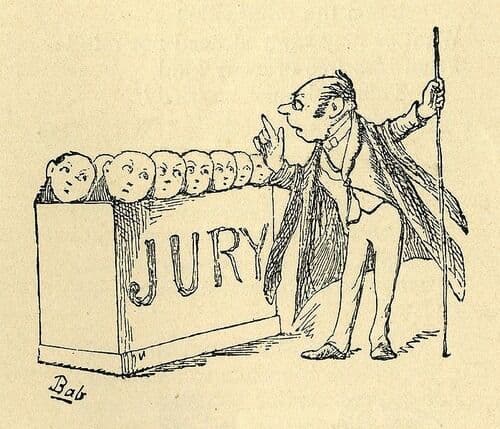
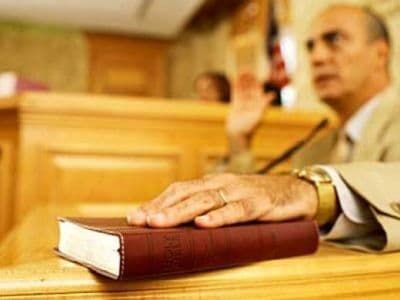

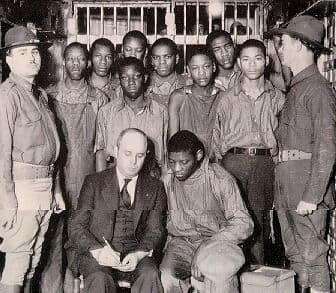


 Chapter 7 Study Guide Answers What does the Bill of Rights do? The Bill of Rights lists our basic rights. Who is the person mainly responsible for the Bill of Rights? James Madison is the person mainly responsible for the Bill of Rights. The Bill of Rights is part of which document? The Bill of Rights is part of the United States Constitution. Whose job is it to protect our rights listed in the bill of rights? It is the job of the federal courts (judicial branch) to protect our rights. What are the five rights listed in the first amendment? Freedom of speech: includes symbolic speech; does not include speech that could endanger the public safety. Religion: Right to believe whatever you want, but you can’t do whatever you want in the name of religion (can’t break the law). Press: The free flow of information and ideas; can’t print lies or information that could be helpful to an enemy in wartime. Assembly: Use public property for meetings and demonstrations (i.e. parades, protests, political rallies). Must be done legally and peaceably. Right to petition: Means you can appeal to the government if you’re unhappy about something or some policy. Give one example of speech NOT protected under the first amendment. An example of speech not protected under the first amendment would be crying “fire” in a crowded movie theater (anything that could potentially endanger the public safety). What does the second amendment give us the right to? The second amendment gives us the right to bear arms. What does the third amendment state we are not legally obligated to do? Under the third amendment, we are not obligated to quarter (or house) soldiers in our homes. What does the fourth amendment protect us from? The fourth amendment protects us from unreasonable search and seizure. What is needed in order to search or seize property? A warrant is needed, which must be issued by a judge, in order to search and seize property. What five rights are we guaranteed under the Fifth Amendment? Right to a grand jury: determines whether or not the government has enough evidence to bring someone to trial. Double jeopardy: Once a person has been found not guilty, he cannot be tried again for the same crime. Self incrimination: A person has the right to remain silent; he does not have to testify against himself. Due process: The government must follow a clear set of rules (a process) as it carries out the law and takes your life, liberty, or property. Just compensation: If the government has to take someone’s land, they will offer a fair price. What is the right stated in the “Miranda Warning”? The main right stated in the “Miranda Warning” is the right to remain silent. What are the four rights stated under the sixth amendment? Right to a speedy and public trial, and an impartial jury. Right to a jury of people that live in the defendant’s area (jury of your peers). To hear and question all witnesses Right to an attorney As stated in the seventh amendment, we have the right to which type of trial depending on how much money a person is being sued for? What can a judge NOT do? Under the seventh amendment, we have the right to a jury trial depending on how much money is at stake in a civil trial. A judge cannot overturn a decision made by a jury. What are the four things that are prohibited under the eighth amendment? The four things that are prohibited (or not allowed) under the eighth amendment are: excessive fines, excessive bail, cruel and unusual punishments, and poor prison conditions. Under the ninth amendment, rights not listed in the Bill of Rights belong to whom? According to the ninth amendment, rights not listed in the Bill of Rights belong to the people. The tenth amendment states that powers not given to the national government are reserved for whom? According to the tenth amendment, powers not specifically given to the national government are reserved for the people and the states. What is meant by the term “double jeopardy”? The term “double Jeopardy” refers to a person being retried for a crime in which he has already been acquitted, or found “not guilty”. What does it mean to be indicted by a grand jury? To be indicted by a grand jury means that a person will be going to trial and will retain all of the rights listed in the fifth, sixth, seventh, and eighth amendments.The Sixth and Ninth CommandmentsThe sixth commanmends Good morning. My name is Pedro. I'm a new student. Can I ask you some questions? Yes! Is the library on the fourth floor? No, the library is on the fifth floor. It's next to the cafeteria. What about the computer lab? The computer lab is on the sixth floor. It has a red door. Wow, thank you, guys! You are very helpful. See you around! You're welcome, Pedro. We're happy to show you around!Bhir Mind: At Bhir Mound however we find ourselves at a surer ground leaving hypothetical reconstructions behind This name is obviously very recent but the city of Bhir Mound belongs to the time of the Achaeme-nian rulers of Iran. The oldest structural remains at this site comprise rough stone structures which cannot be ascribed to a date earlier than the fifth or the sixth century B.C. The actual rule of this Iranian dynasty lasted from abour 518 B.C. to 359 B.C. Among the legacies they left behind, the most notable was the use of the Aramaic writing. It was from this script that the local writing called 'kharoshth .commonly employed in the north west to about the 5th century A.D., was derived. Bhir Mound was a flourishing city at the time of Alexander's 326 BC) He i He is even said to have left a Greek ear changed the whole outlook and the Greeks were soon driven out or destroyed by Chandragupta Maurya who extended his dominions as far as Afghanistan. Under the Mauryas the Bhir Mound city of Taxila rose to a pre-eminent position among the cities of the North West)It was here that Ashoka afterwards ruled as a viceroy on visit in the spring of 326 garrison here but his death the following year behalf of his father Bindusara, and here, too, that in the his father/According to Tibetan tradition Ashoka died at Taxila and was succeeded by his son. Kunala)(c. 237 229 B.C.). The name of this prince was perpetuated at Taxila by a commemorative stupa which, as Hiuen Tsiang says, was erected to mark the spot where the young viceroy had his eyes put out through the evil machinations of his stepmother. For three generations Taxila remained the administrative headquarters of the Mauryan viceroys and then in about 189 B.C passed into the hands of the Greeks of Bactria.commonly known as "Indo-Greeks Timmy: Hey, Cindy, what are you looking at? Cindy: I am looking at the map of our school. Timmy: Where is our classroom? Cindy: Our classroom is on the third floor. We are in the first grade. Sam: How about the second grade? Cindy: Their classroom is on the fourth floor. Anna: Is the new computer lab on the sixth floor? Cindy: No, it's not. It's on the fifth floor.1. How many pillars of Islam are there in total? A) Three B) Five (Correct) C) Six D) Seven Hint: Think about the famous Hadith of Gabriel where he asks about the basic practices of Islam. 2. What is the first pillar of Islam? A) Salah (Prayer) B) Zakat (Charity) C) Shahadah (Declaration of faith) (Correct) D) Sawm (Fasting) Hint: It is the declaration that there is no god but Allah and Muhammad is His messenger. 3. How many times a day must a Muslim perform Salah (prayer)? A) Three times B) Five times (Correct) C) Four times D) Six times Hint: Count Fajr, Dhuhr, Asr, Maghrib, and Isha. 4. What does the word 'Zakat' mean in terms of practice? A) Fasting all day B) Giving charity to the poor (Correct) C) Traveling to Makkah D) Reading the Quran Hint: It involves sharing a small part of your saved wealth to purify the rest of it. 5. During which Islamic month do Muslims fast (Sawm)? A) Muharram B) Ramadan (Correct) C) Shawwal D) Dhul-Hijjah Hint: It is the month in which the Quran was first revealed. 6. Where must a Muslim go to perform Hajj? A) Madinah B) Jerusalem C) Makkah (Correct) D) Cairo Hint: This city contains the Kaaba, the direction Muslims face during prayer. 7. Which pillar of Islam directly trains a Muslim in patience and feeling the hunger of the poor? A) Shahadah B) Sawm (Fasting) (Correct) C) Salah D) Hajj Hint: It is done during the daylight hours of Ramadan. Part 2: Pillars of Iman (أركان الإيمان) 8. How many pillars of Iman (faith) are there? A) Five B) Six (Correct) C) Four D) Eight Hint: It is one more than the number of pillars of Islam. 9. What is the first and most important pillar of Iman? A) Belief in Angels B) Belief in Allah (Correct) C) Belief in the Books D) Belief in the Last Day Hint: This is the belief in Monotheism (Tawhid). 10. Muslims believe that angels are created from what? A) Fire B) Clay C) Light (Correct) D) Water Hint: Think of a bright source that illuminates the dark, which matches their pure and luminous nature. 11. Which angel was responsible for bringing the revelation (Quran) to the Prophet Muhammad? A) Angel Mikaeel (Michael) B) Angel Jibreel (Gabriel) (Correct) C) Angel Israfeel D) Angel Malak al-Mawt Hint: He is the leader of all angels and visited the Prophet in the cave of Hira. 12. Belief in the Holy Books is a pillar of Iman. Which book was given to Prophet Isa (Jesus)? A) The Torah B) The Zabur C) The Injeel (Correct) D) The Quran Hint: The English translation often links this word closely to the 'Gospel'. 13. Who is the final Prophet and Messenger sent by Allah to mankind? A) Prophet Ibrahim (Abraham) B) Prophet Musa (Moses) C) Prophet Muhammad (Correct) D) Prophet Nuh (Noah) Hint: He was born in Makkah and received the Quran. 14. What does 'Belief in the Last Day' mean? A) Belief in the last day of Ramadan B) Belief in the Day of Judgment (Correct) C) Belief in the weekend D) Belief that the sun will never set Hint: It is the day when people will be rewarded with Paradise or punished based on their deeds. 15. What is the sixth pillar of Iman? A) Belief in Qadar (Divine Decree/Fate) (Correct) B) Belief in Hellfire C) Belief in the Companions D) Belief in Charity Hint: It relates to destiny and accepting whatever Allah has written for us. 16. What is the Arabic word for the 'Divine Decree' or destiny in the pillars of Iman? A) Zakat B) Qadar (Correct) C) Injeel D) Tawhid Hint: It sounds like 'Al-Qadr', as in the night of decree (Laylat al-Qadr). 17. Belief in Prophets includes believing in messengers mentioned in other scriptures. Who did Allah speak to directly? A) Prophet Musa (Moses) (Correct) B) Prophet Nuh (Noah) C) Prophet Yusuf (Joseph) D) Prophet Yunus (Jonah) Hint: He is the prophet associated with Mount Sinai and parting the sea. Part 3: Ihsan (الإحسان) 18. What is the meaning of 'Ihsan' according to the famous Hadith? A) To give all your money away B) To worship Allah as if you see Him (Correct) C) To memorize the whole Quran D) To fast twice a week Hint: It is the highest level of religion, focusing on absolute perfection and sincerity in worship. 19. If you cannot see Allah during worship, what must you always remember according to Ihsan? A) That other people are watching you B) That Allah sees you (Correct) C) That you should finish quickly D) That the angels will pray for you Hint: Allah is All-Seeing (Al-Baseer) and All-Knowing (Al-Aleem). 20. Which of the following represents the correct order of levels in religion from lowest to highest? A) Ihsan, then Iman, then Islam B) Islam, then Iman, then Ihsan (Correct) C) Iman, then Islam, then Ihsan D) Islam, then Ihsan, then Iman Hint: Every Muhsin (person of Ihsan) is a Mu'min (person of Iman) and a Muslim, but not vice versa.YouGov found 44 per cent were proud of Britain's history of colonialism, with 21 per cent regretting it happened and 23 per cent holding neither view. The same poll also found 43 per cent believed the British Empire was a good thing, 19 per cent said it was bad and 25 per cent said it was "neither". At its height in 1922, the British empire governed a fifth of the world's population and a quarter of the world's total land area. Although the proponents of Empire say it brought various economic developments to parts of the world it controlled, critics point to massacres, famines and the use of concentration camps by the British Empire. 1. Boer concentration camps During the Second Boer War (1899-1902), the British rounded up around a sixth of the Boer population - mainly women and children - and detained them in camps, which were overcrowded and prone to outbreaks of disease, with scant food rations. Of the 107,000 people interned in the camps, 27,927 Boers died, along with an unknown number of black Africans. 2. Amritsar massacre When peaceful protesters defied a government order and demonstrated against British colonial rule in Amritsar, India, on 13 April 1919, they were blocked inside the walled Jallianwala Gardens and fired upon by Gurkha soldiers. The soldiers, under the orders of Brigadier Reginald Dyer, kept firing until they ran out of ammunition, killing between 379 and 1,000 protesters and injuring another 1,100 within 10 minutes. Brigadier Dyer was later lauded a hero by the British public, who raised £26,000 for him as a thank you. 3. Partitioning of India In 1947, Cyril Radcliffe was tasked with drawing the border between India and the newly created state of Pakistan over the course of a single lunch. After Cyril Radcliffe split the subcontinent along religious lines, uprooting over 10 million people, Hindus in Pakistan and Muslims in India were forced to escape their homes as Some estimates suggest up to one million people lost their lives in sectarian killings. 4. Mau Mau Uprising Thousands of elderly Kenyans, who claim British colonial forces mistreated, raped and tortured them during the Mau Mau Uprising (1951-1960), have launched a £200m damages claim against the UK Government. Members of the Kikuyu tribe were detained in camps, since described as "Britain's gulags" or concentration camps, where they allege they were systematically tortured and suffered serious sexual assault. Estimates of the deaths vary widely: historian David Anderson estimates there were 20,000, whereas Caroline Elkins believes up to 100,000 could have died. 5. Famines in India Between 12 and 29 million Indians died of starvation while it was under the control of the British Empire, as millions of tons of wheat were exported to Britain as famine raged in India. In 1943, up to four million Bengalis starved to death when Winston Churchill diverted food to British soldiers and countries such as Greece while a deadly famine swept through Bengal. Talking about the Bengal famine in 1943, Churchill said: “I hate Indians. They are a beastly people with a beastly religion. The famine was their own fault for breeding like rabbits.”