Loading...


Transformada z
Quiz by Jose Luis Lopez Moreno
Customize this quiz to suit your class
Instantly translate to 100+ languages
Tag the questions with any skills you have. Your dashboard will track each student's mastery of each skill.
Give this quiz to my class
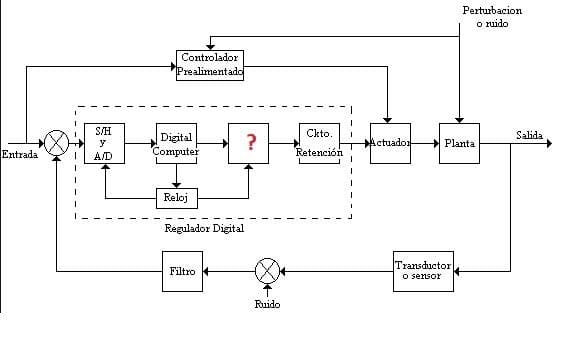 Quiz lab 5 (Transformada Z)When television first started, the system of broadcasting was analogue. This meant that a TV aerial received radio waves from the TV companies. These transformed into sound and images on the TV screen. At the time, the system was revolutionary, but it wasn't perfect. It couldn't transmit many channels and the quality of the pictures was sometimes poor because of interference. For a long time there was only analogue I, but at the end of the 1990s, digital television arrived. Digital TV doesn't use radio waves. Instead, it converts sound and images into binary code. This is a computer language which only consists of zeros and ones and broadcasters can use it to send a lot of information very quickly. This digital information arrives at a TV via an aerial, a cable, a satellite dish, or broadband. Then a decoder converts the information back to sound and images. Decoders are either inside a TV or computer, or in a separate box which is connected to it. Digital broadcasting is much better than the analogue system. There are a lot more channels because the TV companies can transmit much more information. The quality of the images and sound is much higher because there is less interference. Picture quality is even better on a high definition TV (an HDTV) than on a standard TV, so viewers can enjoy cinema-quality pictures in their own home.The Pleiades, also known as the Seven Sisters, is a famous star cluster located in the constellation of Taurus. It is made up of a group of seven bright stars that are visible to the naked eye in the night sky. The stars in the Pleiades cluster are relatively young, being only about 100 million years old, which is young in astronomical terms. The Pleiades cluster has been observed and admired by cultures all around the world for thousands of years. In Greek mythology, the Pleiades were seven sisters who were pursued by the hunter Orion. To protect them, Zeus transformed them into stars, forming the star cluster we see today. Different cultures have their own stories and legends associated with the Pleiades, making it a fascinating object of study for astronomers and a source of inspiration for artists and storytellers. The Pleiades cluster is often used as a test of eyesight, as people are challenged to count how many stars they can see with the naked eye. Most people can see six or seven stars, but those with particularly sharp vision may be able to see more. The Pleiades is also a popular target for amateur astronomers with telescopes, as the cluster reveals even more stars and details when viewed through a telescope. In addition to being a beautiful sight in the night sky, the Pleiades cluster also serves a practical purpose for astronomers. By studying the stars in the Pleiades, scientists can learn more about how stars form and evolve, as well as gain insights into the structure and composition of the Milky Way galaxy. The Pleiades cluster continues to be an important object of study for astronomers, both amateur and professional, and its beauty and significance will continue to capture the imaginations of people for generations to come. Matariki is the Maori name for the Pleiades star cluster. The Pleiades is a group of stars that can be seen in the night sky, and Matariki is a special time of year when the star cluster is visible in the sky. In Maori culture, Matariki is seen as the beginning of the Maori New Year, and it is a time to celebrate and give thanks for the past year and look forward to the year ahead. So basically, Matariki is related to the Pleiades because it is a special time of year when those stars are visible in the sky and it has cultural significance for the Maori people. The Pleiades star cluster is known by different names in various cultures around the world. Here are some of the names by which the Pleiades are referred to in different countries: 1. Maori culture in New Zealand and Polynesia: Matariki 2. Greek mythology: The Seven Sisters 3. Japan: Subaru 4. Native American tribes: The Dancers or The Little Eyes 5. Inca civilization: Collca 6. Ancient Persia: Parvin 7. India: Krittika 8. Aboriginal Australians: The Seven Sisters or Djulpan These different names reflect the diverse cultural significance and interpretations of the Pleiades cluster in various societies throughout history.Figure 18-11 represents the amount of energy stored as organic material in each trophic level in an ecosystem. The pyramid shape of the diagram indicates the low percentage of energy transfer from one level to the next. On average, 10 percent of the total energy consumed in one trophic level is incor- porated into the organisms in the next. Why is the percentage of energy transfer so low? One reason is that some of the organisms in a trophic level escape being eaten. They eventually die and become food for decomposers, but the energy contained in their bodies does not pass to a higher trophic level. Even when an organism is eaten, some of the molecules in its body will be in a form that the consumer cannot break down and use. For example, a cougar cannot extract energy from the antlers, hooves, and hair of a deer. Also, the energy used by prey for cellu- lar respiration cannot be used by predators to synthesize new bio- mass. Finally, no transformation or transfer of energy is 100 percent efficient. Every time energy is transformed, such as during the reactions of metabolism, some energy is lost as heat. Limitations of Trophic Levels The low rate of energy transfer between trophic levels explains why ecosystems rarely contain more than a few trophic levels. Because only about 10 percent of the energy available at one trophic level is transferred to the next trophic level, there is not enough energy in the top trophic level to support more levels. Organisms at the lowest trophic level are usually much more abundant than organisms at the highest level. In Africa, for exam- ple, you will see about 1,000 zebras, gazelles, and other herbivores for every lion or leopard you see, and there are far more grasses and shrubs than there are herbivores. Higher trophic levels con- tain less energy, so, they can support fewer individuals.A population is a group of organisms that belong to the same species and live in a particular place at the same time. All of the bass living in a pond during a certain period of time make up a pop- ulation because they are isolated in the pond and do not interact with bass living in other ponds. The boundaries of a population may be imposed by a feature of the environment, such as a lake shore, or they can be arbitrarily chosen to simplify a study of the population. The humans shown in Figure 19-1 are part of the pop- ulation of a city. The properties of populations differ from those of individuals. An individual may be born, it may reproduce, or it may die. A population study focuses on a population as a whole—how many individuals are born, how many die, and so on. Population Size A population’s size is the number of individuals that the population contains. Size is a fundamental and important population property but can be difficult to measure directly. If a population is small and composed of immobile organisms, such as plants, its size can be determined simply by counting individuals. Often, though, individ- uals are too abundant, too widespread, or too mobile to be counted easily, and scientists must estimate the number of individuals in the population. Suppose that a scientist wants to know how many oak trees live in a 10 km2 patch of forest. Instead of searching the entire patch of forest and counting all the oak trees, the scientist could count the trees in a smaller section of the forest, such as a 1 km2 area. The scientist could then use this value to estimate the population of the larger area. SECTION 1 OBJECTIVES ● Describe the main properties that scientists measure when they study populations. ● Compare the three general patterns of population dispersion. ● Identify the measurements used to describe changing populations. ● Compare the three general types of survivorship curves. VOCABULARY population population density dispersion birth rate death rate life expectancy age structure survivorship curve FIGURE 19-1 A population can be widely distributed, as Earth’s human population is, or confined to a small area, as species of fish in a lake are. Copyright © by Holt, Rinehart and Winston. All rights reserved. 382 CHAPTER 19 If the small patch contains 25 oaks, an area 10 times larger would likely contain 10 times as many oak trees. A similar kind of sampling technique might be used to estimate the size of the pop- ulation shown in Figure 19-2. To use this kind of estimate, the sci- entist must assume that the distribution of individuals in the entire population is the same as that in the sampled group. Estimates of population size are based on many such assumptions, so all esti- mates have the potential for error. Population Density Population density measures how crowded a population is. This measurement is always expressed as the number of individuals per unit of area or volume. For example, the population density of humans in the United States is about 30 people per square kilome- ter. Table 19-1 shows the population sizes and densities of humans in several countries in 2003. These estimates are calculated for the total land area. Some areas of a country may be sparsely popu- lated, while other areas are very densely populated. Dispersion A third population property is dispersion (di-SPUHR-zhuhn). Dispersion is the spatial distribution of individuals within the popu- lation. In a clumped distribution, individuals are clustered together. In a uniform distribution, individuals are separated by a fairly con- sistent distance. In a random distribution, each individual’s location is independent of the locations of other individuals in the popula- tion. Figure 19-3 illustrates the three possible patterns of dispersion. Clumped distributions often occur when resources such as food or living space are clumped. Clumped distributions may also occur because of a species’ social behavior, such as when animals gather into herds or flocks. Uniform distributions may result from social behavior in which individuals within the same habitat stay as far away from each other as possible. For example, a bird may locate its nest so as to maximize the distance from the nests of other birds. These migrating wildebeests in East Africa are too numerous and mobile to be counted. Scientists must use sampling methods at several locations to monitor changes in the population size of the animals. FIGURE 19-2 TABLE 19-1 Population Size and Density of Some Countries Population size Population density Country (in millions) (in individuals/km2) China 1,289 135 India 1,069 325 United States 292 30 Russia 146 8 Japan 128 337 Mexico 105 54 Kenya 32 54 Australia 20 3 dispersion from the Latin dis-, meaning “out,” and spargere, meaning “to scatter” Word Roots and Origins Copyright © by Holt, Rinehart and Winston. All rights reserved. POPULATIONS 383 The social interactions of birds called gannets, which are shown in Figure 19-3b, result in a uniform distribution. Each gannet chooses a small nesting area on the coast and defends it from other gannets. In this way, each gannet tries to maximize its distance from all of its neighbors, which causes a uniform distribution of individuals. Few populations are truly randomly dispersed. Rather, they show degrees of clumping or uniformity. The dispersion pattern of a population sometimes depends on the scale at which the popu- lation is observed. The gannets shown in Figure 19-3b are uni- formly distributed on a scale of a few meters. However, if the entire island on which the gannets live is observed, the distribution appears clumped because the birds live only near the shore. POPULATION DYNAMICS All populations are dynamic—they change in size and composition over time. To understand these changes, scientists must know more than the population’s size, density, and dispersion. One important measure is the birth rate, the number of births occur- ring in a period of time. In the United States, for example, there are about 4 million births per year. A second important measure is the death rate, or mortality rate, which is the number of deaths in aCablul cu fibră optică a devenit foarte popular pentru interconectarea echipamentelor de rețea. Aceasta permite transmiterea datelor pe distanțe mari și la lățimi de bandă mai mari față de orice alt mediu de rețea. Fibra optică este flexibilă, da extrem de subțire și transparentă din dioxid de siliciu, nu este mai mare decât un fir de păr uman. Biții sunt codificați pe fibră sub formă de impulsuri de lumină. Cablul cu fibră optică se comportă ca un ghid de unde sau “light pipe”, pentru a transmite lumina între cele două capete cu pierderea minimă a semnalului. Analogic, gandiți-vă la cartonul unei role de hartie, având interiorul căptușit cu o oglindă și lungime de o mie de metri, și un dispozitiv laser care este utilizat pentru a trimite semnale codate, folosind codul Morse, cu viteza luminii. Cam așa funcționează un cablu cu firbă optică, cu excepția faptului că este mai mic în diametru și folosește emiterea sofisticată de lumină și tehnologii de primire. Spre deosebire de firele din cupru, cablul cu fibră optică poate transmite semnale cu mai puțină atenuare și este complet imun la EMI și RFI. Cablarea cu firbă optică este acum utilizată în patru tipuri de industrii: • Rețele ale Companiei:Fibra este utilizată pentru aplicațiile de cablare pentru backbone și interconectarea echipamentelor de infrastructură. • Rețele de Acces și FTTHFiber-to-the-home (FTTH) este utilizat pentru a asigura servicii permanente de broadbant pentru companiile mici și locuințe. FTTH suportă viteze mari de acces la Internet la prețuri accesibile, dar și telemedicină și streaming video. • Rețele Long-HaulProviderii de internet utilizează rețele pe bază de fibră optică terestră pentru a interconecta țări și orașe. De obicei, rețelele cuprind de la o duzină la câteva mii de km și folosesc sisteme de până la 10 Gb/s. • Rețele SubmarineCablurile cu fibră specială sunt utilizate pentru a asigura o viteză crescută fiabilă, soluții de capacitate mare capabile să supraviețuiască în medii dure submarine pe distanțe transoceanice. Scopul nostru este utilizarea fibrei în cadrul companiilor. Proiectarea cablului cu mediu din fibră Deși o fibră optică este foarte subțire, este compusă din două tipuri de geam și dintr-un înveliș de protecție extern. Acestea sunt: • NucleuConstă în geam pur și este partea din fibră prin care trece lumina. • ÎnvelişGeamul care înconjoară nucleul și se comportă ca o oglindă. Impulsurile de lumină se propagă pe nucleu în timp ce învelișur le reflectă. Astfel se păstrează impulsurile de lumină din nucleul fibrei într-un fenomen cunoscut ca reflexie totală internă. • IzolaţieDe obicei, o izolație din PVC protejează nucelul și învelișul. Poate conține și materiale de întărire și un înveliș al cărui scop este să protejeze geamul împotriva umezelii și a zgârieturilor. Deși este sensibil la îndoiri sub unghi ascuțit, proprietățile miezului și ale armăturii au fost modificate la nivel molecular pentru a le face foarte rezistente. Fibra optică este testată printr-un proces de fabricație riguros la o forță de minimum 100,000 livre pe inci pătrat. Fibra optică este suficient de durabilă pentru a rezista în timpul instalării și dezvoltării în condiții de mediu dure din rețelele din întreaga lume. Tipuri de Mediu din Fibră Impulsurile de lumină care reprezintă datele transmise sub formă de biți în mediu sunt generate de: • Lasere • Diode Emițătoare de Lumină (LED-uri) Dispozitivele electronice semiconductoare numite fotodiode detectează pulsurile de lumină și le transformă în tensiuni ce pot fi reconstruite în frame-uri de date. Notă:Lumina laser transmisă în cablarea cu fibră optică poate afecta ochiul uman. Trebuie să evitați să priviți în capătul unei fibre optice active. Cablurile cu fibră optică pot fi clasificate în două tipuri: • Fibră single-mode (SMF)Constă într-un nucleu foarte mic și folosește tehnologie laser scumpă pentru a trimite o singură rază de lumină. Este utilizată de obicei pe distanțe lungi care se întind pe sute de km precum telefonie pe distanțe mari și aplicații TV prin cablu. • Fibră multimode (MMF)Constă într-un nucleu mare și folosește emițătoare LED pentru a trimite impulsuri de lumină. Lumina dintr-un LED intră în fibra multimode în unghiuri diferite. Este utilizată în LAN-uri deoarece pot fi pornire prin LED-uri ieftine. Asigură lățime de bandă până la 10 Gb/s pe distanțe de până la 550 metri. Figura 1 și 2 evidențiază caracteristicile celor două tipuri de fibră. Una dintre diferențe este cantitatea de dispersie. Dispersia se referă la împrăștierea unui impuls de lumină pe o durată de timp. Cu cât este mai mare dispersia, cu atât este mai mare pierderea de putere a semnalului.Make a multiple choice quiz for my year 8 science students based on the science in this transcript from a video: 3°C 0:04 It can be the difference between snow and sleet 0:08 Wearing a jacket or not 0:11 In your day-to-day life, it may not seem significant 0:15 But 3°C of global warming would be catastrophic 0:20 Heatwaves, droughts, extreme precipitation, even fire 0:25 3°C of warming is really disastrous 0:28 The scary thing is, the world is well on its way there 0:32 Since the industrial revolution, the Earth has warmed between 1.1°C and 1.3°C 0:40 This is a problem that babies you pass in the street will have to live with 0:46 Children born today... 0:47 ...are up to seven times more likely to face extreme weather than their grandparents 0:52 If global temperatures do rise by 3°C... 0:55 ...what would their world look like? Climate change is already having devastating effects 1:03 Rising sea levels 1:05 Desertification 1:07 Hollywood has always enjoyed imagining the end of the world 1:11 While blockbusters like this are clearly fiction... 1:14 ...this film will show the scenario we all face... 1:17 ...unless more drastic measures are taken to stop burning fossil fuels 1:30 In some parts of the world the effects of inaction are already clear 1:35 The slums of Bangladesh’s capital are filling up with climate migrants 1:41 Minara comes from Bhola District, an area in southern Bangladesh 1:46 There, like many other parts of the country... 1:49 ...rivers swollen by heavier rain and melting Himalayan glaciers... 1:53 ...are washing away people’s homes 1:56 Many, like her, have lost everything 2:00 Our home in Bhola had endless amounts of land 2:03 There was lots of space for farming, we had a spacious house 2:08 There were different types of fruits, vegetation and trees growing at home 2:12 We used to eat the fruit from our own trees 2:18 I can’t eat them now because they don't exist anymore 2:21 Since the river flooded for the third time, I had to flee to Dhaka 2:26 Life was much better back home 2:29 It was unbearable to live through, truly intolerable 2:33 We didn’t have the time to save anything at all 2:38 1.1°C to 1.3°C of global warming has already transformed Minara’s life 2:45 It’s one of the reasons why so many migrants like her... 2:47 ...are moving to the city each year... 2:50 ...nearly 400,000 according to the last estimate 2:53 And climate models show there could be much worse to come How climate modelling works 3:02 Climate scientist Joeri Rogelj... 3:04 ...has spent the last ten years modelling future climate scenarios... 3:08 ...for the United Nations 3:10 The models we use to carry out this exercise... 3:13 ...really represent the state of the art... 3:15 ...of our current knowledge of climate change and where we are heading 3:19 Joeri’s projections use data collected by hundreds of scientists around the world 3:26 Here this is the 3°C level... 3:28 ...and so there is at least a one-in-four chance that under current policies... 3:32 ...we would hit 3°C by the end of the century 3:36 This is just one of the scenarios Joeri looks at 3:40 Another one imagines that all policy promises are kept 3:44 The most optimistic assumes that all promises have been kept... 3:47 ...and net-zero targets are met 3:50 Where our best estimate ends up around 2°C at the end of the century... 3:54 ...there is still a one-in-20 chance that we end up with 3°C instead 3:59 One would not be entering a plane if there is a one-in-20 chance... 4:03 ...that the plane will crash Nowhere is safe from global warming 4:07 A rise of 3°C would affect everyone 4:10 Even wealthy cities in rich countries wouldn’t be immune to the consequences 4:15 European capitals like Paris and Berlin... 4:18 ...would bake under more extreme heatwaves 4:22 Frequent storm-surges in New York could turn parts of the city desolate 4:27 In many ways, cities magnify, intensify climate events 4:33 Cities are hotter than the places around them... 4:36 ...they tend to be more vulnerable to flooding 4:39 And you can get a really bad event in a city in a way that you can’t in the countryside 4:46 And because of their denser populations... 4:49 ...disasters in a city affect far more people 4:52 Some cities might be badly prepared for the changes coming 4:56 But they have the means to adapt 4:59 Cities tend to be wealthier than surrounding places 5:03 They have a lot of amenities 5:05 A city that has taken seriously the risks of a 3°C world... 5:08 …wouldn’t necessarily be a worse place to be in a 3°C world 5:12 But a city that hasn’t prepared for these sort of eventualities... 5:16 ...that might be a really nasty place The impact of prolonged droughts 5:20 So far, many developed cities have got off lightly... 5:24 ...but some rural parts of the world are suffering disproportionately 5:29 Smallholders—small-scale farmers—are particularly vulnerable to climate change 5:35 And there are over 600 million around the world 5:38 Smallholders with farms under two hectares... 5:40 ...produce around a third of the global food supply 5:46 Central America’s “Dry Corridor”... 5:48 ...supports a mix of smallholdings and medium-sized farms 5:53 Sandwiched between the Pacific Ocean and the Caribbean Sea... 5:56 ...the area is prone to droughts 6:08 Israel Ramírez Rivera is a smallholder in Guatemala 6:12 Here, climate change is making the dry seasons longer, and more severe 6:18 This is the biggest ear of maize that this plot could deliver 6:23 He depends on his crops of corn and beans 6:26 But they’re getting harder to grow 6:30 The surrounding mountains... 6:32 ...used to provide us with native food... 6:38 ...and now that isn’t an option anymore... 6:41 ...due to climate change and its effects 6:46 Nearly two-thirds of the smallholders in the Dry Corridor now live in poverty 6:52 The impact of all of this for us... 6:59 ...malnutrition among children 7:03 We’ve lost a few 7:07 For my crops especially, the midsummer heat is harder than before 7:16 The plant dries up and can’t provide us... 7:19 ...with the necessary food provision 7:24 Severe droughts in Central America... 7:26 ...are now four times more likely than they were last century 7:30 Many families from here have gone to the States 7:37 The economic despair and debts... 7:44 ...have pushed many people from this community to do this journey 7:53 Migration from Guatemala to the United States has quadrupled since 1990 7:59 Not all of this has been due to climate change 8:02 But longer droughts would force even more to move 8:05 In a 3°C world, annual rainfall in this region... 8:09 ...could drop by up to 14% 8:12 At 3°C, over a quarter of the world’s population... 8:16 ...could endure extreme droughts for at least a month of the year 8:19 Northern Africa could see droughts that last for years at a time Rising sea levels, storm surges and flooding 8:24 But for some, too much water will be the problem 8:29 10% of the world’s population lives on a coastline... 8:32 ...that’s less than 10 metres above sea level 8:35 For these coastal inhabitants, a 3°C world would spell disaster 8:40 By 2100, global sea levels could have climbed by half a metre from 2005 levels 8:46 Low-lying cities like Lagos would be especially vulnerable... 8:49 ...with up to up to a third of the population displaced 8:54 And in Fiji, rising waters are already upending lives 9:04 You can see the graveyard there, it’s all under water now... 9:08 ...due to this rising sea level and climate change 9:15 The village of Togoru in Fiji is being swallowed by the sea 9:19 Barney Dunn, the village headman, has seen over half the village disappear 9:24 Relatives’ houses have been abandoned, and family graves are now under water 9:29 We have been asked by the government to relocate... 9:32 ...but no one wants to relocate... 9:34 ...because we have our great-great-grandparents down there in the sea 9:39 This is the place we’ve been brought up in 9:41 ...it’s not easy to leave 9:44 Past attempts to build a seawall haven’t worked 9:48 But Barney sees building a new one as the village’s only hope 9:52 If they do that, maybe we can save whatever is left 9:56 But if we don’t have the seawall, then it will be keep eroding and time will come... 10:01 ...maybe in ten,15 years, Togoru will be all eroded 10:05 Rising seas also mean storms cause more floods 10:11 And many more countries could suffer 10:14 The Philippines and Myanmar are just two countries... 10:17 ...that will also see an increase in storm surges in a 3°C world 10:21 To escape, many will move… 10:24 …often, to urban areas Extreme heat and wet-bulb temperatures 10:27 Half the world’s population already lives in cities... 10:31 ...almost a third in slums 10:36 For them, a 3°C world could be deadly 10:40 Minara has moved to Dhaka to escape the impact of climate change 10:44 But life could get even worse for her 10:47 I’m struggling a lot nowadays 10:49 The heat during the day is unbearable 10:52 Even late at night it doesn’t cool down 10:57 The heat is getting more intense every day 10:59 I mean, it’s going to get much worse 11:03 I can barely survive it now, how will I live through it in the future? 11:08 Dhaka is getting hotter 11:11 In the last 20 years the average daytime temperature... 11:13 ...has crept up by nearly half a degree 11:17 Days that approach 40°C are now being reported 11:20 And high so-called wet-bulb temperatures are on the rise 11:26 A wet-bulb temperature is a measure of heat and humidity 11:30 Humans cool themselves by sweating… 11:32 But in these conditions, when relative humidity is near 100%... 11:36 ...sweat doesn’t evaporate well 11:38 So people can’t cool down… 11:41 ...even if given unlimited shade and water 11:45 At a high wet-bulb temperature, the body can’t lose heat... 11:49 ...and so it gets hotter and hotter... 11:51 ...and the body is designed to work at a given temperature 11:53 And if it gets too hot inside, you will die 11:58 The human limit for wet-bulb temperatures is 35°C... 12:02 ...around skin temperature 12:04 Dhaka will have a much higher chance... 12:05 ...of reaching dangerous wet-bulb temperatures... 12:07 ...if global warming reaches 3°C 12:12 You can’t really adapt to that 12:14 You have to get out. If the temperature is so high that you can’t work... 12:20 ...can’t do hard manual labour outside for significant parts of the year... 12:25 ...then many places will become functionally no longer part of the economy 12:33 Jacobabad in Pakistan, and Ras al Khaimah, in the United Arab Emirates... 12:37 ...have already recorded deadly wet-bulb temperatures 12:40 More of the tropics and the Persian Gulf... 12:43 ...as well as parts of Mexico and the south-eastern United States... 12:47 ...could all get to this threshold by the end of the century 12:50 Climate modelling might show us the weather Increased migration and conflict 12:52 But it doesn’t show us its other effects on society 12:56 Established migration patterns could change 12:59 Climate disasters may exacerbate reasons people cross borders 13:03 Within countries, more people will move to cities 13:07 In a 3°C world, tens of millions of people a year... 13:10 ...could be displaced by disasters made worse by climate change 13:15 When people are displaced by climate... 13:18 …they may well go to cities... 13:19 ...because cities are the places that attract people from the countryside already 13:25 A lot of people who can get to the developed world... 13:28 ...not least because the developed world tends to be less hot, will give that a go 13:35 As migration around the world increases... 13:38 ...there could be more competition for fewer resources 13:42 Water—already a highly contested resource—will be a focal point 13:47 Turkey’s new Ilisu dam has reduced the flow of water into Iraq 13:53 China lays claim to rivers vital to India and Pakistan 13:57 The prospect of a water-conflict makes people very uneasy 14:03 How national tensions would exacerbate those sorts of reactions... 14:08 ...in a 3°C world... 14:09 ...is the sort of thing that no one should really want to find out 14:14 I think you’d have to be incredibly sanguine... 14:16 ...not to think that the sort of climate extremes that we talk about... 14:19 ...in a 3°C world wouldn’t lead some places... 14:22 ...to the brink of societal collapse 14:25 Those lucky enough to escape unrest... Adaptation and mitigation are crucial 14:28 ...would still have to adapt to a radically different world 14:32 People can adapt to climate change in all sorts of ways, one of the most obvious ones... 14:37 ...is air conditioning 14:39 But other ways to adapt at a local or regional level... 14:42 ...I mean, one of the most obvious is diversifying agriculture 14:47 There are physical things you can do, like seawalls 14:52 The fact that people can adapt and that adaptation will reduce suffering... 14:57 ...doesn’t mean that it will eliminate suffering 15:00 Suffering is built into this whole process of heating up the planet 15:06 Adaptation will only get the world so far 15:09 The best way to deal with a 3°C world... 15:12 ...is not to go to a 3°C world 15:14 And that’s why increasing efforts on mitigation are important 15:17 It’s why working towards negative emissions... 15:20 ...that could bring down the temperature after it peaks are important 15:25 Once you get to a 3°C world, you are in real bad global trouble 15:33 The scale of change needed... 15:35 ...and the slow progress of governments so far... 15:38 ...means 3°C of warming is uncomfortably likely unless more is done 15:44 Despite existing pledges, greenhouse-gas emissions... 15:48 ...are still set to rise by 16% from 2010 levels by 2030 15:54 The need to act has never been clearer 15:57 There’s still time to reduce emissions, so that a 3°C world remains fiction... 16:02 ...rather than becoming factWHAT IS SCIENCE? - is a way in which answers related to NATURAL events are proposed. - a way in which people can learn and UNDERSTAND events in the NATURAL WORLD - based on OBSERVABLE EVENTS - a study of the NATURAL WORLD - a method of DISCOVERY and UNDERSTANDING by using a PROBLEM-SOLVING process called the?? - A systematic body of knowledge based on observation and experimentation. FOUR COMMON CHARACTERISTICS OF SCIENCE: 1. It focuses on the NATURAL WORLD. 2. Goes through experiment. 3. Relies on evidence. 4. Passes through the scientific community. WHAT IS TECHNOLOGY? Brian Arthur (2009) defined technology as: 1. a means to fulfill a human purpose 2. assemblage of practices and components 3. a collection of devices and engineering practices available to a culture. SOCIETY ST (Science Technology) would not exist without society. WHAT IS STS? Science and Technology and Society (STS) is the study of how society, politics and culture affect scientific research and technological innovation and how these, in turn affects society, politics and culture. EVENTS IN THE HISTORY OF SCIENCE AND TECHNOLOGY THAT TRANSFORMED THE SOCIETY (IN THE WORLD) ANCIENT PERIOD 3500 BC. - 500 AD EUROPE - use of fire by Homo Erectus CA 750,000 - Stone Headed Spears CA 45,000 - Wooden bow and arrow CA 20,000 - The Minoans build palaces in Crete CA 2,000 THE AMERICAS - The Folsom people living on eastern side of the Rocky Mountain developed sophisticated tools CA 8,000. - Pottery is made in South America CA 6,000 - Olmec sculpture carves figurines and giant human heads. CA 1200 ASIA AND OCEANA - Earliest known clay pots are made in Japan CA 11,000. - Bronze is first made in Thailand CA 4000 - A lunar calendar is developed in China CA 2950 - Chinese doctors begin using acupuncture CA 2500 - The Hindu calendar of 360 days was introduced in India CA 1000 AFRICA AND MIDDLE EAST - Homo erectus uses stone tools CA 1000000 - CA 15000 in Africa, bone harpoons are used for fishing. - Clay tokens are used for record keeping in Mesopotamia CA 7500 - Mesopotamian mathematicians discover the Pythagorean Theorem MEDIEVAL PERIOD CA 500 -1500 - Dark ages because few written records and evidences remained - Scholastic tradition was established by Charlemagne - Vertical windmills, spectacles, mechanical clock, water mills, gothic style were invented - Johannes Gutenberg invented the printing press RENAISSANCE PERIOD 14TH – 17TH CENTURY - Rebirth of revival - Printing with movable type allowed Bible, secular books made in large amount - Nicolas Copernicus presented a heliocentric theory - Galileo Galilei invented telescope INDUSTRIAL REVOLUTION 18TH CENTURY - Skilled workers were set aside because of the machines - Iron production, steam engine and textile flourished - Scottish James Watt improved steam engine Robert Fulton (steam boat) - The following were invented: Light bulb, telephone, first steam powered locomotive 19TH CENTURY - Age of machine and tools - Herman Helmholtz (law of conservation of energy) - James Clark Maxwell (light as electro-magnetic wave) - Henry Becquerel (radioactivity) - Marie and Pierre Curie (radium) - Hans Christian Oersted (electric current near the magnet) - Michael Faraday (magnet produces electricity) - Atomic Theory proposed by John Dalton - Electron discovered by JJ. Thomson - Telegraph developed by Samuel Morse 20TH CENTURY - Communication, transportation, military research were developed - Personal computer was created - Intel developed microprocessor - Apple was introduced by Steve Jobs and Steve Wozniak - Internet was created (ARPANET) - Henry Ford's mass production of cars - Artificial Intelligence was invented SCIENCE, TECHNOLOGY AND SOCIETY (PHILIPPINE HISTORY) Stone Age - Archeological findings show that modern man from Asian mainland first came over land on across narrow channels to live in Batangas and Palawan about 48,000 B.C. - Subsequently they formed settlement in Sulu, Davao, Zamboanga, Samar, Negros, Batangas, Laguna, Rizal, Bulacan and Cagayan. Inventions - They made simple tools and weapons of stone flakes and later developed method of sawing and polishing stones around 40,000 B.C. - By around 3,000 B.C. they were producing adzes ornaments of seashells and pottery. Pottery flourished for the next 2,000 years until they imported Chinese porcelain. Soon they learned to produce copper, bronze, iron, and gold metal tools and ornaments. Iron Age - The Iron Age lasted from the third century B.C. to 11th century A.D. During this period Filipinos were engaged in extraction smelting and refining of iron from ores, until the importation of cast iron from Sarawak and later from China. INVENTIONS AND DISCOVERIES - They learn to weave cotton, make glass ornaments, and cultivate lowland rice and dike fields of terraced fields utilizing spring water in mountain regions. - They also learned to build boats for trading purposes. - Spanish chronicles noted refined plank built warships called caracoa suited for interisland trade raids 10TH CENTURY A.D. - Filipinos from the Butuan were trading with Champa (Vietnam) and those from Ma-I (Mindoro) with China as noted in Chinese records containing several references to the Philippines. These archaeological findings indicated that regular trade relations between the Philippines, China and Vietnam had been well established from the 10th century to the 15th century A.D. TRADING - The People of Ma-I and San-Hsu (Palawan) traded bee wax, cotton, pearls, coconut heart mats, tortoise shell and medicinal betel nuts, panie cloth for porcelain, leads fishnets sinker, colored glass beads, iron pots, iron needles and tin. SOME PRESPANISH FILIPINO SCIENCE AND TECHNOLOGY - Curative values of plants extract use as medicine - Alphabet (Alibata) - Counting Methods - Weights - Measuring system (isang gatang) - Calendar based on the periods of moon - Banaue Rice Terraces SPANISH REGIME Religion the Catholic Church - The latter part of the 16th Century Development of schools: - Colegio de San Ildefonso-Cebu-1595 - Colegio de San Ignacio-Manila-1595 - Colegio De Nuestra Senora del Rosario-Manila 1597 - Colegio De San Jose-Manila-1601 Colegio De San Ildefonso De Cebu - In 1863 the colonial authorities issued a royal degree to reform the existing educational system. In 1871 the school of medicine and pharmacy were opened to UST, after 15 years it had granted the degree Of Licenciado En Medicina to 62 graduates. Medicine - Development of hospitals San Juan Lazaro hospital the oldest in the far east was founded in 1578. Roads and Bridges Among other Spanish contributions: - Arithmetic - Algebra - Geometry - Trigonometry - Physics - Hydrography - Meteorology - Navigation - Pilotage American Period and Post Commonwealth Era - BUREAU OF GOVERNMENT LABORATORIES (1901) - BUREAU OF SCIENCE (1905) - INSTITUTE OF SCIENCE (1946) RA 2067 OTHERWISE KNOWN AS THE “SCIENCE ACT OF 1958”. - This was enacted to integrate, coordinate, and intensify scientific and technological research and development and to foster invention including allocation of funds and other purposes. NATIONAL RESEARCH COUNCIL WAS ESTABLISHED ON DECEMBER 8, 1933. - Its Mandate (Nrcp) Promotes And Supports Fundamental Or Basic Research For The Continuing Total Improvement Of The Research Capability Of Individual Scientists Or Group Of Scientists; Provides Advice On Problems And Issues Of National Interest; Promotes Scientific And Technological Culture To All Sectors Of Society; And Fosters Linkages With Local And International Scientific Organizations For Enhanced Cooperation In The Development And Sharing Of Information NATIONAL RESEARCH COUNCIL WAS ESTABLISHED IN DECEMBER 8, 1933. - Its Mandate (NRCP) promotes and supports fundamental or basic research for the continuing total improvement of the research capability of individual scientists or group of scientists; provides advice on problems and issues of national interest; promotes scientific and technological culture to all sectors of society; and fosters linkages with local and international scientific organizations for enhanced cooperation in the development and sharing of information. It was during the American Period when Science was inclined towards: - Agriculture - Food Processing - Forestry - Medicine - Pharmacy - NursingExistă trei tipuri principale ale mediului de cupru utilizat în rețelistică: • Unshielded Twisted-Pair (UTP) - Torsadat neecranat • Shielded Twisted-Pair (STP) - Torsadat Ecranat • Coaxial Aceste cabluri coaxiale sunt utilizate pentru a interconecta nodurile într-un LAN sau echipamentele de infrastructură precum switchuri, routere și puncte de acces wireless. Fiecare tip de conexiune și echipamentele însoțitoare au cerințe de cablare stipulate de standardele layer-ului fizic. Standardele layer-ului fizic specifică utilizarea diferiților conectori. Aceste standarde specifică dimensiunile mecanice ale conectorilor și proprietățile electrice acceptabile pentru fiecare tip. Mediile de rețea folosesc mufe modulare pentru a asigura o conectare și deconectare facilă. De asemenea, poate fi utilizat un singur tip de conector fizic pentru mai multe tipuri de conexiuni. De exemplu, conectorul RJ-45 este utilizat în întreaga lume în LAN-uri cu un tip de mediu și în unele WAN-uri cu un alt tip de mediu. Cablu Torsadat Neecranat Cablarea UTP este mediul cel mai utilizat din rețelistică. Cablarea UTP, terminată cu conectorii RJ-45 este utilizată pentru interconectarea hosturilor din rețea cu echipamente de rețelistică intermediare, precum switchuri și routere. În LAN-uri, cablul UTP constă în patru perechi de fire codate cu culori care au fost înfășurate împreună iar apoi puse într-un înveliș flexibil de plastic care protejează împotriva deteriorărilor fizice minore. Înfășurarea firelor ajută la protecția împotriva interferenței semnalului de la celelalte fire. Așa cum se vede în figură, codurile de culoare identifică perechile individuale și firele din perechi și ajută la terminarea cablului. Cablu Torsadat Ecranat (STP) Acestea asigură o protecție mai bună împotriva zgomotului decât cablarea UTP. În orice caz, comparat cu cablul UTP,cablul STP este mult mai scump și mai dificil de instalat. Ca și cablul UTP, STP folosește un conector RJ-45. Cablul STP combină tehnicile de protecție pentru a contracara EMI și RFI și torsadarea cablurilor pentru a contracara crosstalk-ul. Pentru a beneficia în totalitate de protecție, cablurile STP sunt mufate cu conectori de date STP speciali. În cazul în care cablul nu este împământat corect, ecranarea va acționa ca o antenă și va recepționa semnale nedorite. Există mai multe tipuri diferite de cabluri STP cu caracteristici diferite. În orice caz, există două tipuri de STP: • Cablul STP protejează întregul pachet de fire cu folie, eliminând toată interferența într-o manieră virtuală (cea mai obișnuită). • Cablul STP protejează întregul pachet de fire cu folie, dar și firele individuale cu folie, eliminând toată interferența. Cablul STP arătat folosește patru perechi de fire, fiecare împachetată într-o folie, care este apoi împachetată într-o altă folie metalică. Pentru mulți ani, STP a fost structura de cablare specificată pentru utilizarea în instalațiile de rețea Token Ring. Având în vedere declinul observat pentru Token Ring, cererea pentru cablarea torsadată ecranată a scăzut. În orice caz, noul standard GB pentru Ethernet are o clauză pentru utilizarea cablării STP care furnizează un interes reînnoit pentru cablarea torsadată ecranată. Cablu coaxial Cablul coaxial (coax) își are numele din faptul că are doi conductori care împart aceeași axă. Așa cum se arată în figură, cablul coaxial constă în: • Un conductor din cupru utilizat pentru a transmite semnale electronice. • Conductorul din cupru este înconjurat de un layer din izolație din material plastic. • Materialul de izolare este înconjurat cu o împletitură din cupru sau folie metalică ce se comportă ca un al doilea fir în circuit și ca un scut pentru conductorul intern. Acest layer secundar sau scut reduce și cantitatea de interferență electromagnetică exterioară. • Întregul cablu este acoperit de un înveliș pentru a îl proteja împotriva deteriorărilor fizice minore. Notă:Există tipuri diferite de conectori utilizate cu cablul coaxial. Cablul coaxial a fost utilizat de obicei în televiziunea prin cablu capabilă să transmită într-o singură direcție. A fost utilizată intens și în instalările Ethernet. Deși cablul UTP a înlocuit cablul coaxial în instalările moderne de Ethernet, design-ul cablului coaxial a fost adaptat pentru utilizarea la: • Instalări wirelessCablurile coaxiale atașează antene la echipamentele wireless. Cablul coaxial transportă energia frecvenței radio (RF) între antene și echipamentul radio. • Instalări ale Internetului prin cabluFurnizorii de servicii prin cablu își transformă sistemele unidirecționale în sisteme bidirecționale pentru a asigura conectivitatea la Internet pentru clienții lor. Pentru a asigura aceste servicii, sunt înlocuite porțiuni din cablul coaxial și elementele ce suportă amplificarea cu cabluri din fibră optică. În orice caz, conexiunea finală de la locația clientului și cablarea din interior este tot coaxială. Această utilizare combinată de fibră și cablu coaxial este denumit HFC (hybrid fiber coax).