Loading...


UNITS AND MEASUREMENTS
Quiz by Jyothi Suresh
Customize this quiz to suit your class
Instantly translate to 100+ languages
Tag the questions with any skills you have. Your dashboard will track each student's mastery of each skill.
Give this quiz to my class
Q1
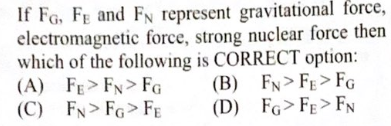
C
D
B
A
Q2
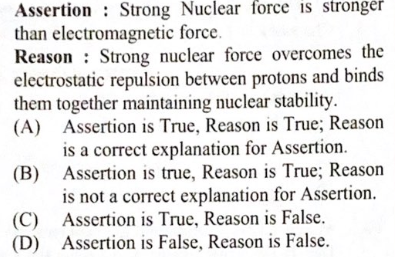
B
D
A
C
Q1

Q2
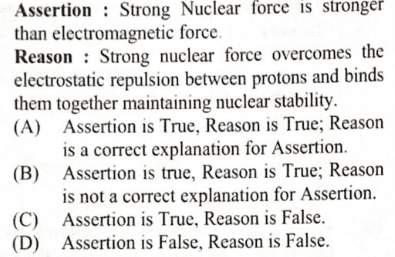
Q3

Q4
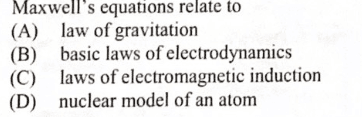
Q5

Q6
 Physical World, Units and MeasurementsConverting units of metric and customary measurementsResearch: Scientific Attitudes These are the traits that scientists and researchers practice to ensure reliable results and good research work: Curiosity – Desire to ask questions and seek answers. Drives exploration and discovery. Example: Wondering why leaves change color in autumn. Intellectual Honesty – Reporting observations and results truthfully, even if they don’t support your hypothesis. Open-Mindedness – Willingness to accept new ideas and consider other perspectives. Perseverance – Continuing research despite difficulties or failures. Objectivity – Avoiding bias; basing conclusions only on evidence and facts. Positive Attitude Towards Failure – Viewing mistakes as opportunities to learn and improve. Skepticism – Questioning results and not accepting claims without sufficient evidence. Observation and Inference Observation – Using the senses (or tools) to gather information. Qualitative Observation → Describes qualities (color, shape, texture). Quantitative Observation → Uses numbers or measurements (height, mass, temperature). Inference – Logical explanation or conclusion based on observations and prior knowledge. Example: Seeing smoke and inferring there is fire. 🔎 Science Process Skills These are steps used in scientific investigations: Observing – Using senses and instruments to gather data. Inferring – Making explanations based on observations. Predicting – Stating what you think will happen based on patterns or evidence. Communicating – Sharing results through words, graphs, charts, or reports. Classifying – Grouping objects or data according to similarities and differences. Ordering/Sequencing – Arranging objects or events in correct order (time, size, importance). Measuring – Using standard units and instruments to describe length, mass, volume, time, etc. 📏 Measurement and Measuring Instruments Measurement – The process of comparing an unknown quantity with a standard unit. Common Quantities and Instruments: Length/Distance – Ruler, Meter Stick, Vernier Caliper, Tape Measure. Mass – Balance (triple beam, electronic). Volume – Graduated Cylinder, Measuring Cup, Pipette, Burette. Temperature – Thermometer. Time – Stopwatch, Clock. Electric Current – Ammeter. Voltage – Voltmeter. Key Idea: Accurate measurement requires using the correct instrument and unit (SI Units).Convert weight, mass and volume measurements for nurses using only Australian metric unitsStudents multiply numbers of up to four digits by one-digit numbers and numbers of up to three digits by two-digit numbers. Students divide numbers of up to four digits by one-digit numbers, resulting in whole-number quotients and remainders. They also explore the multiplication and division of multi-digit numbers. Students express customary measurements in terms of both smaller and larger units. Measurements: - Learners will be estimating and measuring lengths in centimetres, metres and kilometres, sometimes rounding to the nearest whole number across the measurements - Learners will begin to understand the relationships between the different units of length"UNITS AND MEASUREMENTUNITS AND MEASURMENTS