Loading...

Weird Food
Quiz by Kunchira WANTHONG
Customize this quiz to suit your class
Instantly translate to 100+ languages
Tag the questions with any skills you have. Your dashboard will track each student's mastery of each skill.
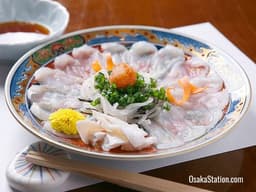
Where do people eat fugu?
What is weird about eating it?
Where do people eat fugu?
What is weird about eating it?
Give this quiz to my class
 Astonishing Animals Our planet is full of weird and wonderful creatures. Meet three of them – animals with surprising bodies, habits and abilities. The animal that can’t be true When in 1798 zoologists in Britain first saw the skin of an Australian platypus and a drawing of the animal, they were sure it was a hoax. A creature like that could not exist. Why not? First, it has fur, like cats or dogs, but also a flat bill like a duck, and a big thick tail like a beaver. Secondly, it lays eggs and looks after them like a bird, but when the young come out of the eggs, the mother feeds them with her milk. On top of everything, the platypus has a poisonous sting – like a snake! It cannot kill a human, but it’s very painful. Champion Runner You probably know the cheetah is the fastest runner among animals. It can run up to 100 kilometres per hour. But after some 200 metres, it needs to lie down and rest. The pronghorn, which lives in the prairies of North America, can run a few kilometres at ninety kilometres per hour, and fifteen kilometres at sixty-five kilometres per hour. Its whole body – heart, lungs, legs – is a perfect machine for long-distance running. But why? It doesn’t need to run this fast now, but 18,000 years ago there were cheetahs in America. The pronghorn probably evolved to escape them. This beautiful animal is not well-known in Europe, but in America it is a symbol of the prairie life. You can see it in the emblem of the province of Alberta, Canada. Aliens in the ocean An octopus has no fixed shape or colour. In danger, it will change both. It can become like its surroundings and difficult to see. Or it can look like a dangerous animal, such as a sea snake, and scare an attacker away. Octopuses are also intelligent. Their brains are large in proportion to their body size. They can use tools and solve problems: for example, open bottles to get food, or use clever strategies to escape from an aquarium. It seems they are unhappy in a zoo or lab. But they are so different from humans that it is difficult for us to understand their intelligence. In fact, it is a bit like meeting intelligent aliens.What Pet Should You Get? Introduction. Almost every kid has wanted to have a pet. Pets can make good friends. But how do you decide which kind of pet to get? Here are some kids who have some opinions about pets. Read what they have to say. Then decide what kind of pet you would like to have. Dogs as Pets. Every kid should own a dog. A dog comes when you call it. You know it likes you because it wags its tail. Dogs like to play chase with you. Some dogs will even play catch! Get a dog for a great playmate! Dogs as Pets. Dogs are hard pets to keep. They need lots of space to run. What if you don't have a yard? You have to take them on walks even if it is cold. The worst thing is that you have to clean up after them. Yuck, who wants a dog? Lizards as Pets. Lizards make the coolest pets. They don't bark or meow. You don't have to take them for walks. They are easy to hold and to pet. It doesn't cost much for lizard food. So, go get a lizard! Lizards as Pets. It is mean to keep lizards as pets. Some have to stay in one tiny box their whole life. Some of them eat live crickets. Plus, it feels really weird to pet them. Never, ever, get a lizard! Fish as Pets. Fish make awesome pets. They come in such pretty colors. It is fun to watch them swim back and forth. It is fun to watch their funny mouths. They only need to be fed once a day. Fish make fun and easy pets to keep. Fish as Pets. Fish should be left in the oceans and rivers. Fish don't come when you call them. They can't do any tricks. And worse than that, fish don't like to be touched. Fish win the most boring pet award. Parrots as Pets One of the best pets to own is a parrot. Parrots are very beautiful birds. They often do not need a cage. I love it when my parrot says "hello." Some parrots even whistle. Get a parrot and teach it to talk. Parrots as Pets Parrots are really messy pets. They spill seeds and fruit all over. They are not the best drinkers. They get water on the floor. Their feathers can even fall out. Don't get a parrot unless you like cleaning! Conclusion. There are good things and bad things about each pet. You have to decide whether the good things are great. You have to decide whether the bad things are okay for you. You also have to do research to see whether your house is good for a pet. Don't get a pet unless you have thought hard about it. But the right pet can be your best friend! 1 .Sand soil • Has course/ large particles • they are larger than those of clay • Loses water quickly • Has less organic matter • Has good aeration • Allows good root penetration • Leaching of nutrients is more in sand soil. • Does not stick when wet 2. Clay soil • Has very fine particles which are closely packed • The soil is sticky when wet and can be moulded into any shape • It holds more water than sand and loam • It has poor drainage • It cracks when dry • It has poor aeration • It does not allow good root penetration 2 .Loam soil • Is a mixture of sand and clay particles • It half clay half sand • It can be easily moulded into a shape but easily crumbles • Holds water for a longer time than sand • It sticks on the hands when wet • It has good drainage • It has good aeration • It allows good root penetration • Loam is the best soil Soil Fertility • When soil has enough plant nutrients it is fertile • Soil fertility is the presence of nutrients in the soil • A farmer can add nutrients to the soil to make it fertile • This is done by applying fertilizers and compost. • A fertiliser is a substance that is added to the soil to increase fertility • Nutrients found in the soil include Nitrogen, Phosphorus and Potassium ( NPK ) • They are called major nutrients or macro nutrients because they are needed in large quantities Minor nutrients • Minor nutrients are needed in smaller quantities • Minor nutrients are also called micro nutrients or trace elements • Examples of minor nutrients are boron, iron, zinc, manganese, magnesium and molybdenum Soil erosion • Is the washing away of top soil by agents such as Water Wind Animals Humans 1. Water: • Water washes away soil when it rains. • Loose soil is washed away into dams and rivers. • Steep slopes also lead to soil erosion. • Ploughing 2 . Wind • The blowing away of soil by wind causes soil erosion. • When people cut down trees wind erosion easily takes place. • Type of soil also leads to wind erosion. Which soil type is easily eroded by wind? 3 . Animals • Animal cause soil erosion by overgrazing. • Overgrazing is when animals eat plant or vegetation leaving the ground surface bare. • Animals walking on the same pathway for a long time make the soil loose. • Animals that live underground also burrow loosening the soil. • This makes soil break easily and get washed away. WATER WATER CONSERVATION Water • Water is important in agriculture • It is used to: Clean farm tools Mould bricks Wash milking equipment Cool machines Provide homes(habitat) for fish Give animals drinking and bathing water Sources of Water Natural sources 1. Natural rains: • rain water from the clouds is a primary source of water. • It is used to water crops such as maize, millet, sorghum and so on during the rainy season. • Rain water that collects into the rivers and dams is used by animals and people for drinking. 2 . Rivers : • Rivers are some of the major sources of water for different activities such as fishing, boat cruising and irrigation. 3 . Streams : • A stream is a small river. • Streams supply water for irrigating garden crops especially in rural areas. • They are also a source of water for animals to drink and bath. Sources of Water 4 . Springs : • Springs are usually found on hilly areas. • They result from pressure of underground streams. • The pressure forces water underground to form a channel to the surface of the soil and flow above the ground. Sources of Water Man made sources Man discovered that water for agriculture was not enough during the rain and cool dry seasons. They decided to make structures which would harvest or collect and store water for future use. 1.Protected well: • Wells are dug in the ground by hand. • They are often lined with bricks and concrete so that they do not cave in. • Protected wells are covered, therefore are safe to drink from. 2 . borehole : • They are deep holes made by drilling machines. • Drilling can be done up to 70 metres deep. • Water is pumped using an electric pump or hand pump. Sources of Water 3 . Dams : • A dam is a large wall or barrier built to hold water to save it for future use. 4 . Weir : • A weir is made by construction a cement brick wall or concrete wall across a river to trap water and eroded soil. • water flows over the wall when the river is inflood. 5 .Water tank : • Is a temporary manmade water source. • Water from a water tank is usually harvested from roof tops or it works along a borehole or protected well as temporary storage. • Water is pumped from the borehole or protected well into the water tank. 6 . reservoir : • A large natural or manmade lake used as a source of water. PLANTS Uses of plants • Fibre for making clothes • Oil for cooking, making paint and chemicals • Sugar for tea • Wood for timber • Refreshing drinks and alcohol • Food for people and animals • Protect the soil from erosion • Plants supply us with fresh oxygen for breathing. • Some plant parts are used as medicine.Weird questions to test general knowledge??Weird spelling wordsWeird sports Weird Weather. Starlight-8. 1eWeird Questions