Loading...

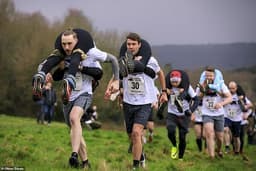
Weird sports
Quiz by POOLSUK CHINYIM
Customize this quiz to suit your class
Instantly translate to 100+ languages
Tag the questions with any skills you have. Your dashboard will track each student's mastery of each skill.
Give this quiz to my class
A person who makes a judgement in sport games
Combat
Referee
Obstacle
Horrendous
A thing that makes something more difficult
Injuries
Obstacle
Opponent
Horrendous
A person who makes a judgement in sport games
A thing that makes something more difficult
A fight
Frightening, terrible, or very bad
Another competitor in the sport games
A physical damage to someone
 Hinter den Bergen Zwei Bilder sagen mehr als tausend Worte Wolfgang Ullrich Wer über Erfahrung mit Bildern verfügt, weiss, wie unerwartet und wie stark sie aufeinander reagieren können. So uninteressant ein Bild für sich alleine sein mag, so komisch, zynisch, erhellend oder erhebend wird es oft, wenn man es mit anderen Bildern kombiniert. Ähnliches kennt man sonst am ehesten vom Chemieunterricht: Zuerst harmlose Stoffe entfalten ungeahnte Energien und Effekte, sobald sie zusammengebracht werden. Besonders verblüffend ist immer wieder, was alles durch die Verbindung von nur zwei Bildern passieren kann. Einmal werden sie zum Gegensatzpaar, in einem anderen Fall bestätigen und verstärken sie sich gegenseitig – oder sie variieren ein Thema, erzählen auf knappste Weise eine Geschichte, geben in ihrer Verschiedenheit ein Rätsel auf. In der Geschichte der Kunst, aber ebenso in der Propaganda oder Werbung nutzte man die Aussagekraft von Bildpaaren häufig: vom Diptychon in der christlichen Tradition des Andachtsbilds bis hin zu plakativen Vorher-nachher-Bildern, mit denen ein Haarwuchsmittel angepriesen oder ein kultureller Niedergang beklagt wird. In der Moderne, in der Bilder allgemein verfügbar geworden sind, ist das Kombinieren von Bildern sogar mindestens so wichtig geworden wie das Machen neuer Bilder. Die wohl subtilste Form des Bildpaars taucht aber vor allem in früheren Jahrhunderten auf. Es handelt sich dabei um Pendants. Sie ergeben sich daraus, dass man zwei Bilder zusammenfügt, die ein verwandtes Sujet zeigen, es aber unterschiedlich behandeln, also aus jeweils anderer Perspektive, in verschiedenen Stimmungen oder mit wechselnden Konnotationen darstellen. Die Blütezeit der Pendants war das 18. Jahrhundert, sie wurden aber bereits von Claude Lorrain und auch noch von Caspar David Friedrich virtuos eingesetzt.[1] Viele Pendants stellten aber nicht einmal die Künstler selbst zusammen; vielmehr wurden sie in den Werkstätten und Verkaufsräumen von Druckgraphikern arrangiert. Diese erkannten nämlich, dass sich Kupferstiche oft besser paarweise als alleine verkaufen ließen, weil sie dem Publikum dann mehr Stoff zum Räsonieren boten. So wurde es sogar üblich, Stiche von Werken verschiedener Künstler zu kombinieren, und selbst Bilder, die zu unterschiedlichen Zeiten entstanden waren, ließen sich als Pendants vereint wiederfinden.[2] Der Tiroler Fotograf Lois Hechenblaikner hat diese Praxis nicht nur neu aufgegriffen, sondern sie um eine zusätzliche – entscheidende – Dimension bereichert. In Gegenüberstellungen, an denen er seit dem Jahr 2000 arbeitet, präsentiert er jeweils ein Bild in Schwarz-Weiß – meist ein Foto aus dem reichen Nachlass des Agraringenieurs Armin Kniely (1907-1998) – neben einem Farbbild, das er selbst fotografiert hat. Die unterschiedlichen Entstehungszeiten der Bilder sind damit, anders als bei den Pendants des 18. Jahrhunderts, bereits auf den ersten Blick erkennbar und auch Thema: Lois Hechenblaikner geht es darum, sichtbar zu machen, wie sich eine Region – fast alle Motive stammen aus Tirol – innerhalb von nur zwei Generationen verändert hat. Wo man in den 1930er und selbst noch in den 1960er Jahren Bergbauern bei ihrer mühsamen Feldarbeit aufnehmen sowie ein ritualisiertes Brauchtum dokumentierten konnte, sind mittlerweile der Tourismus und die Formate der Eventkultur am prägendsten geworden. Doch statt nur einen Strukturwandel festzuhalten, besteht Hechenblaikners besondere Fähigkeit darin, in jeder Gegenüberstellung zwei formal analoge Szenerien aufeinander zu beziehen. Erst so werden aus seinen Bildpaaren auch Pendants – zwei Fotos, die trotz aller Unterschiede jeweils genügend Gemeinsames haben, um zum Vergleich herauszufordern. Die Bildpaare gehen bei Hechenblaikner auch immer über das bloß Assoziative hinaus, das in der Kunst sonst beliebt ist, weil das Arrangement dann eine Vieldeutigkeit verheißt und verrätselt wirkt (oft aber nur beliebig ist). Vielmehr empfindet man seine Pendants als geradezu unheimlich – als unglaublich und grotesk –, weil die von ihm entdeckten Ähnlichkeiten so stark sind. Daher überlegt man auch, ob es sich bei den Farbfotos nicht vielleicht um direkte Remakes der Schwarz-weiß-Motive handelt. Doch ist schnell zu erkennen, dass Lois Hechenblaikner seine Bilder nicht eigens inszeniert: Da fast immer Menschen, nicht selten sogar größere Gruppen darauf zu sehen sind, wäre es zu aufwändig, für einen einzelnen Fotografen gar unmöglich, die Szenen zu stellen. Vielmehr ist es Hechenblaikners hervorragendem Bildgedächtnis zu verdanken, wenn er bei seinen Streifzügen durch das Land immer wieder Situationen entdeckt, die denen auf alten Fotos genau entsprechen: Wie einst ein Bauer Jauche auf die Felder spritzte, so schießt man jetzt Schnee aus Kanonen, die Stecken, um die man früher das Heu zum Trocknen wickelte, ähneln verblüffend Handy-Masten, und wo die Landwirte einst stolz ihre Schafe präsentierten, posieren heute Golfspieler mit ihren Trolleys. Die Botschaft der Pendants ist somit eine doppelte: Sie künden sowohl von den gewaltigen Umbrüchen in den Alpen während der letzten Jahrzehnte als auch davon, dass alle Veränderungen doch nur scheinbar sind, ja dass sich lediglich die Hüllen und Akzidenzien gewandelt haben, in denen dieselben Muster geradezu zeitlos zur Geltung kommen. Man könnte darin eine Bestätigung für das sehen, was Aby Warburg als Pathosformeln bezeichnet hat, nämlich Gesten und Konstellationen, die über Epochen und sogar über Kulturen hinweg immer wieder auftauchen und die damit den Status anthropologischer Konstanten besitzen. Wollte Warburg diese Formeln mithilfe eines Atlasses erforschen, der Bilder unterschiedlichster Herkunft mit jeweils verwandten Sujets auf Tableaus versammelte[3], so läßt sich das vorliegende Buch von Lois Hechenblaikner als Tiroler Variante eines ähnlichen Projekts würdigen. Doch während Warburg, getrieben von metaphysischem Interesse und auf der Suche nach so etwas wie Archetypen menschlicher Existenz, auf den einzelnen Tafeln seines Atlasses weit ausholt und auch Bilder zusammenbringt, die zumindest auf den ersten Blick nur wenig gemeinsam haben, ist Hechenblaikners Arbeit ungleich konzentrierter. Da er immer nur Bildpaare zeigt, denen zudem allen dasselbe Schema zugrunde liegt, wird der Betrachter viel stärker geführt. Jede Doppelseite gerät bei ihm zu einer neuen Pointe. Doch verhindert die Form des Pendants, dass mit dem Erfassen der Pointe schon alles vorbei ist. Im Gegenteil fordert sie zur weiteren Reflexion heraus, und das Spiel von Identität und Differenz, das Lois Hechenblaikner mit jeder Gegenüberstellung auf die Spitze treibt, eröffnet dafür den Raum. Viel mehr als einzelne Bilder, mehr aber auch als andere Formen von Bildpaaren verlangen Pendants sogar ausdrücklich aktive Rezipienten, die diesen Raum mit ihren Gedanken füllen. Sie können dann entweder darüber sinnieren, wieso sich zwei vermeintlich so unterschiedliche Lebenswelten wie Landwirtschaft und Tourismus, Religion und Sport, Brauchtum und Kommerz in so ähnlichen Bildformeln ausdrücken, oder sie können der Überlegung nachgehen, wie sich eine Region innerhalb kurzer Zeit so stark verändern konnte, dass alle Tätigkeiten und Situationen komplett durch andere Tätigkeiten und Situationen ersetzt wurden. Ist also einmal die Ähnlichkeit des Unterschiedlichen das Faszinosum, so das andere Mal die Andersheit des Gleichen. Jeweils aber muss der Rezipient beides – Identität und Differenz – zusammendenken. Er kann sich dabei auf ein einzelnes Beispiel konzentrieren und Überlegungen zur jeweiligen Rolle etwa von Schafen und Trolleys – zu ihrer Eignung als Symbole für eine Lebensform – anstellen. Er kann sich aber auch von der Summe der Bildpaare anregen lassen und so zu Theoriebildung animiert werden, um für das ihm Dargebotene eine Erklärung zu finden. In einem Text spricht Lois Hechenblaikner selbst davon, durch die Bildpaare solle „im Kopf des Betrachters ein so starkes drittes Bild entstehen, dass ihm förmlich ‚das Licht aufgeht’“. Doch sind es – je nach Interesse, Haltung und Vorbildung – durchaus unterschiedliche Lichter, die aufgehen können. Während Hechenblaikner die Gegenüberstellungen zuerst mit dem Ziel anlegte, die Veränderung Tirols und des Alpenraumes als Verlustgeschichte zu erzählen, ist es mit ihnen genauso möglich, die verschwundene Welt nachträglich zu dekonstruieren. Läßt der Wechsel vom Schwarz-weiß zur Farbe einerseits den Schluss zu, dass sich in der Gegenwart eine brutale Marktlogik durchgesetzt hat, derzufolge alles mit möglichst starken Reizen – mit Grellheit und Obszönität – auf sich aufmerksam macht, so kann man daraus andererseits also auch die Mahnung ableiten, auf das Vergangene nicht nur deshalb sentimental zu blicken, weil es durch die einheitliche Tönung verfremdet erscheint. Obwohl das Leben der Bergbauern, ihre familiäre Bindung, ihr Gottvertrauen und ihre dem Rhythmus der Jahreszeiten gehorchende Arbeit idyllisch wirken mag, könnte das alles vielmehr ähnlich – genauso? – derb, banal und kalt gewesen sein wie die heutige von Unterhaltungsindustrie, Animiergewerbe und Konsum bestimmte Welt des Massentourismus. Oder muss es sich doch eindeutig um einen Verfall handeln, wenn allenthalben natürliche Materialien durch Kunststoffe ausgetauscht, freie Blicke durch Werbetafeln verstellt, beschauliche Szenerien von Massenevents abgelöst, Ernst und Strenge durch Albernheit und Ausgelassenheit ersetzt wurden? Aber ist es nicht auch ein Zeichen von Freiheit und Wohlstand – und damit sogar ein Fortschritt –, wenn die Menschen ihre Launen heute ausleben können und nicht länger ein enges, allein von Armut und Notwendigkeiten bestimmtes Leben führen müssen? Selbst wenn man klar für eine Deutung optiert und sich entweder als Kulturpessimist oder als Fürsprecher einer grundsätzlichen Gleichwertigkeit verschiedener Epochen oder aber als Fortschrittseuphoriker bekennt, kann man die jeweils alternativen Interpretationen wohl nie ganz ausblenden. Je besser ein Bildpaar ist, desto stärker sind vielmehr zugleich die jeweils anderen Sichtweisen präsent. Es gehört sogar geradezu zum Wesen von Pendants (wie ihr Name, abgeleitet vom lateinischen ‚pendere‘, bereits verrät), zu einem Abwägen zu verleiten und feste Positionen in die Schwebe zu bringen. Pendants sind also die ideale Bildform für Skeptiker, die sich ungern festlegen und immer gerne mindestens eine zweite Sichtweise parat haben. Zwei Bilder, so wie Lois Hechenblaikner sie aufeinander bezieht, sagen daher tatsächlich mehr als tausend Worte, mit denen nämlich jeweils nur eine einzige Position formuliert werden kann: Satz und Gegensatz in sich vereinend, verführen Pendants zum philosophischen Denken – zu einem nie abschließbaren Nachdenken über Geschichte, Menschen, Kultur. Das Schwanken zum Prinzip erhebend, sind sie die besten Stimulanzien des Geistes.Yaama I'm Jack Evans and you're watching BTN. Here's what's coming up. We uncover the story behind this famous photo, learn about First Nations seasons and find out the history of Book Week. What is Statehood? Reporter: Tatenda Chibika INTRO: But first, the Prime Minister Anthony Albanese has announced that Australia will join other countries in recognising Palestine as an independent state. So, what does that mean? Tatenda found out. Anthony Albanese, Prime Minister: Australia will recognise the state of Palestine. Australia will recognise the right of the Palestinian people to a state of their own. We will work with the international community to make this right a reality. Tatenda Chibika, Reporter: That's the moment our Prime Minister said Australia would recognise Palestine as an independent state at the upcoming United Nations General assembly next month. It's something other countries, including France and Canada, have said they'll be doing too. So, what does that mean exactly? To be considered an independent state under international law a place needs to have its own land or territories with defined borders, it needs to have people who permanently live there, have a working government and it has to be able to talk and make deals with other countries. Once a place meets all those rules, it can ask to be recognised by other independent states and countries. But a big step in becoming an independent state is being fully recognised by the United Nations. To do that you first need to get approval from at least nine members of the UN's Security Council. That's a group of countries responsible for maintaining international peace and security. But even then, that tick of approval can still be blocked by one of the Security Council's five permanent members Russia, China, the UK, the US and France. If the Security Council approves, the decision then goes to the UN's General Assembly where at least two thirds of the UN's 193 members have to agree to make it official. Yeah, it's a pretty complex process which is why we've only seen a handful of countries recognised by the UN in recent years like South Sudan and Montenegro. Others like Kosovo are only 'partially' recognised which means they have some recognition but not enough to become a full member state at the UN. Right now, Palestine is recognised by more than 140 countries — that's more than two thirds of the UN General Assembly. So, why hasn't it become a UN member state yet? Well, it came pretty close last year when 12 members of the Security Council voted in favour of it. VANESSA FRAZIER, AMBASSADOR OF MALTA, APRIL 2024 UNSC PRESIDENT: I shall now put the draft resolution to the vote. But the US, a close ally to Israel, used its special powers to block Palestine from becoming a member state. VANESSA FRAZIER: Those against? At the time, the U.S said Palestine and Israel needed to come to an agreement on their own first. Throughout the years, there have been attempts to figure out a way for both Palestine and Israel to exist peacefully alongside each other but that hasn't happened yet. And now Israel has said that recognising Palestine as an independent state would be rewarding Hamas the group in charge of Gaza which was responsible for the terror attacks on October 7th, 2023. But the Palestinian Authority which governs parts of the West Bank says Hamas won't have a role in any future state of Palestine which will exist peacefully alongside Israel. Australia, like the US, had previously said that it wanted Israel and Palestine to figure out things by themselves first but because of how the war has been going the Australian government is worried that if it continues to wait, there might not be a Palestinian state to recognise. ANTHONY ALBANESE, PRIME MINISTER: There has been too many lives lost, both Israeli's and Palestinians and the world is saying we need a solution to this conflict, we need to end the cycle of violence and the way to do that is to have a two-state solution. News Quiz Russia's President Vladimir Putin stepped foot on American Soil for the first time in a decade to meet with US President Donald Trump. What state did they meet in? Alabama, Alaska or Arizona?It's Alaska. The two leaders met to discuss a way to end the war in Ukraine but weren't able to make any final agreements. DONALD TRUMP, US PRESIDENT: There were many, many points that we agreed on. Most of them, I would say, a couple of big ones, that we haven't quite got there, but we've made some headway. There's no deal until there's a deal. A lot of people criticised the two world leaders for not including Ukraine's president Volodymyr Zelenskyy in the meeting. But that didn't seem to worry Mr Trump who said the meeting was a success and Mr Putin even invited the US President to meet up again in Russia. DONALD TRUMP: We'll see you again very soon. Thank you very much, Vladimir. VLADIMIR PUTIN, RUSSIAN PRESIDENT: Next time in Moscow. DONALD TRUMP: Oh, that's an interesting one. No, no, no. I'll get a little heat on that one. Last week thousands of people marked the 80th anniversary of VJ Day. What does VJ Day commemorate? The victory of Allied forces in Europe, the surrender of Japan and the end of World War II or the dropping of the first atomic bomb? VJ Day or Victory over Japan day commemorates the surrender of Japan and the end of World War II on the 15th of August 1945. Around the world, and here in Australia, people marked the anniversary with ceremonies remembering those who fought in the war. REPORTER: Who will you be remembering today? VETERAN: Oh, a lot of fellows that I knew that never made it home. Scientists in the UK have created toothpaste that includes which of these ingredients? Hair, eye lashes or fingernails? Yeah, they're all a bit random and gross but the answer is hair. According to scientists from King's College in London, hair could be the key to good oral health because it contains a protein called Keratin which they say when mixed with saliva forms a crystal-like protective coating similar to enamel. And Swifties rejoice because Taylor Swift has announced her 12th Studio album. It's called life of a show what? Is it show pony, show girl or show bag? It's Life of a Showgirl and it'll be released October 3rd. Vincent Lingiari Reporter: Joseph Baronio INTRO: Now to this very famous photograph. It was taken 50 years ago and depicts a really significant moment in Australian history. Joe found out about the story behind it. On the 16th of August 1975, this famous photo was taken. It shows the former Prime Minister Gough Whitlam pouring sand into the hand of Aboriginal leader Vincent Lingiari. A simple gesture that symbolised handing the land at Wave Hill in the Northern Territory back to the Gurindji people. But the journey to get there was far from simple. It started back in the 1960s. At the time, Wave Hill was the biggest cattle station in the world, controlled by British landowner Lord Vestey. The Gurindji people, who had lived on the land for generations, worked for Vestey, but they weren't paid fairly, and conditions were tough. NEWS REPORTER: The station's 100 aboriginal stockmen, with their 100 dependents, are camped in the dry bed of the Victoria River with little shade from 90-degree heat, dust and flies. Eventually, Gurindji leader Vincent Lingiari said it was time to act. VINCENT LINGIARI: I said, "What was it before Lord Vestey born and I was born?" It was blackfella country. So, on August 23rd, 1966, Mr Lingiari and his fellow Aboriginal workers went on strike. It became known as the Wave Hill Walk Off. They moved their camp away from the Wave Hill station to a sacred site called Daguragu on Wattie Creek. They wanted to set up their own cattle station, and said they wouldn't move until their land was returned to them. For years, petitions and negotiations went on between the Gurindji people, the NT Administration, and the Australian Government in Canberra. CLAPPERS: 31. 32. 33. DAVID QUINN, ABSCOL: Well, it's basic justice that their land is recognised. PROTESTORS: Equal rights! As the news spread across the country, thousands of Aussies joined the campaign, including the leader of the Labor Party, Gough Whitlam, who made this promise during his 1972 election campaign. GOUGH WHITLAM: We will legislate to give Aborigines land rights. Not just because their case is beyond argument, but because all of us as Australians are diminished, while the Aborigines are denied their rightful place in this nation. Later that year, Gough Whitlam became Prime Minister. (Song From Little Things Big Things Grow, Song by Kev Carmody and Paul Kelly, 1993) From little things big things grow,from little things big things grow… But it wasn't until 1975, 9 years after the Wave Hill Walk Off started, that he followed through with his promise. Eight years went by, eight long years of waiting'Til one day a tall stranger appeared in the landAnd he came with lawyers and he came with great ceremony GOUGH WHITLAM: I solemnly hand to you these deeds as proof in Australian law that these lands belong to the Gurindji people. And through Vincent's fingers poured a handful of sandFrom little things big things grow 50 years on, and The Wave Hill Walk Off is seen as a pivotal moment in Australia's history. It led to significant legal and social changes for First Nations people, which is something many agree is worth celebrating. First Nations Seasons Reporter: Saskia Mortarotti INTRO: Recently, Melbourne's Lord Mayor suggested ditching the four-season calendar that most of us are familiar with and adopting a six-season Wurundjeri calendar instead saying it gives a better description of what the weather's actually like there. Sas found out more about the different seasonal calendars used by First Nations people. SASKIA MORTAROTTI, REPORTER: Right now, in most of the country, it's pretty cold. COLD GIRL: Think of somewhere warm. What? It's 32 degrees in Darwin in the middle of winter? But ah, yeah. There are some places where it's, well, quite warm. Which makes you wonder whether the weather actually matches the seasons. You see, Australia is pretty big, and we have lots of different weather patterns. Which is something First Nations people have tracked for thousands of years with their own seasonal calendars. KARL WINDA TELFER, CULTURAL CREATIVE KANYANYAPILLA: Why have we got four seasons when you know that don't make any sense here. It doesn't relate to the country here. This is Karl Telfer. He's an artist and storyteller who produced the Kuri Kurru exhibition at the Museum of Discovery in Adelaide that explores the 6 different seasons of the Kaurna Meyunna. SASKIA MORTAROTTI: So, how do you know when you're in one of those six seasons? KARL WINDA TELFER: Well, there are stars that rise. So, you know, there are certain stars, like in Parnatti, for example. There's a star called Parna, and we know what that star is. So, that talks to us about, okay, the time now is going to be cold on the ground. First Nations calendars like the Kaurna one don't just tell us what's happening with the weather; they're also used to track when certain plants and animals are around. KARL WINDA TELFER: It teaches you about what plants you can, you know, what you can eat what you can't and all that what is ready certain times a year and fruit everything, bird shows you the right time to eat the fruit, perfect time, if you try and go get them the next week they're gone. Karl says we can also use these calendars to see how the environment has changed over time. KARL WINDA TELFER: Kudlilla is the season we're in now and Kudlilla that talks about like the rain but we're not having enough rain these days, well, these times. And this is due to climate and the climate changing. There are many different First Nations seasonal calendars around the country. Like Ngan'gi calendar from the Northern Territory which has 13 seasons that follow the life cycle of the native spear grass. Or the Wurundjeri Calendar in Victoria which has 6 seasons. And recently, Melbourne's Lord Mayor, Nicholas Reece, said Melbourne, or Naarm, would be better off adopting the Wurundjeri calendar because it's more in tune to what's happening with the weather. Something many, including Karl, think we should be doing right across the country. KARL WINDA TELFER: I'm talking about the English four seasons. So, this is totally different systems that we're talking about and weather patterns and currents and all sorts of different things, because it's the sea country too. So, my question is, well, why do we have that? If that doesn't work, you know? Quiz How many seasons are there in the Tiwi Island Calendar? 1, 2 or 3? It's 3, although they also have 13 minor seasons. Book Week Reporter: Wren Gillett INTRO: This week, kids across Australia have been dressing up as their favourite characters to celebrate Book Week. Wren finds out why Book Week began 80 years ago and why it's still important today for getting young Aussies into reading. STUDENT: I read an hour every night, maybe even two hours some nights. STUDENT: My favourite book series are the Harry Potter series and the Keeper of the Lost City series. STUDENT: Probably Bad Guys and Weirdo. STUDENT: I like the Amulet, I've been reading that. STUDENT: I love reading Dork Diaries and Exploding Endings. Whether it's Fantasy, mystery, history — whatever you're into. Book week is a time to celebrate, well, books. STUDENT: Me and my friends are dressing up as Inside Out. STUDENT: I was thinking SpongeBob. STUDENT: I'm dressing up as Winnie the Pooh and it's just a fun way to express what kind of books you like. And guess what, book week has actually been a thing for many, many years. WREN GILLETT, REPORTER: Once upon a time, in a land not so far away, literacy lovers noticed a problem. The year was 1945. The second World War had just ended, and kids were mainly reading books from overseas, in particular the UK. Because, at the time, there weren't many Aussie authors writing books for children. WREN GILLETT: So, a group of passionate teachers, librarians, booksellers, publishers, and book-loving volunteers, decided to create what we now know as The Children's Book Council of Australia. Familiar logo, right? Together, they launched book week, all in an effort to get Aussie kids' reading more. And it seemed to work. The 1960s saw a boom in Australian children's books being published. REPORTER: How many books do you read a week? STUDENT: Well, it really depends on the week. If there's exams, I might read only one or two. But if there's no exams and if I've got plenty of time, I might read up to five or six. WREN GILLETT: But today, it's a slightly different story. Studies show that less than one in five eight to 18-year-olds are reading in their free time, and that only one in three actually enjoy reading for fun. WREN GILLETT: Why do you reckon we're seeing this trend? STUDENT: People are getting sucked into screens and they're like spending hours just scrolling through TikTok and stuff, and they're getting so attached to it that they don't feel the need to pick up books and read them. Yeah, there's a lot of different things competing for our attention these days, but many think books are still worth our time. PETER HELLIER, AUSSIE COMEDIAN AND AUTHOR: Books are the exact opposite of boring. And if you think they're boring, I'm sorry, but you're wrong. This is Peter Hellier, he's a pretty famous Aussie comedian, actor, and the author behind these books. And he's just released another one called Detective Galileo, about a trail horse who dreams of solving crimes. PETER HELLIER: He joins the police force and quickly finds out that the horses don't actually solve the crimes, it's the police officers who solve the crime. So he promptly gets thrown out of the force and begins his own detective agency, which I'm reliably told is the only detective agency in the world run by a horse. Peter actually started writing books when he was a kid. PETER HELLIER: I started writing when I was six, seven, eight years old. In fact, I started my own publishing company called Better Books. And I would write these books, and then I would get a parent or one of my parents or teachers to type them up. And I would read them in front of the class. And, you see, each has the logo, the Better Books logo, there it is — the famous Better Books logo. WREN GILLETT: You weren't mucking around. PETER HELLIER: There all on all of them. There we go. There we go. Many, Including Peter, say there's plenty to get from a good book. They help us learn new words and phrases, get a better understanding of the world around us, and strengthen our imaginations. PETER HELLIER: Books can take you absolutely anywhere. They can take you to countries that you never dreamed about going. Countries that exist, countries that don't exist. Reading just makes the world a much bigger place. It's why for the past 80 years, schools around the country have been taking part in book week. STUDENT: Reading is a place where you can have your own world just to yourself. STUDENT: It's like watching a movie inside your head, but you can choose how it goes. STUDENT: Picking up a book is a good idea, maybe you should start with something that you're interested with and then you can start exploring from there. Quiz What is the title of the book that took out this year's Book of the year Award for younger readers? It's Laughter is the Best Endingby Maryam Master. Some other winners included I'm not really here by Gary Loneborough which took out book of the year for older readers and best picture book went to The Truck Cat, by Deborah Frenkel. Sport Australia's men's national basketball team — the Boomers — have won their third Asia Cup in a row, with an epically narrow victory over China. COMMENTATOR: It is Australia who are celebrating! China started strong, leading 25-17 at quarter time. But Aussie Xavier Cooks led a fierce comeback, shooting 30 points and collecting nine rebounds, earning him the title of MVP. And there seriously couldn't have been a tighter finish. Just as the final buzzer went off, China missed a shot that would have won them the game, leaving Australia with a 90-89 victory. COMMENTATOR: An unbelievable finish. The 2025 AFLW season kicked off last week, and so did a new trick. Yeah, 19-year-old Ash Centra from Collingwood, pulled out this move in the warm-up before their season-opener to Carlton, and since then, a lot of people have been trying to do it, with some success, kind of? FOOTY PLAYER: No, I'm not doing it on camera. But despite the epic warmup, Carlton did end up beating Collingwood by 24 points. Now, the moves from these athletes in China weren't quite so graceful but give 'em a break, okay, they're robots. For the first time ever, humanoid robots from all over the world, competed in their very own games, which featured, soccer, boxing, running, and ahh, lots of falling over. Lots. Luckily though, they did bring their own cheer squad. Young Rapper Reporter: Rylie INTRO: Finally, we're going to meet another winner of this year's Heywire competition — which asks young people in regional areas to share their stories. Rylie's going to tell us how music helped to transform his life. Check it out. Mum and I were homeless. We lived at a caravan park, in motels and tents around Warrnambool. It wasn't pretty. I'm First Nations, and I remember feeling like, my own country is failing me right now. So, we camped right along here. I remember pitching a tent right here and this was actually around the same time I started to get into music which was a good way for me to have something to look forward to. I was raised by the SoundCloud era, listening to a lot of trap music. When I was in school, I'd rap along to songs by Juice World, then I started to make my own. My first track was recorded on my phone. It was bad but a lot of fun to make. Some kids in my school heard it and shamed me. That put me off music for the next couple of years, until a friend of mine bought a microphone and encouraged me to give it another go. There was something about that mic and the energy of the crew around me that gave me confidence. It lit a fire in me. Over time, I was able to focus my flow. My songs are about escapism, living the life, being a success. I rap about stuff that takes me to a better place in my head. I'm manifesting my future. My stage name is Hundo Milli, it's short for hundreds of millions. Money's not really the end goal; it's more about having the freedom to dream big. Mum taught me to never stop believing. Even when times were tough, she kept pushing for us to get housing and eventually we did. We're some of the lucky ones. Today, I'm in a Melbourne studio recording my next single. I remember living in my tent dreaming about this very moment and now I'm here, doing what I love. Ain't nothing going to stop me. Closer Well, that's all we've got for you today, but we'll be back before you know it. In the meantime, you can head to our website, there's plenty to see and do. You can also catch Newsbreak every weeknight and there's BTN High for all you highschoolers out there. Have an awesome week and I'll see you next time. Bye.Weird questions to test general knowledge??Weird FoodWeird spelling wordsWeird Weather. Starlight-8. 1eWeird QuestionsWeird quiz