WWI REVIEW
Quiz by Megan Touhey
Feel free to use or edit a copy
includes Teacher and Student dashboards
Measure skillsfrom any curriculum
Measure skills
from any curriculum
Tag the questions with any skills you have. Your dashboard will track each student's mastery of each skill.
With a free account, teachers can
- edit the questions
- save a copy for later
- start a class game
- automatically assign follow-up activities based on students’ scores
- assign as homework
- share a link with colleagues
- print as a bubble sheet
18 questions
Show answers
- Q1World War I helped to change the role of women because many womenwere freed from household choreswere drafted into the Army and Navyreplaced men in politicsfilled jobs previously held by men such as working in factories30s
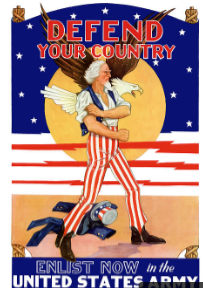
- Q2Which idea is BEST expressed by the poster?Civil DisobedienceNationalismExpansionismAppeasement30s
- Q3During which time were posters such as the one shown most commonly seen?The Progressive EraThe Cold WarWorld War IThe Great Depression30s
- Q4The main goal of President Woodrow Wilson's Fourteen Points wasPunish Germany for WWICreate jobs in the USGain territory for the USPrevent future wars30s
- Q5Who was the 28th President of the US?Franklin RooseveltTheodore RooseveltWoodrow WilsonWilliam McKinley30s
- Q6The Germans mainly used U-boats forIncreasing the military strength of the United StatesEngaging in major naval battles with the French fleetenforce economic blockades by sinking shipsMaintaining a stalemate30s
- Q7“Archduke Franz Ferdinand Assassinated!” “Germany Declares war on Russia and France” “Peace Treaty signed at Versailles!” Which event is referred to in these headlines?The Progressive EraThe Spanish American WarWorld War IThe Cold War30s
- Q8The United States refused to join the League of Nations after World War I mainly becauseThe League’s headquarters would not be located in the United StatesThe United States wished to avoid further involvement in world affairsThe United States wished to continue the war against GermanyMembership would be too expensive30s
- Q9Three sources of tension in Europe around 1900 were militarism, imperialism, andPacifismProgressivismIsolationismNationalism30s
- Q10Which country was the main aggressor in WWI and the country who many in the world blame for WWI?RussiaItalyGermanyFrance30s
- Q11President Woodrow Wilson, in his Fourteen Points proposed the establishment ofA triple allianceAn army to occupy the defeated countriesA league of nationsA militia to protect western nations30s
- Q12Speaker A: “joining the organization would surely involve the United States in future wars” Speaker B: “The minute the United States becomes a member, we will once again come under control of the British” Speaker C: “This organization is the most important of all fourteen points. Joining it will allow the United States to help establish and keep world peace” Speaker D: “Although it is a fine idea and a Noble effort, President Wilson overlooked the suggestions and thoughts of the United States Senate” Which organization is being discussed by the speakers?NATOThe League of NationsEECUnited Nations120s
- Q13Speaker A: “joining the organization would surely involve the United States in future wars” Speaker B: “The minute the United States becomes a member, we will once again come under control of the British” Speaker C: “This organization is the most important of all fourteen points. Joining it will allow the United States to help establish and keep world peace” Speaker D: “Although it is a fine idea and a Noble effort, President Wilson overlooked the suggestions and thoughts of the United States Senate” Which two speakers would likely oppose United States membership in this organization?A and BA and CB and CC and D120s
- Q14Which development in Europe was a RESULT of the other three?Growth of intense nationalismformation of alliancespower strugglesOutbreak of WWI30s
- Q15“America cannot be an ostrich with its head in the sand” –Woodrow Wilson, 1916 In the above quotation, Wilson is warning the America people against which type of foreign policy?isolationismimperialismnationalismmilitarism30s