Loading...


2Q GRADE 8 SPECIAL TEST
Quiz by Rhodalia Salamat
Track each student's skills and progress in your Mastery dashboards
Which of the following intensity scale is the most widely used?
A _______ is a fracture or zone of fractures between two blocks of rock.
A type of fault which shows both dip-slip and strike-slip motion is called ________.
An earthquake can occur with__________ faulting.
It is caused by a sudden slip on a fault.
The Ring of Fire, also called Circum-Pacific Belt or Pacific Ring of Fire is a long horseshoe-shaped seismically active belt of earthquake epicenters, volcanoes, and tectonic plate boundaries that fringes the Pacific basin.
You heard from the news that the earthquake has an energy of 7.6. Which of the following is the correct term to be used to describe the energy of 7.6?
Which of the following statements does NOT explain the difference of earthquake’s magnitude and intensity?
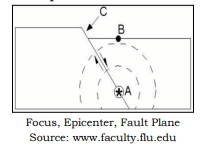
Focus is where slip initiated during an earthquake. At what point you can locate the focus of an earthquake?
It is an instrument used to measure the amount of energy released by an Earthquake.
Which travels fastest, always being the first detected by seismic stations?
The diagram below shows the path of which type of seismic wave through the Earth?

As the waves travel deeper into the mantle of the Earth, which likely to happen?
Shadow zone is part of the Earth that is not penetrated by which type of seismic waves?
Which of the following DOES NOT describe the Rayleigh waves?
Tropical cyclone in the Philippines is locally known as __________.
The air pressure and wind speed on the eye of the tropical cyclone is lesser. So, in part of the eyewall, it is __________.
In what condition do typhoons form?
What do we expect when a typhoon comes?
These are warning signals issued by PAGASA because of an incoming weather disturbance.
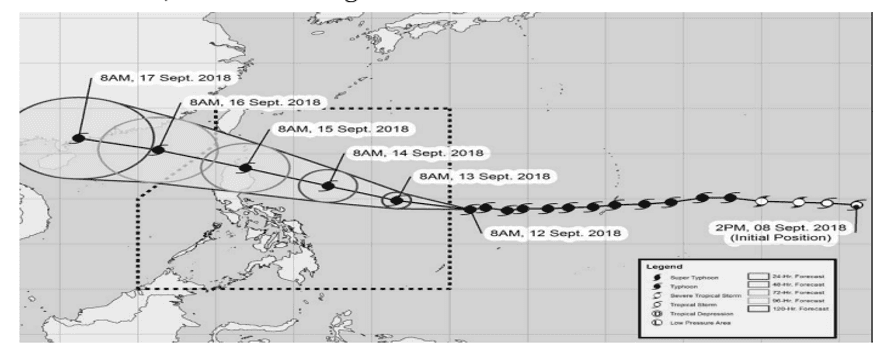
Based on the track of typhoon Ompong last September 2018, at what time and date does Ompong enters the Philippine Area of Responsibility?
Which of the following best describes PAGASA?
Why do we see a tail in a comet?
Which interplanetary object is found between the planets Mars and Jupiter?
What is the term for a meteor that survives and hit the earth’s surface?
