Loading...


3rd QUARTER SUMMATIVE TEST IN SCIENCE
Quiz by Ma. Lorena S. Alejandria
Track each student's skills and progress in your Mastery dashboards
Applying Hund's Rule, which of the following electron configuration is incorrect?


Applying Hund's Rule, which of the following electron configuration is incorrect?
What happens to the particles of a substance after undergoing a chemical change?
Which of the following describes the systematic arrangement of elements based on their atomic numbers and unique chemical and physical properties?
Which of the following is NOT an example of physical change?
A phase change is a physical process in which a substance goes from one phase to another. When does phase change occur?
Which of the following is NOT true about chemical change?
Which information about an atom is not given in the figure below?
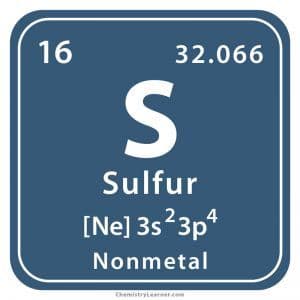
The element with 39 protons and 50 neutrons
A student mixed two clear liquids together. After a few minutes, a white powdery solid was seen and settled at the bottom of the test tube. What conclusion can be made based on the observations cited above?
When two or more substances are combined so each substance can be separated by physical means, the result is a(n) _____.
Which of the following physical changes in matter does not require an increase in temperature to take place?
Which of the following is NOT true about physical change?
Which of the following is NOT an example of chemical change?
This principle states that there are ONLY two electrons that can occupy an orbital and they are moving in opposite spins, denoted by two arrows.
Which of the following elements is NOT a member of the B-Family?
The word which literally means "salt forming"
Which of the following is the correct electron configuration of silver atom?
What would 354 mL written on the label of an evaporated milk be classified as?
Which is TRUE about the forces of attraction between the particles of the three states of matter?
What similarities do you observe from the given samples? Carbon, Gold, Mercury, and Oxygen.
What similarities do you observe from the given samples? Flourine, Bromine, Chlorine, Iodine
Which of the following is NOT an example of matter?
Which among the following processes have physical changes?
Discovered the negatively charged particles in 1897.
Electrons must be distributed singly first before pairing up with other electrons.
Electrons must occupy the lowest possible energy level first before occupying higher energy levels.
How many electrons can occupy an orbital based on Pauli’s Exclusion Principle?
The total number of electrons that can fill the "p" sublevel is ____.
Which of the following has the electron configuration of 1s22s22p63s23p64s1?
A lithium atom has an atomic number of 3 and a mass of 7 a.m.u. The number of electrons which it has in the second shell is ______.
This refers to the total number of protons and neutrons in an atom.
The seven horizontal rows in the periodic table
The energy needed to remove the valence electrons
Which group has the lowest ionization energy on the periodic table?
Which has the highest electronegativity?
Metallic property is the tendency of an atom to lose electrons. Which of the following is a metal?
It determines the isotope of the element
Number of neutrons in an atom of silver
Which subatomic of the following elements has 24 electrons, 24 protons and 28 neutrons?
Which of the following is NOT an example of a heterogeneous mixture?
