Loading...


8th Grade Review Round 1
Quiz by Amy Crump
Track each student's skills and progress in your Mastery dashboards
Some dairy farmers want to increase the amount of milk produced by their cows. How can the farmers use selective breeding to increase milk production?
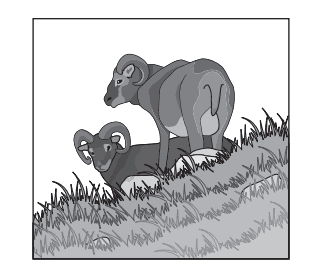
Wild Soay sheep live in a cold environment on a small Scottish island. The sheep used to be large because they gained extra weight during the summers in order to survive the harsh winters. A recent change in the island’s climate has caused grass to be available for a longer period each year, so survival conditions for the sheep have become less challenging.
Researchers who study these sheep have most likely observed a decrease in the wild Soay’s —
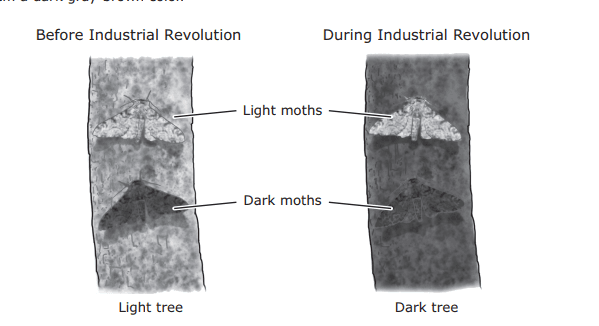
Before the Industrial Revolution in England, the peppered moth was commonly found on tree trunks that had light-colored lichen on the bark. Most of the peppered moths were a light gray-brown color similar to that of the lichen. A few of the moths had a mutation that made them a dark gray-brown color.
During the Industrial Revolution, coal-burning factories produced black soot that covered the trees and killed the lichen in and near cities. In these areas the number of dark peppered moths increased, while the number of light peppered moths decreased. What contributed to this change?
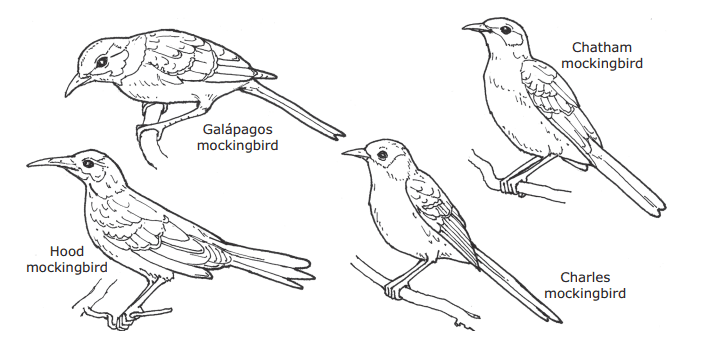
When Charles Darwin visited the Galápagos Islands in the 1800s, he observed many types of organisms that were similar but lived on different islands. The four species of mockingbirds found on the Galápagos Islands are shown below. Each species lives on a different island.
These species are very similar, but the Hood mockingbird has a longer beak than the other three species. Which of the following best explains this difference?
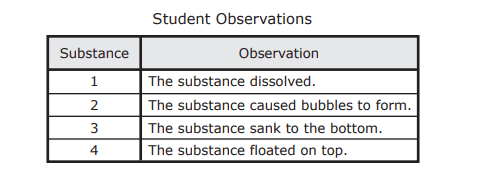
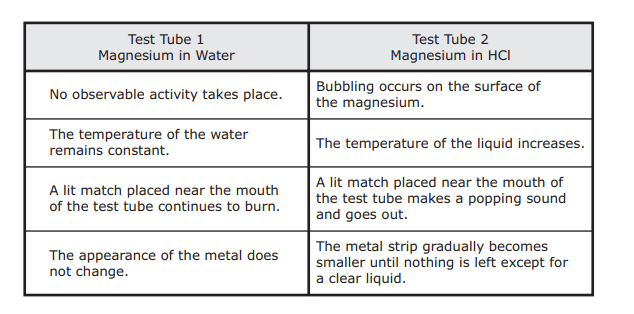
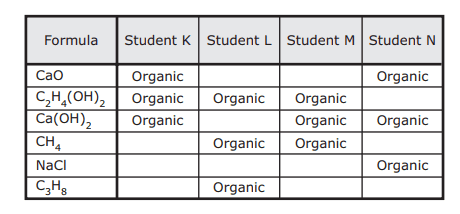
Some students in a chemistry lab conducted an investigation in which they added four different solid substances to separate beakers of water. They stirred the mixtures for one minute and then recorded their observations in the table below.
Which substance most likely caused a new substance to be formed when mixed with water?
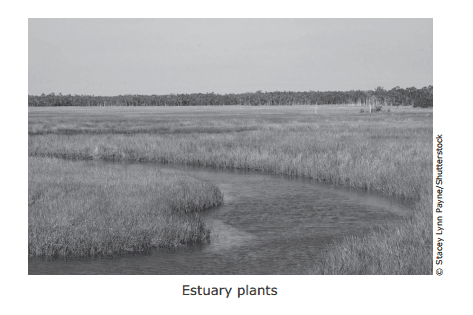
Galveston Bay, an estuary in Southeast Texas, is shown below. The amount of salt in the water changes with the tides. Sometimes the water is mostly freshwater, and sometimes it is mixed with saltwater. Various plant species live in this environment and provide a habitat for other organisms.
To successfully live in an estuary, a plant species must have an adaptation that allows it to —
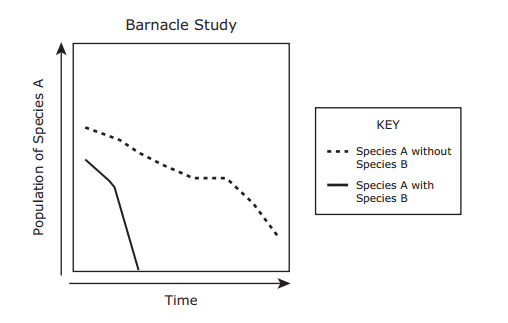
A scientist named Joseph Connell studied two species of barnacles on the shore of a Scottish island. In the area between the average tide and the neap high tide, he found that the population of Species A was smaller than that of Species B. He removed Species B from one area but left both Species A and B in a similar area. The graph below shows the results of this study.
Based on these data, which hypothesis was Connell most likely testing?
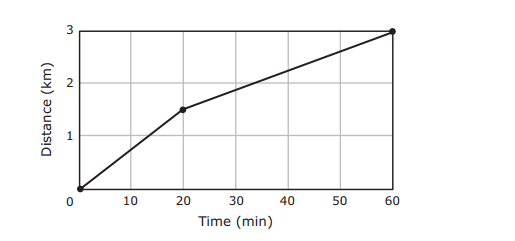
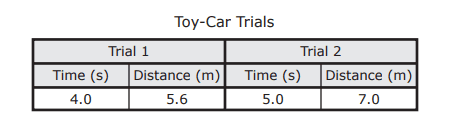
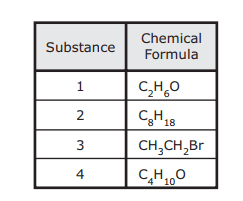
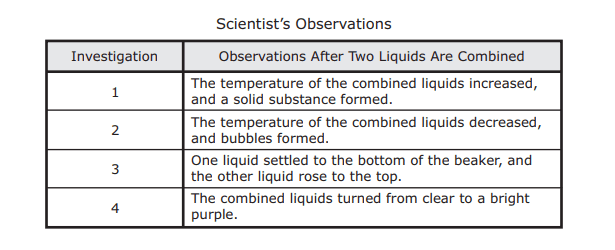
A scientist performed four investigations using eight different liquids. In each investigation, the scientist combined two of the liquids under a fume hood and recorded observations in the table below.
In which investigation is it least likely that the liquids reacted chemically?
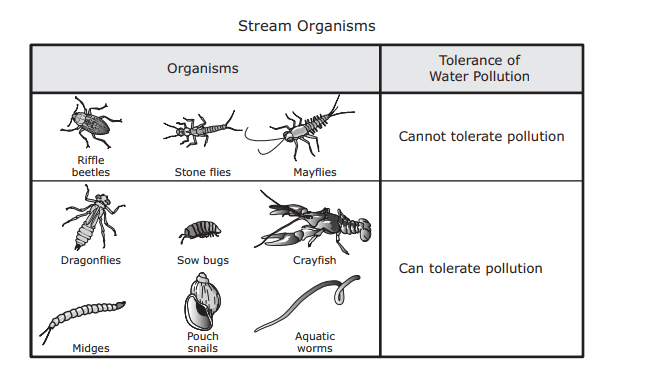
The types of small organisms that live on the bottom of streams can be good indicators of water pollution. The table below groups some organisms by their tolerance of pollution.
A certain stream that was historically clear and clean has become increasingly polluted with fertilizer waste over the years. Which of these describes a likely result of this pollution?
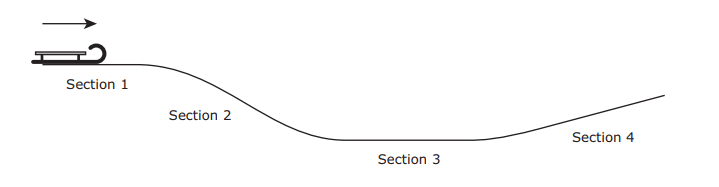


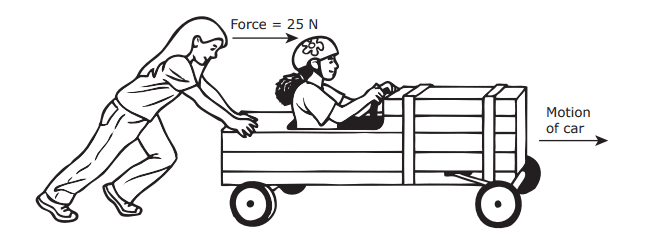
The diagram shows a homemade car being pushed with a force of 25 N. The force causes the car to move at a constant speed of 3 m/s.
What will happen if the force is changed to 35 N?

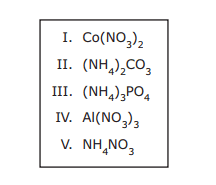

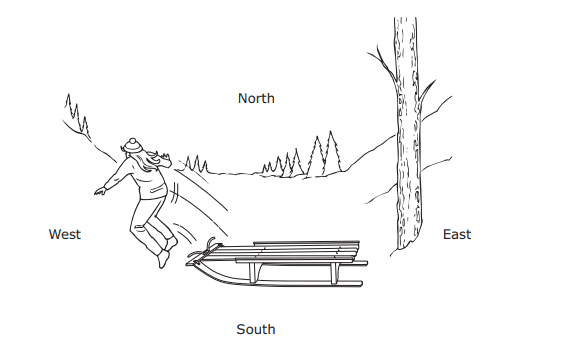

A student used a video camera to record another student dropping a marble through water in a graduated cylinder. The students watched the video in slow motion and made the observations shown below.
During which part or parts of the marble’s fall did the marble experience unbalanced forces?



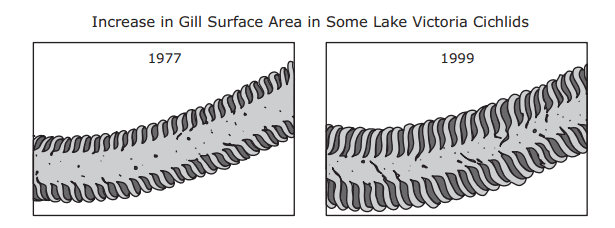
Lake Victoria in East Africa is home to many species of fish called cichlids. In 1954 the predatory Nile perch was introduced to Lake Victoria. The Nile perch became the dominant fish species in the lake by the mid-1980s. The number of cichlid species in the lake decreased as the Nile perch population increased. The perch preyed heavily on cichlid species that fed on algae and debris on the bottom of the lake. Algae in the lake increased, and oxygen levels decreased. The surface area of the gills of some cichlid species has increased in just over 20 years.
Which statement explains the increase in gill surface area seen in some of Lake Victoria’s cichlids?
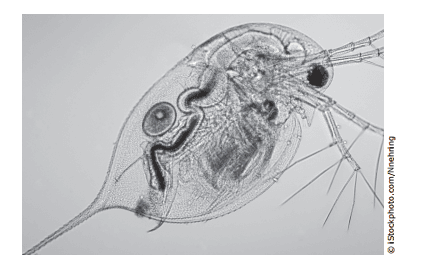
The organism in the photo is a daphnia, or water flea. Daphnia are tiny aquatic organisms that live in most freshwater habitats. Adults range from less than 1 to 5 mm in length. They are good swimmers and eat mostly algae. Daphnia become mature at 5 to 10 days, and an adult female can produce up to 100 eggs every 3 or 4 days during its 2-month life span. When harmful algae rapidly increase in the daphnia’s environment, daphnia can develop adaptations to tolerate the negative effects of the algae within 10 years.
What characteristic of the daphnia allows the population to adapt to environmental change?
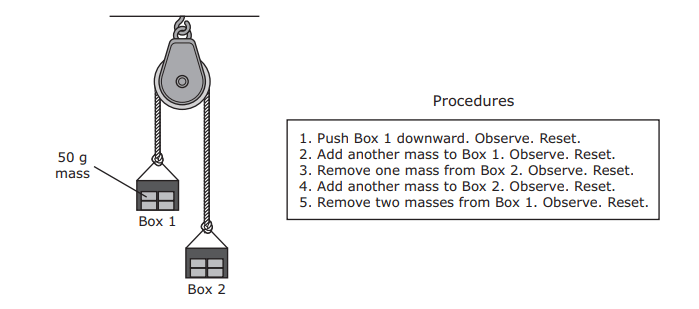
During a lab investigation, students added four 50 g masses to two boxes and arranged the boxes so that they were motionless on a pulley, as shown in the diagram. The students then followed the procedure described in the box. The students recorded their observations after each procedure and reset the pulley system to the original conditions.
During which procedures did students observe an unbalanced upward force on Box 1?
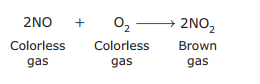
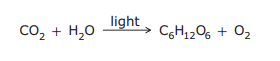
Nitrogen dioxide is a gas that can be generated by emissions from vehicles and factories. It can also be generated by natural sources, such as forest fires, lightning, and microbial activity in soil. The equation for producing nitrogen dioxide is shown below.
Which of these provides evidence that a chemical reaction occurs?