Loading...


Anatomy Final Mock Assessment
Quiz by Jason Wang
Tag the questions with any skills you have. Your dashboard will track each student's mastery of each skill.
Acquired Immunodeficiency Syndrome (AIDS) results from infection by the Human Immunodeficiency Virus (HIV); which best describes HIV?
Women who are or have been pregnant recently are at higher risk of developing this autoimmune disorder.
Recognition of self vs. non-self by the adaptive immune system in humans is accomplished in which of the following ways?
Which of these are not lymphocytes?
Experts recognize 4 courses of this chronic disease: progressive-relapsing, secondary progressive, primary progressive, and relapsing-remitting
A common course of treatment for this disorder are antiretrovirals and nucleoside reverse transcriptase inhibitors.
The airways beyond the larynx can be divided into two zones (the conducting zone and the respiratory zone) based on their functions. Which of the following is not a function of the conducting zone?
Bronchodilators are a class of drug often used in the treatment of asthma and COPD, which act on β-adrenergic receptors of the airways to induce smooth muscle relaxation. The anatomic distribution of these receptors is closely correlated to the function of each structural component of the lungs. What structural component(s) of the airway would be most affected by the use of a bronchodilator, and in what functional zone(s) are they found?
The partial pressures of carbon dioxide and oxygen in the atmosphere at sea level are 0.3 mmHg and 160 mmHg respectively, but the partial pressures of these gasses in blood leaving the lungs are 40 mmHg and 95 mmHg, respectively. What factor most likely accounts for this difference?
Interstitial lung disease (ILD) refers to a set of conditions which affect the pulmonary interstitium-- the area of tissue and space which lies between the alveoli and alveolar capillaries. What factor in the setting of severe ILD, would NOT decrease the extent to which oxygen passes from the air sacs of the lungs into the blood?
Which of the following causes a rightward shift in the oxygen dissociation curve?
Determine the state of the lung in the following H&E stain micrographs:
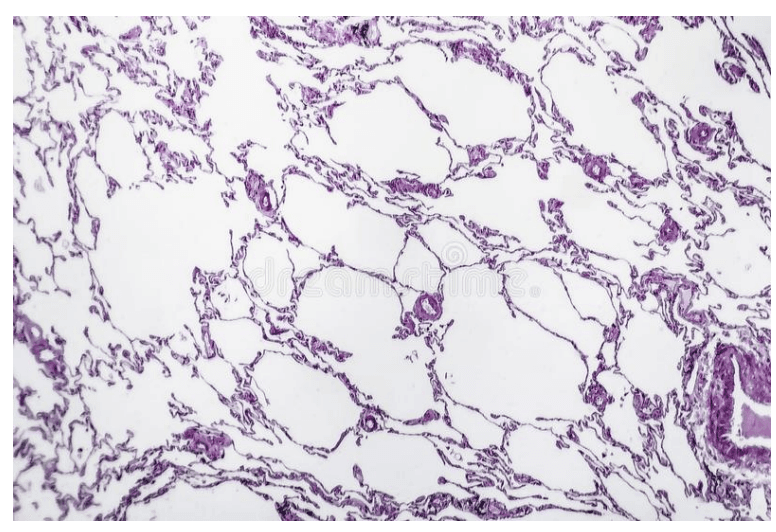
A patient presents with salty sweat, cough that produces sputum; frequent lung infections; intestinal blockage What disorder is described by the list above?
A patient has symptoms of nausea, loss of appetite and pain around the navel. What condition is the patient most likely to have?
GALT (Gut-associated lymphoid tissue) is more developed in the large intestine due to the large number of microorganisms that live in the lumen. Which layer of the large intestine is GALT in?
The Anal transition zone (ATZ) is a transition zone from the colorectal zone to the squamous zone. It thus represents a transition between the _________ of the rectal mucosa and the stratified squamous epithelium of the perianal skin.
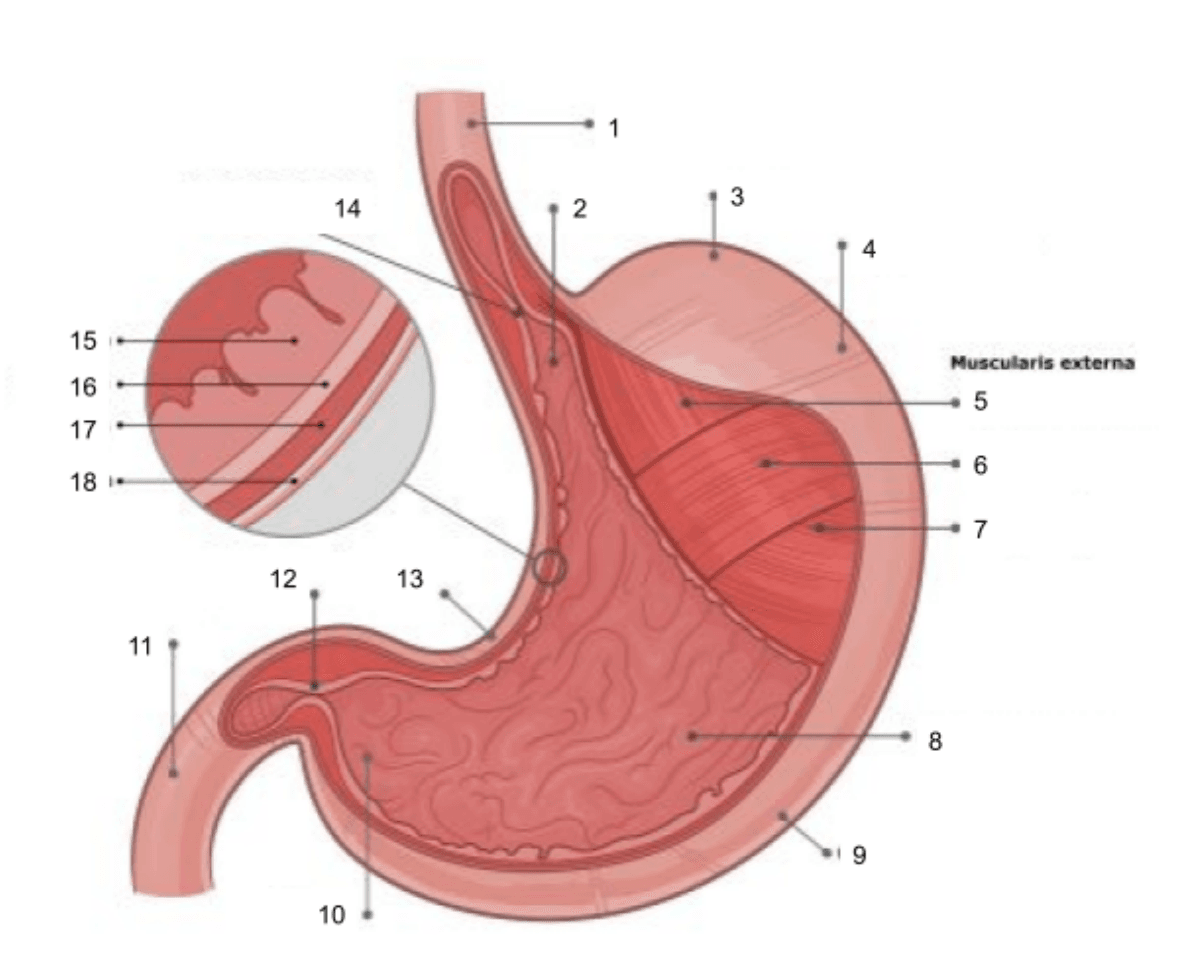
What is the body part with label 11?
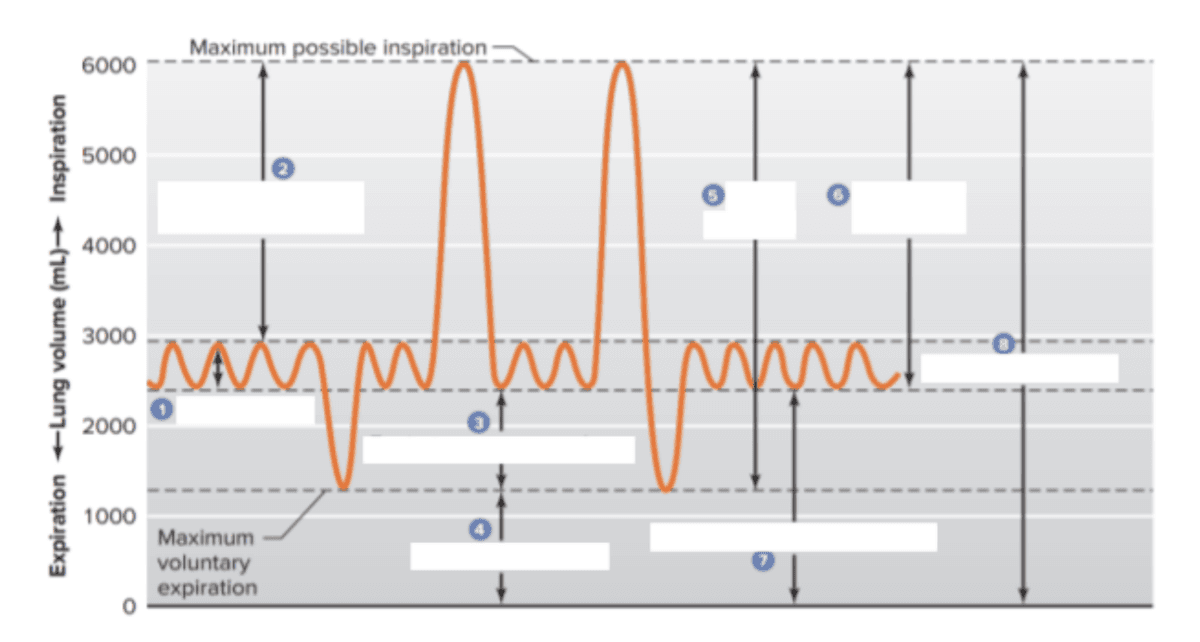
Based on the Spirometer, what does label 2 present?
Skin develops a burning rash when irritants are exposed to sunlight.
Which of the following statements is (are) true of the respiratory burst? Select ALL that apply.
A. The enzyme superoxide dismutase generates superoxide from oxygen
B. Patients with deficient NADPH oxidase are susceptible to both catalase-positive and catalase-negative organisms because they cannot produce hydrogen peroxide
C. Patients with deficient NADPH oxidase are not susceptible to catalase-negative microorganisms because they can co-opt the hydrogen peroxide generated by the microorganisms themselves
D. Deficiency of myeloperoxidase is more serious than NADPH oxidase deficiency because hypochlorous acid generation is needed for effective oxidation of bacterial DNA, lipids, and proteins
E. Aside from the NADPH oxidase-myeloperoxidase pathway, neutrophils have an additional pathway to generate reactive oxygen species from L-arginine
Case Study: Tim T. Beaver is addicted to McDonald’s – as a result, he has been obese for much of his life. Recently, Tim has been complaining of chest pain and a sour taste in the back of his mouth, as well as trouble swallowing. He goes to MIT Medical and an X-ray of his chest is taken. The X-ray is shown below. What abnormality is shown on the above X-ray?
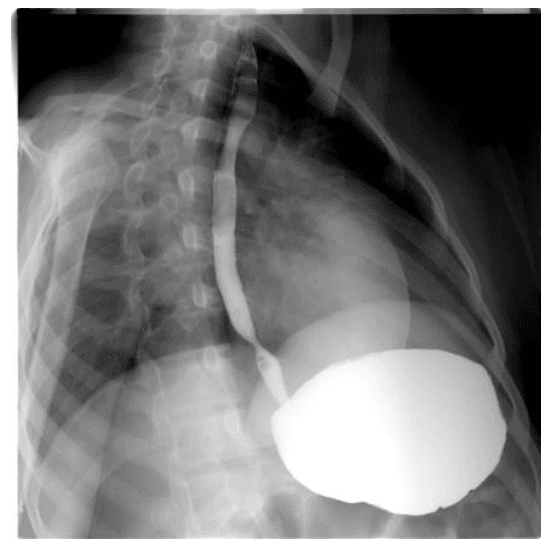
Which of Tim’s symptoms (chest pain, sour taste, trouble swallowing) is directly caused by the abnormality shown in the X-ray?
In addition to a chest X-ray, an upper endoscopy is performed and a biopsy of the esophagus. Staining is performed and the results are shown on the next page. What is B?
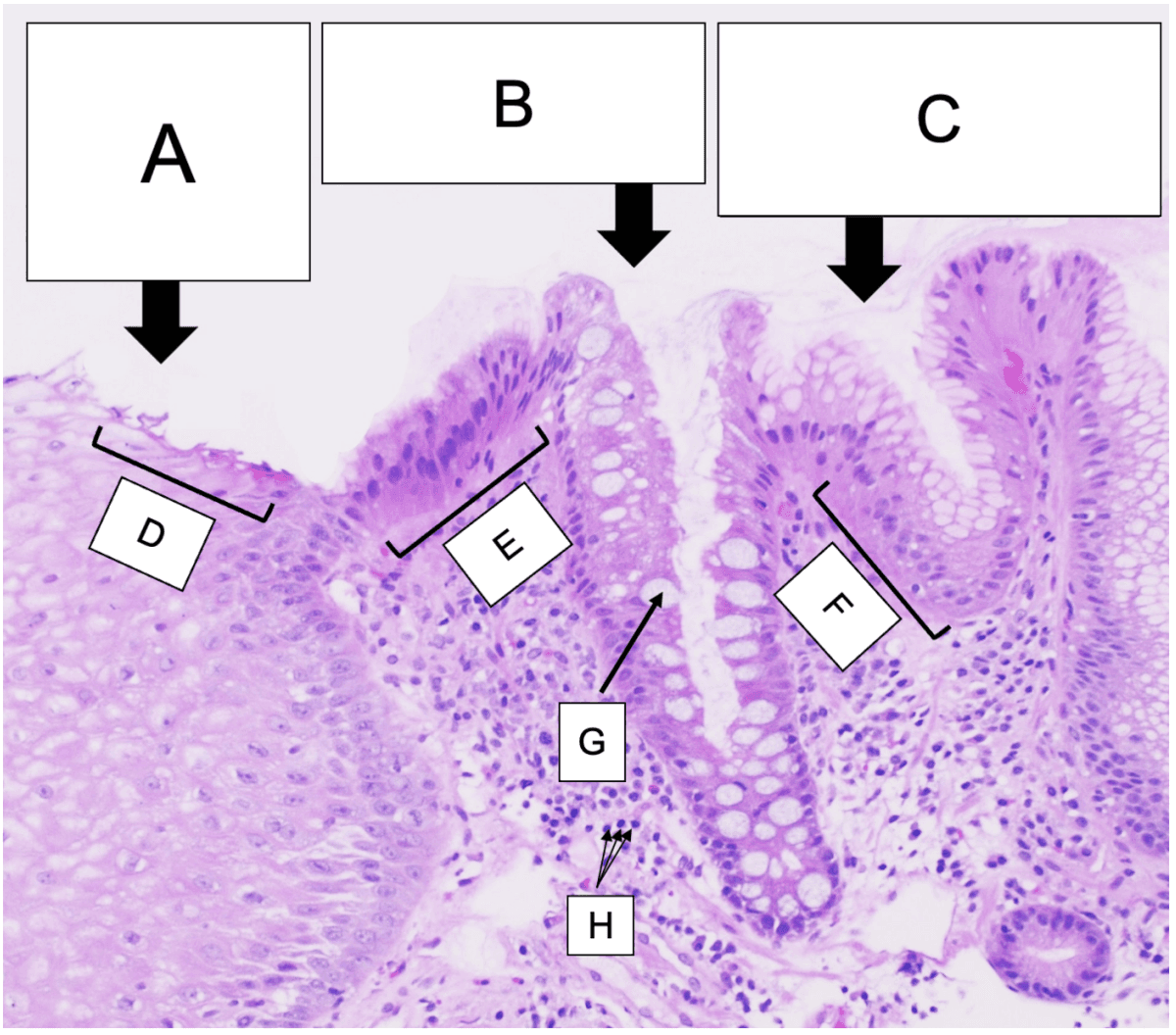
What is the above condition (as seen in the histology) known as?
What is Anatomy?