Loading...


Animal Science Meat Judging
Quiz by Bryson Smith
Customize this quiz to suit your class
Instantly translate to 100+ languages
Tag the questions with any skills you have. Your dashboard will track each student's mastery of each skill.
Give this quiz to my class
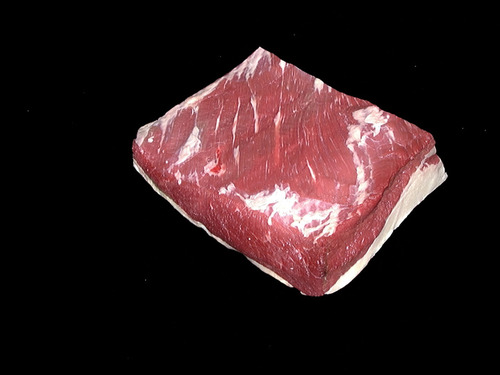
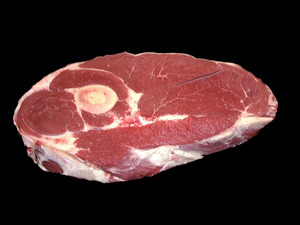



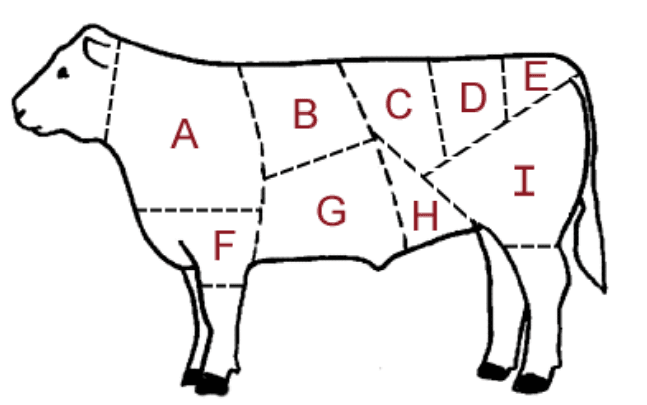 BSAA Animal Science - Muscle and Meat Biology - Chapter 3One of the phenomena which had peculiarly attracted my attention was the structure of the human frame1, and, indeed, any animal endued with2 life. Whence3, I often asked myself, did the principle of life proceed? It was a bold question, and one which has ever been considered as a mystery; yet with how 5 many things are we upon the brink of4 becoming acquainted, if cowardice or carelessness did not restrain our inquiries. I revolved5 these circumstances in my mind, and determined thenceforth to apply myself more particularly to those branches of natural philosophy which relate to physiology. Unless I had been animated by an almost supernatural enthusiasm, my application to this study 10 would have been irksome, and almost intolerable. To examine the causes of life, we must first have recourse to death. I became acquainted with the science of anatomy: but this was not sufficient; I must also observe the natural decay and corruption of the human body. In my education my father had taken the greatest precautions that my mind should be impressed with no supernatural horrors. 15 I do not ever remember to have trembled at a tale of superstition, or to have feared the apparition of a spirit. Darkness had no effect upon my fancy; and a churchyard was to me merely the receptacle of bodies deprived of life, which, from being the seat of beauty and strength, had become food for the worm. Now I was led to examine the cause and progress of this decay, and forced to spend 20 days and nights in vaults and charnel-houses6. My attention was fixed upon every object the most insupportable to the delicacy of the human feelings. I saw how the fine form of man was degraded and wasted; I beheld the corruption of death succeed to the blooming cheek of life; I saw how the worm inherited the wonders of the eye and brain. I paused, examining and analysing all the minutiae 25 of causation, as exemplified in the change from life to death, and death to life, until from the midst of this darkness a sudden light broke in upon me – a light so brilliant and wondrous, yet so simple, that while I became dizzy with the immensity of the prospect which it illustrated, I was surprised that among so many men of genius who had directed their inquiries towards the same science, 30 that I alone should be reserved to discover so astonishing a secret. Remember, I am not recording the vision of a madman. The sun does not more certainly shine in the heavens, than that which I now affirm is true. Some miracle might have produced it, yet the stages of the discovery were distinct and probable. After days and nights of incredible labour and fatigue, I succeeded in 35 discovering the cause of generation and life; nay7, more I became myself capable of bestowing8 animation upon lifeless matter. The astonishment which I had at first experienced on this discovery soon gave place to delight and rapture. After so much time spent in painful labour, to arrive at once at the summit of my desires was the most gratifying 40 consummation of my toils9. But this discovery was so great and overwhelming10 that all the steps by which I had been progressively led to it were obliterated, and I beheld only the result. What had been the study and desire of the wisest men since the creation of the world was now within my grasp. Not that, like a magic scene, it all opened upon me at once: the information I had obtained was of a 45 nature rather to direct my endeavours11 so soon as I should point them towards the object of my search, than to exhibit that object already accomplished. I was like the Arabian who had been buried with the dead, and found a passage to life, aided only by one glimmering, and seemingly ineffectual12, light.Some Arctic Dinos Lived in Herds
By Sid Perkins
Just as interesting, however, is how this was discovered. Scientists didn’t look at a single fossil bone.
Instead, they analyzed a large number of preserved footprints on a mountainside located toward the
southern end of central Alaska.
Anthony Fiorillo works at the Perot Museum of Nature and Science in Dallas, Texas. As a vertebrate
paleontologist, he studies the fossils of creatures with backbones. In 2007, he was part of a research
team exploring Denali National Park. “We rounded the corner and there they were,” he recalls.
Thousands of footprints had been preserved in stone. “It was amazing.”
Dinosaurs died out more than 65 million years ago (not
counting birds, their modern-day relatives). So, it’s a bit
surprising that scientists know so much about these
ancient creatures. Now, a new study reveals that a certain
type of duckbilled dinosaur lived in the Arctic year-round.
These animals also traveled in herds that included many
age groups, they find. The creatures even appear to have
gone through a “teenage growth spurt.”
Those tracks pepper a steep patch of exposed rock about twice as
long as a football field and up to 60 meters (roughly 200 feet) wide.
They sit at least 160 kilometers (100 miles) north of the Gulf of Alaska.
Between 69 million and 72 million years ago, that now-rocky material
was muddy sediment on a floodplain near a seacoast, Fiorillo explains.
The hadrosaurs walked across the squishy mud. Later, the footprints
they left turned to stone.
Previous studies suggested adult duckbills took care of their young,
says Fiorillo. The new evidence that these dinosaurs truly traveled in
herds with multiple age groups confirms that parents cared for their
young well beyond the time they left the nest, his team concludes. The
researchers published their findings June 30 in Geology.
© Science News for Students
Thousands of tracks cover this
rocky mountainside in Alaska’s
Denali National Park. They
provide a wealth of information
about the size, age and lifestyle
of certain dinosaurs.
COURTESY OF PEROT MUSEUM OF
NATURE AND SCIENCE
EVIDENCE FOR HERDS O F DINOSAURS
Small meat-eating dinosaurs called theropods had left behind a few of the tracks that Fiorillo’s team
found in Denali. Birds had left some others. But the vast majority came from creatures called
hadrosaurs. These large plant-eating duckbilled dinosaurs had been quite common during the
Cretaceous Period. That helps explain one of their nicknames: “cattle of the Cretaceous.”
For the new study, the researchers focused only on the hadrosaur tracks. More than half of the
footprints were preserved so well that they had clear impressions of the skin on the dinosaurs’ feet.
Most tracks had a similar level of preservation. That suggests all were probably left within a short
period. Other fossils in the nearby rocks, including insect burrows, suggest these hadrosaurs had left
their footprints during the summer. These are trace fossils — evidence of ancient life other than a
preserved carcass or bone.
At the time these dinosaurs lived, Fiorillio says, the average temperature in the warmest months was
between 10° and 12° Celsius (50° and 54° Fahrenheit). That’s about what conditions are like today
along the border between Canada and the lower 48 U.S. states, he notes.
The team measured a large sample of the duckbills’ footprints. They fell into four distinct size ranges.
The largest tracks, presumably made by adults, measured about 64 centimeters (25 inches) across. The
smallest tracks, 8 centimeters (3 inches) wide, were likely left by young duckbills. They would have
been no more than a year old. Tracks of two other size groups were probably made by juveniles and
near-adults.
These data suggest the community of hadrosaurs included four different age groups.
© Science News for Students
A hadrosaur footprint made
roughly 70 million years ago. For
scale, the long blue bar at right is
10 centimeters long; each small
blue or white bar measures 1
centimeter.
COURTESY OF PEROT MUSEUM OF NATURE
AND SCIENCE
© Science News for Students
THESE DINOSAURS DIDN’T MIGRATE
About 84 percent of the tracks sampled for the new study had been left by older hadrosaurs — adults or
near-adults. Roughly 13 percent came from the youngest members of the herd. And a mere 3 percent
came from herd members considered to be juveniles, says Fiorillo. The rarity of tracks by these tweens
suggests that the young of this species had a rapid growth spurt. If true, they would have spent relatively
little time at this vulnerable size — and therefore left very few tracks.
“What’s really neat is how many small tracks there are,” notes Anthony Martin. An ichnologist — or
expert in trace fossils — he works at Emory University in Atlanta, Ga.
Other scientists had analyzed fossil bones from duckbills. These studies had hinted that the equivalent of
adolescent hadrosaurs would have experienced growth spurts. But the new findings are “the best
evidence that I’ve seen,” says Eric Snively. He’s a vertebrate paleontologist at the University of Wisconsin-
La Crosse. “This is a great study,” he adds, “and further evidence that juvenile hadrosaurs grew up in an
eye-blink.”
Also previously, researchers had proposed that Arctic dinosaurs migrated farther south for the winter.
That’s because even if the region was much warmer than it is today, nights in the high Arctic would have
been 24 hours long. So, with no sunshine for several months, Alaska would have had long periods of very
bleak, chilly weather.
But finding juveniles in the herd
strongly suggests that these
dinosaurs remained in the Arctic all
year. That’s because adolescents and
preadolescents wouldn’t have had
the strength or stamina to make
those long treks, Fiorillo maintains.
Field work is often harsh. Paleontologists studying the dinosaur
footprints here on an Alaskan mountainside sometimes worked
in cold and fog.
COURTESY OF PEROT MUSEUM OF NATURE AND SCIENCE
© Science News for Students
The presence of very young dinosaurs might have been expected, he notes: If this were a nesting region,
the babies would have hatched sometime just before summer. And remember, that’s when these tracks
were left. But that wouldn’t explain the juveniles, he says.
The team’s findings “suggest that these dinosaurs were overwintering in Alaska somehow,” says Snively.
At the time, the average temperature in the region remained above freezing even during the winter, he
notes. But, he adds, “this study raises interesting issues about how the dinosaurs could live in the region
when it was pretty dark for several months at a time.”ANIMAL SCIENCEAnimal Science QuestionsAnimal Science Test Review CORRECTEDAnimal Science Unit 1 ReviewAnimal Science Capstone TSA
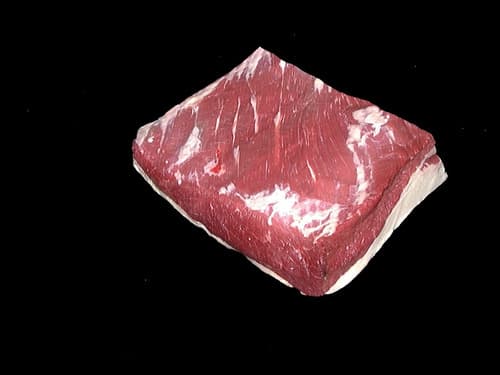
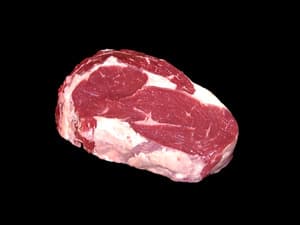
BSAA Animal Science - Muscle and Meat Biology - Chapter 3One of the phenomena which had peculiarly attracted my attention was the structure of the human frame1, and, indeed, any animal endued with2 life. Whence3, I often asked myself, did the principle of life proceed? It was a bold question, and one which has ever been considered as a mystery; yet with how 5 many things are we upon the brink of4 becoming acquainted, if cowardice or carelessness did not restrain our inquiries. I revolved5 these circumstances in my mind, and determined thenceforth to apply myself more particularly to those branches of natural philosophy which relate to physiology. Unless I had been animated by an almost supernatural enthusiasm, my application to this study 10 would have been irksome, and almost intolerable. To examine the causes of life, we must first have recourse to death. I became acquainted with the science of anatomy: but this was not sufficient; I must also observe the natural decay and corruption of the human body. In my education my father had taken the greatest precautions that my mind should be impressed with no supernatural horrors. 15 I do not ever remember to have trembled at a tale of superstition, or to have feared the apparition of a spirit. Darkness had no effect upon my fancy; and a churchyard was to me merely the receptacle of bodies deprived of life, which, from being the seat of beauty and strength, had become food for the worm. Now I was led to examine the cause and progress of this decay, and forced to spend 20 days and nights in vaults and charnel-houses6. My attention was fixed upon every object the most insupportable to the delicacy of the human feelings. I saw how the fine form of man was degraded and wasted; I beheld the corruption of death succeed to the blooming cheek of life; I saw how the worm inherited the wonders of the eye and brain. I paused, examining and analysing all the minutiae 25 of causation, as exemplified in the change from life to death, and death to life, until from the midst of this darkness a sudden light broke in upon me – a light so brilliant and wondrous, yet so simple, that while I became dizzy with the immensity of the prospect which it illustrated, I was surprised that among so many men of genius who had directed their inquiries towards the same science, 30 that I alone should be reserved to discover so astonishing a secret. Remember, I am not recording the vision of a madman. The sun does not more certainly shine in the heavens, than that which I now affirm is true. Some miracle might have produced it, yet the stages of the discovery were distinct and probable. After days and nights of incredible labour and fatigue, I succeeded in 35 discovering the cause of generation and life; nay7, more I became myself capable of bestowing8 animation upon lifeless matter. The astonishment which I had at first experienced on this discovery soon gave place to delight and rapture. After so much time spent in painful labour, to arrive at once at the summit of my desires was the most gratifying 40 consummation of my toils9. But this discovery was so great and overwhelming10 that all the steps by which I had been progressively led to it were obliterated, and I beheld only the result. What had been the study and desire of the wisest men since the creation of the world was now within my grasp. Not that, like a magic scene, it all opened upon me at once: the information I had obtained was of a 45 nature rather to direct my endeavours11 so soon as I should point them towards the object of my search, than to exhibit that object already accomplished. I was like the Arabian who had been buried with the dead, and found a passage to life, aided only by one glimmering, and seemingly ineffectual12, light.Some Arctic Dinos Lived in Herds
By Sid Perkins
Just as interesting, however, is how this was discovered. Scientists didn’t look at a single fossil bone.
Instead, they analyzed a large number of preserved footprints on a mountainside located toward the
southern end of central Alaska.
Anthony Fiorillo works at the Perot Museum of Nature and Science in Dallas, Texas. As a vertebrate
paleontologist, he studies the fossils of creatures with backbones. In 2007, he was part of a research
team exploring Denali National Park. “We rounded the corner and there they were,” he recalls.
Thousands of footprints had been preserved in stone. “It was amazing.”
Dinosaurs died out more than 65 million years ago (not
counting birds, their modern-day relatives). So, it’s a bit
surprising that scientists know so much about these
ancient creatures. Now, a new study reveals that a certain
type of duckbilled dinosaur lived in the Arctic year-round.
These animals also traveled in herds that included many
age groups, they find. The creatures even appear to have
gone through a “teenage growth spurt.”
Those tracks pepper a steep patch of exposed rock about twice as
long as a football field and up to 60 meters (roughly 200 feet) wide.
They sit at least 160 kilometers (100 miles) north of the Gulf of Alaska.
Between 69 million and 72 million years ago, that now-rocky material
was muddy sediment on a floodplain near a seacoast, Fiorillo explains.
The hadrosaurs walked across the squishy mud. Later, the footprints
they left turned to stone.
Previous studies suggested adult duckbills took care of their young,
says Fiorillo. The new evidence that these dinosaurs truly traveled in
herds with multiple age groups confirms that parents cared for their
young well beyond the time they left the nest, his team concludes. The
researchers published their findings June 30 in Geology.
© Science News for Students
Thousands of tracks cover this
rocky mountainside in Alaska’s
Denali National Park. They
provide a wealth of information
about the size, age and lifestyle
of certain dinosaurs.
COURTESY OF PEROT MUSEUM OF
NATURE AND SCIENCE
EVIDENCE FOR HERDS O F DINOSAURS
Small meat-eating dinosaurs called theropods had left behind a few of the tracks that Fiorillo’s team
found in Denali. Birds had left some others. But the vast majority came from creatures called
hadrosaurs. These large plant-eating duckbilled dinosaurs had been quite common during the
Cretaceous Period. That helps explain one of their nicknames: “cattle of the Cretaceous.”
For the new study, the researchers focused only on the hadrosaur tracks. More than half of the
footprints were preserved so well that they had clear impressions of the skin on the dinosaurs’ feet.
Most tracks had a similar level of preservation. That suggests all were probably left within a short
period. Other fossils in the nearby rocks, including insect burrows, suggest these hadrosaurs had left
their footprints during the summer. These are trace fossils — evidence of ancient life other than a
preserved carcass or bone.
At the time these dinosaurs lived, Fiorillio says, the average temperature in the warmest months was
between 10° and 12° Celsius (50° and 54° Fahrenheit). That’s about what conditions are like today
along the border between Canada and the lower 48 U.S. states, he notes.
The team measured a large sample of the duckbills’ footprints. They fell into four distinct size ranges.
The largest tracks, presumably made by adults, measured about 64 centimeters (25 inches) across. The
smallest tracks, 8 centimeters (3 inches) wide, were likely left by young duckbills. They would have
been no more than a year old. Tracks of two other size groups were probably made by juveniles and
near-adults.
These data suggest the community of hadrosaurs included four different age groups.
© Science News for Students
A hadrosaur footprint made
roughly 70 million years ago. For
scale, the long blue bar at right is
10 centimeters long; each small
blue or white bar measures 1
centimeter.
COURTESY OF PEROT MUSEUM OF NATURE
AND SCIENCE
© Science News for Students
THESE DINOSAURS DIDN’T MIGRATE
About 84 percent of the tracks sampled for the new study had been left by older hadrosaurs — adults or
near-adults. Roughly 13 percent came from the youngest members of the herd. And a mere 3 percent
came from herd members considered to be juveniles, says Fiorillo. The rarity of tracks by these tweens
suggests that the young of this species had a rapid growth spurt. If true, they would have spent relatively
little time at this vulnerable size — and therefore left very few tracks.
“What’s really neat is how many small tracks there are,” notes Anthony Martin. An ichnologist — or
expert in trace fossils — he works at Emory University in Atlanta, Ga.
Other scientists had analyzed fossil bones from duckbills. These studies had hinted that the equivalent of
adolescent hadrosaurs would have experienced growth spurts. But the new findings are “the best
evidence that I’ve seen,” says Eric Snively. He’s a vertebrate paleontologist at the University of Wisconsin-
La Crosse. “This is a great study,” he adds, “and further evidence that juvenile hadrosaurs grew up in an
eye-blink.”
Also previously, researchers had proposed that Arctic dinosaurs migrated farther south for the winter.
That’s because even if the region was much warmer than it is today, nights in the high Arctic would have
been 24 hours long. So, with no sunshine for several months, Alaska would have had long periods of very
bleak, chilly weather.
But finding juveniles in the herd
strongly suggests that these
dinosaurs remained in the Arctic all
year. That’s because adolescents and
preadolescents wouldn’t have had
the strength or stamina to make
those long treks, Fiorillo maintains.
Field work is often harsh. Paleontologists studying the dinosaur
footprints here on an Alaskan mountainside sometimes worked
in cold and fog.
COURTESY OF PEROT MUSEUM OF NATURE AND SCIENCE
© Science News for Students
The presence of very young dinosaurs might have been expected, he notes: If this were a nesting region,
the babies would have hatched sometime just before summer. And remember, that’s when these tracks
were left. But that wouldn’t explain the juveniles, he says.
The team’s findings “suggest that these dinosaurs were overwintering in Alaska somehow,” says Snively.
At the time, the average temperature in the region remained above freezing even during the winter, he
notes. But, he adds, “this study raises interesting issues about how the dinosaurs could live in the region
when it was pretty dark for several months at a time.”ANIMAL SCIENCEAnimal Science QuestionsAnimal Science Test Review CORRECTEDAnimal Science Unit 1 ReviewAnimal Science Capstone TSA