Bio Unit 17-18 Evolution & Natural Selection
Quiz by Lisa Vaught
Feel free to use or edit a copy
includes Teacher and Student dashboards
Measure skillsfrom any curriculum
Measure skills
from any curriculum
Tag the questions with any skills you have. Your dashboard will track each student's mastery of each skill.
With a free account, teachers can
- edit the questions
- save a copy for later
- start a class game
- automatically assign follow-up activities based on students’ scores
- assign as homework
- share a link with colleagues
- print as a bubble sheet
40 questions
Show answers
- Q1What is natural selection?When a few organisms move to a new location and start a new population.When organisms that are BEST adapted/suited to the environment survive and reproduce the most.When organisms need to adapt to a changing environment to survive.When organisms acquire traits to match a changing environment30s
- Q2
Sort the following types of reproduction into the correct categories:
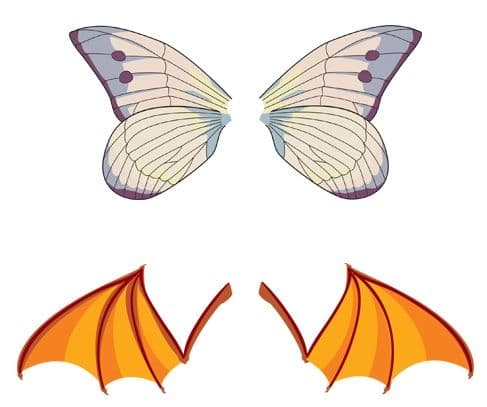
Users sort answers between categoriesSorting30s - Q3What three things fit the picture aboveThey are Homologous Body structures Coevolution and they did NOT share a Common Ancestor.They are Anaogous Body Structures, Coevolution, and they shared a common ancestorThey are Analogous Body structures, Convergent Evolution, and they did NOT share a common ancestorThey are Homologous Body Structures, Divergent Evolution and they DID share a common ancestor30s
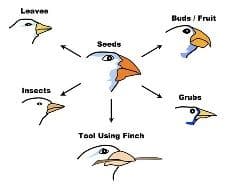
- Q4Populations evolve and change in response to what?The changing environment.Acquired TraitsOrganisms Choosing which trait works best.Artificial Selection30s
- Q5When 2 organisms are in a close relationship, like predators and prey or insects and flower, and when 1 organisms changes, the other organism changes in response, that is what type of evolution?Artificial SelectionCoevolutionConvergent EvolutionDivergent Evolution30s
- Q6What type of evolution is shown?Convergent EvolutionDivergent EvolutionUse and DisuseCoevolution30s
- Q7What is carrying capacity?The average number of organisms an environment can carry/support at that time.The lowest number of organisms the environment has ever carried/supported.The highest number of organisms the environment has ever carried/supported.The number of organisms that will start dying off when resources run out.30s
- Q8What is an important mechanism for new traits to appear and thus evolution to occur, but is not the MAIN mechanism?Carrying CapacityMutationsLimited resourcesArtificial Selection30s
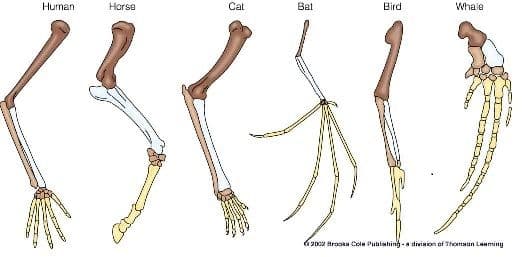
- Q9What 3 statements fit the picture aboveThey are Analogous Body Structures, Convergent Evolution and they did NOT share a common ancestor.They are Homologous Body Structures, Divergent Evolution, and they DID share a common ancestor.They are Analogous Body Structures, Coevolution and they DID share a common AncestorThey are Homologous Body Structures, Coveolution and they did share a common ancestor.30s
- Q10What is Evolution?When humans choose which organism will reproduce based on desired traits in the offspring.When all organisms adapt because they need to when the environment changes.When organisms acquire the traits they need to survive when the environment changes.The process of change that occurs over time in a population, driven by natural selection.30s
- Q11Punctuated Equilibrium is the type of evolution that occurs how:Constant rapid changeLong Periods of No change followed by short periods of rapid change.Long periods of rapid change followed by short periods of no changeConstant, slow and steady change30s
- Q12Gradualism is the type of evolution that has:Long Periods of No change followed by short periods of rapid change.Constant, slow, and steady change.Long periods of rapid change followed by short periods of no changeConstant rapid change30s
- Q13What is a population?All of the different species living in a specific ecosystem.Only the consumers in an ecosystem.A group of interbreeding individuals of a single species.All of the Abiotic and Biotic Factors in an ecosystem30s
- Q14When scientists can determine a fossil is 4 billion years old by measuring the radioactive carbon in the fossil, they used what method of dating?Relative datingAbsolute DatingOrder Dating30s
- Q15When 2 organisms are in the same area, but don't interbreed because they have different mating rituals, what type of mechanism is this?Reproductive IsolationGeographical IsolationBehavioral IsolationTemporal Isolation30s