Loading...


C++ TVL REVIEWER
Quiz by Rhoanna Shane Malabaguio
Tag the questions with any skills you have. Your dashboard will track each student's mastery of each skill.
What is this operation does this shape represents?
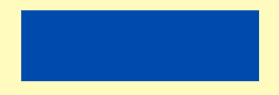
Decision
Terminator
Data
Process
What is this operation does this shape represents?

Flow line
Off - Page connector
Preparation
Process
What is this operation does this shape represents?

What is this operation does this shape represents?

What is this operation does this shape represents?

What is this operation does this shape represents?

What is this operation does this shape represents?

What is this operation does this shape represents?

What is this operation does this shape represents?

What is this operation does this shape represents?
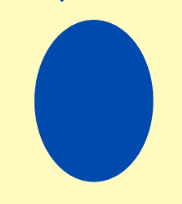
___________ refers to the reasons why a program works the way it does. It is the logic or the reasons behind program instructions.
________________________ provides the tools needed to design the right solution by helping you define and identify the problem, its requirements and the needed solution to solve it.
Algorithm, Pseudocode, Flowchat are the 3 tools in PCF
________ is a type of diagram that represents a workflow or process.
A flowchart can also be defined as a diagrammatic representation of an algorithm, a step-by-step approach to solving a task.
use ________ to show the flow of process
use _________ for a decision point. This usually contains a question
use _________ to indicate the continuation of the process to another flowchart
use _________ for start or end points
use _________ to represent a process
use _________ for input and output of a process
use _________ for preparation or indicate a change in the process
ALGORITHM is a type of a programming language
An algorithm is a step-by-step instruction for solving a problem that is precise yet general.
PSEUDOCODE is Set of instructions that mimic programming language instructions but IS a programming language.
Pseudocode is a simplified version of programming codes, written in plain English language and used to outline a program after its implementation.
Flow chart is a Visual program design tool
words that cannot be used as identifiers or variable names because they have special function in a C/C++ program
values that do not change at a given scope
names that are used to reference variables, functions, labels, and user-defined objects.
Contants are classified with Numeric and Non Numeric constants
quantities that are enclosed in a pair of double quotes
symbols that tell the compiler to perform specific mathematical or logical manipulations
symbols that have special function in a C++ program
IS THE OPERATION THAT GIVES THE REMAINDER OF A DIVISION OF TWO VALUES
Returns true if both statements are true (and, or, not)
Reverse the result, returns false if the result is true (and, or, not)
Returns true if one statement is true (and, or, not)
These operators increase or reduce by one the value is stored in a variable. They are equivalent to +=1 and to -=1, respectively
Conditional Operators example
Less than: a < b
Greater than or equal to: a >= b
Equal to a = b
Less than or equal to: a < b =
Use ELSE to specify a block of code to be executed, if a specified condition is true
Use ELSE IF to specify a new condition to test, if the first condition is false
Use ELSE to specify a block of code to be executed, if the same condition is false
x + y
--x
x % y
x / y
stores values with two states: true or false
stores floating point numbers, with decimals, suchas 19.99 or -19.99
stores single characters, such as 'a' or 'B', values are surrounded by single quotes
stores integers (whole numbers), without decimals, such as 123 or -123
stores text, such as "Hello World", values are surrounded by double quotes
