Loading...


Category 4 Science (8th Grade)
Quiz by Jennifer Davis
Track each student's skills and progress in your Mastery dashboards
The diagram shows a pond ecosystem. What is true of the marsh grass and the grasshopper?
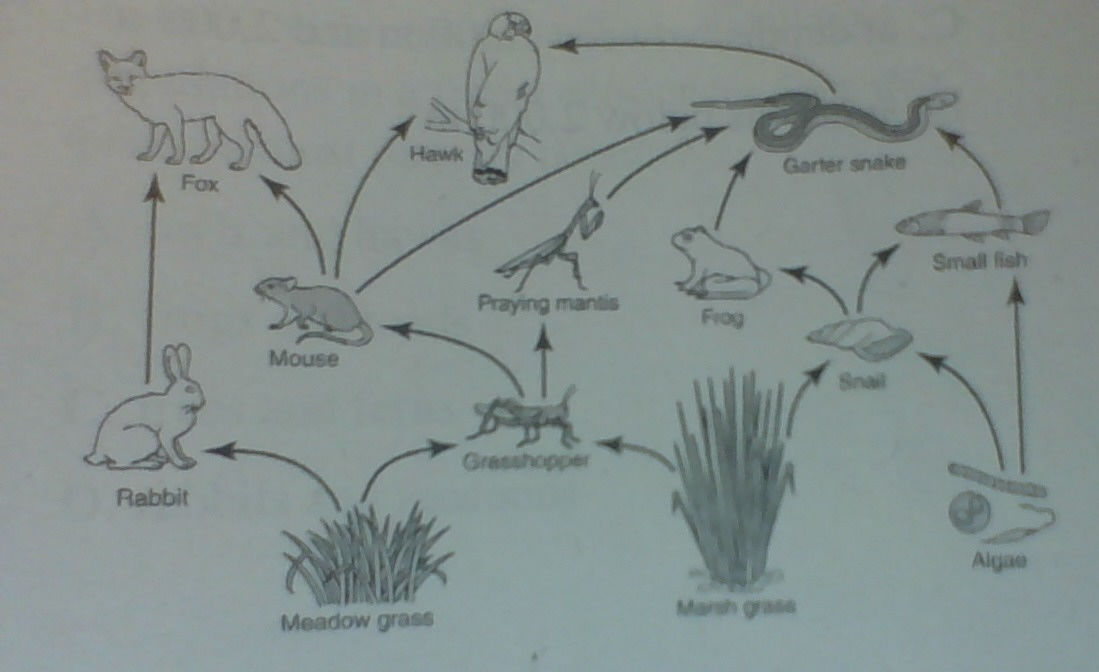
The marsh grass is a herbivore and the grasshopper is a carnivore.
The marsh grass is a predator and the grasshopper is a prey.
The marsh grass is a producer and the grasshopper is a consumer.
The marsh grass is a host and the grasshopper is a parasite.
You are investigating the relationship between an ear tick and a pronghorn in a prairie. What type of relationship are you most likely investigating?
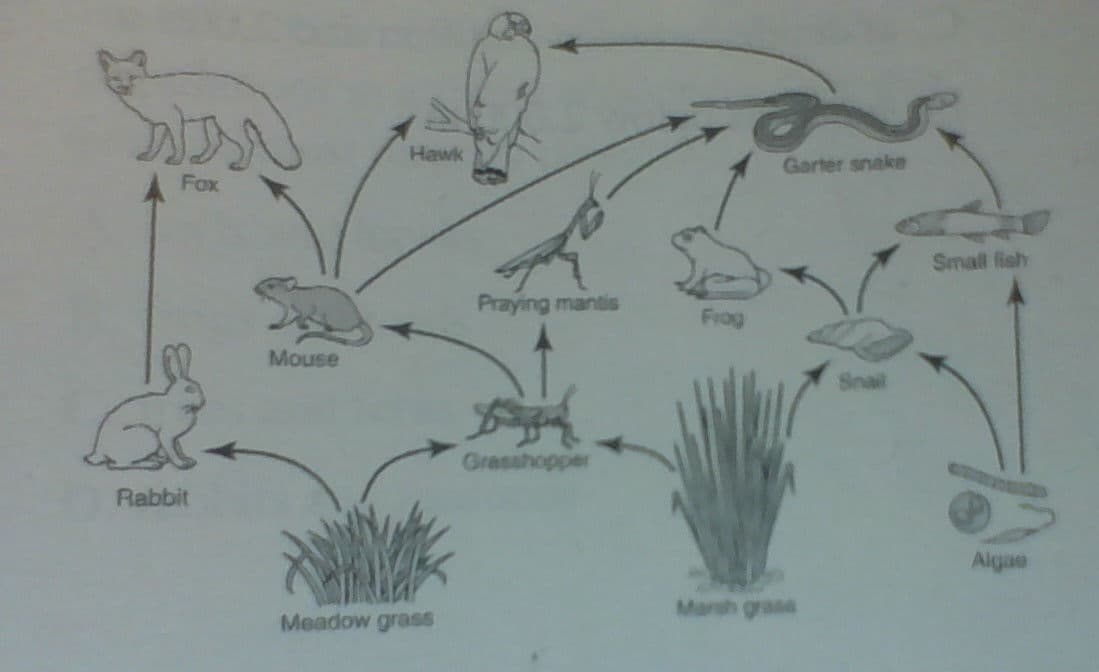
The diagram shows a pond ecosystem. What is true of the marsh grass and the grasshopper?
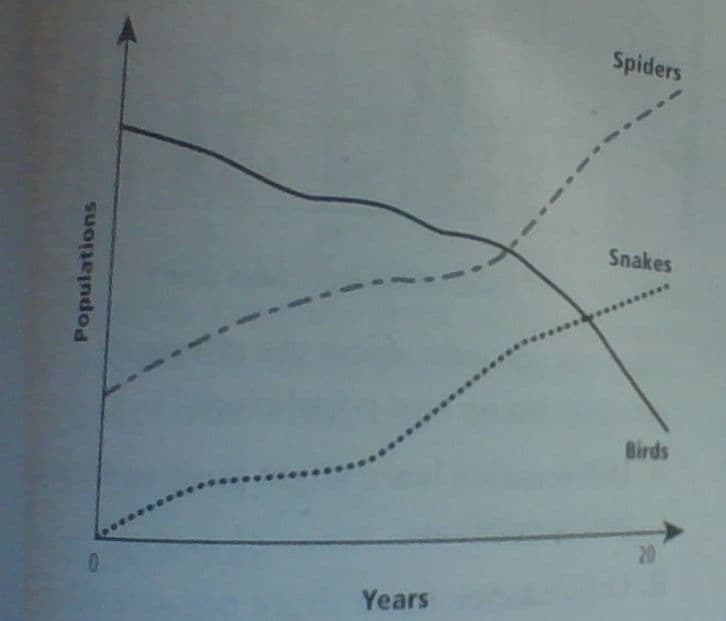
The following graph shows what happens to the population of native birds and spiders on a small island after a new species of snake is introduced to the island. Based on the graph, what can you infer about the relationship between the populations on the island?
What unique adaptation might be crucial for an organism in an estuary but not necessary for an organism in a freshwater ecosystem?
An estuary is defined as a water passage where the tide meets a river current especially : an arm of the sea at the lower end of a river. Basically where the ocean meets the river.
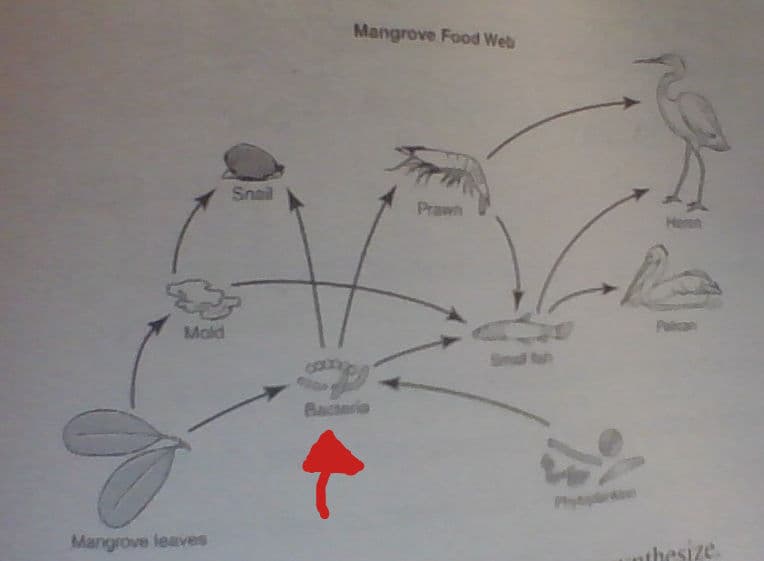
Some kinds of bacteria can photosynthesize. Do the bacteria in this food web photosynthesize? Why or why not?
Remember: Photosynthesis means the process by which green plants and some other organisms use sunlight to synthesize foods from carbon dioxide and water. If a plant photosynthesizes then THEY MAKE THEIR OWN FOOD!
Monogenean worms are parasites that live on the gills of groupers. How will this affect the groupers?
A fish in the deep ocean has a lure that lights up to attract mates and prey. Why would it need this adaptation?
Hint: Recall conditions in the deep ocean ecosystems. Relate these conditions to the fish's adaptations.
Following a short-term change to the environment, which traits are most likely to be passed onto the next generation?
The graph shows changes in the population of predator and prey over time. Which best explains why the population of prey increased near the end of the timeline shown on the graph?

Which of the following investigations studies how an organism in an aquatic ecosystem depends on an abiotic factor?
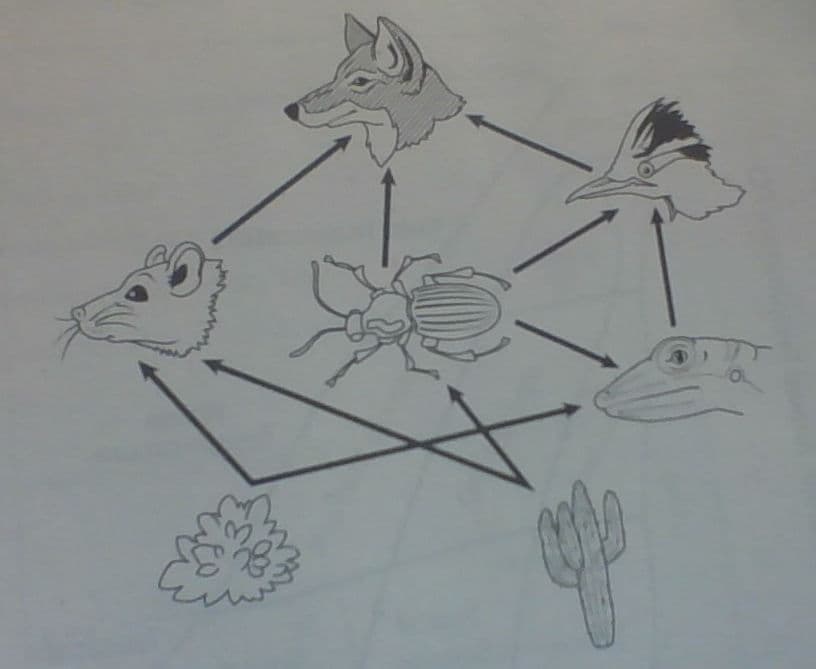
Which would be the most direct cause of an increase in the cacti population?
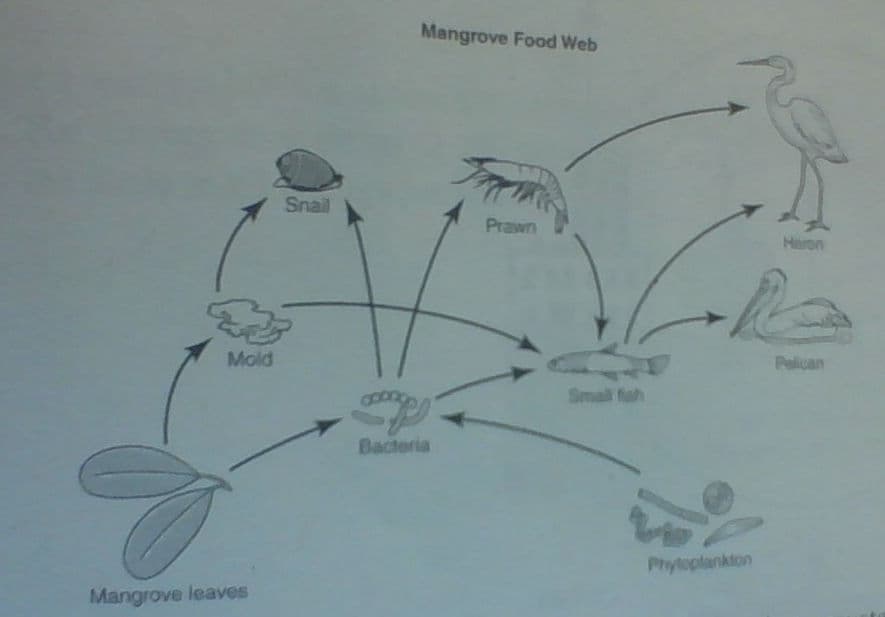
The diagram shows the mangrove swamp food web. Molds are consumed by some organisms. They are also decomposers in the ecosystem. How would the food web change to show the role of the mold as decomposers?
Immediately after a forest fire, the primary consumers in the area would compete most for which biotic factor?
There are three different species of plants shown. Species Z can successfully share the same environment with the other plants shown because Species Z absorbs water -

Plants that live on the floors of densely populated forests must compete for sunlight. Which type of leaves are most likely found on plants that are best suited to living on the floor of a dense forest?
Researchers are studying lichens growing on trees in a forest ecosystem. At the beginning of the study, the researchers identified twelve lichen species in the forest. Later, a forest fire happened in the study area. The researchers returned to the area and found only six lichen species. What inference is best supported from the researchers' observations?
To fight a bacterial infection a patient was given an antibiotic to take for 10 days. After the patient finished taking the antibiotics as directed, almost all bacteria was killed. After another 10 days, the patient was sick again with the same kind of infection. What most likely happened?
A coastal area that once supported a thriving fishing industry is over-fished. The number of species found living in the marine ecosystem decreases. Which of these activities is most likely to increase the natural biodiversity in the area?
In an energy pyramid, what best describes how energy flows?
A barnacle attaches itself to the back of a whale to soak in the nutrient-rich water. The whale is unaffected. What relationship does this describe?