Loading...

Track each student's skills and progress in your Mastery dashboards
This diagram shows the movement of a skater at 1-second intervals. What is the magnitude of the average velocity, in m/s, if the skater went for a total of 24 meters?

6 m/s
96 m/s
0.4 m/s
4 m/s
This diagram shows the movement of a skater at 1-second intervals. What is the magnitude of the average velocity, in m/s, if the skater went for a total of 24 meters?

While running around the track at school, Milt notices that he runs due East on the 100m homestretch and due West on the 100m backstretch. To train for the 800m event, he runs both the 100m homestretch and the 100m backstretch in 12.2 seconds. How do Milt's velocities on the homestretch and backstretch compare?
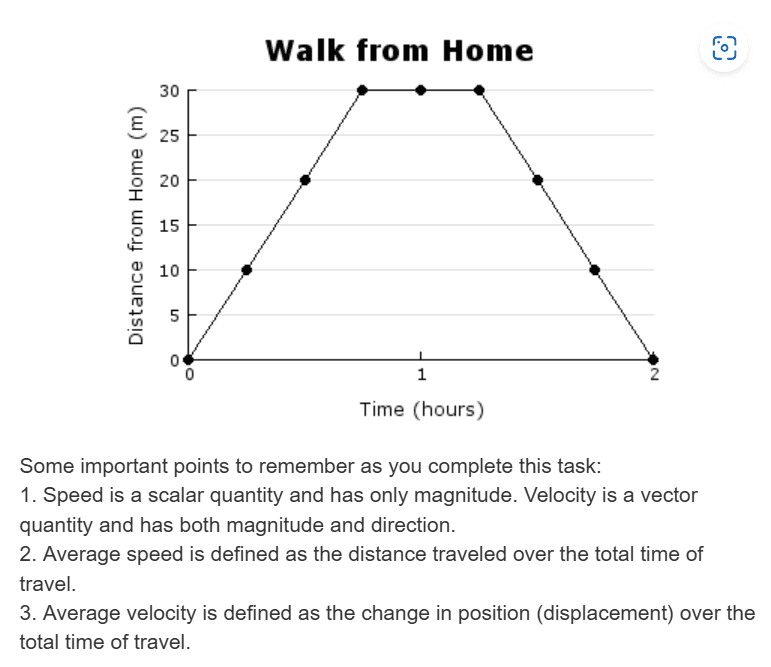
Calculate the average speed in meters/minute for the trip represented by the walk graphed here.
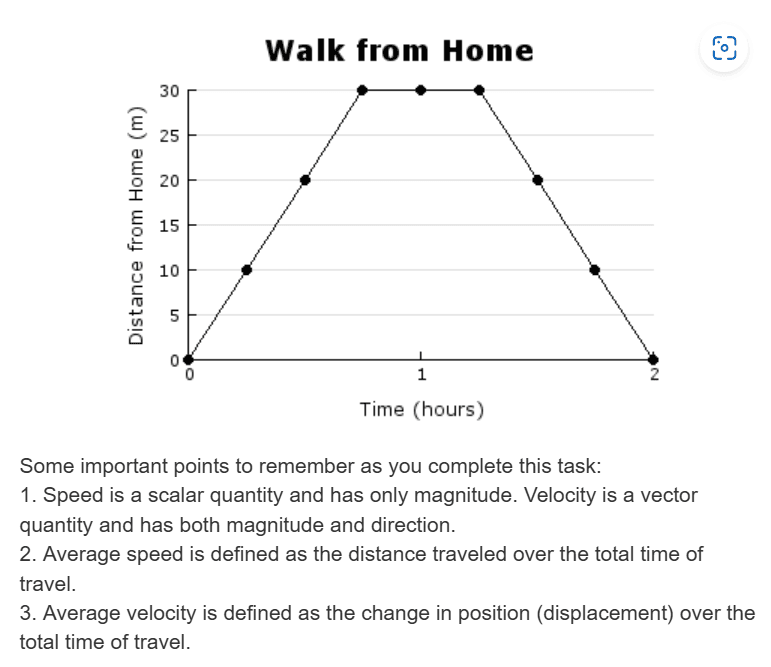
What is the average velocity of the person taking this walk?
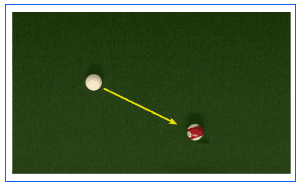
Consider the collision between the moving cue ball and the red 15 ball that is at rest on the pool table. Which statement does NOT describe what occurs when the cue ball collides with the 15 ball?
A moving golf club hits a stationary golf ball. We can use Newton's second and third laws to explain what happens upon impact. Which statement is INCORRECT.
A 10-newton force is applied to a 4-kg block. The block slides across the floor at a constant speed of 5 m/s. What is a valid conclusion from this situation?
Listed in the Item Bank are key terms and expressions, each of which is associated with one of the columns. Some terms may display additional information when you click on them. Drag and drop each item into the correct column. Order does not matter.
During science class, Ben and Dylan had to set up a demonstration to model one of Newton's laws. This is a photo of their demonstration. When Ben hit the index card with his finger, the penny fell into the cup. What does the students' demonstration illustrate?

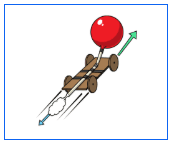
The boys tried a second experiment. They built a balloon car like the one seen here. As the gas in the balloon is released, the car moves. Ben and Dylan discovered that the bigger they blew up the balloon, the farther the car moved. This balloon car is a good model of Newton's
Liz puts a 1 kg weight and a 10 kg on identical sleds. She then applies a 10N force to each sled. Which does not explain why the smaller weight accelerate faster?
A 500N person stands in an elevator that is moving downward at constant speed. The force that the floor exerts on the person must be
