Construct an argument supported by scientific evidence to identify surface features (examples could include deltas, sand dunes, mountains, volcanoes) as being caused by constructive and/or destructive processes (examples could include deposition, weathering, erosion, and impact of organisms).
Develop simple interactive models to collect data that illustrate how changes in surface features are/were caused by constructive and/or destructive processes.
Ask questions to obtain information on how technology is used to limit and/or predict the impact of constructive and destructive processes. (Clarification statement: Examples could include seismological studies, flood forecasting (GIS maps), engineering/construction methods and materials, and infrared/satellite imagery.)
Track each student's skills and progress in your Mastery dashboards
Give this quiz to my class
Q 1/10
Score 0
Landforms are the...
30
good places to visit
plants and animals on Earth surface
natural shapes and features of an area of land
houses and building in our communities
Q 2/10
Score 0
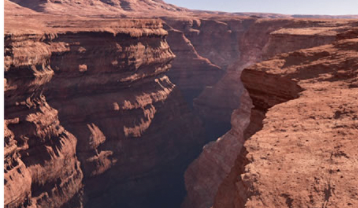
What carved out this huge canyon?
30
The river cut through it.
The tornado cut through it
The hurricane cut through it.
The wind blew through it.
10 questions
Q.
Landforms are the...
1
30 sec
S5E1a
Q.
What carved out this huge canyon?
2
30 sec
S5E1a
Q.
What is causing this U-shaped valley to form?
3
30 sec
S5E1b
Q.
What is it called when rock is broken into smaller pieces?
4
30 sec
S5E1b
Q.
What is Seismology?
5
30 sec
S5E1c
Q.
Maps and models
6
30 sec
S5E1c
Q.
A topographic map shows:
7
30 sec
S5E1b
Q.
Erosion is...
8
30 sec
S5E1a
Q.
Which landform is the result of changes to Earth’s surface by wind?
9
30 sec
S5E1a
Q.
Rainwater fills in a crack in the rock in a cold climate. When the temperature drops, the water freezes to form ice. After the water thaws, it evaporates. The crack left behind is larger than it was originally. What factor caused the rock to weather?