Analyze and interpret data to compare and contrast the planets in our solar system in terms of: size relative to Earth, surface and atmospheric features, relative distance from the sun, and ability to support life.
Track each student's skills and progress in your Mastery dashboards
Give this quiz to my class
Q 1/12
Score 0
True or False - The Earth is the largest object in our solar system.
60
True
False
Q 2/12
Score 0
True or False - The Sun is the only star in our Solar System.
60
False
True
12 questions
Q.
True or False - The Earth is the largest object in our solar system.
1
60 sec
S6E1c
Q.
True or False - The Sun is the only star in our Solar System.
2
60 sec
S6E1c
Q.
Objects such as planets, moons, asteroids, comets, and dwarf planets rotate or orbit the sun.
3
60 sec
S6E1c
Q.
Which statement best describes the 3rd planet from the Sun?
4
60 sec
S6E1c
Q.
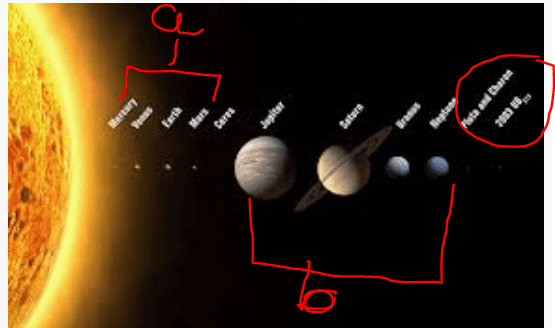
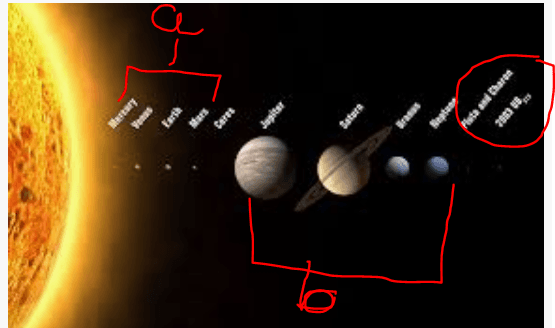
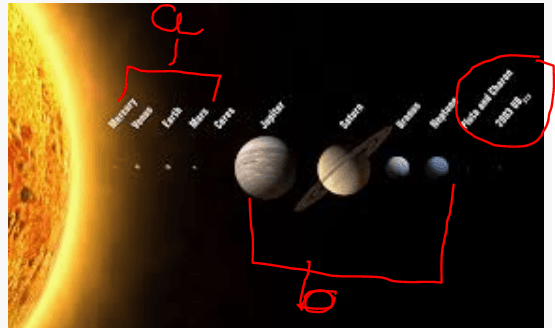
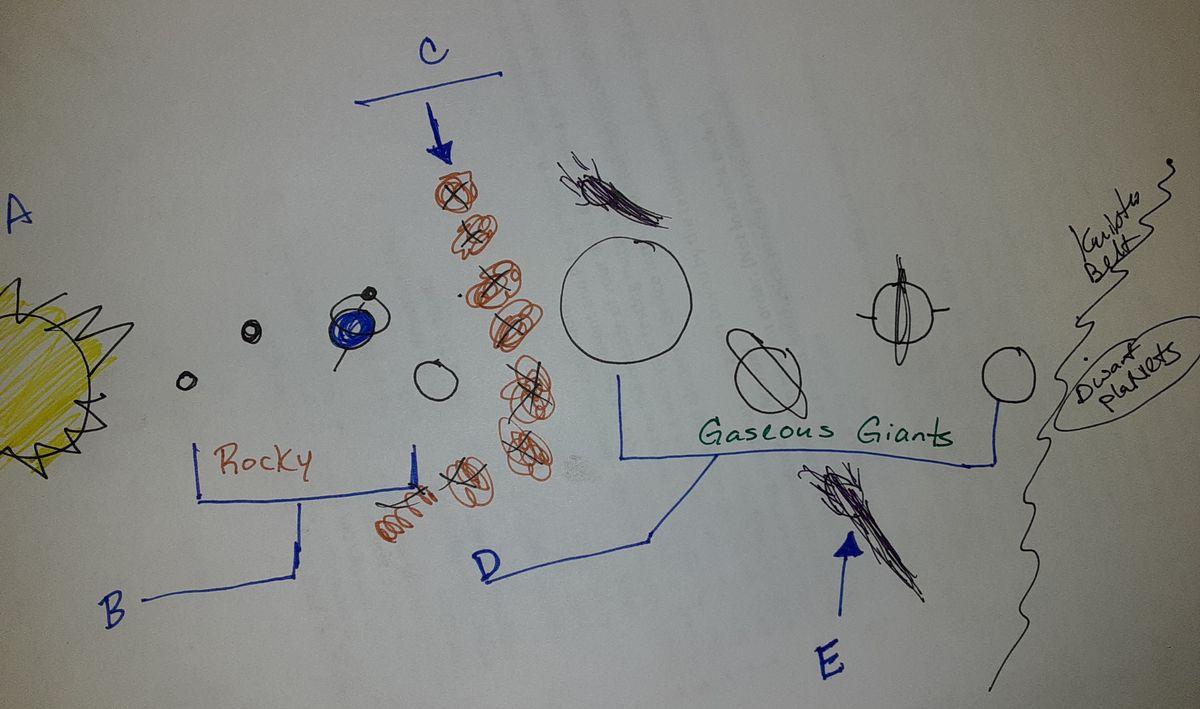
All the planets of the A category represent
5
60 sec
S6E1c
Q.
All the planets of B category represent
6
60 sec
S6E1c
Q.
Based on your knowledge of our solar system, which planet would take the least amount of time to orbit the star?
7
60 sec
S6E1c
Q.
Which planets appear to be larger in diameter and longer revolution periods?
8
60 sec
S6E1c
Q.
If a student was modeling the solar system and is using a bread crumb, basket ball, and tennis ball, which would best represent dwarf planets?
9
60 sec
S6E1c
Q.
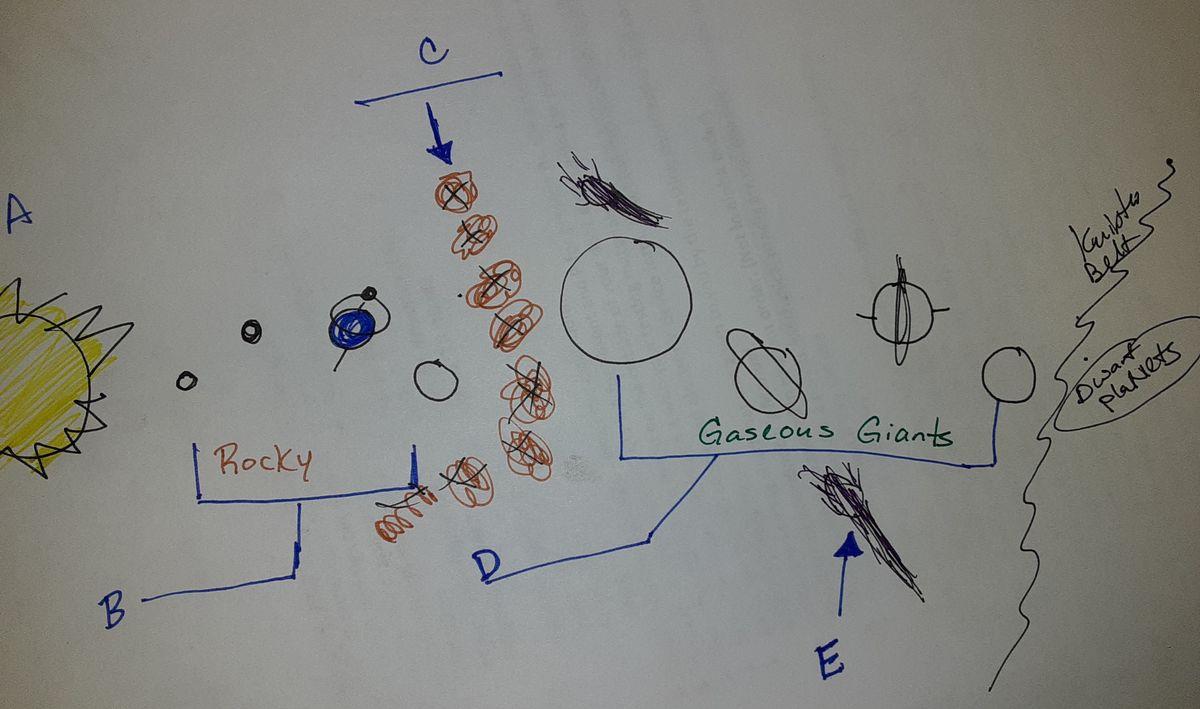
Based on the student's sketch of the solar system what the rocky irregular shape objects be located
10
60 sec
S6E1c
Q.
Based on the diagram , which component of solar system an irregular shape object made of gas, ice rock, and a tail
11
60 sec
S6E1c
Q.
You can find all of these in the solar system EXCEPT